Artwork
Broad Street, Ludlow
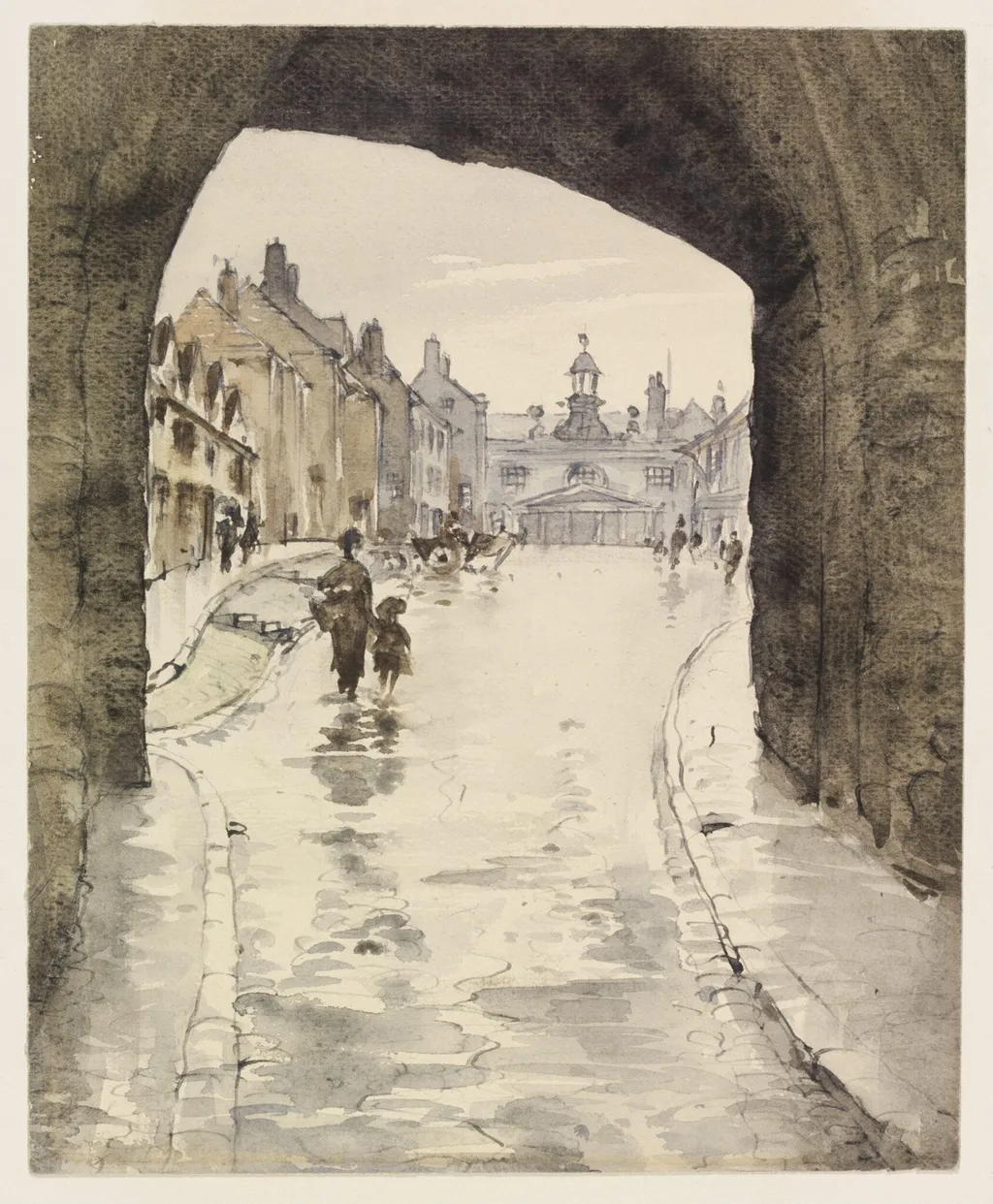
Broad Street, Ludlow is a watercolor work on paper by the Social Realist artist Musman. It dates from 1942 and is held in the collection of the Victoria and Albert Museum.
About this work
Overview
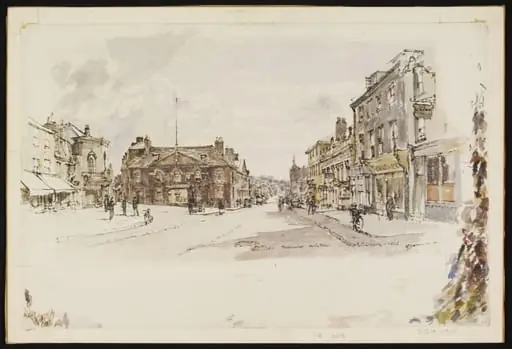
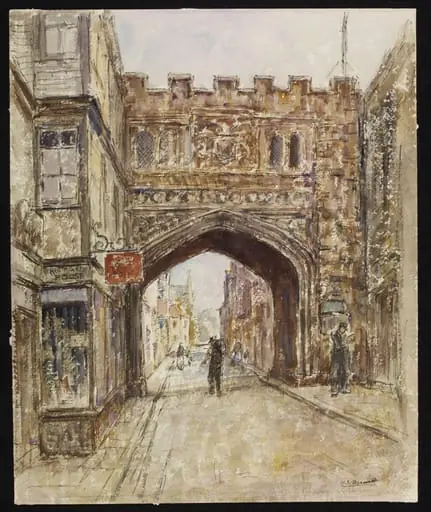
The watercolor, created in 1942 by artist Musman, portrays a rain‑slicked stretch of Broad Street in Ludlow. A stone arch frames the composition, guiding the eye toward the Buttercross market building that recedes into the distance. The scene is rendered in muted greys and browns, with soft brushwork that conveys a damp, atmospheric mood.
Subject & Meaning
The painting captures a moment of everyday life: a woman and child walk along the wet cobbles, their silhouettes reflected in the rain‑glazed surface. The quiet presence of these figures underscores the transient nature of the street’s activity, while the architectural backdrop anchors the work in a specific locale.
Technique & Style
Musman employs a restrained palette of greys and earth tones, allowing the subtle variations of light on wet stone to dominate. Delicate, fluid brushstrokes suggest the sheen of rain and the softness of atmospheric perspective, creating depth without sharp detail.
History & Provenance
The work was produced under the auspices of the Recording Britain project, a wartime effort that enlisted artists to document England’s built environment. This initiative aimed to safeguard visual records of places that might be altered or lost during the conflict. The watercolor now belongs to the collection of the Victoria and Albert Museum.
Context
Recorded during World War II, the painting reflects a broader cultural impulse to affirm national identity through the preservation of familiar streetscapes. Ludlow’s historic market street, with its stone arch and Buttercross, exemplifies the architectural heritage that the project sought to capture.
Artist & collection
Artist
Musman painted quiet English towns in the early 1940s, using watercolours to capture cobbled streets and stone bridges bathed in soft light.

![North Gate [by Thomas Harrison], Chester, by Causer](https://artifactworldgallery.com/img/causer--north-gate-by-thomas-harrison-chester--aa1b0a0e4cef52c8-w320.webp)