Artwork
Self-Portrait
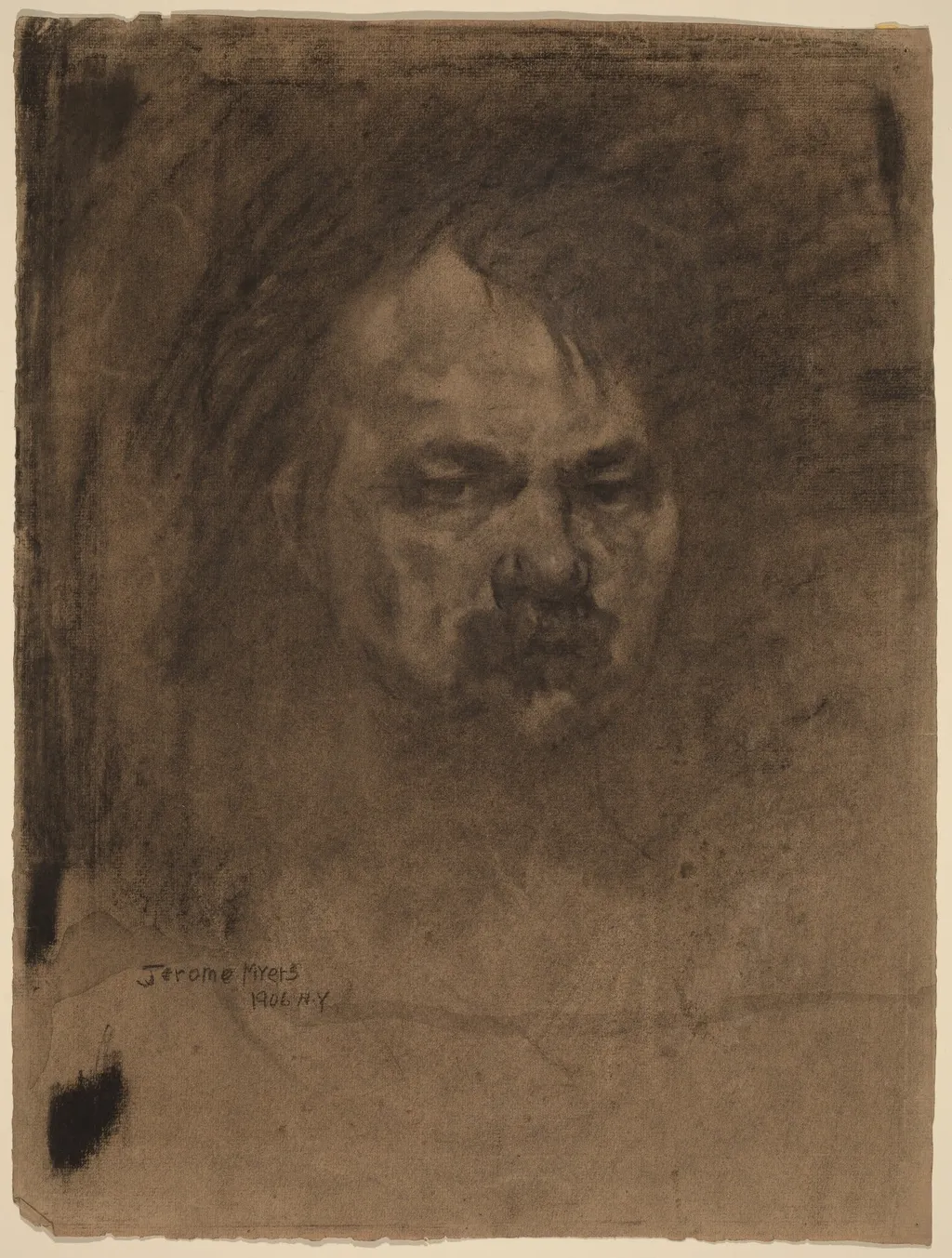
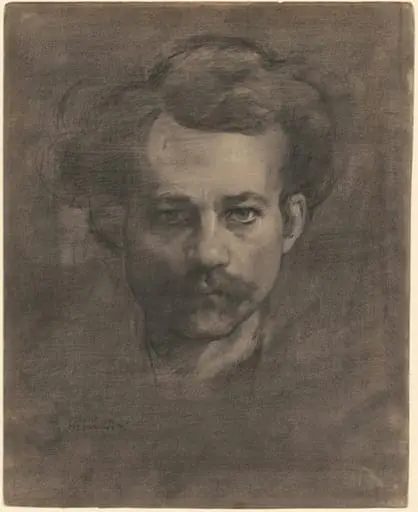
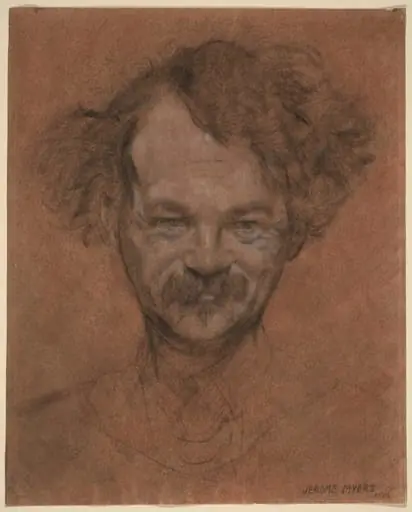
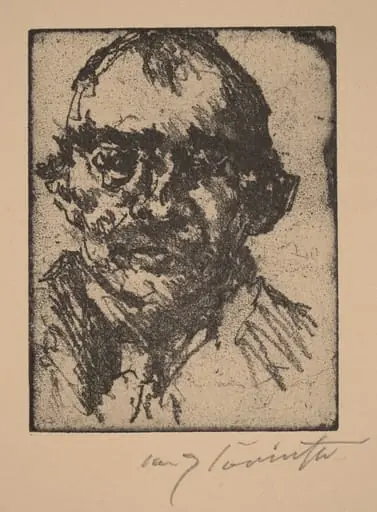
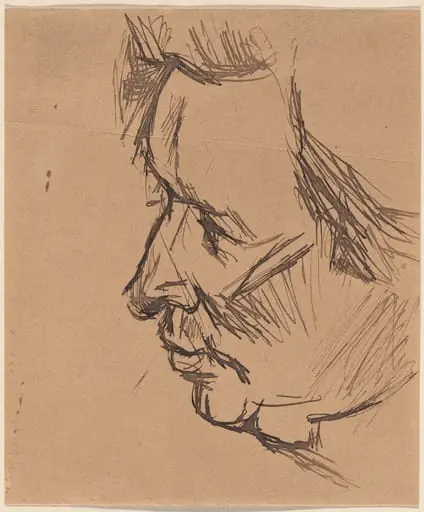
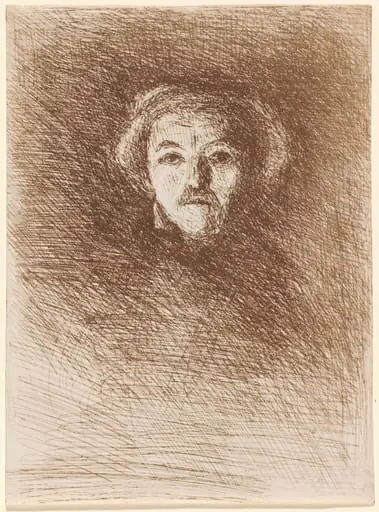
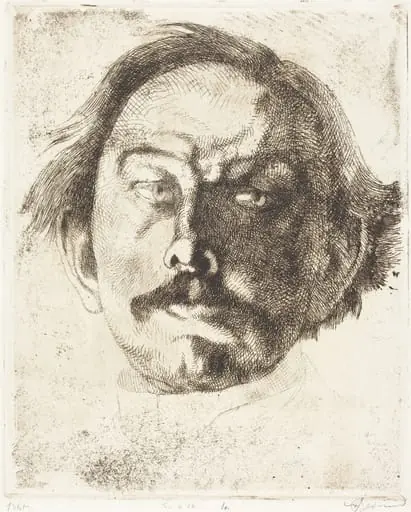
Self-Portrait is a charcoal drawing by Jerome Myers. It dates from 1906 and is held in the collection of the National Gallery of Art.
About this work
Overview
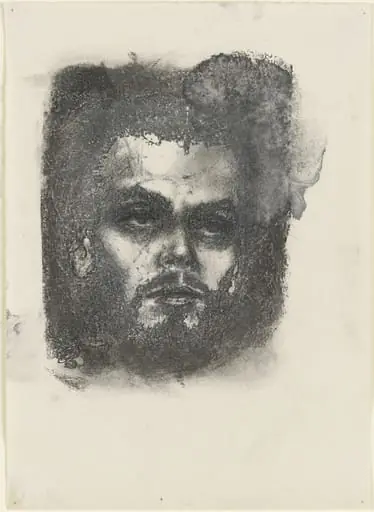
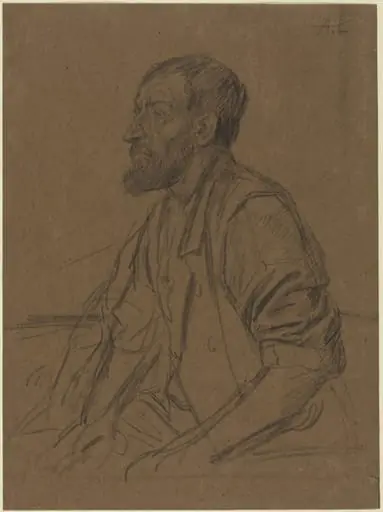
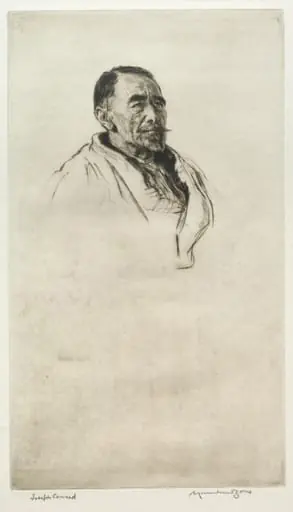
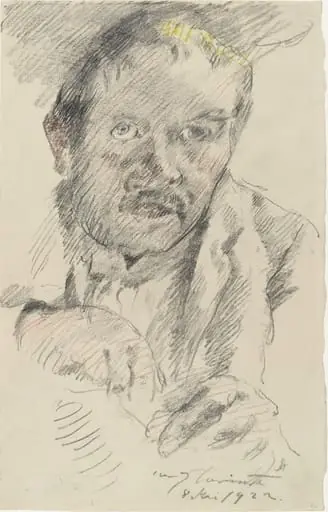
Jerome Myers’ *Self‑Portrait* (1906) is a charcoal drawing on light brown laid paper, heightened with white. Executed during his early New York period, the work presents the artist’s own likeness in a restrained, monochromatic palette. The composition focuses tightly on the head, isolating the figure from any narrative setting and emphasizing the personal nature of the study.
Subject & Meaning
The portrait shows a middle‑aged man with dark hair and a moustache, eyes lowered and expression subdued. The downward gaze and muted demeanor suggest introspection, aligning with Myers’ broader interest in the inner lives of individuals amid the bustling urban environment he often depicted.
Technique & Style
Myers employs charcoal for the majority of the tonal modeling, while selective white highlights define the facial planes and suggest light falling across the features. Cross‑hatching and varied pressure create texture and depth, and the dark, gestural background reinforces the figure’s prominence without distracting detail.
History & Provenance
Created shortly after Myers’ studies at Cooper Union and the Art Students League, the drawing belongs to the early phase of his career when he was establishing his reputation within the Ashcan School circle. The work has remained in private collections, documented in exhibition catalogs of early 20th‑century American drawing.
Artist & collection
Artist
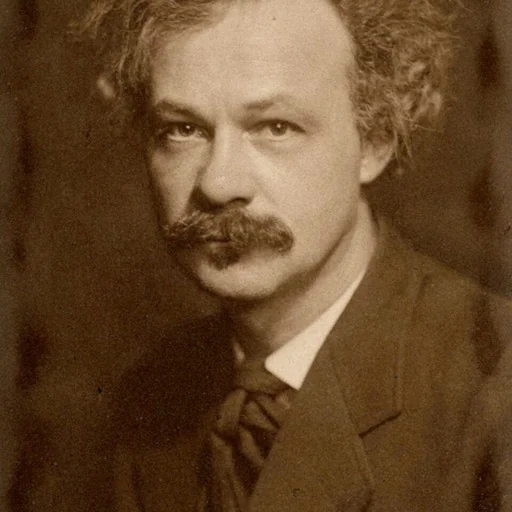
Jerome Myers (March 20, 1867 – June 19, 1940) was an American artist and writer associated with the Ashcan School, particularly known for his sympathetic depictions of the urban landscape and its people.