Artwork
New York Street Scene
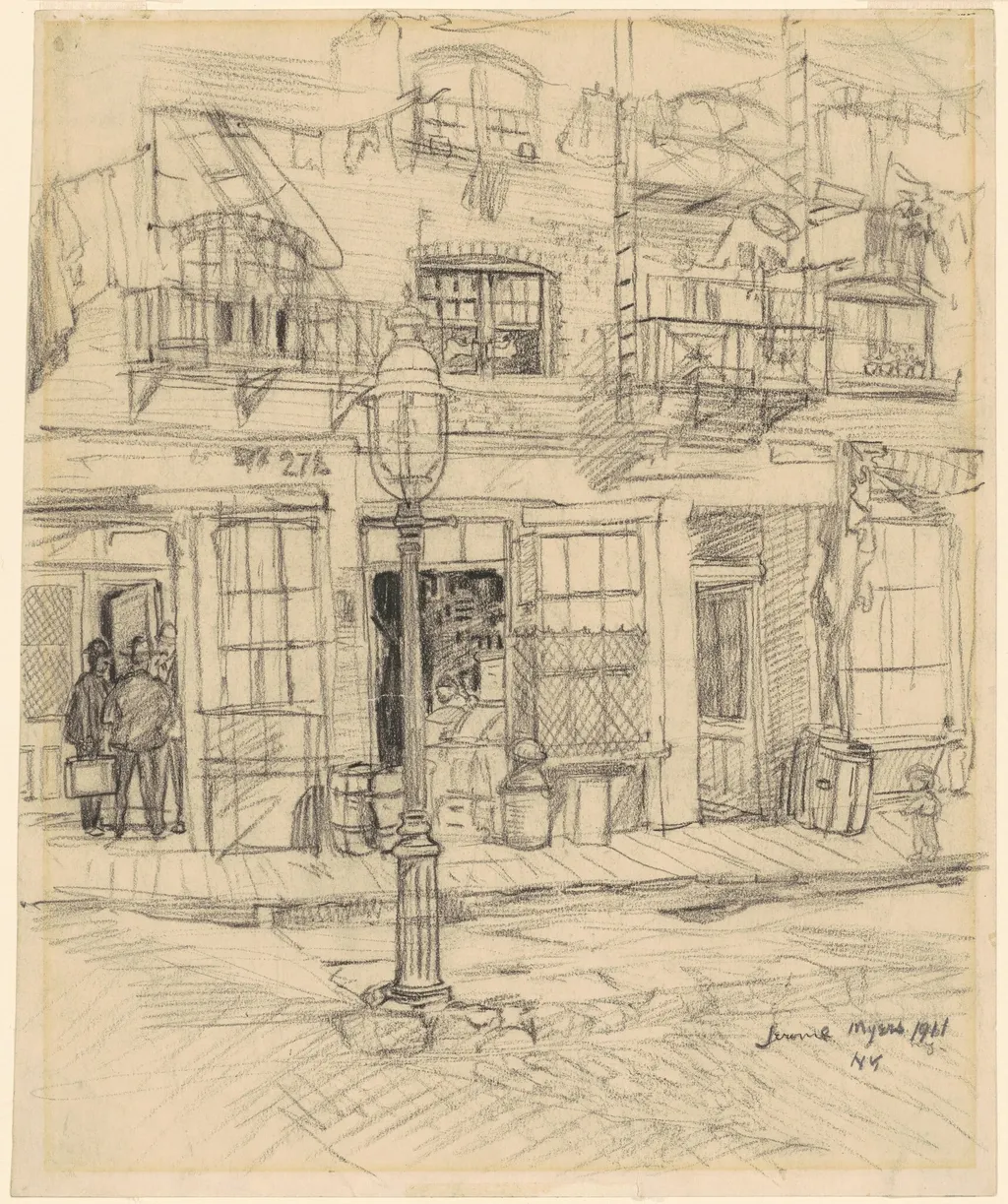
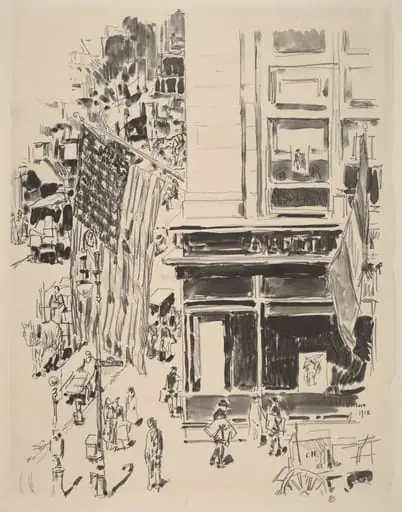
New York Street Scene is a chalk drawing by Jerome Myers. It dates from 1911 and is held in the collection of the National Gallery of Art.
About this work
Overview
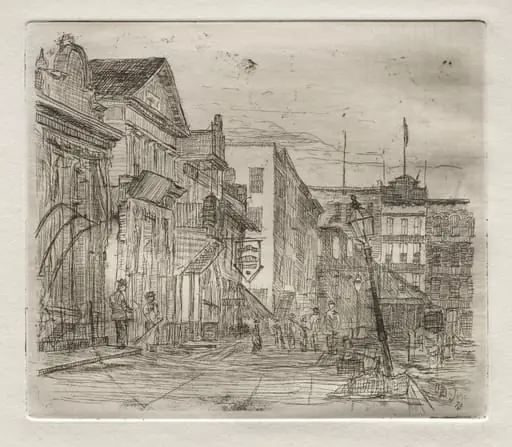
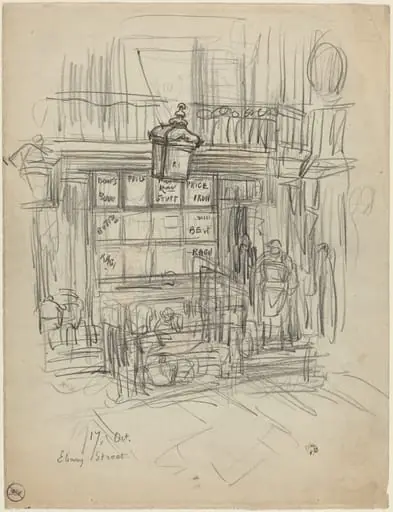
Jerome Myers created this drawing in 1911 using black chalk on wove paper, capturing a quiet moment in a New York City street.
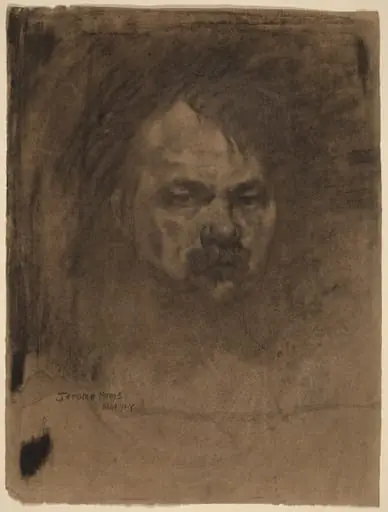
Jerome Myers created this drawing in 1911 using black chalk on wove paper, capturing a quiet moment in a New York City street. As a figure associated with the Ashcan School, Myers favored unidealized depictions of urban life. The work is a spontaneous study, not a polished composition, reflecting his habit of sketching directly from observation. Its immediacy aligns with his broader commitment to documenting the rhythms of everyday city existence.
Subject & Meaning
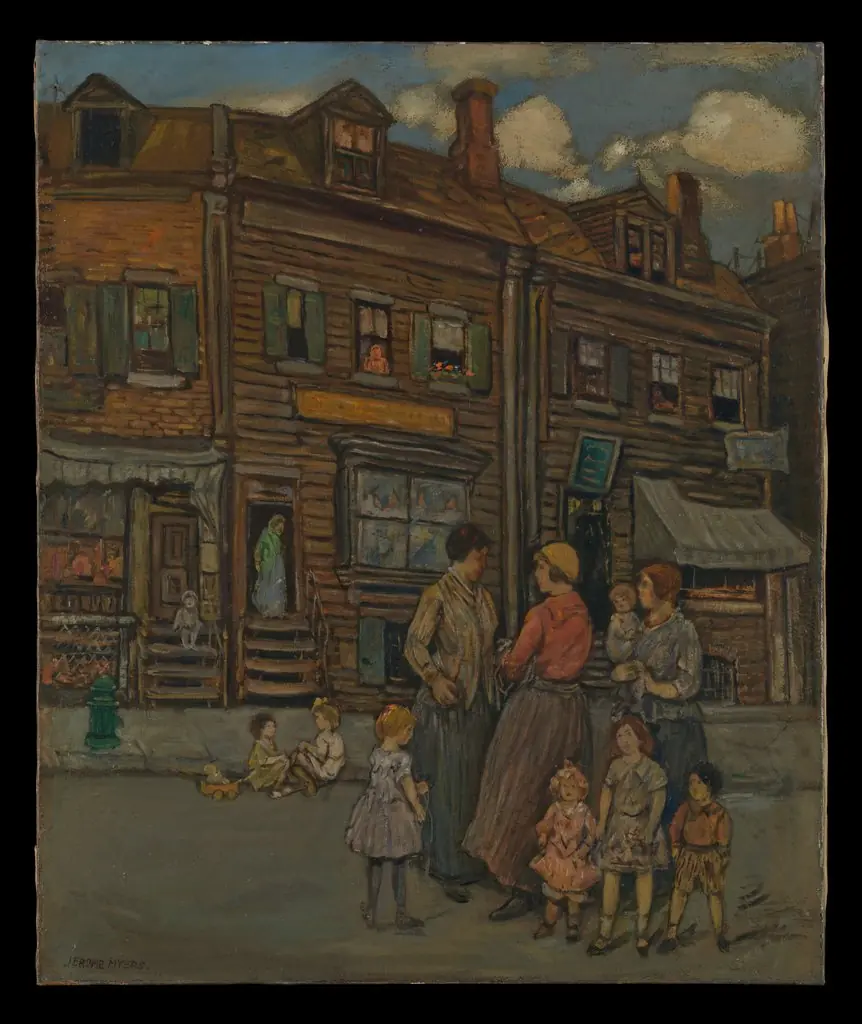
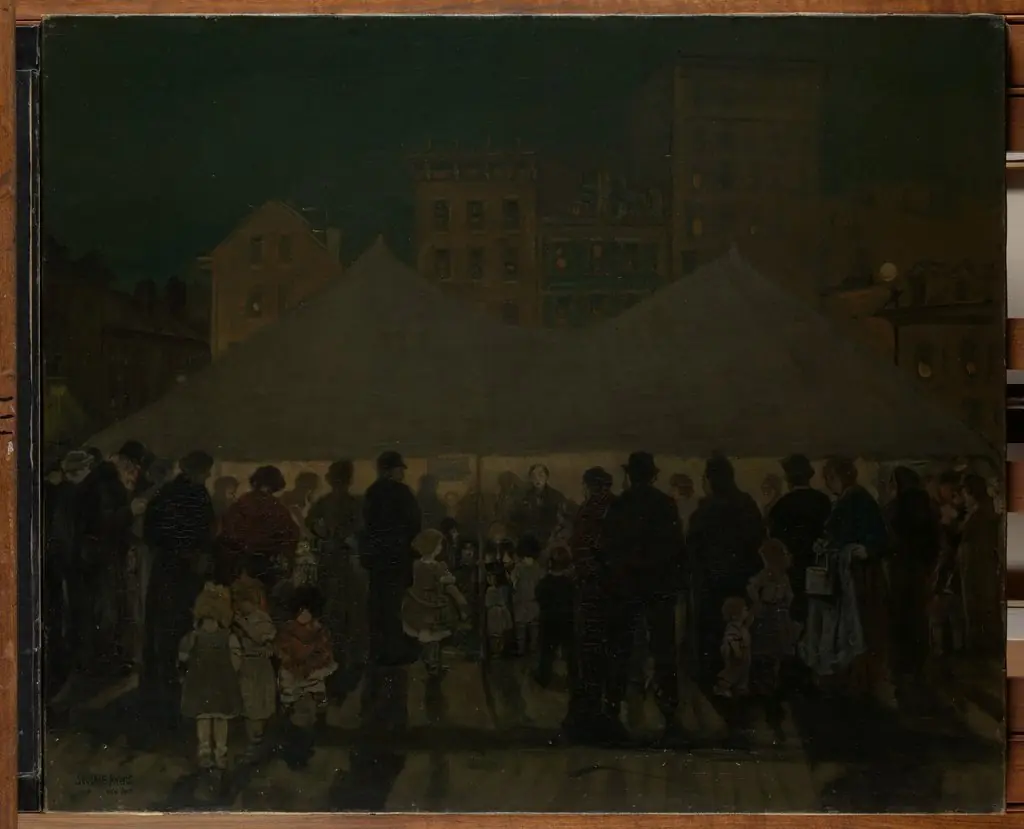
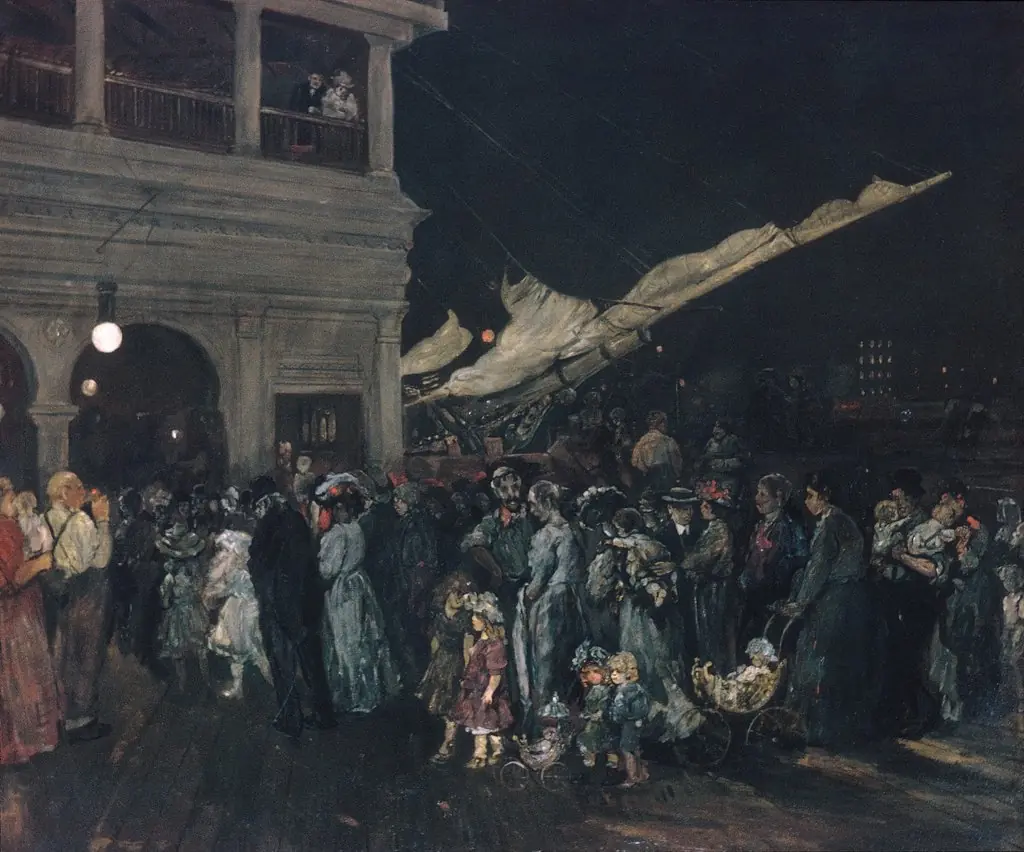
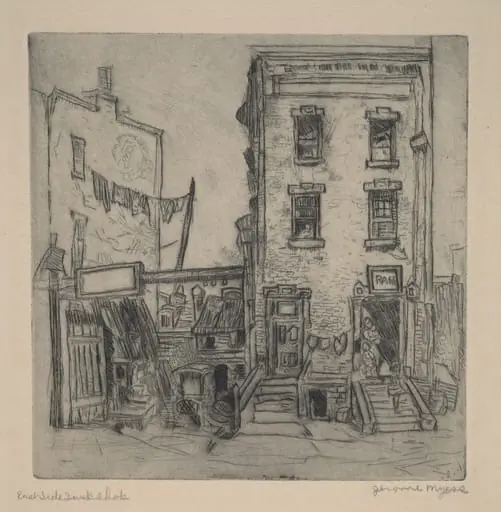
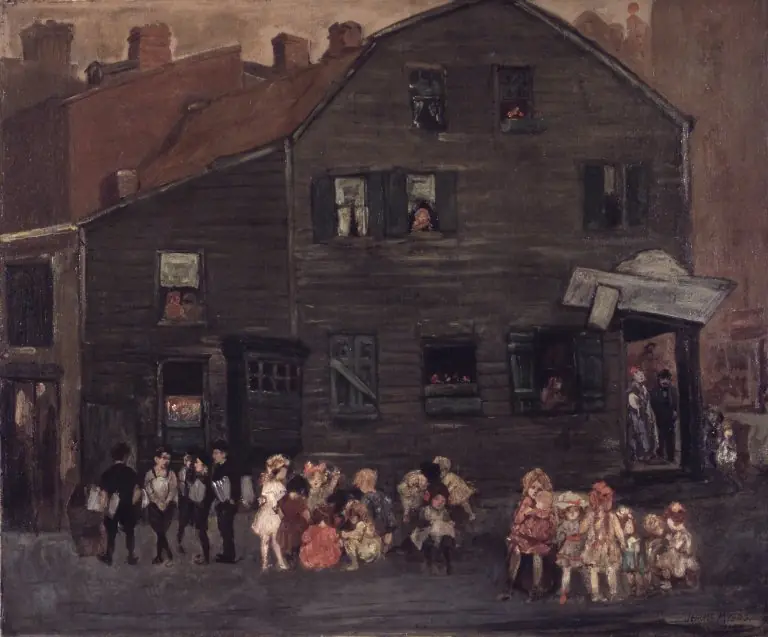
The scene centers on a street corner at dusk, with a tall lamp casting long shadows over a modest sidewalk. Two figures linger near a doorway—one holding a bag—as if pausing after a day’s errands. The architecture, with its balconies and large windows, suggests tenement living. There is no drama or narrative climax; instead, the drawing conveys the quiet persistence of ordinary life, emphasizing presence over action.
Technique & Style
Myers employed loose, energetic hatching with black chalk to model form and suggest depth without fine detail. The paper’s texture enhances the sketch’s raw quality, and the absence of erasure or correction underscores its immediacy. Forms are suggested through bold lines and tonal contrasts rather than precise outlines. The composition is asymmetrical, with the lamp anchoring the center and the figures placed off-balance, reinforcing the sense of a fleeting glance.
History & Provenance
Created during Myers’s most active period in New York, the drawing emerged from his daily practice of sketching the city’s streets after his training at Cooper Union and the Art Students League. While its early ownership is undocumented, it entered institutional collections in the 20th century as part of broader efforts to preserve Ashcan School works. Its survival reflects growing recognition of urban realism as a significant strand in American art.
Context
In 1911, New York was rapidly expanding, with tenements, streetcars, and early automobiles reshaping public space. Myers, like other Ashcan artists, turned away from academic idealism to record these changes with empathy. His work stood in contrast to the polished salon art of the time, offering instead a grounded view of working-class life. He also contributed to the 1913 Armory Show, helping shift American audiences toward modernist ideas.
Legacy
Myers’s drawings, including this one, helped define a distinctly American approach to urban realism. His emphasis on unembellished observation influenced later generations of illustrators and social realists. Though less celebrated than some peers, his body of work remains a vital record of early 20th-century city life, valued for its honesty and quiet attentiveness to the unnoticed moments of daily existence.
Artist & collection
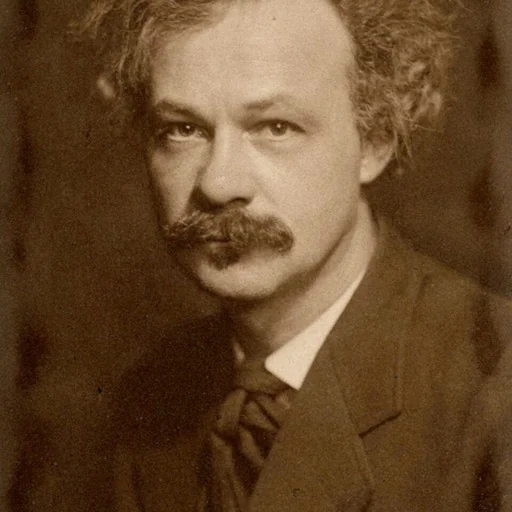
Artist
Jerome Myers (March 20, 1867 – June 19, 1940) was an American artist and writer associated with the Ashcan School, particularly known for his sympathetic depictions of the urban landscape and its people.