Artwork
Puppies, Sparrows, and Chrysanthemums
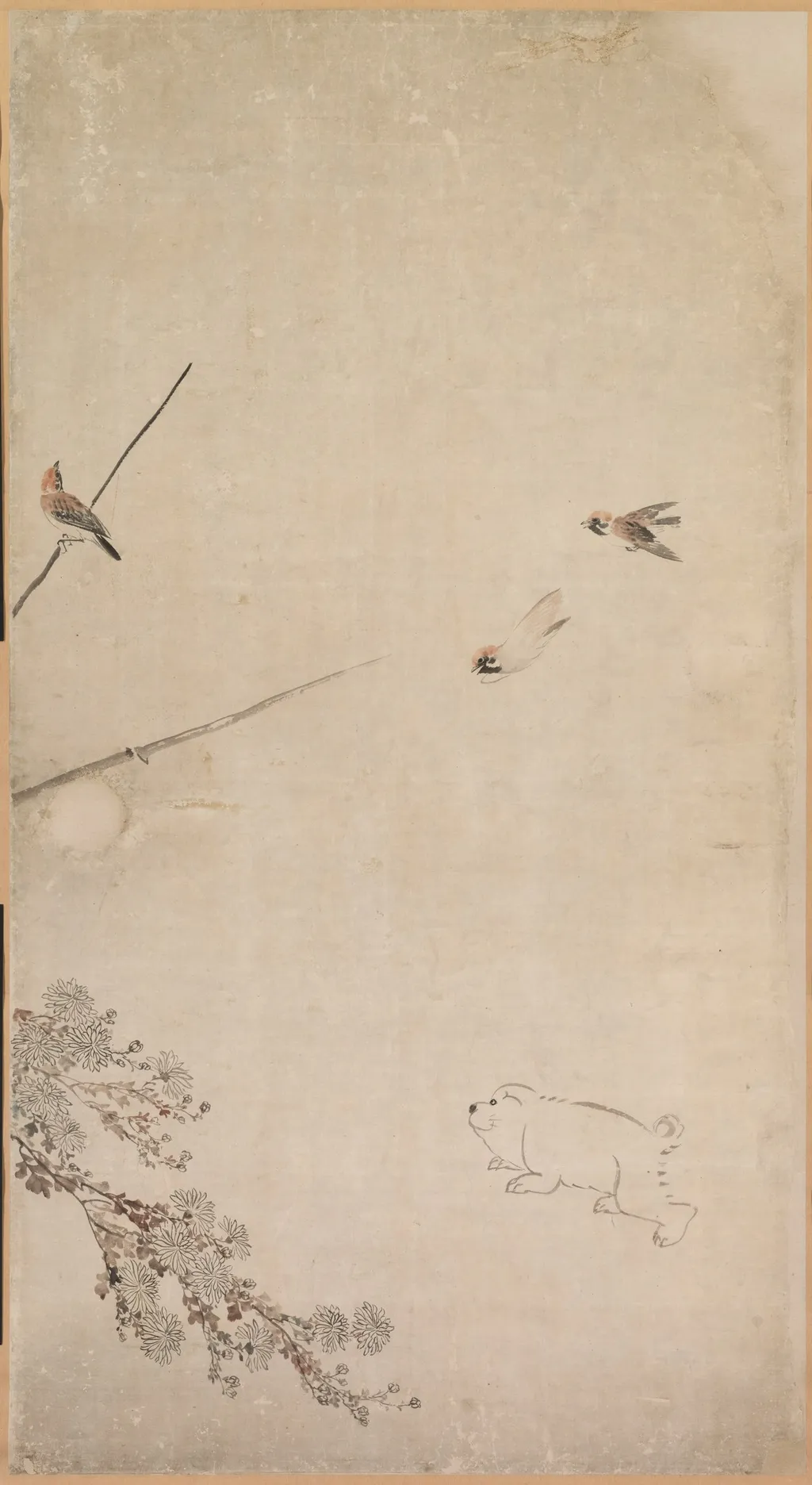
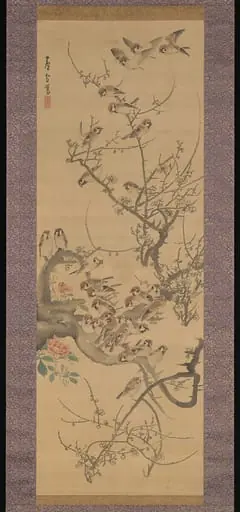
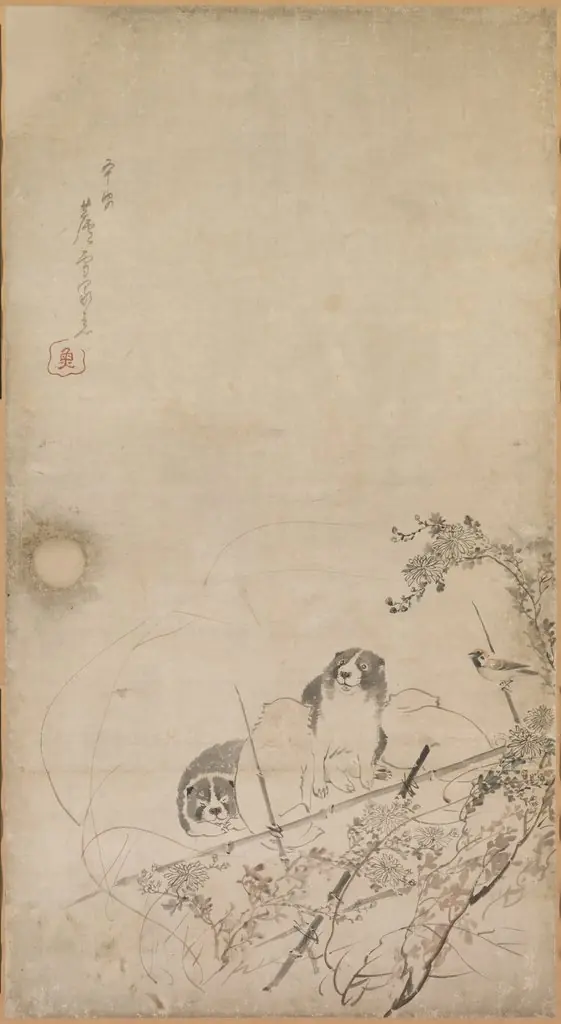
Puppies, Sparrows, and Chrysanthemums is an unspecified painting by Nagasawa Rosetsu 長澤蘆雪. It dates from 1788 and is held in the collection of the Cleveland Museum of Art. Created in 1788 by Nagasawa Rosetsu, this small painting is part of the Cleveland Museum of Art’s collection.
About this work
Overview
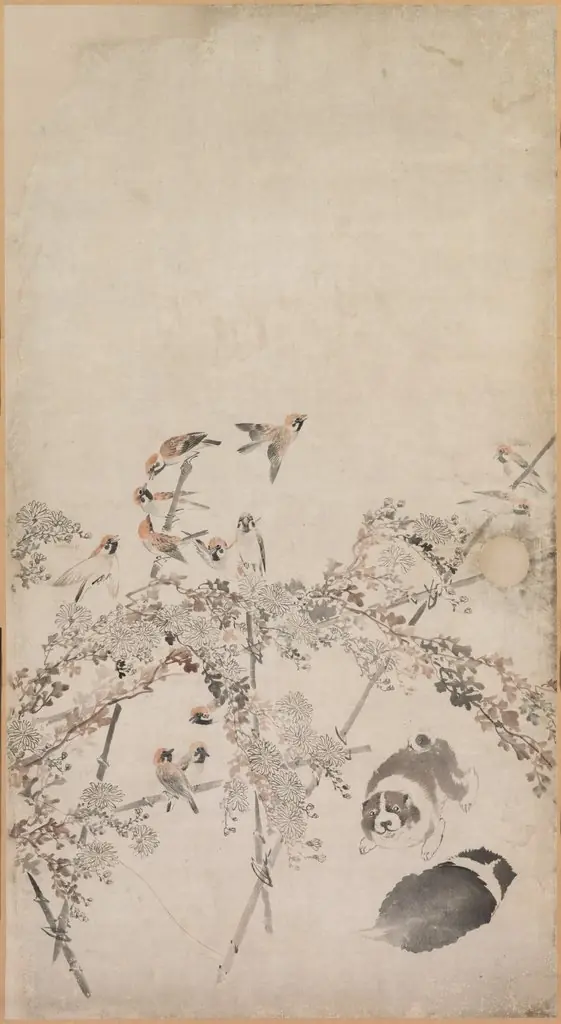
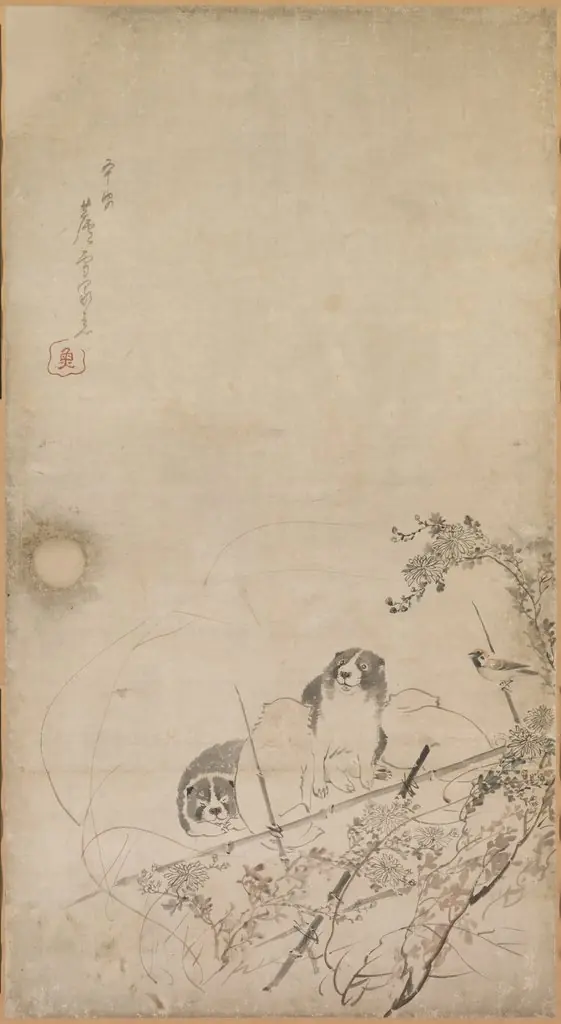
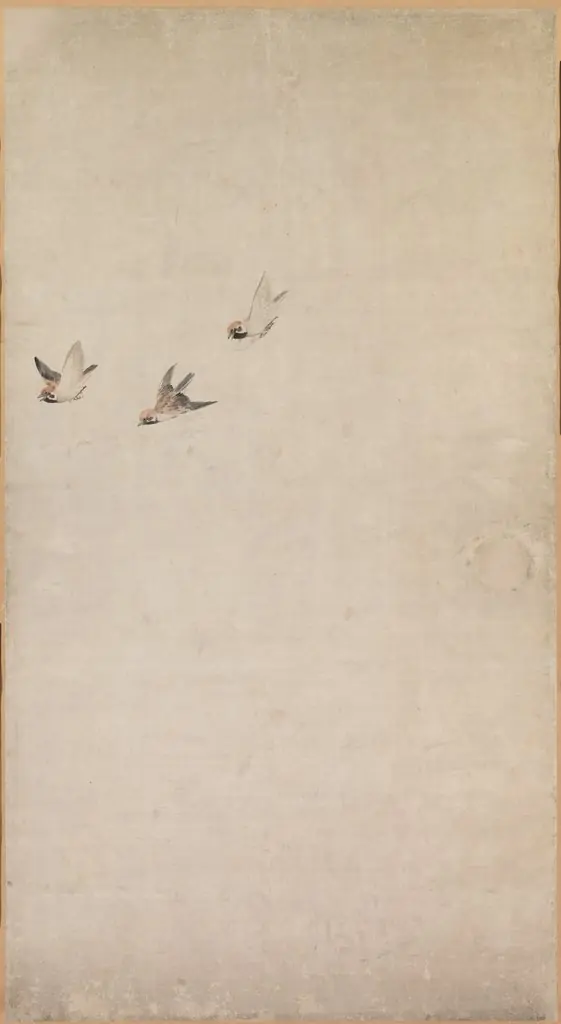
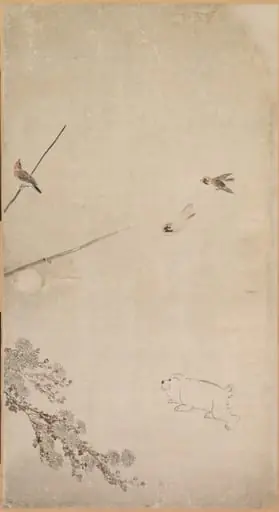
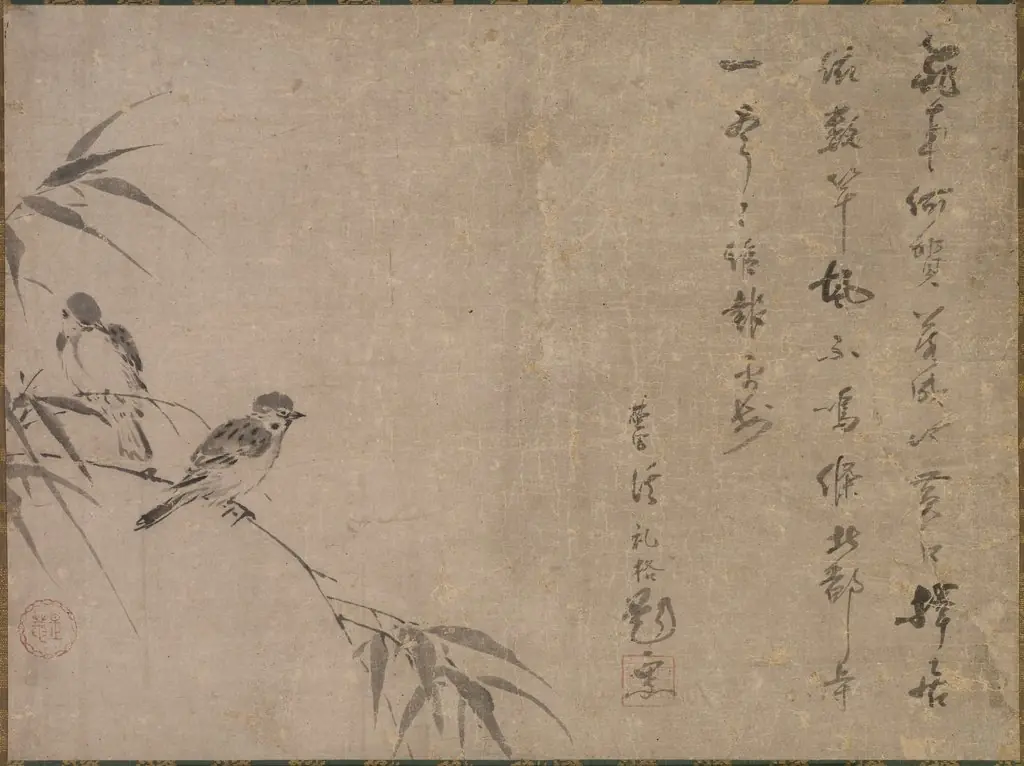
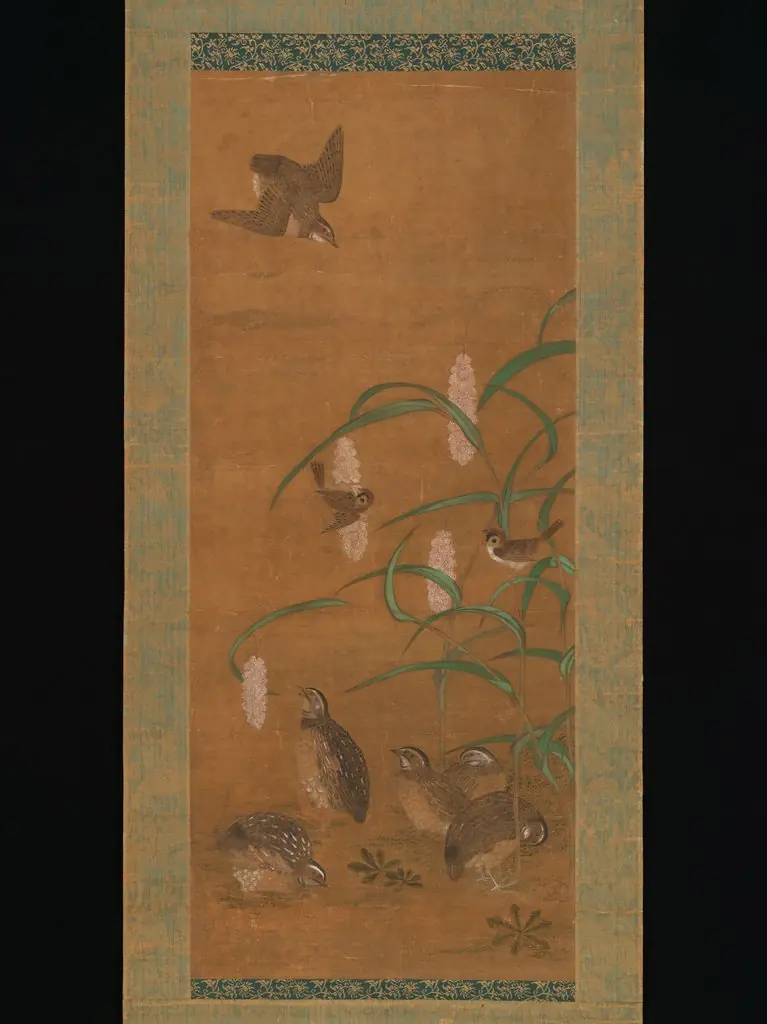
Created in 1788 by Nagasawa Rosetsu, this small painting is part of the Cleveland Museum of Art’s collection. It presents a tranquil composition in which sparrows, a slender branch with blossoms, and a modest line drawing of a puppy share a warm, light‑brown ground. The arrangement balances delicate detail with a sense of quiet motion, inviting quiet contemplation.
Subject & Meaning
The work juxtaposes fleeting birds in flight with a grounded branch bearing tiny flowers and leaves, while a simple canine sketch rests in the opposite corner. The sparrows suggest vitality and freedom, the blossoms hint at seasonal renewal, and the puppy’s understated form adds a touch of domestic charm, together evoking a harmonious natural scene.
Technique & Style
Rosetsu employs fine brushwork to render the sparrows and foliage with subtle shading, set against a muted, warm background that enhances the figures’ delicacy. The puppy is rendered in a minimalist line, contrasting with the more detailed birds and branch, illustrating the artist’s skill in varying degrees of abstraction within a single composition.
History & Provenance
Painted in the late eighteenth century, the piece entered the Cleveland Museum of Art’s holdings through acquisition, though specific details of its earlier ownership remain limited. Its presence in a major American institution reflects the broader interest in Japanese Edo‑period painting that grew in the West during the twentieth century.
Context
Rosetsu was active during the Edo period, a time when Japanese artists often explored natural subjects with refined brush techniques. This painting aligns with contemporary interests in depicting everyday fauna and flora, while also incorporating a playful element through the puppy sketch, a motif occasionally found in informal Japanese works of the era.
Artist & collection