Artwork
Cariatide
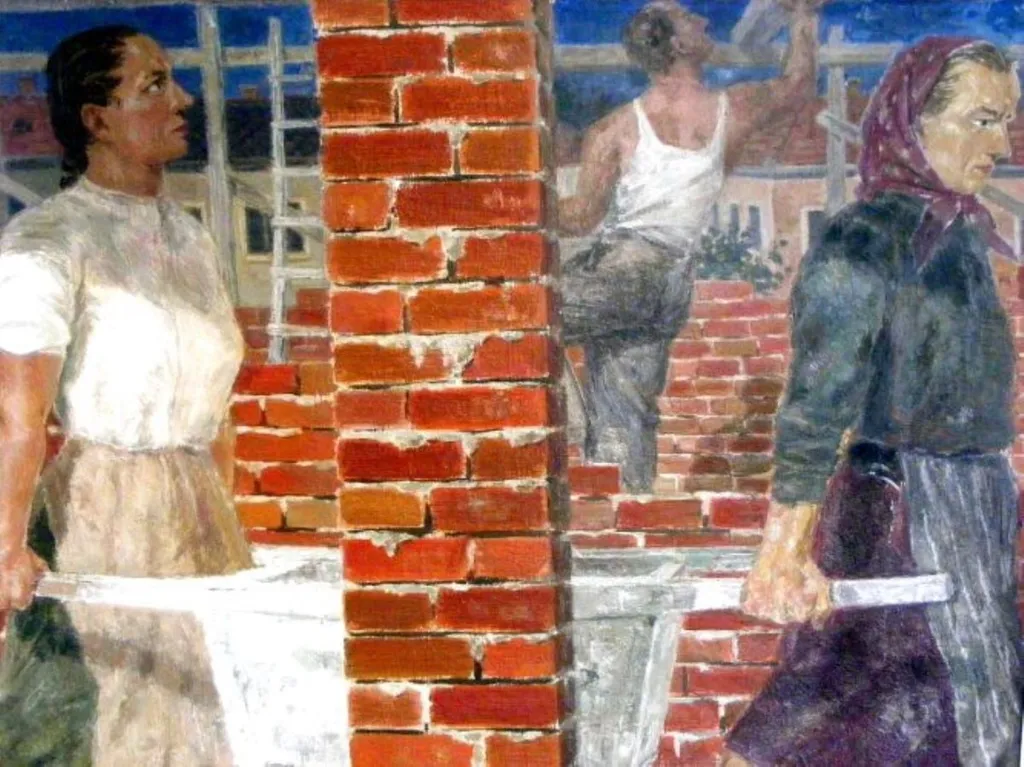
Cariatide is an unspecified painting by Albert Nagy. It dates from 1956 and is held in the collection of the Székely National Museum.
About this work
Overview
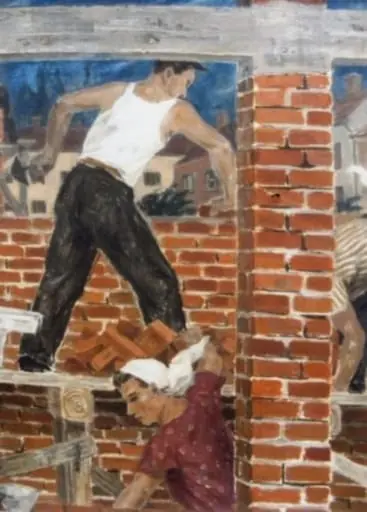
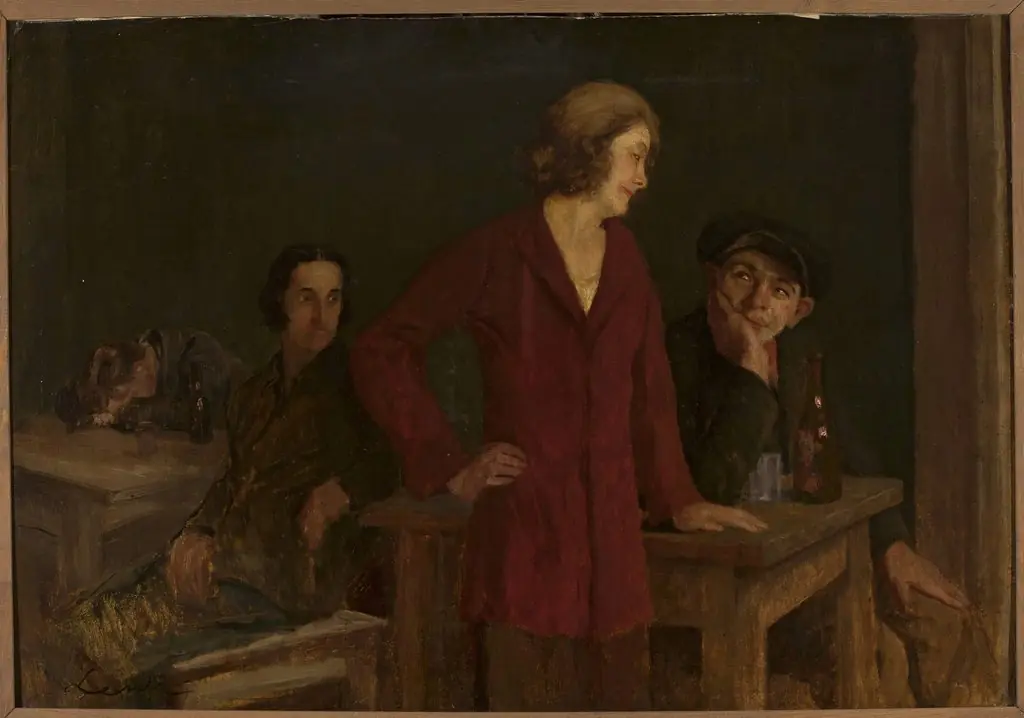
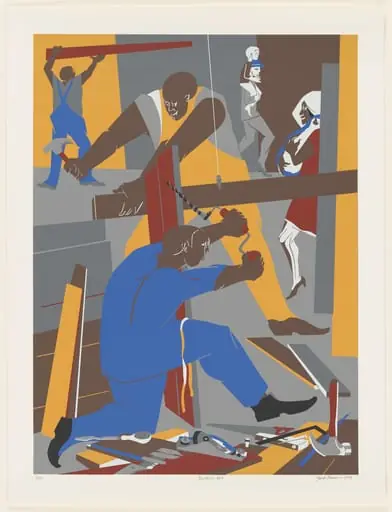
The scene captures two women positioned beside a brick wall, each holding a large, ambiguous white form, while a third figure—a laborer—works in the background.
Cariatide, painted by Albert Nagy in 1956, is a figurative composition held by the Museum of Ethnography. The scene captures two women positioned beside a brick wall, each holding a large, ambiguous white form, while a third figure—a laborer—works in the background. The setting suggests a construction site under daylight, with a clear sky overhead. The painting blends domestic and industrial elements, creating a layered narrative of labor and presence.
Subject & Meaning
The two women, dressed in contrasting attire—one in white, the other in dark fabric with a red headscarf—appear as silent witnesses to the labor unfolding behind them. Their held objects, possibly furniture or sculptural forms, evoke themes of domesticity and cultural weight. The male figure, engaged in physical construction, contrasts with their stillness, suggesting an unspoken division between manual work and symbolic presence. The title 'Cariatide' alludes to architectural supports, implying the women bear unseen burdens.
Technique & Style
Nagy employs bold, flat areas of color and sharp outlines to define forms, avoiding soft transitions. The sky and wall provide a restrained backdrop, allowing the figures and their garments to dominate visually. While light falls evenly, there is no pronounced chiaroscuro; instead, contrast arises from color juxtaposition—white against dark, red against gray. The composition is asymmetrical, with figures anchored to the wall, generating a sense of tension and spatial balance.
History & Provenance
Created in 1956, Cariatide entered the collection of the Museum of Ethnography shortly after its completion. The work reflects Nagy’s engagement with postwar Hungarian society, where reconstruction and shifting gender roles were prominent. Though little is documented about its exhibition history prior to museum acquisition, its inclusion in an ethnographic institution signals an interest in social documentation over pure aesthetics.
Context
In mid-1950s Hungary, state-led rebuilding efforts reshaped urban landscapes and labor dynamics. Nagy’s painting captures this moment through the coexistence of domestic figures and construction workers. The women’s passive stance may reflect societal expectations of women as carriers of cultural continuity, while the man’s activity embodies state-driven progress. The work quietly critiques or observes this duality without overt commentary.
Legacy
Cariatide remains a rare example of Nagy’s figurative work in a public collection, offering insight into how Hungarian artists interpreted everyday life during a period of political and social transition. It is not widely reproduced or studied, but its inclusion in an ethnographic museum underscores its value as a visual record of labor, gender, and material culture in postwar Eastern Europe.
Artist & collection
Artist
Albert Nagy painted mid-20th-century Romanian scenes: village markets, snow-dusted towns, and construction sites.