Artwork
Calica ( Peisaj la Calica 1980)
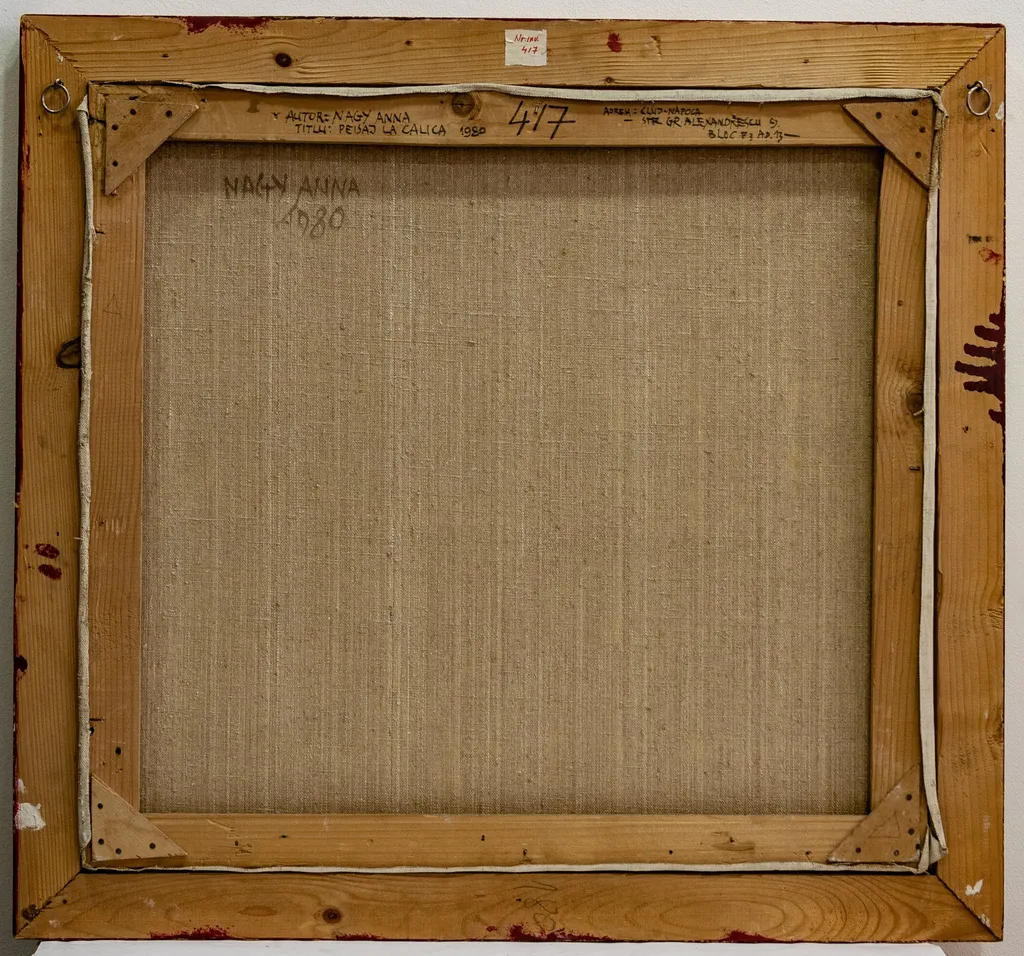
Calica ( Peisaj la Calica 1980) is an unspecified painting by Nagy Anna. It dates from 1980 and is held in the collection of the Gavrila Simion Eco-Museum Research Institute Tulcea.
About this work
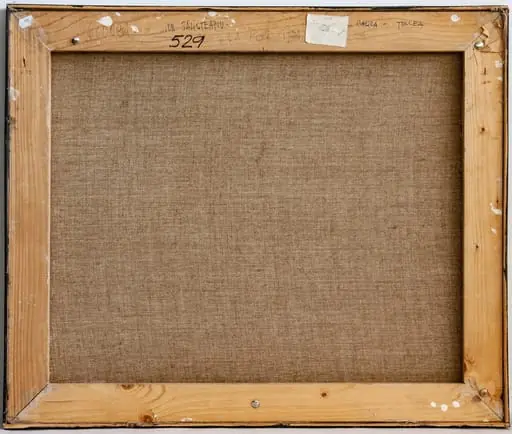
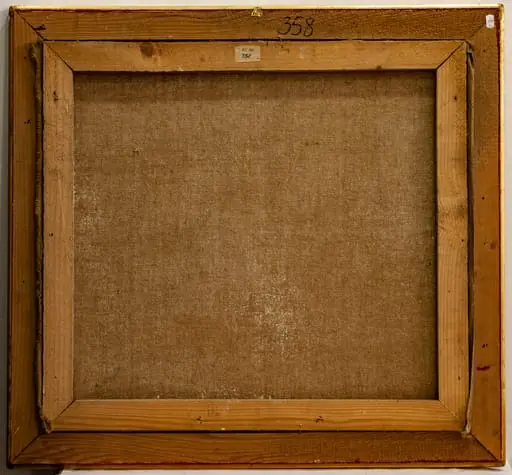
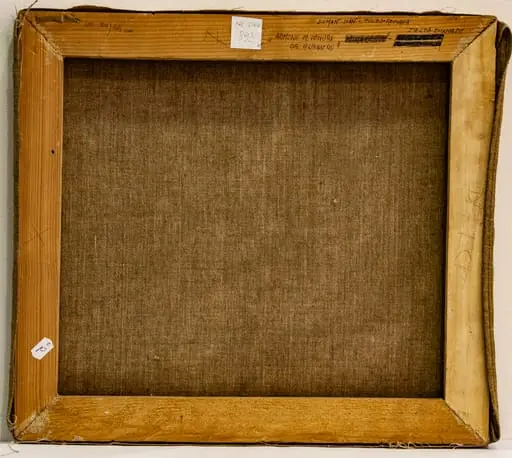
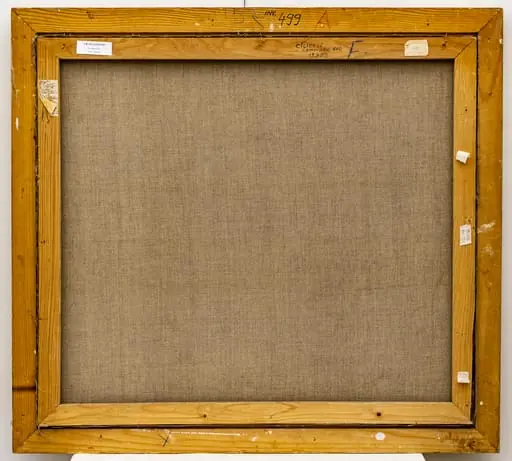
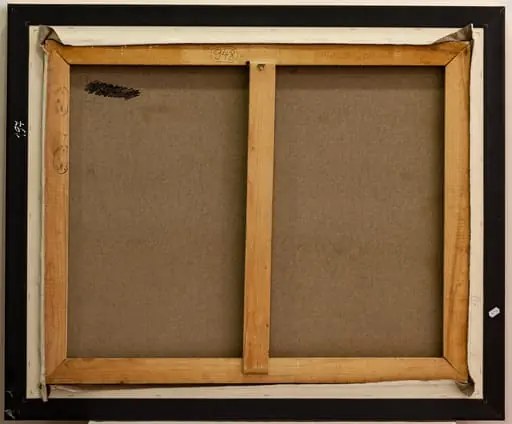
The frame is plain, with rough edges and some dried paint splatters along the bottom.
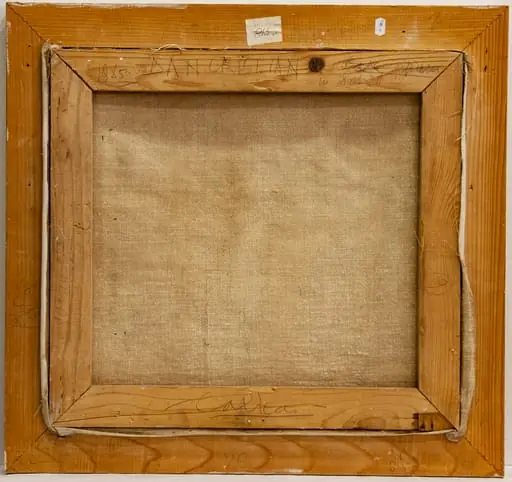
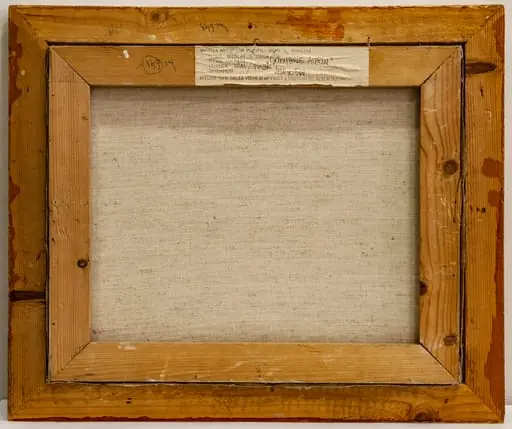
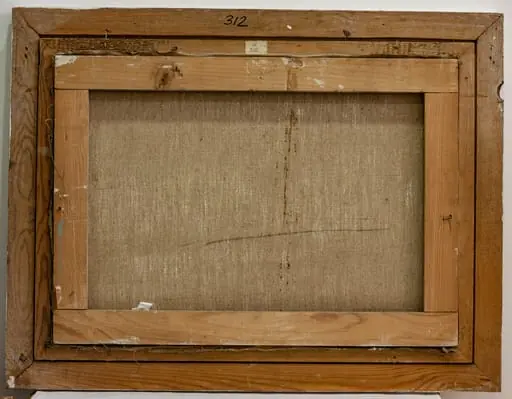
This is an empty canvas stretched over a wooden frame. The frame is plain, with rough edges and some dried paint splatters along the bottom. The canvas itself is bare, showing only the raw, textured fabric underneath.
The title on the back, *Peisaj la Calica*, hints this was meant to be a landscape. The artist’s name, Nagy Anna, is scrawled in pencil, along with the year 1980.
Look up Nagy Anna to see what else she created.
Overview
Calica (Peisaj la Calica, 1980) is an artwork by Hungarian‑Romanian artist Nagy Anna, presently in the collection of the Museum of Ethnography. The piece consists of a plain wooden stretcher supporting an unprimed canvas that remains largely untouched, exposing the raw textile surface. A few dried paint splatters appear near the lower edge, and the reverse side bears the title and the artist’s handwritten details.
Subject & Meaning
The title, *Peisaj la Calica* (Landscape at Calica), suggests an intended representation of a landscape, yet the work offers no pictorial depiction. By presenting an empty, textured surface, Nagy invites viewers to contemplate the notion of landscape as a conceptual space, perhaps alluding to the terrain of memory, place, or the materiality of the medium itself.
Technique & Style
Executed on a stretched canvas without conventional painting, the work relies on the inherent texture of the fabric and minimal accidental marks. The rough edges of the frame and the isolated splatters emphasize the object's physicality, aligning the piece with minimalist and conceptual tendencies that foreground material presence over illusionistic representation.
History & Provenance
Created in 1980, the artwork entered the Museum of Ethnography’s holdings at an unspecified date, where it remains on display. The artist’s handwritten inscription of name and date on the back provides primary documentation of its origin and authorship.
Context
During the late 1970s and early 1980s, artists in Eastern Europe explored reductive forms and the dematerialization of the art object. Nagy Anna’s *Calica* reflects this climate, engaging with ideas of absence and the reduction of visual content to challenge traditional expectations of landscape painting.
Artist & collection
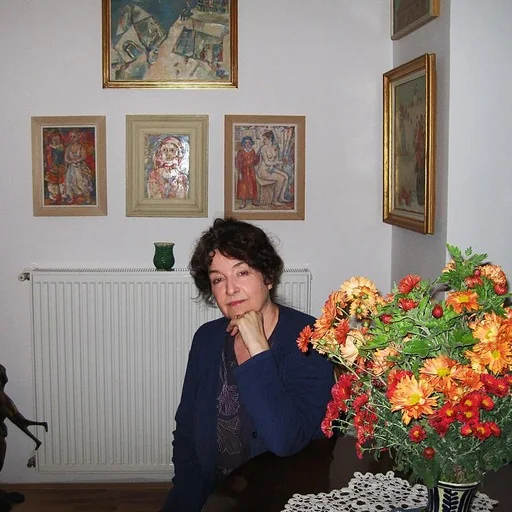
Artist
Nagy Anna painted quiet scenes from everyday life. In *Calica (Peisaj la Calica)* (1980) she shows a narrow village road lined with low houses, a pale sky overhead. The work belongs to a tradition of Hungarian rural…
Museum
Gavrila Simion Eco-Museum Research Institute Tulcea
Continue through works from the same source collection.