Artwork
The Bather
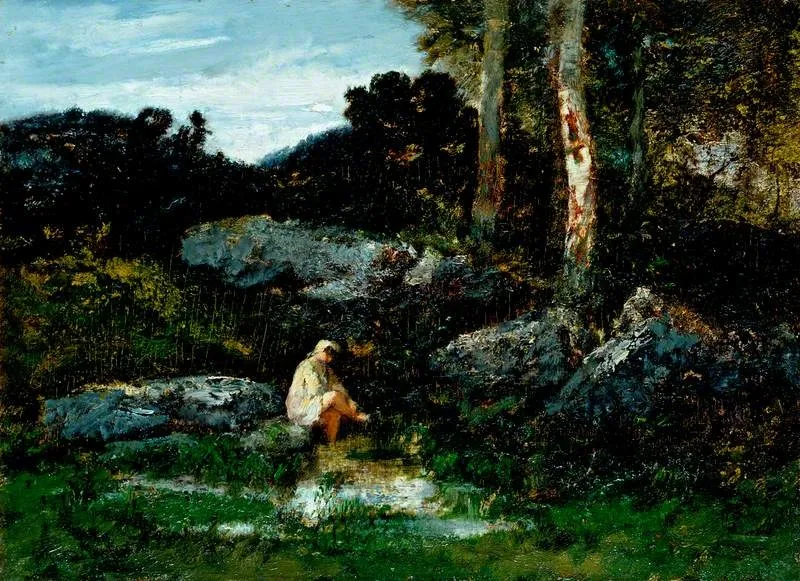
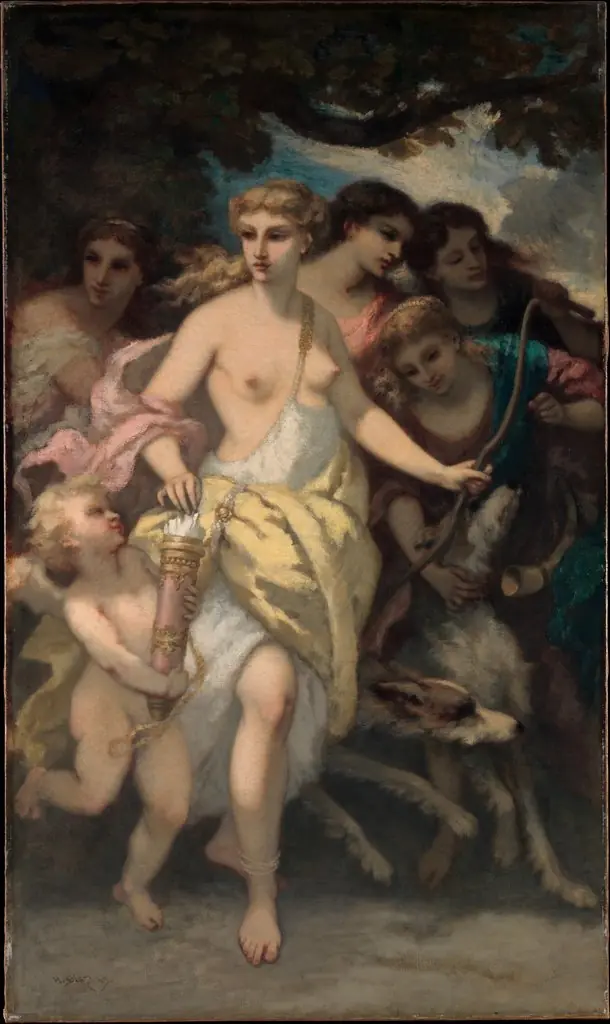
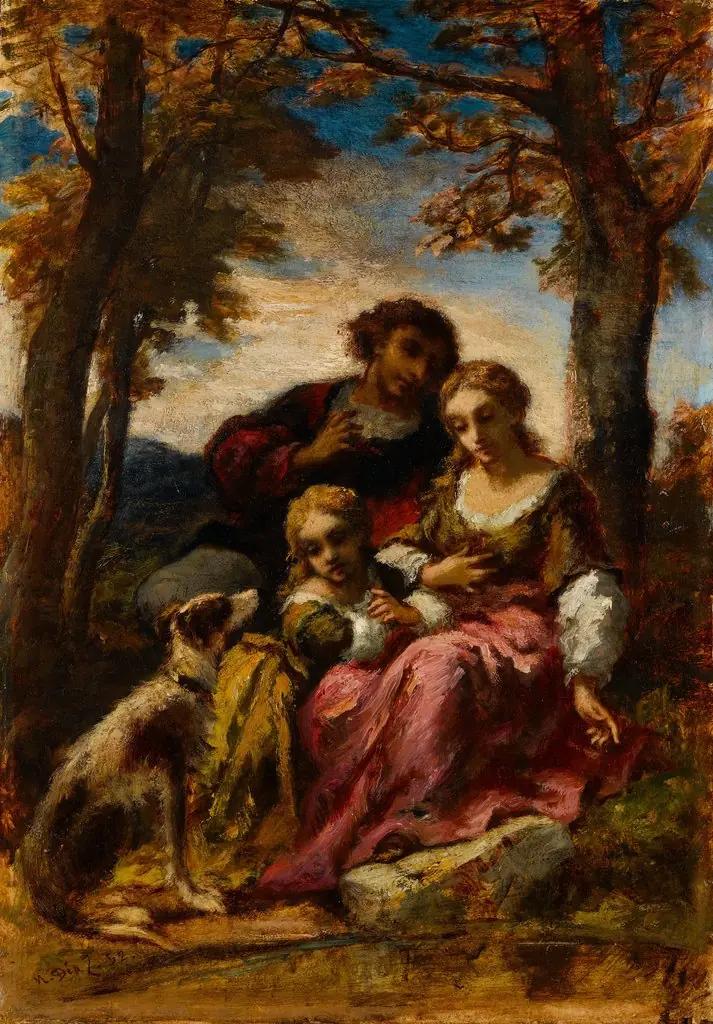
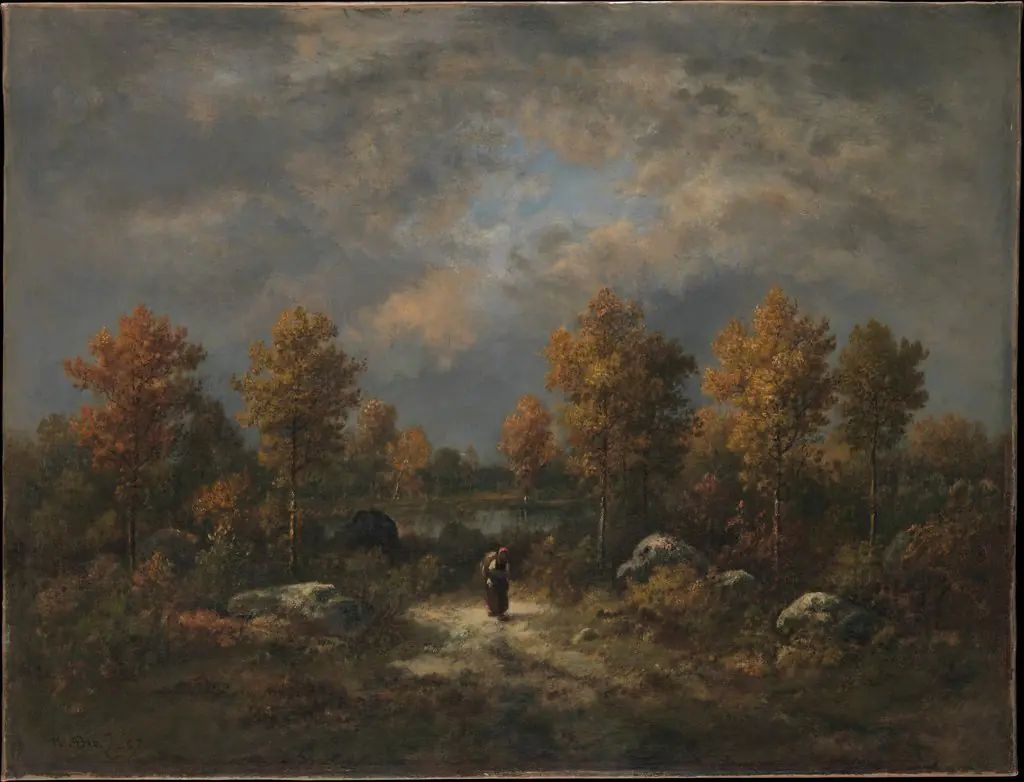
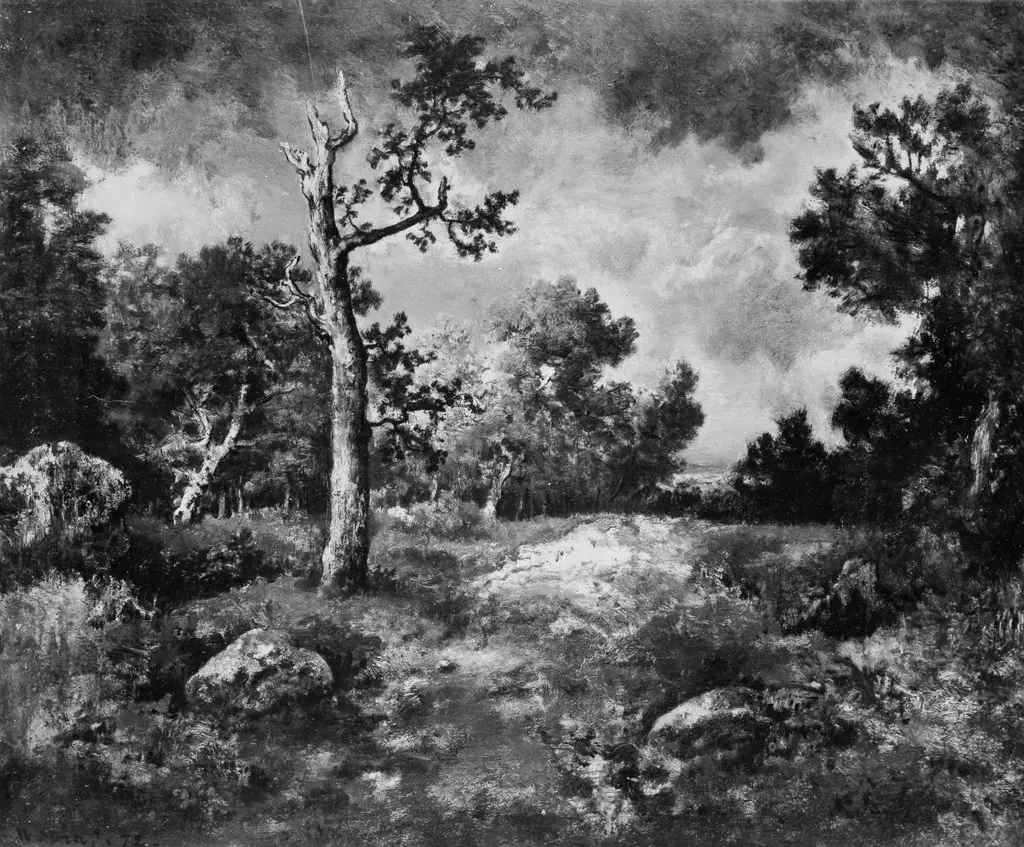
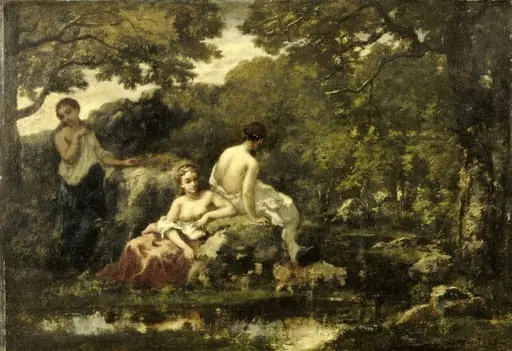
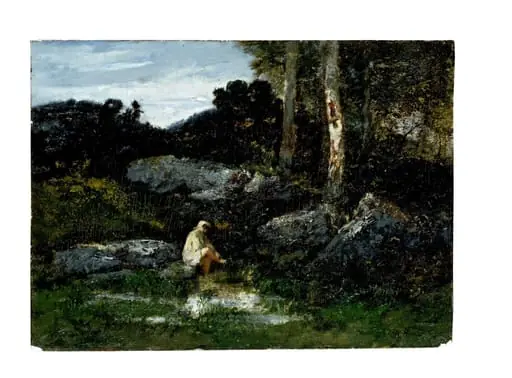
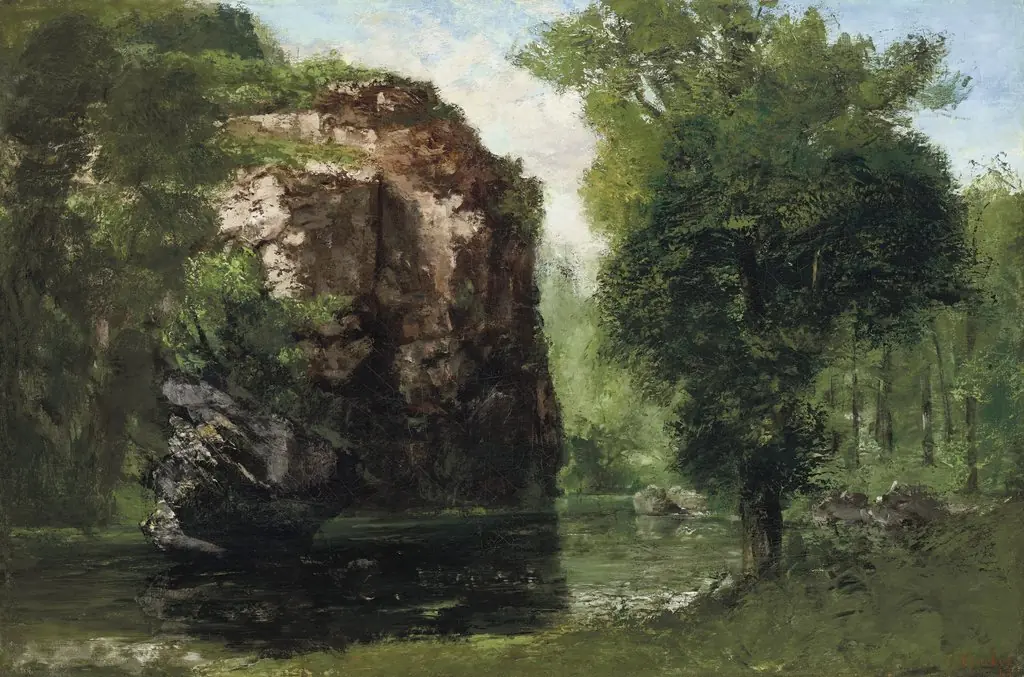
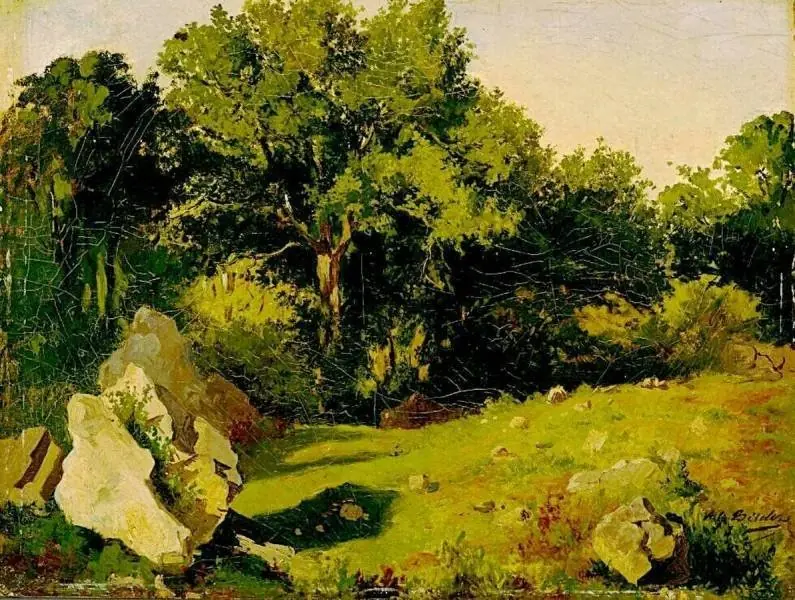
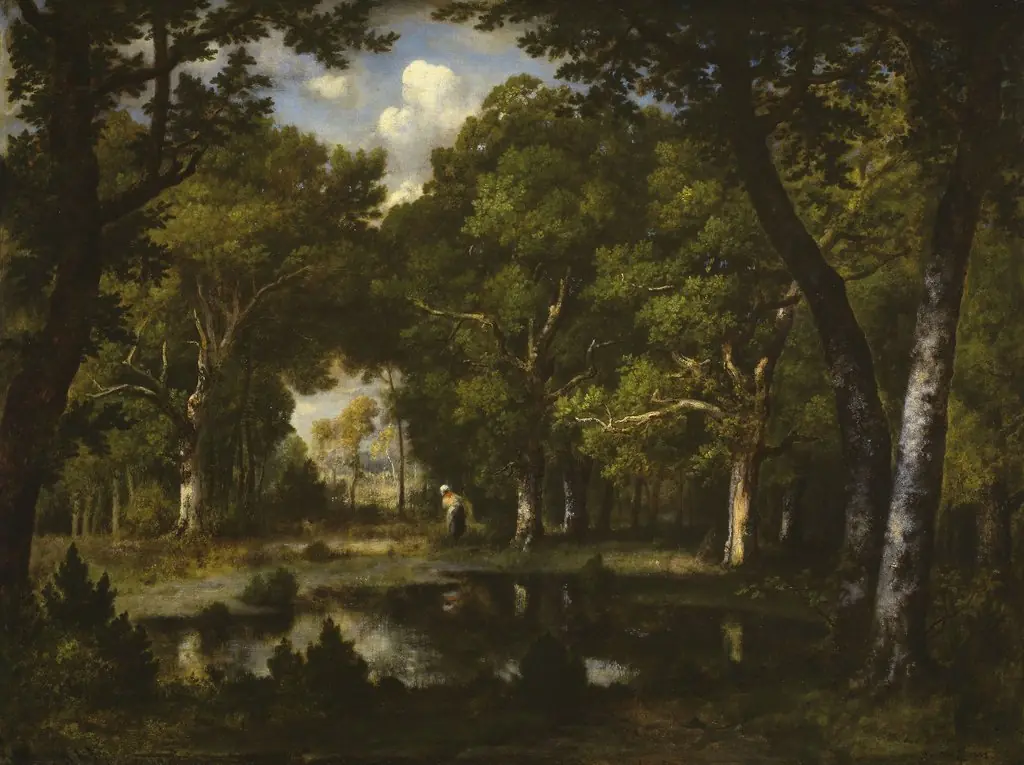
The Bather is an oil painting by Narcisse Virgilio Díaz. It dates from 1851 and is held in the collection of the Victoria and Albert Museum.
About this work
Overview
Painted around 1851, The Bather is an oil-on-canvas work by Narcisse Virgilio Díaz, depicting a solitary female figure in a natural setting.
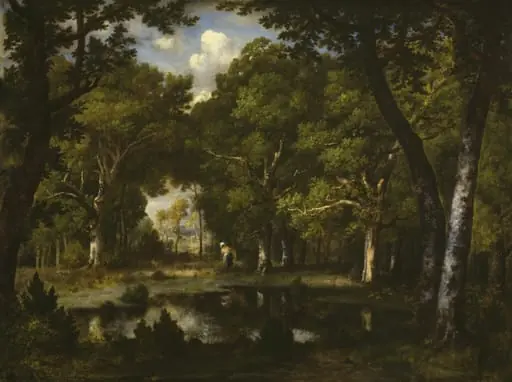
Painted around 1851, The Bather is an oil-on-canvas work by Narcisse Virgilio Díaz, depicting a solitary female figure in a natural setting. It resides in the collection of the Victoria and Albert Museum. The composition centers on a woman seated quietly on a rocky outcrop, surrounded by dense woodland and a soft, open sky. The scene conveys stillness and introspection, avoiding theatricality in favor of intimate observation.
Subject & Meaning
The figure, dressed in a loose, light-colored garment, is engaged in a private moment, her gaze directed downward. Her posture and expression suggest contemplation rather than performance, distancing the image from idealized nudes of academic tradition. The setting—unadorned, natural, and unpopulated—emphasizes solitude and quietude. The work invites reflection on personal stillness within nature, without narrative or symbolic embellishment.
Technique & Style
Díaz employed glazing techniques to build subtle shifts in tone and luminosity, particularly in the fabric of the dress and the dappled light filtering through trees. Layers of thin, transparent pigment create a soft diffusion of color, enhancing the atmospheric quality of the scene. Brushwork remains restrained, favoring smooth transitions over defined contours, aligning with the Barbizon School’s emphasis on naturalistic light and mood.
History & Provenance
Created in the early 1850s, the painting entered the Victoria and Albert Museum’s collection through established institutional acquisitions of 19th-century French art. Its provenance reflects the museum’s broader interest in capturing the evolution of landscape and figure painting during the period. No significant alterations or documented restorations are recorded, preserving its original tonal harmony and surface integrity.
Context
Díaz was associated with the Barbizon School, a group of artists who rejected studio idealism in favor of painting outdoors and observing rural life. The Bather aligns with their ethos: a quiet, unidealized engagement with nature. While contemporaries like Rousseau focused on dense forests, Díaz’s composition emphasizes openness and stillness, reflecting a personal variation within the movement’s broader aims.
Legacy
The Bather exemplifies a quieter strand of 19th-century French painting, one that prioritized mood over drama. Though less widely known than major works of the period, it contributes to understanding how artists like Díaz expanded the expressive potential of landscape and figure studies. Its presence in a major museum underscores its role in documenting the shift toward intimate, naturalistic representation in European art.
Artist & collection
Artist
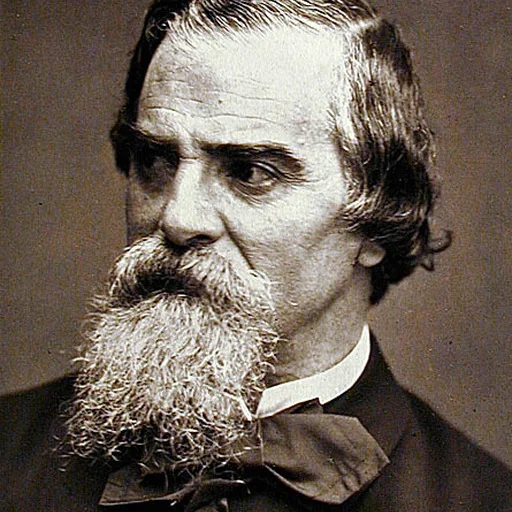
Narcisse Virgilio Díaz (1807–1876) was a French artist, born in Bordeaux.