Artwork
The Bather
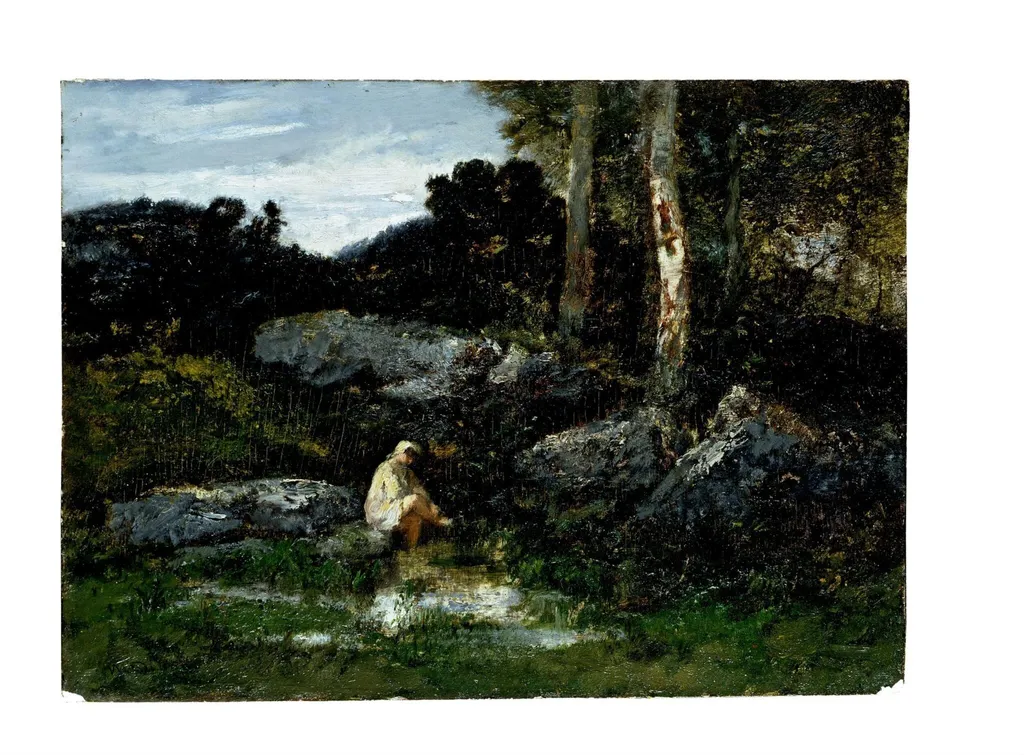
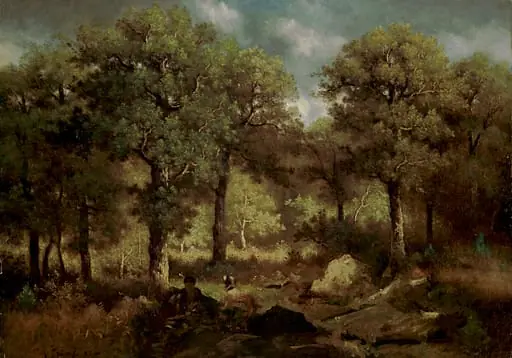
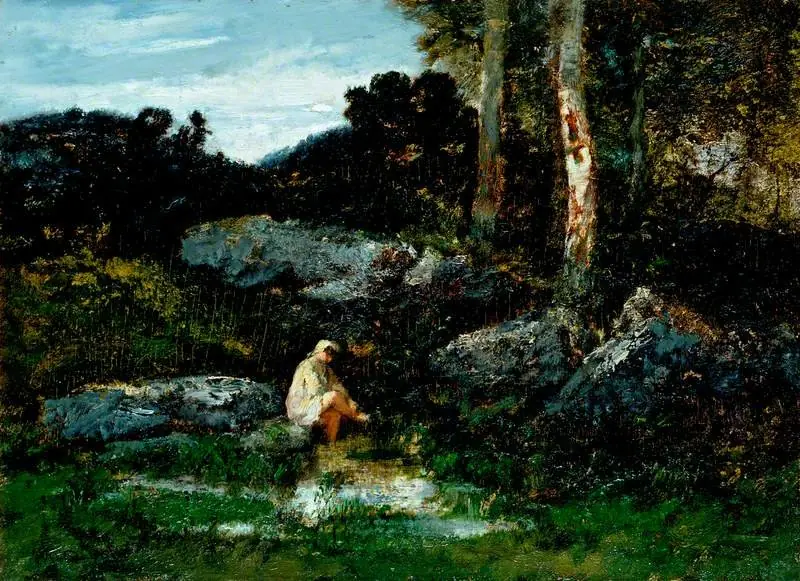
The Bather is an oil painting by the Impressionist artist Narcisse Virgile Diaz de la Peña. It dates from 1850 and is held in the collection of the Victoria and Albert Museum.
About this work
This oil painting shows a woman by a stream, washing her feet. Diaz de la Peña painted it after 1850, during the overlap of Impressionism and Realism.
He started in porcelain work before training with François Souchon. Later he befriended Barbizon artists like Daumier and Rousseau. By the end of his life, younger painters already saw him as an influence.
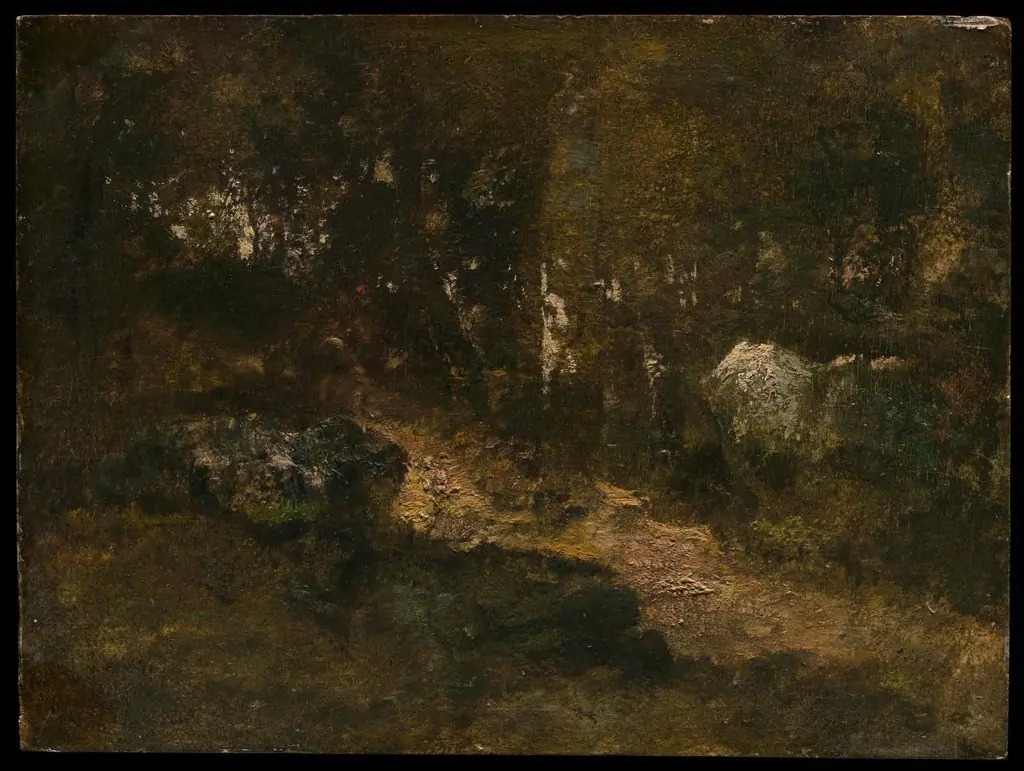
See a landscape by Théodore Rousseau next.
Overview
The Bather is an oil painting by Narcisse-Virgile Diaz de la Peña, created after 1850. It depicts a barefoot woman washing her feet in a stream, set against a dominant rocky landscape.
Subject & Meaning
The painting focuses on a serene, everyday moment of a woman tending to her personal hygiene in a natural setting, emphasizing the harmony between the figure and the landscape.
Technique & Style
Characterized by a luminous palette and broken brushwork, the painting exemplifies the Barbizon school’s emphasis on capturing light effects through decomposed color schemes.
History & Provenance
Diaz de la Peña, who transitioned from porcelain painting to fine art under François Souchon, created this work during a period when his style was influencing the upcoming Impressionist generation.
Context
Painted during the overlap of Realism and the emergence of Impressionism, The Bather reflects Diaz de la Peña's connections to both the Barbizon school (associates included Daumier and Rousseau) and his later admiration by younger, Impressionist-leaning artists.
Own this work as a print
Artist & collection
Artist
Narcisse Virgile Diaz de la Peña
Narcisse Virgile Diaz de la Peña painted lush forest scenes and mythological figures with a loose, glowing touch.