Artwork
Venus and Cupid (II)
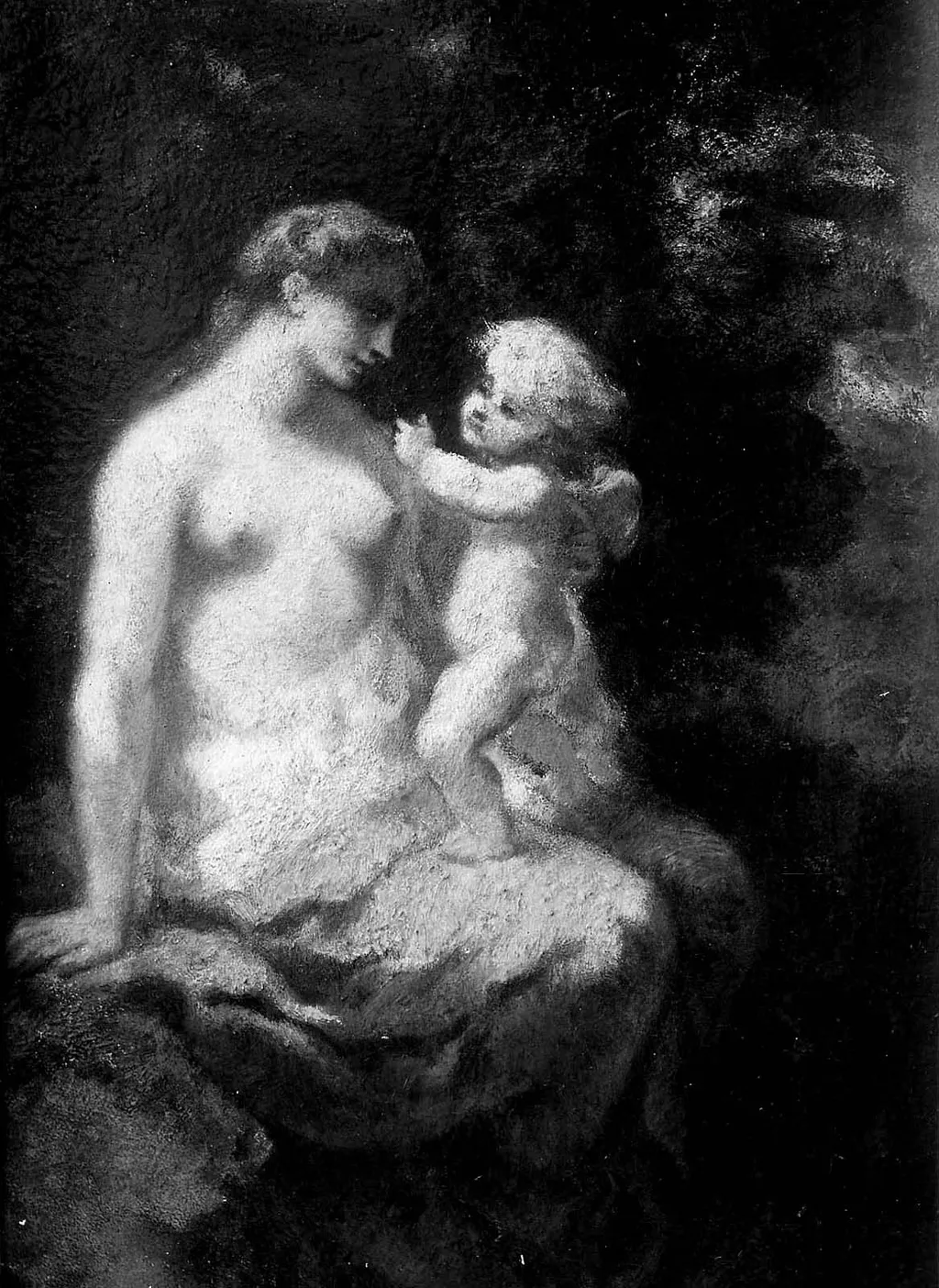
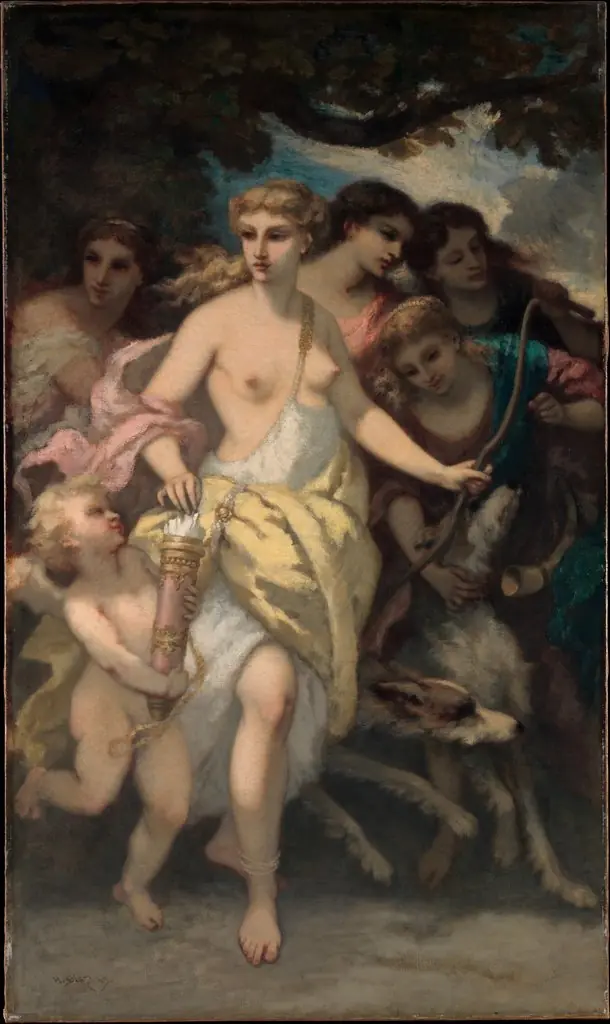
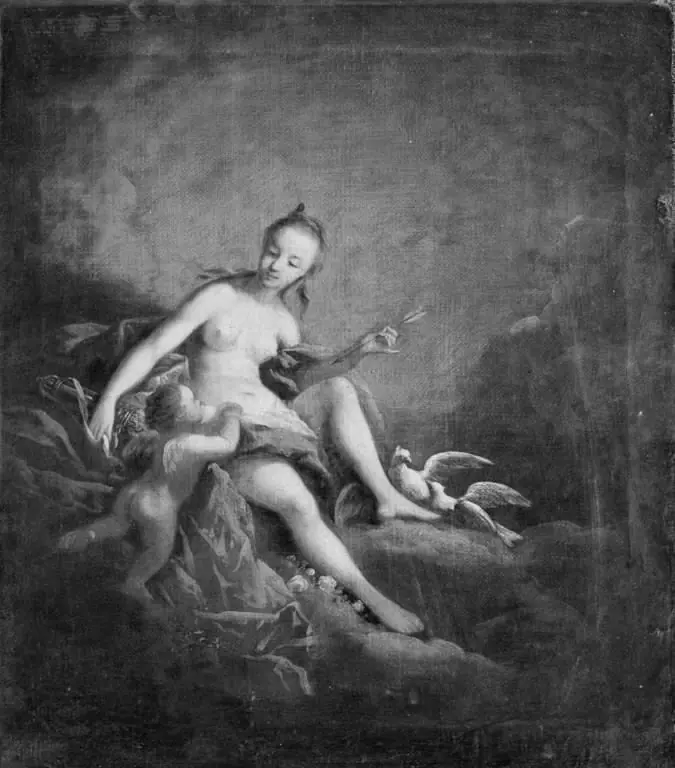
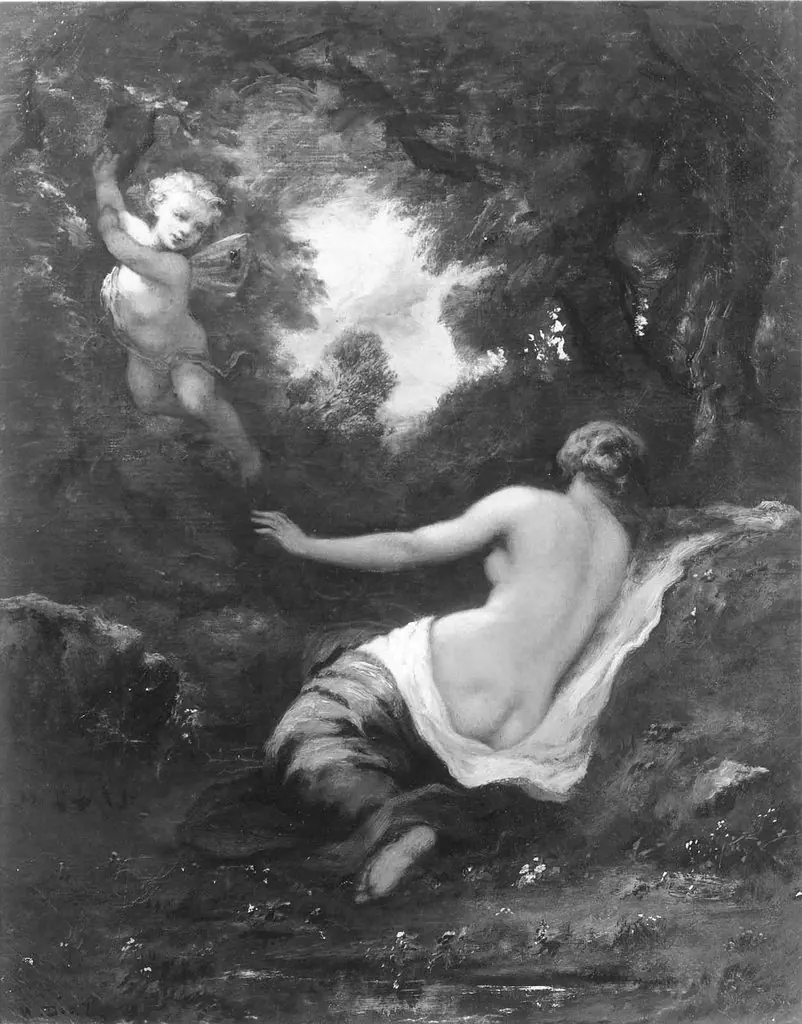
Venus and Cupid (II) is an unspecified painting by Narcisse Virgilio Díaz. It dates from 1847 and is held in the collection of the Museum of Fine Arts Boston.
About this work
Overview
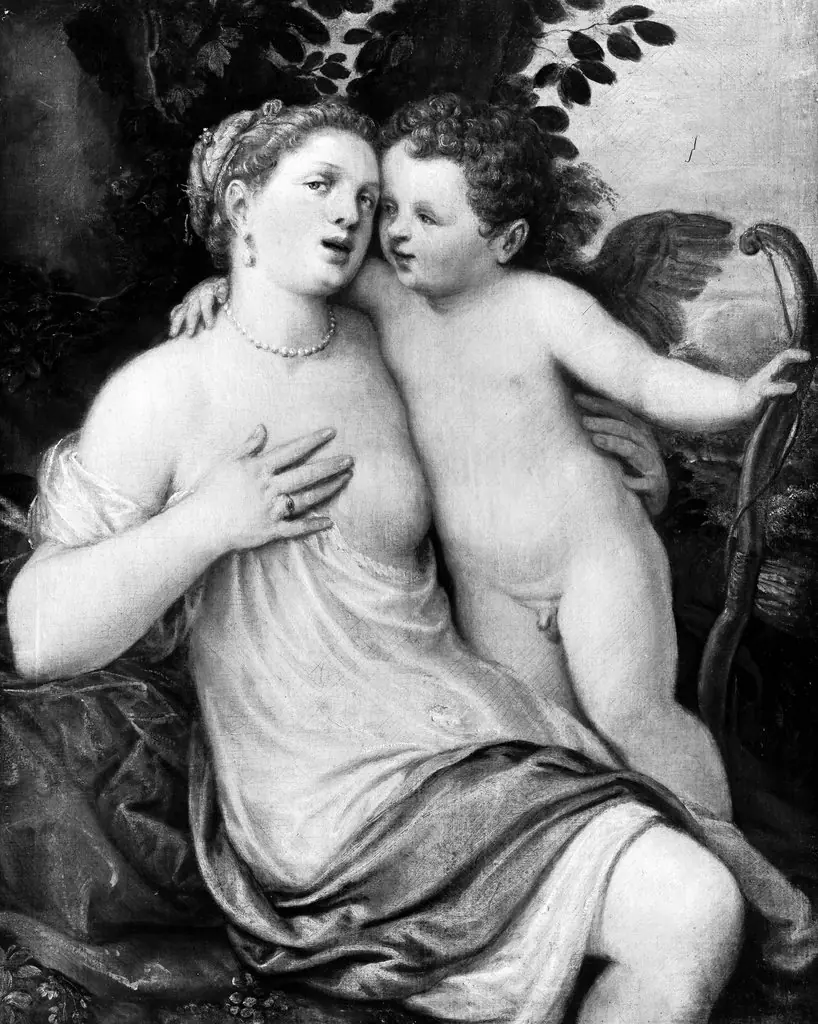
Created in 1847 by French painter Narcisse Virgilio Díaz, this oil work titled *Venus and Cupid (II)* presents a nocturnal scene in which the goddess and her son share an intimate moment. The canvas is part of the collection at the Museum of Fine Arts in Boston, where it is displayed among other 19th‑century academic pieces.
Subject & Meaning
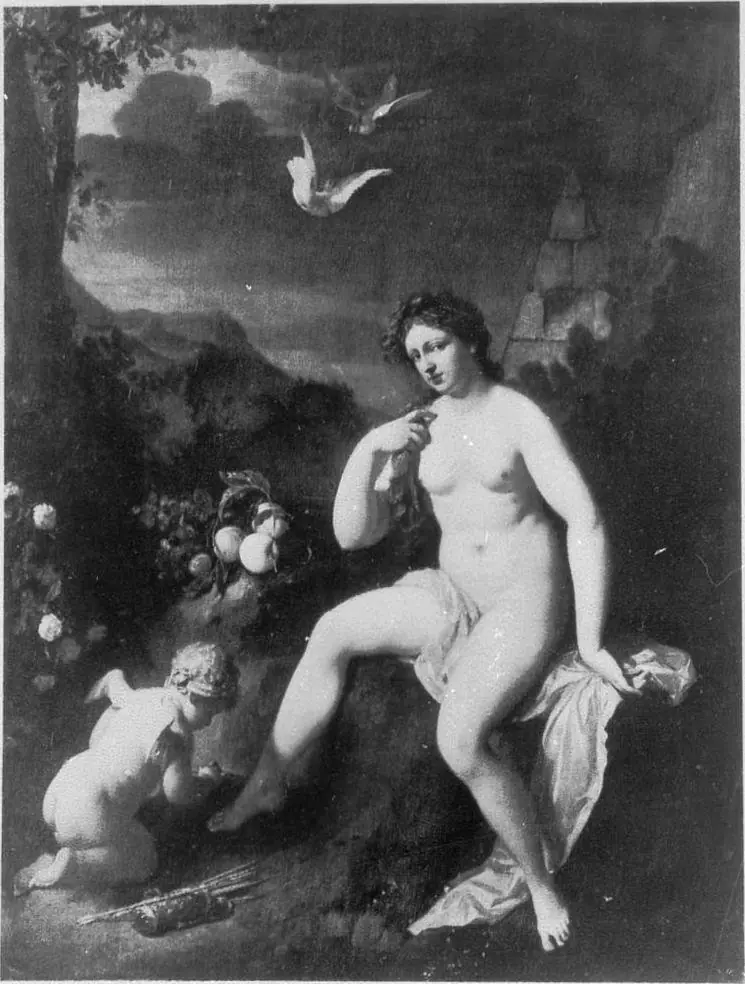
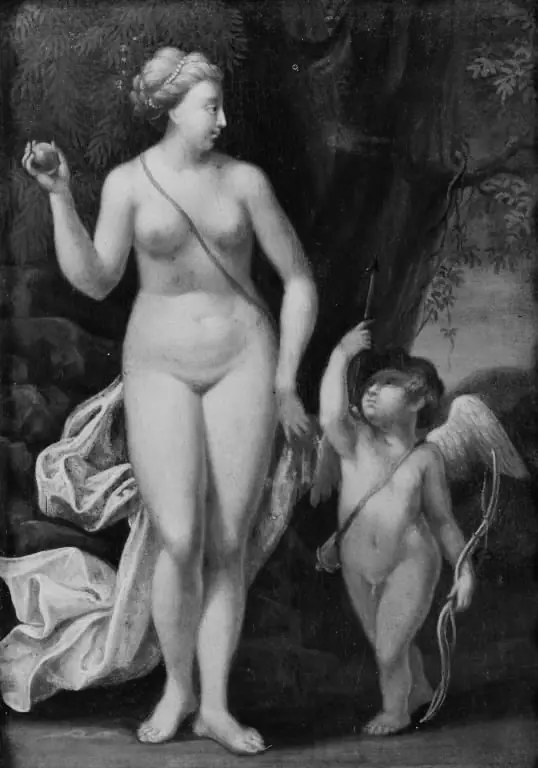
The composition centers on a nude Venus cradling a small child, identified as Cupid, on her lap. Their close physical proximity suggests a tender maternal bond, while the mythological identification invites contemplation of love’s origins and the divine lineage that links the goddess of beauty to the god of desire.
Technique & Style
Díaz employs a dramatic chiaroscuro, allowing the illuminated skin of the figures to emerge from a deep, shadowed backdrop. Brushstrokes are notably fluid and at times appear softened, giving the flesh a luminous quality that contrasts with the surrounding darkness. The treatment of form emphasizes the rounded, voluptuous contours of Venus against the more modest silhouette of the child.
History & Provenance
After its completion, the painting entered the European art market before being acquired by the Museum of Fine Arts, Boston, where it has remained in the permanent collection. Its provenance reflects the 19th‑century fascination with classical themes and the popularity of academic painters who catered to collectors seeking mythological subjects.
Context
*Venus and Cupid (II)* belongs to the Romantic‑Academic tradition that flourished in mid‑century France, a period when artists often revisited antiquity to explore sensuality and emotion. Díaz, a member of the Barbizon circle, merged the movement’s naturalistic sensibility with the idealized forms of classical mythology, situating the work at the intersection of landscape‑influenced technique and studio‑based narrative painting.
Artist & collection
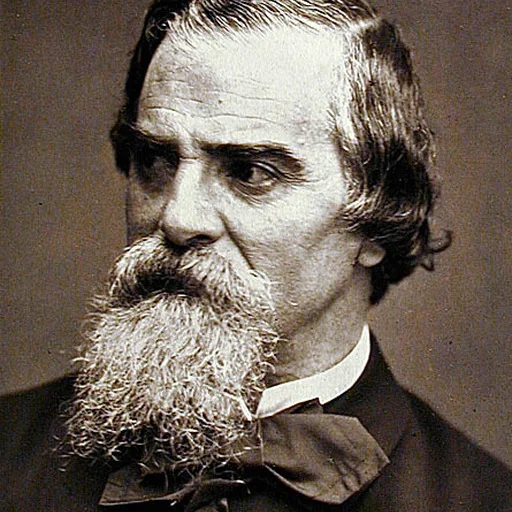
Artist
Narcisse Virgilio Díaz (1807–1876) was a French artist, born in Bordeaux.