Artwork
Small Drawing Room, Levens, Westmorland
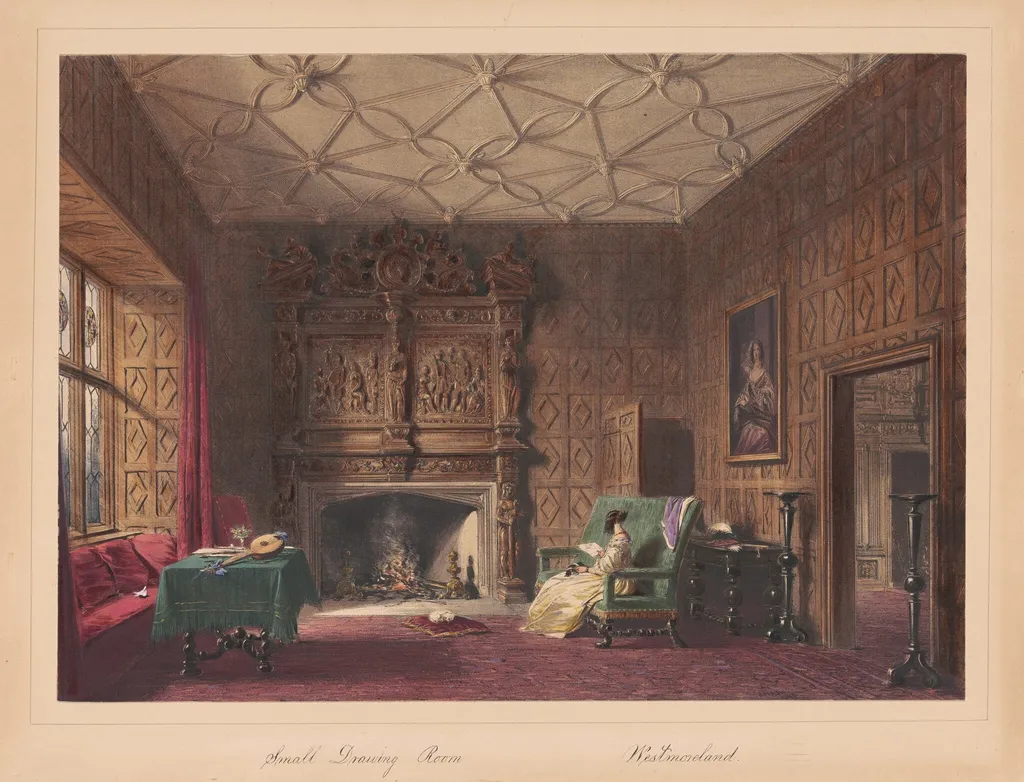
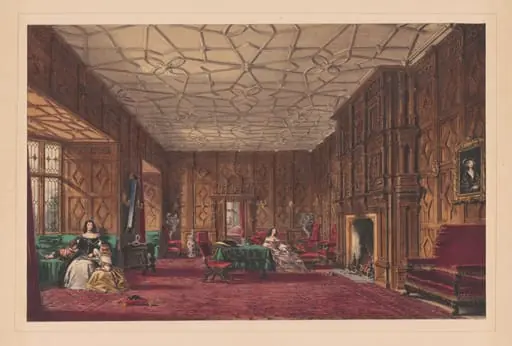
Small Drawing Room, Levens, Westmorland is an ink print by the Romanticist artist Joseph Nash. It dates from 1849 and is held in the collection of the National Gallery of Art.
About this work
Overview
Created in 1849, this hand-colored lithograph by Joseph Nash captures the interior of a modest drawing room at Levens Hall in Westmorland.
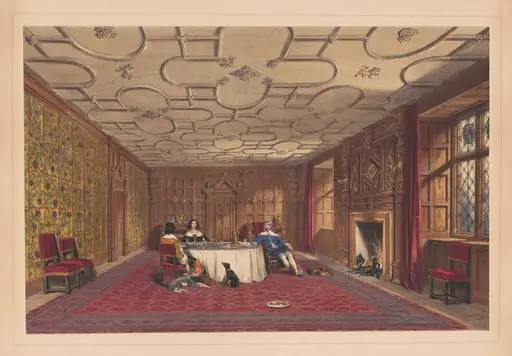
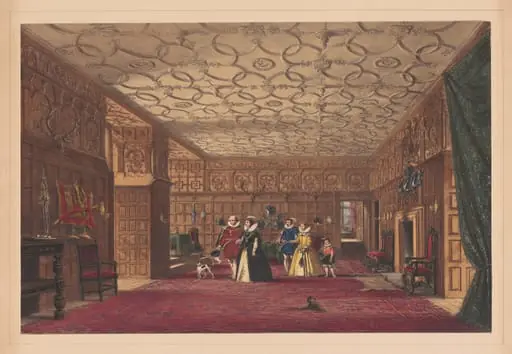
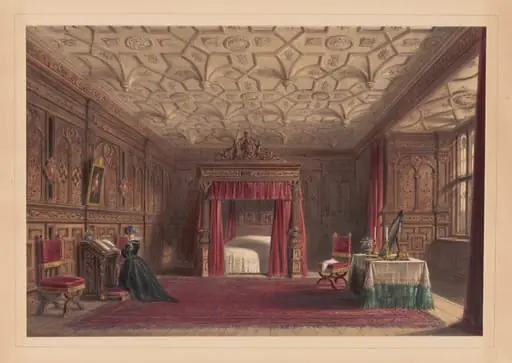
Created in 1849, this hand-colored lithograph by Joseph Nash captures the interior of a modest drawing room at Levens Hall in Westmorland. It was produced as part of his four-volume series documenting historic English country houses, published between 1839 and 1849. The work combines precise architectural observation with delicate color application, typical of Nash’s method in translating watercolor studies into printed form on wove paper mounted to board.
Subject & Meaning
The scene depicts a quiet, lived-in interior centered on a woman reading by the fireplace, surrounded by period furnishings: a green-upholstered chair, a draped table, and a red couch. Wooden paneling and an ornate ceiling suggest a space of refined domesticity. The portrait above the fireplace hints at familial continuity. The composition emphasizes intimacy and order, reflecting a cultural interest in preserving the character of aristocratic interiors during a time of rapid social change.
Technique & Style
Nash employed lithography to reproduce detailed architectural elements, then applied color by hand to enhance texture and atmosphere. The rendering of wood grain, fabric folds, and ceiling moldings shows careful observation. The palette is restrained yet warm, with muted greens, reds, and browns reinforcing the room’s coziness. The style blends topographical accuracy with a gentle romantic sensibility, avoiding theatricality in favor of quiet realism.
History & Provenance
The print originated as plate 32 in Nash’s *Mansions of England in the Olden Time*, a project commissioned to record the architectural heritage of England’s historic homes. Levens Hall, a Tudor-era estate, was one of many sites visited and sketched by Nash before lithographic reproduction. The work was likely distributed to subscribers of the series, and its current mounting on board suggests later conservation to preserve the fragile paper.
Context
Produced during the Victorian era, the image responds to a growing antiquarian interest in preserving England’s architectural past amid industrialization. Nash’s series aligned with broader efforts by scholars and collectors to document pre-industrial domestic life. Unlike grand historical paintings, this work focuses on the ordinary elegance of private spaces, reflecting a shift toward valuing the intimate and the everyday in cultural memory.
Legacy
Nash’s lithographs remain valuable records of 19th-century interior design and country house culture. While not widely exhibited today, his work continues to inform architectural historians and conservationists studying the evolution of domestic spaces. The *Mansions* series, including this piece, stands as a systematic visual archive, offering insight into how middle- and upper-class households presented themselves in the decades before modernization transformed English interiors.
Artist & collection
Artist
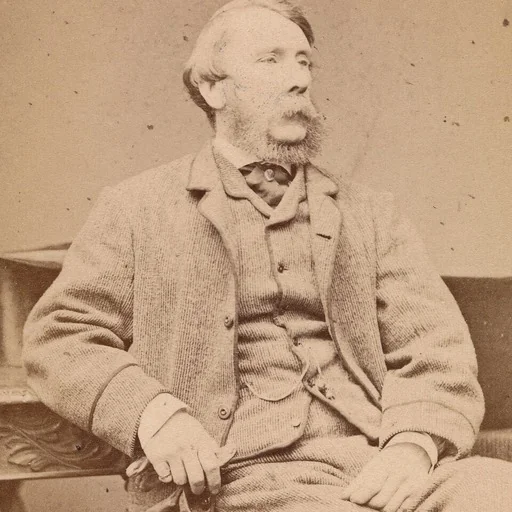
Joseph Nash (17 December 1809 – 19 December 1878) was an English watercolour painter and lithographer, specialising in historical buildings. His major work was the 4-volume Mansions of England in the Olden Time, published from 1839–49.

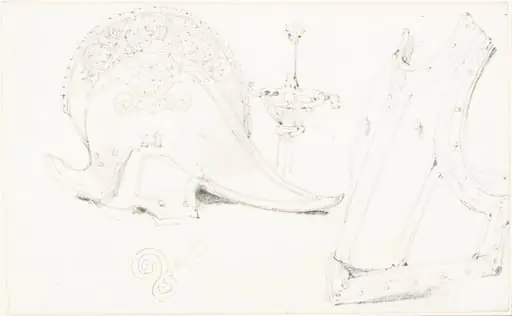 Study of a Helmet, Breastplate, and Rapier
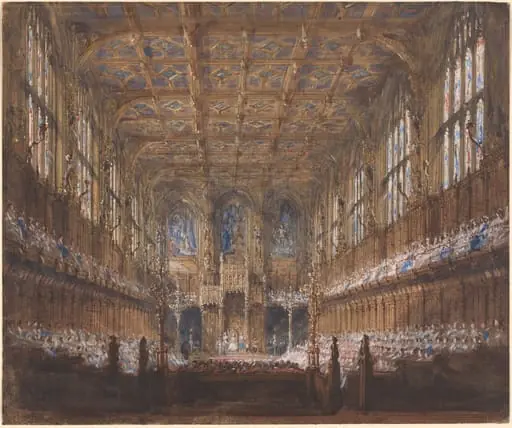 The State Opening of Parliament in the Rebuilt House of Lords
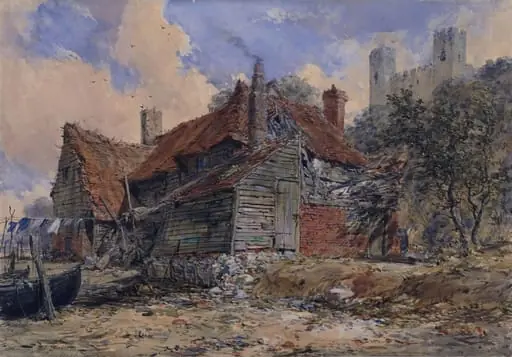 Rochester
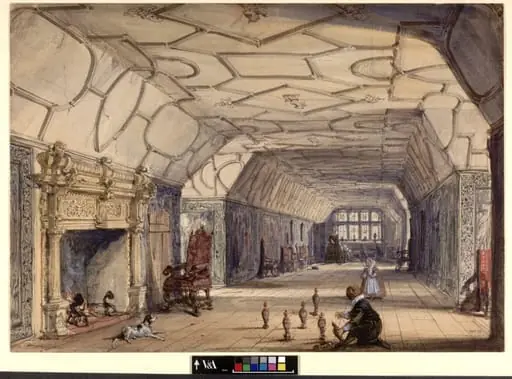 The gallery at Knole House, near Sevenoaks
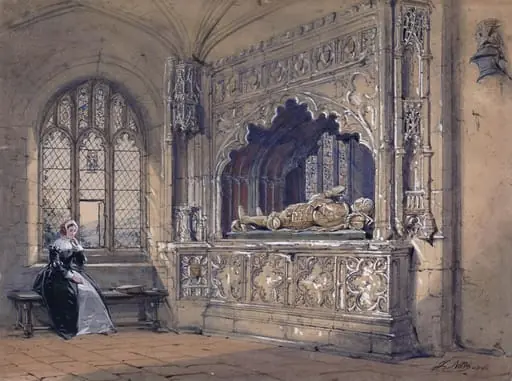 The supposed tomb of Thomas Fiennes, in Herstmonceux Church, Sussex, looking south-east from the North Chapel
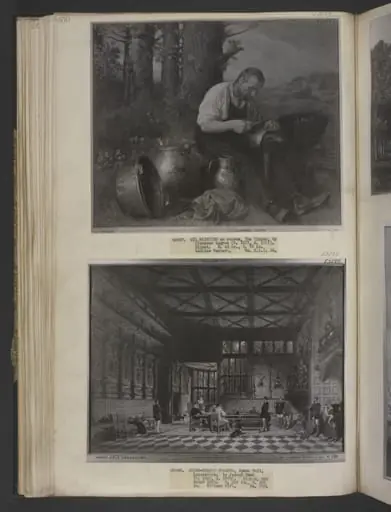 Speke Hall, Lancashire
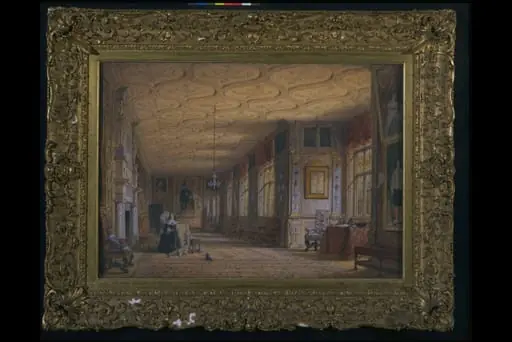 The Cartoon Gallery at Knole
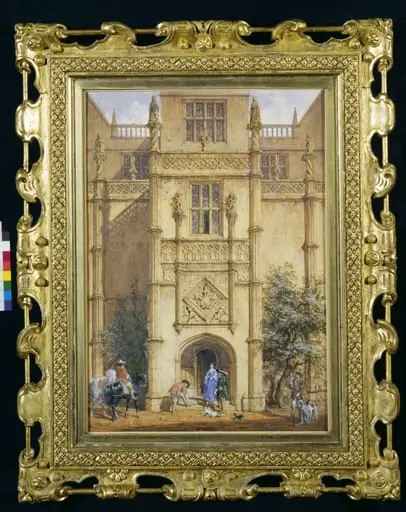 The Porch at Montacute House, Somerset