Artwork
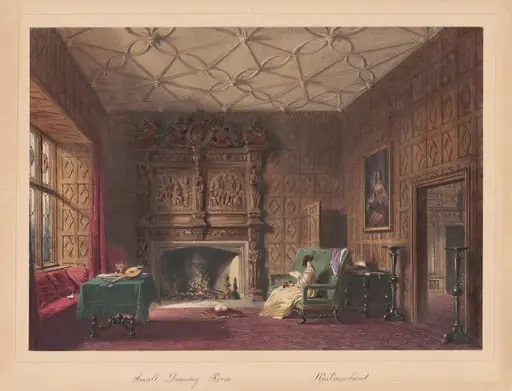
The Drawing Room, Levens, Westmorland
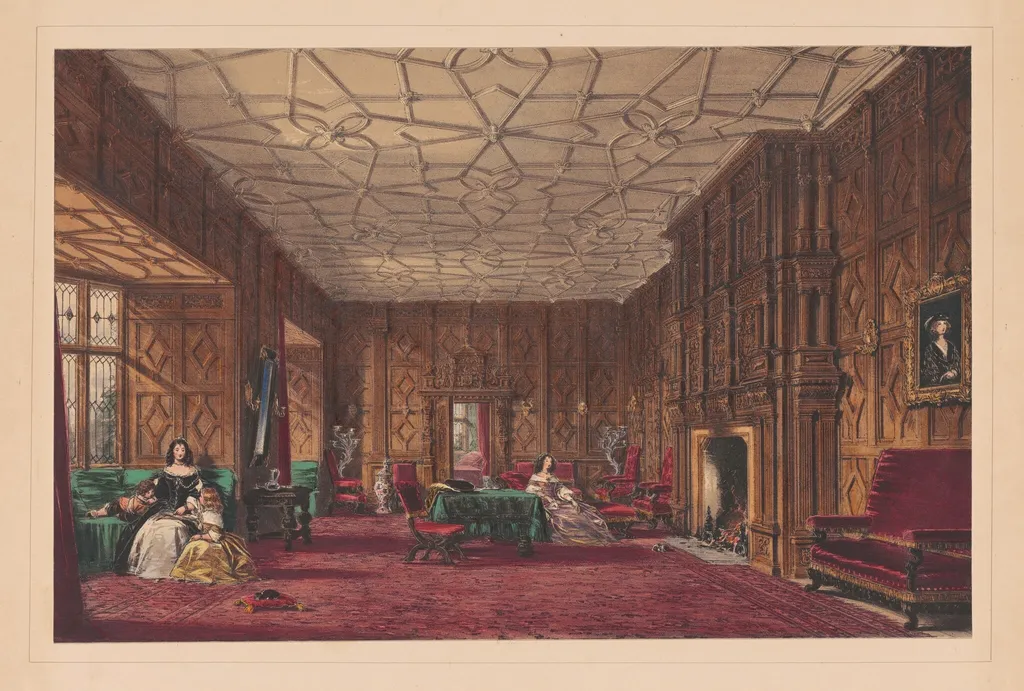
The Drawing Room, Levens, Westmorland is an ink print by the Romanticist artist Joseph Nash. It dates from 1849 and is held in the collection of the National Gallery of Art.
About this work
Overview
The work reflects a deliberate effort to record architectural detail through print, blending topographical accuracy with subtle atmospheric tone.
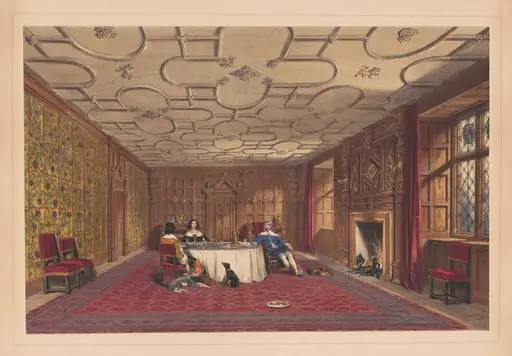
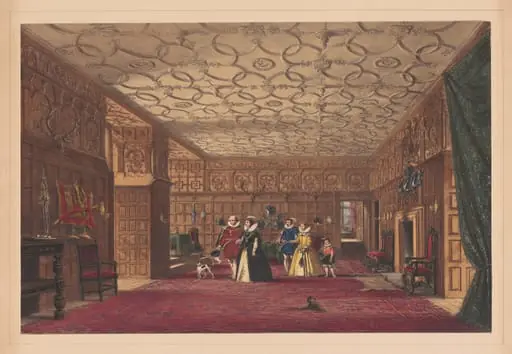
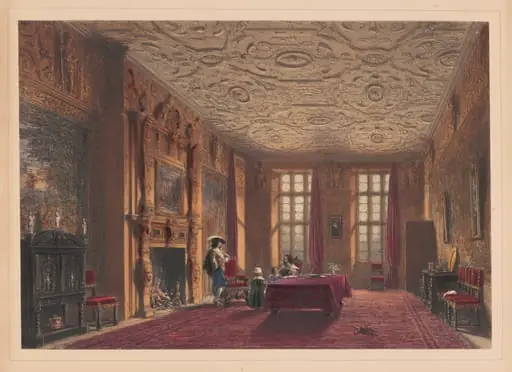
Created in 1849, this hand-colored lithograph by Joseph Nash captures the interior of a 17th-century drawing room at Levens Hall in Westmorland. Executed on wove paper and mounted to board, it forms part of Nash’s four-volume series documenting historic English country houses. The work reflects a deliberate effort to record architectural detail through print, blending topographical accuracy with subtle atmospheric tone.
Subject & Meaning
The scene depicts a quiet, formal interior inhabited by three women and a child, their presence suggesting domestic continuity within a historic space. Furnishings—red chairs, a green sofa, a carved wooden paneling, and a red carpet—emphasize inherited luxury. The stillness of the figures and the richness of the decor imply a reverence for tradition, positioning the room as a vessel of familial and cultural memory rather than a stage for activity.
Technique & Style
Nash employed lithography with careful hand-coloring to achieve depth and texture, enhancing the wood paneling, fabric surfaces, and architectural moldings. The composition is balanced and frontal, drawing attention to symmetry and ornamentation. Light enters from the left window, casting soft shadows that model the room’s surfaces without dramatic contrast, reinforcing a sense of quiet observation over theatricality.
History & Provenance
The print was produced as Plate 12 in Nash’s *Mansions of England in the Olden Time*, a project spanning a decade and commissioned to preserve the appearance of aristocratic interiors before modernization. Levens Hall, still standing, was among the few properties whose interiors remained largely unaltered, making it a favored subject for Nash’s documentation. The work was distributed to subscribers of the series, primarily collectors and antiquarians.
Context
Produced during a period of rapid industrial change, Nash’s project responded to growing concern over the loss of historic architecture. His focus on interiors aligned with Romantic-era interests in the past, though his approach was more archival than emotional. Unlike painters who idealized ruins, Nash recorded intact spaces with precision, contributing to early efforts in architectural conservation.
Legacy
Nash’s lithographs, including this one, became reference points for later historians and restorers of historic houses. While not widely exhibited in his lifetime, the series influenced 19th-century perceptions of English domestic heritage. Today, the work remains a valuable record of pre-Victorian interior design and the material culture of the English gentry.
Artist & collection
Artist
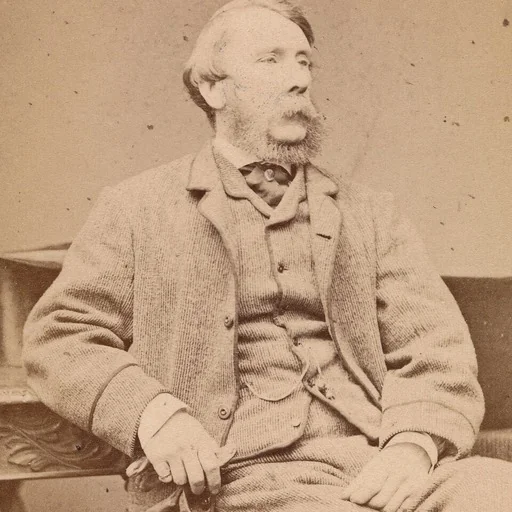
Joseph Nash (17 December 1809 – 19 December 1878) was an English watercolour painter and lithographer, specialising in historical buildings. His major work was the 4-volume Mansions of England in the Olden Time, published from 1839–49.

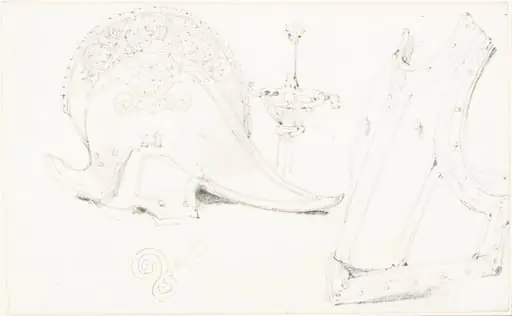 Study of a Helmet, Breastplate, and Rapier
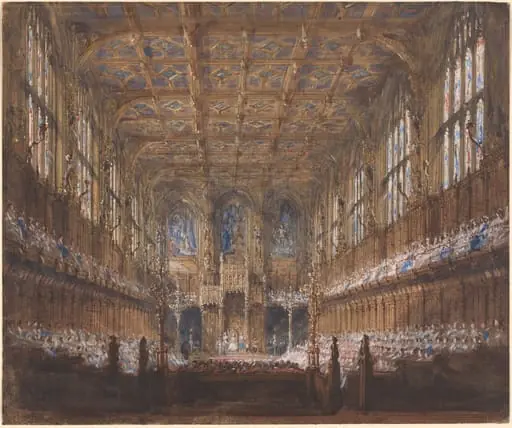 The State Opening of Parliament in the Rebuilt House of Lords
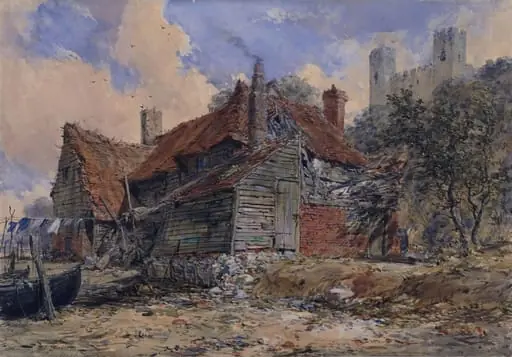 Rochester
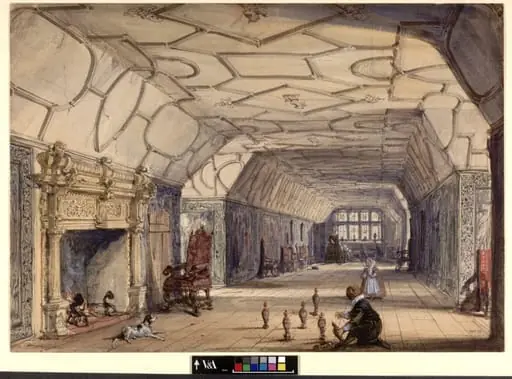 The gallery at Knole House, near Sevenoaks
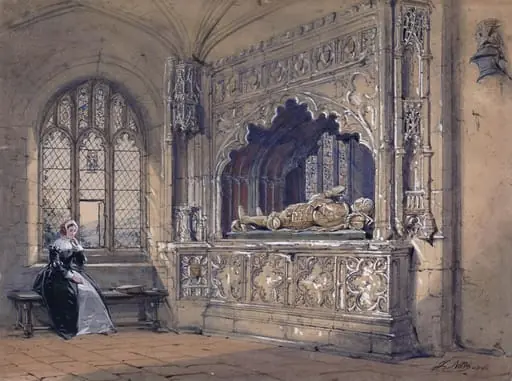 The supposed tomb of Thomas Fiennes, in Herstmonceux Church, Sussex, looking south-east from the North Chapel
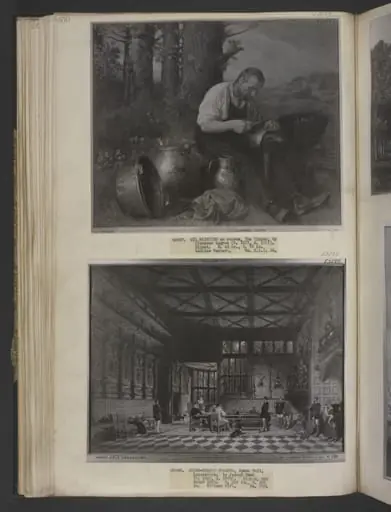 Speke Hall, Lancashire
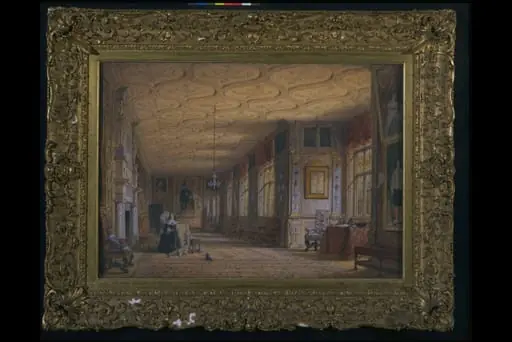 The Cartoon Gallery at Knole
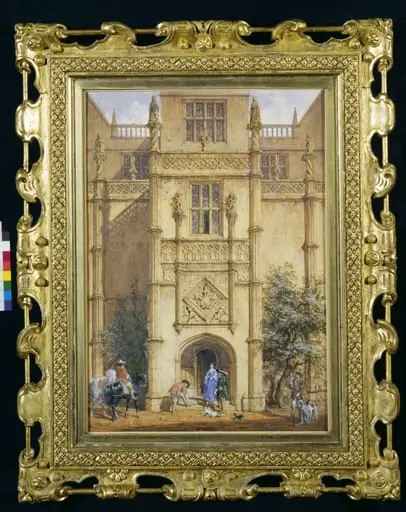 The Porch at Montacute House, Somerset