Artwork
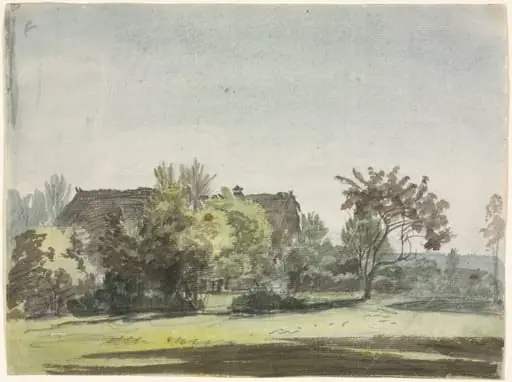
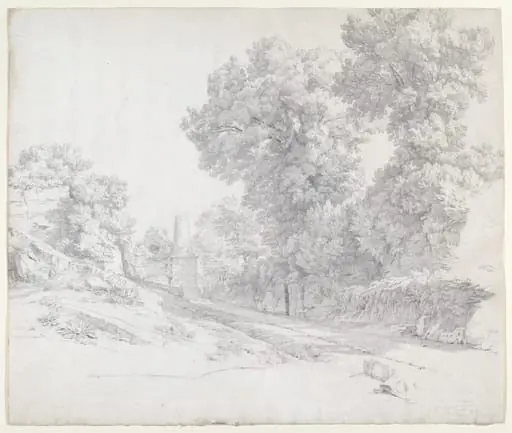
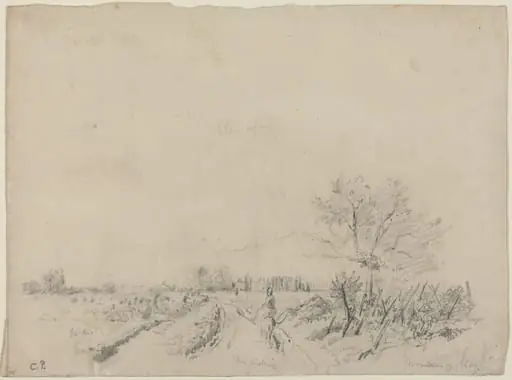
A Road through a Country Village
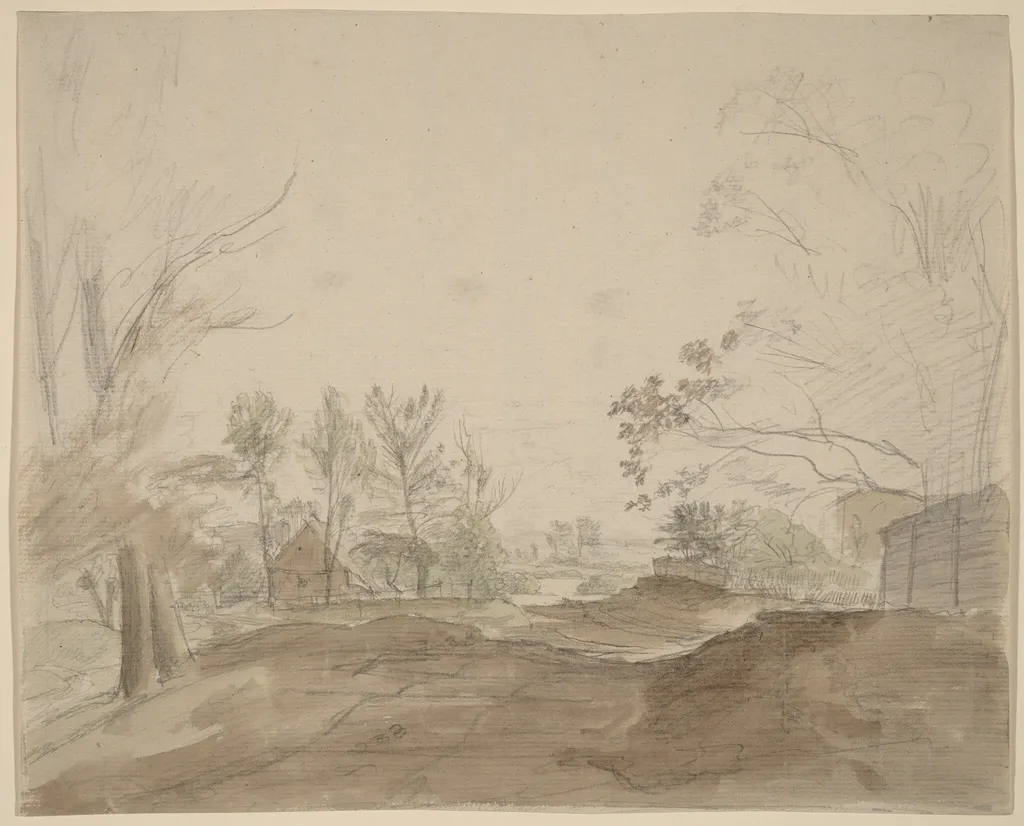
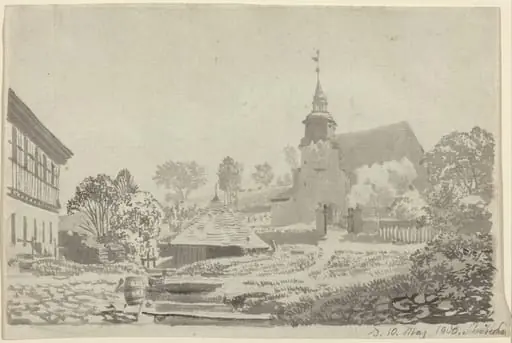
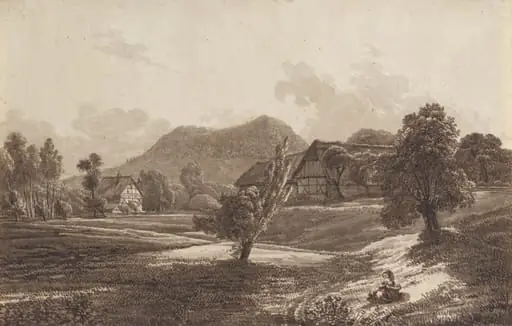
A Road through a Country Village is a graphite drawing by the Romanticist artist Christoph Nathe. It dates from 1790 and is held in the collection of the National Gallery of Art.
About this work
Overview
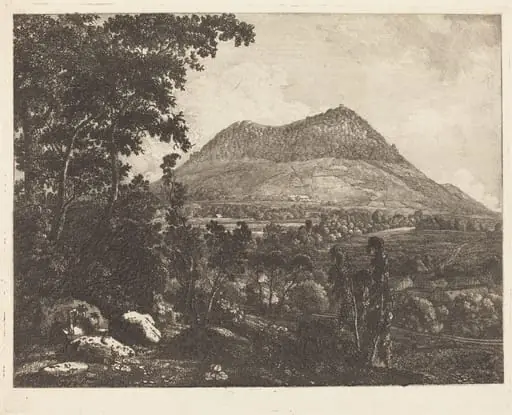
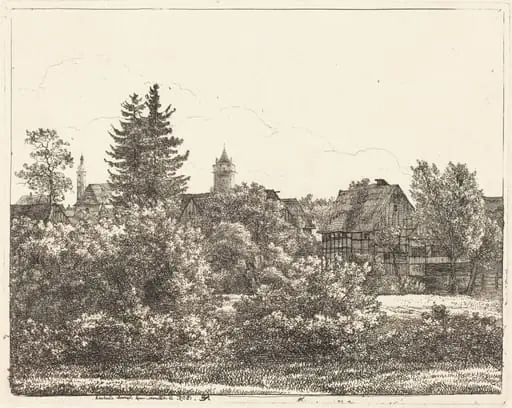
Created circa 1790, this watercolor and graphite drawing by Christoph Nathe captures a quiet rural path in a German village. Executed on laid paper, the work exemplifies Nathe’s precision in small-scale landscape studies. Its intimate scale and restrained palette reflect his background in miniatures and etching, emphasizing observation over grandeur.
Subject & Meaning
The scene presents a modest village road winding between sparse dwellings and bare trees, suggesting a moment of stillness in daily rural life.
The scene presents a modest village road winding between sparse dwellings and bare trees, suggesting a moment of stillness in daily rural life. A single house anchors the composition, flanked by evergreens and uneven terrain. The absence of figures and the muted tones convey a sense of solitude, aligning with late 18th-century German landscape sensibilities that valued quiet authenticity over theatricality.
Technique & Style
Nathe applied thin watercolor washes over a light graphite underdrawing, building subtle tonal shifts through glazing. Loose, tentative lines and areas of bare paper preserve the sketch’s immediacy. The technique suggests a field study—quickly rendered yet carefully observed—where texture emerges from layered transparency rather than detail.
History & Provenance
The work is part of Nathe’s broader output as a German artist active in the late 1700s, known for topographical drawings and miniature portraits. While its early ownership is undocumented, its survival reflects the value placed on such studies within artistic circles of the period, where observational drawing was central to training and practice.
Context
In late 18th-century Germany, landscape drawing was increasingly valued as a discipline separate from painting. Artists like Nathe documented rural scenes not as idealized visions but as records of place, influenced by Enlightenment ideals of observation and naturalism. This work fits within that tradition, prioritizing quiet realism over romanticized scenery.
Legacy
Though Nathe is not widely known today, his drawings contribute to the understanding of German landscape practice before Romanticism’s dominance. This piece exemplifies how artists used watercolor to capture transient effects of light and season, laying groundwork for later developments in plein air study and topographical art.
Artist & collection

Artist
Christoph Nathe (3 January 1753, Nieder-Bielau - 10 December 1806, Schadewalde) was a German miniaturist, watercolorist and etcher.