Artwork
A Triton Blowing a Conch Shell
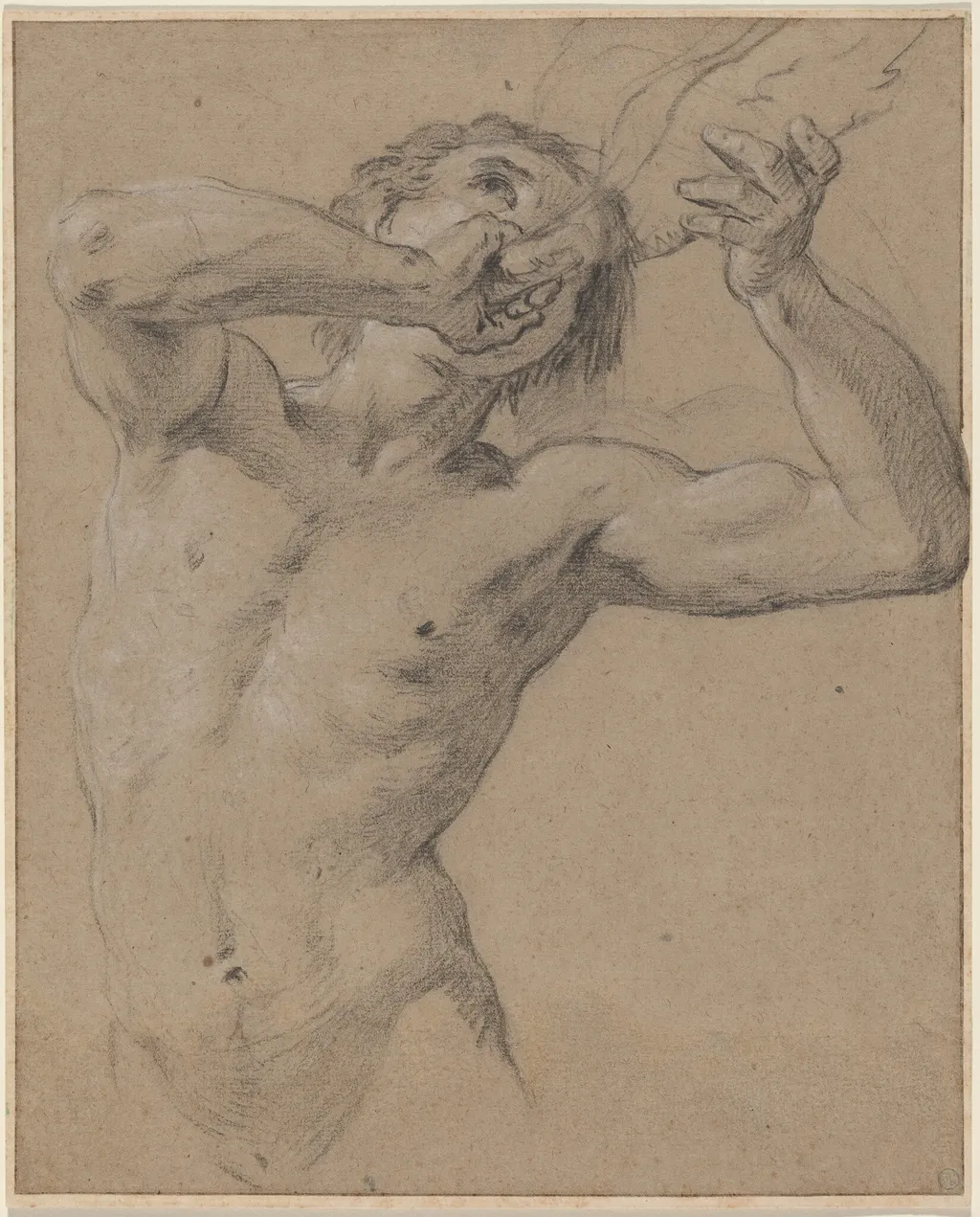
A Triton Blowing a Conch Shell is a chalk drawing by the Baroque artist Jean-Baptiste Nattier. It dates from 1724 and is held in the collection of the National Gallery of Art.
About this work
Overview
Jean‑Baptiste Nattier’s 1724 drawing depicts a Triton—a half‑human, half‑fish figure from classical mythology—caught in the act of sounding a conch shell. Executed with black chalk heightened by white on a gray‑brown laid paper, the composition is rendered in a compact, monochromatic palette that emphasizes form and gesture.
Subject & Meaning
The Triton, traditionally a messenger of the sea, is shown mid‑blow, suggesting the transmission of sound across the watery realm. The work reflects the 18th‑century fascination with mythological subjects as allegorical vehicles, here perhaps alluding to the power of music or the call of the ocean.
Technique & Style
Nattier employs a restrained drawing technique, using the contrast between dense black strokes and delicate white highlights to model the figure’s musculature and the shell’s curvature. The gray‑brown ground provides a muted tonal base, allowing the chalk marks to stand out without the distraction of color.
History & Provenance
Created in 1724, the piece is believed to be a preparatory study rather than a finished composition, likely intended to inform a larger painting or print. Its survival in paper form offers insight into Nattier’s working process during his early career in Paris.
Artist & collection

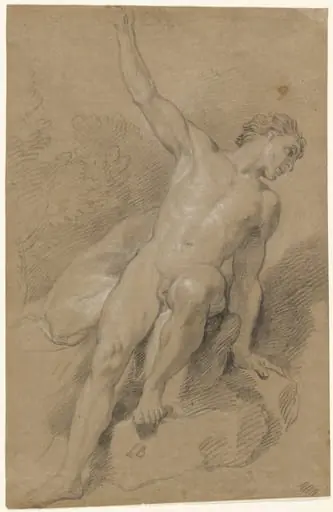
![Seated Satyr Leaning Backward [recto], by Jean-Baptiste Deshays](https://artifactworldgallery.com/img/jean-baptiste-deshays--seated-satyr-leaning-backward-recto--46579a155129856e-w320.webp)
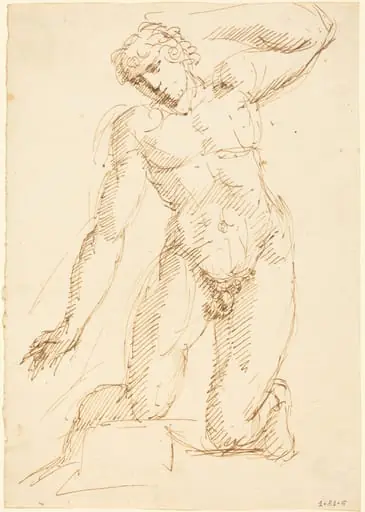
![Nude Man Seen from Behind [verso], by Jacopo Palma il Giovane](https://artifactworldgallery.com/img/jacopo-palma-il-giovane--nude-man-seen-from-behind-verso--2de266ff199c839b-w320.webp)