Artwork
Untitled
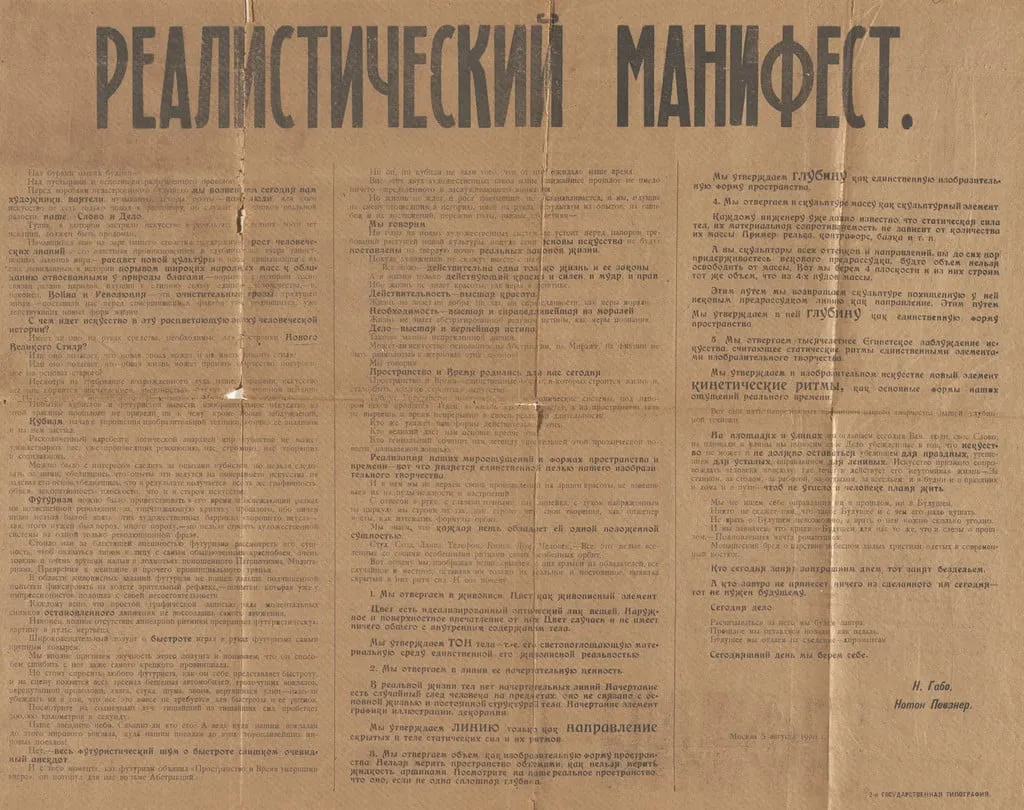
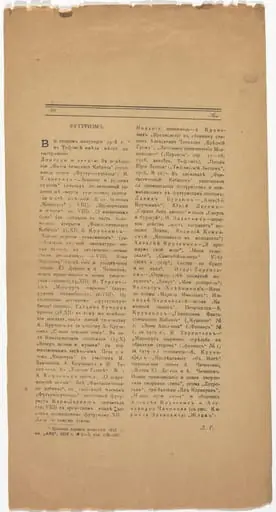
Untitled is a print by Antoine Pevsner Naum Gabo. It dates from 1920 and is held in the collection of the Museum of Modern Art.
About this work
Overview
Created in 1920, this broadside print is attributed to Antoine Pevsner and Naum Gabo, two artists associated with the Constructivist movement.
Created in 1920, this broadside print is attributed to Antoine Pevsner and Naum Gabo, two artists associated with the Constructivist movement. Produced as a printed poster, it combines typographic experimentation with graphic abstraction. The work is part of The Museum of Modern Art’s collection, where it is recognized for its radical approach to visual communication during a period of intense political and cultural transformation in Russia.
Subject & Meaning
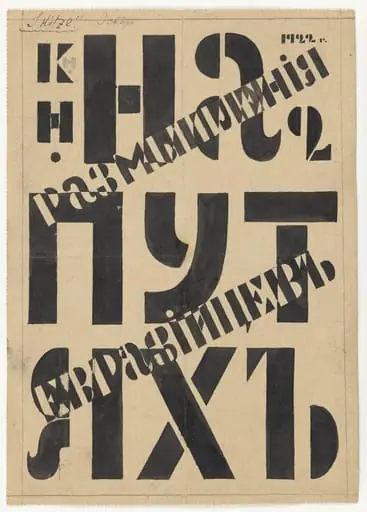
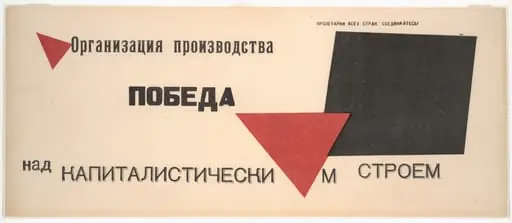
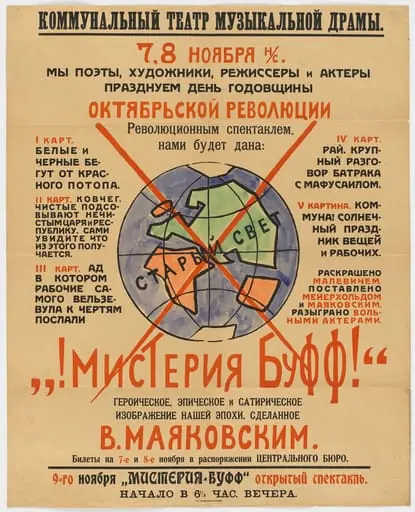
The text, written in Russian, employs capitalization and exclamation marks to convey urgency and ideological intensity. Though the exact content is not translated in available records, its aggressive typography suggests a propagandistic or revolutionary message. The central shadowed circle may symbolize a collective force or an abstract ideal, contrasting with the fragmented text to evoke tension between order and chaos in post-revolutionary society.
Technique & Style
The design uses stark black-and-white contrasts and irregular typographic placement to disrupt conventional reading patterns. Letters are stacked, tilted, and overlapped, rejecting symmetry in favor of dynamic imbalance. The heavy use of negative space and the central circular form create a visual rhythm that prioritizes emotional impact over legibility, aligning with Constructivist principles that favored form as expression.
History & Provenance
Produced in 1920, the broadside likely originated in Moscow during the early years of Soviet rule, when artists were enlisted to design posters for public agitation. It entered The Museum of Modern Art’s collection in the mid-20th century, possibly through donations or acquisitions focused on avant-garde European works. Its attribution to both Pevsner and Gabo reflects their collaborative period before diverging artistic paths.
Context
This work emerged amid the Russian Constructivist push to merge art with social function. Artists like Pevsner and Gabo sought to replace traditional aesthetics with designs that served revolutionary goals, using typography as a tool for mass communication. The chaotic layout mirrors the instability of the era, while the bold forms reflect a broader international interest in modernist experimentation after World War I.
Legacy
Though not widely reproduced, the broadside exemplifies how Constructivists transformed printing into a visual language of political engagement. Its influence can be traced in later graphic design movements that prioritized typographic dynamism over clarity. Within MoMA’s collection, it stands as a key artifact of early 20th-century experimental print culture, illustrating art’s role in shaping public discourse during times of upheaval.
Artist & collection