Artwork
Shakespeare Monument in Church at Stratford-on-Avon
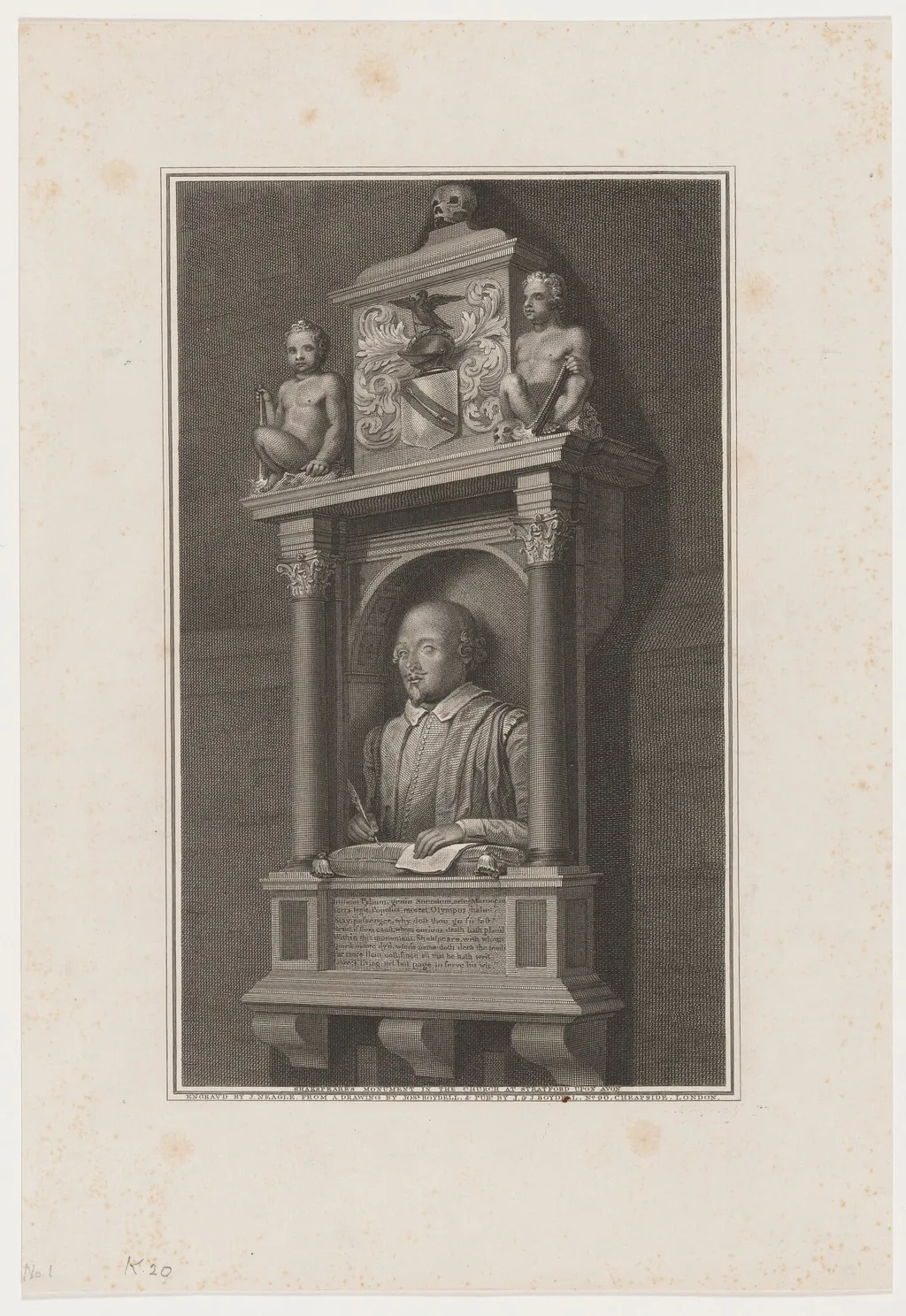
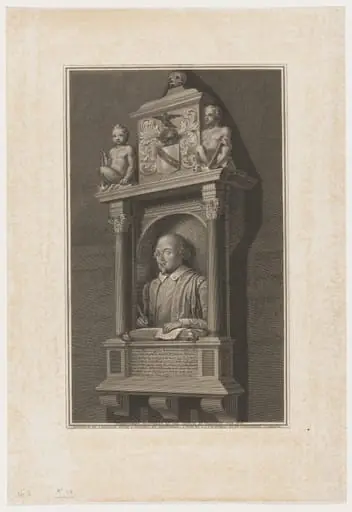
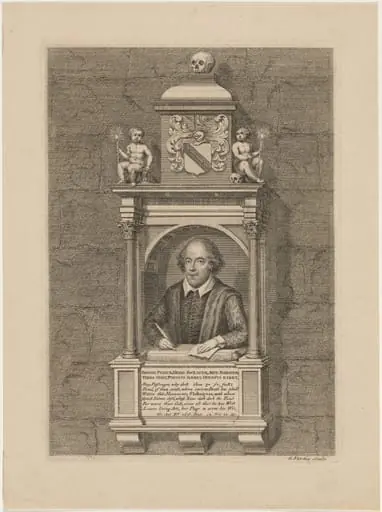
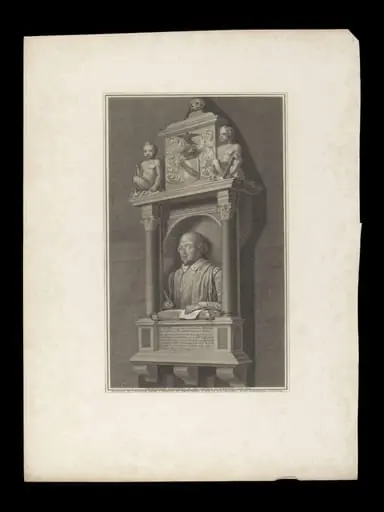
Shakespeare Monument in Church at Stratford-on-Avon is an ink print by the Romanticist artist James Neagle. It dates from 1796 and is held in the collection of the National Gallery of Art.
About this work
Overview
James Neagle, a British engraver known for his work in book illustration, created this 1796 print as a detailed reproduction of the funerary monument to William Shakespeare in Holy Trinity Church, Stratford-on-Avon. Executed in line engraving, the piece captures the monument’s architectural and sculptural elements with precision, reflecting the period’s interest in documenting cultural heritage through print.
Subject & Meaning
Flanking him are paired columns, while the upper register features two allegorical figures and a skull, evoking themes of mortality and intellectual endurance.
The monument depicts Shakespeare seated, holding a quill and resting his hand on a cushioned book, symbolizing his literary legacy. Flanking him are paired columns, while the upper register features two allegorical figures and a skull, evoking themes of mortality and intellectual endurance. The composition conveys quiet reverence, aligning with 18th-century attitudes toward the poet as a national figure worthy of solemn commemoration.
Technique & Style
Neagle employed fine line engraving with meticulous cross-hatching to render texture and depth, particularly in the drapery, stone surfaces, and facial features. The monochrome palette enhances the monument’s gravitas, while the controlled density of lines guides the viewer’s eye toward the central bust. The style reflects the precision favored in topographical and commemorative prints of the era.
History & Provenance
The engraving was made shortly after the monument’s restoration in the late 18th century, when interest in Shakespeare’s burial site intensified. Neagle’s print likely served as a widely distributed record for scholars and admirers unable to visit Stratford. It was probably issued as a standalone plate or included in illustrated editions of Shakespeare’s works, contributing to the visual canon of his legacy.
Context
Produced during a period of growing national pride in English literary figures, the engraving emerged alongside broader efforts to preserve and publicize Shakespeare’s physical and cultural presence. While Romanticism emphasized emotion and individual genius, this print adheres to the more restrained, documentary aesthetic common in antiquarian publishing, bridging Enlightenment scholarship with emerging cultural nationalism.
Legacy
Neagle’s engraving remains one of the most accurate early printed records of the monument’s appearance before later alterations. It informed subsequent illustrations and helped standardize the visual representation of Shakespeare’s tomb in popular imagination. As a historical document, it continues to aid scholars in studying the evolution of Shakespearean commemoration in Britain.
Artist & collection
Artist
James Neagle (1760?–1822) was a British engraver. Very largely a line engraver of book illustrations, he was prolific of designs by Thomas Stothard, Robert Smirke, Henry Fuseli, Gavin Hamilton, Henry Singleton, Richard…