Artwork
Sculpture Court including the Discobolus at Crystal Palace
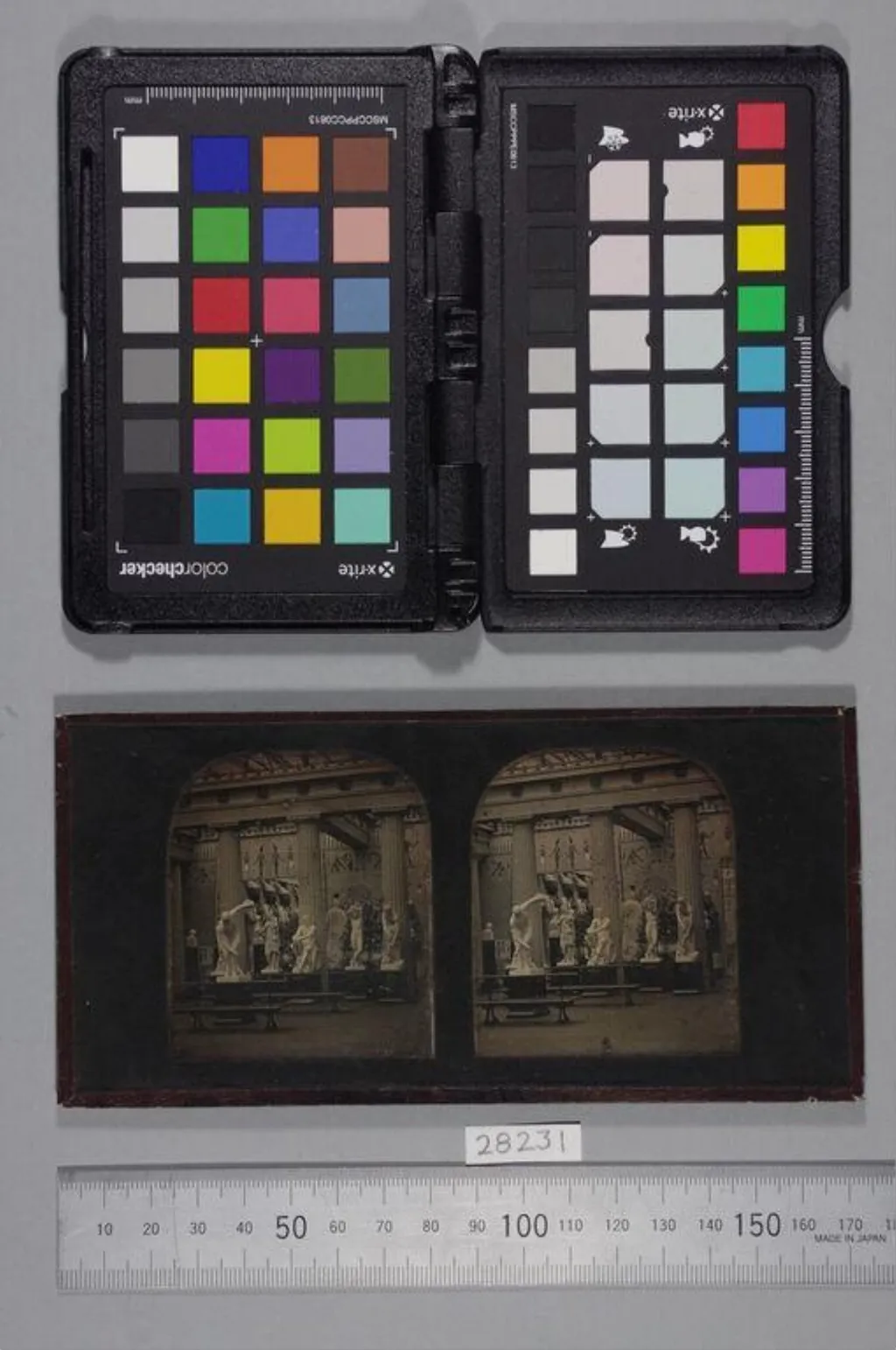
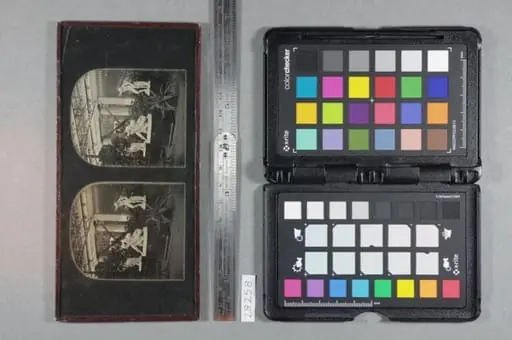
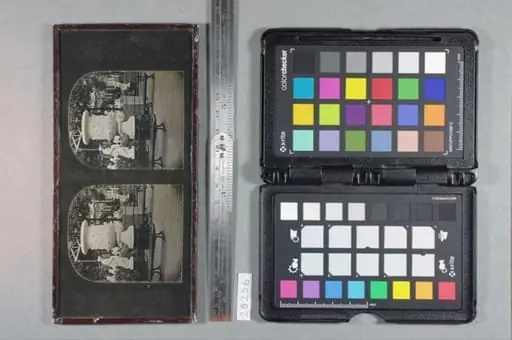
Sculpture Court including the Discobolus at Crystal Palace is a photographic photography by the Impressionist artist Negretti and Zambra. It dates from 1855 and is held in the collection of the Victoria and Albert Museum. The photograph is a stereoscopic daguerreotype documenting the sculpture court of the Crystal Palace after its 1854 move to Sydenham.
About this work
Overview
The photograph is a stereoscopic daguerreotype documenting the sculpture court of the Crystal Palace after its 1854 move to Sydenham. It captures two glass display cases: the left case houses a copy of the Discobolus, while the background reveals the Egyptian Gallery. The image is presented in a black-mounted frame with two arched rectangular windows, set within a glazed passe-partout.
Subject & Meaning
Within the left case, the Discobolus—a representation of a discus‑thrower—exemplifies the 19th‑century fascination with classical antiquity. The Egyptian Gallery, visible behind, reflects the era’s interest in ancient Egypt, juxtaposing Greco‑Roman and Egyptian artistic traditions within a single exhibition space.
Technique & Style
The daguerreotype, an early photographic process, renders the scene in monochrome with fine detail, allowing the textures of marble and glass to be discerned. The stereoscopic format provides a subtle sense of depth, enhancing the three‑dimensional quality of the displayed statues and their surrounding architecture.
History & Provenance
Created shortly after the Crystal Palace’s relocation, the image was produced by Negretti and Zambra, a prominent photographic firm of the period. A label from the firm is affixed to the verso of the frame, confirming its origin and indicating its purpose as a record of the palace’s sculptural holdings.
Context
The Crystal Palace, originally built for the 1851 Great Exhibition, was re‑erected in Sydenham in 1854, where it continued to serve as a cultural venue. The sculpture court, featuring both classical and Egyptian works, illustrated the Victorian ambition to educate the public through exposure to a broad spectrum of world art.
Artist & collection
Artist

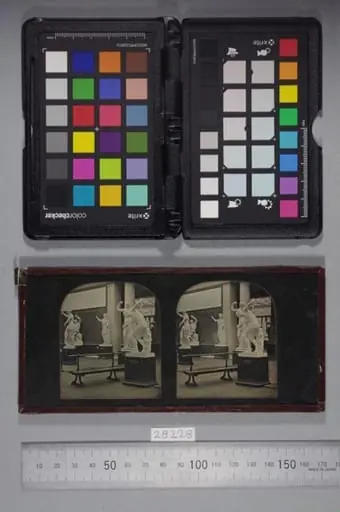 Sculpture Court at Crystal Palace, including the Discobolus
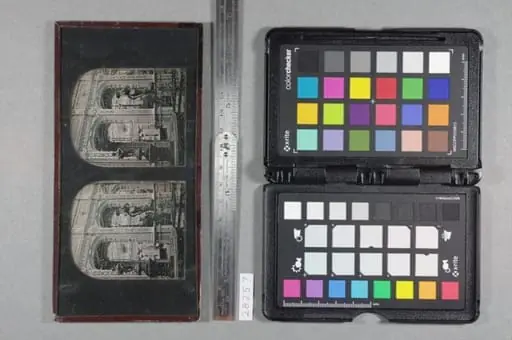 Sculpture Court at Crystal Palace, including Donatello's 'David'
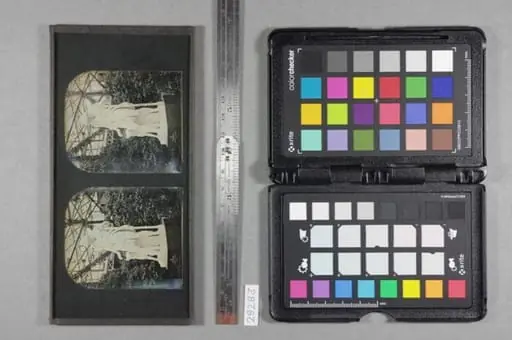 Sculpture of Ulysses at Crystal Palace
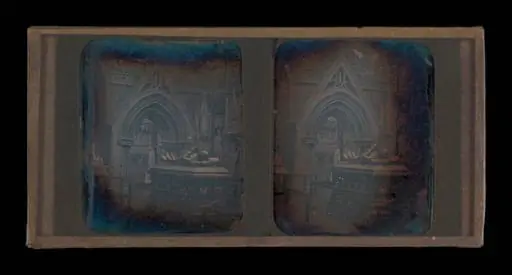 Gothic or Medieval Funerary Statuary
 Guy Little Theatrical Photograph
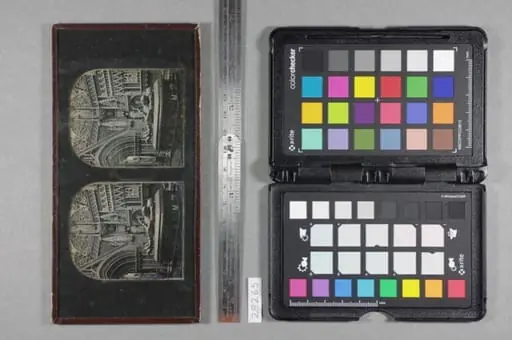 View of Gothic Architecture, Sculpture and Tomb Displayed at Crystal Palace
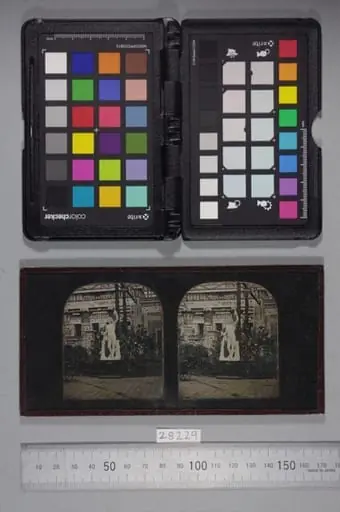 Sculpture of Bacchus at Crystal Palace
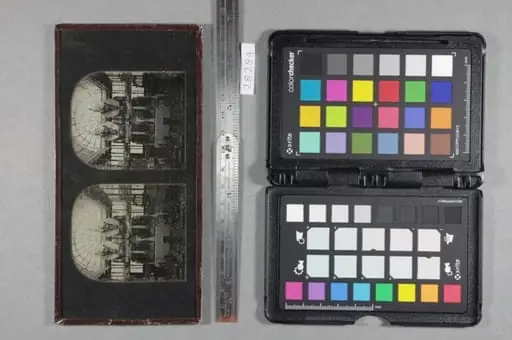 Monumental Egyptian Sculpture at Crystal Palace
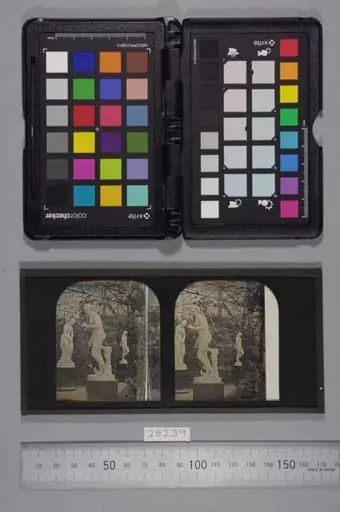 Sculptures at the Crystal Palace
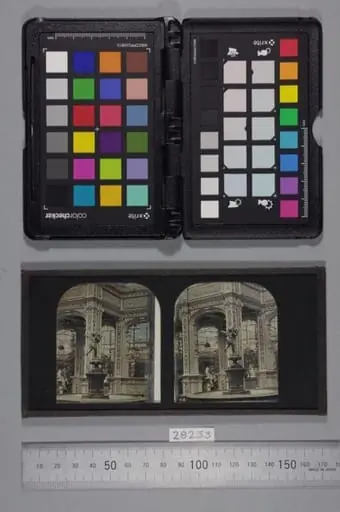 Crystal Palace Interior
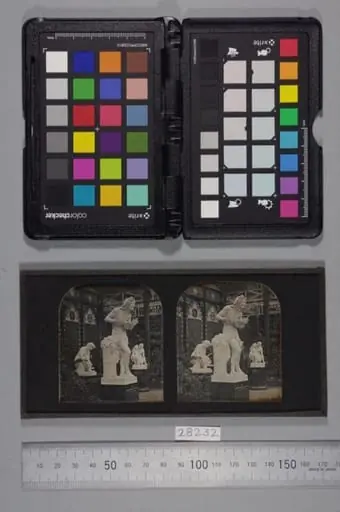 Sculpture Court at Crystal Palace
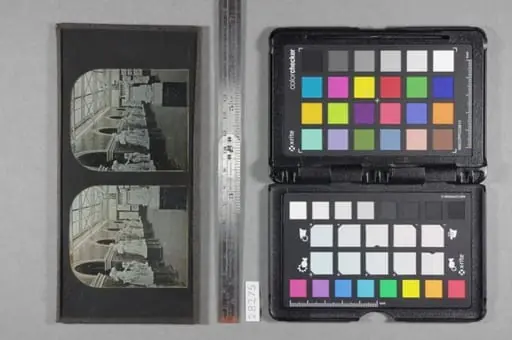 Sculptures on display at Crystal Palace
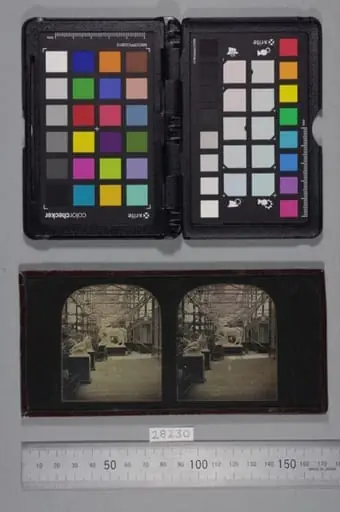 Sculptures Displayed at Crystal Palace
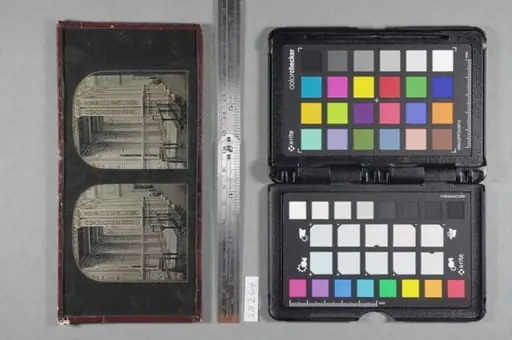 View of Architectural Sculpture Displayed at Crystal Palace
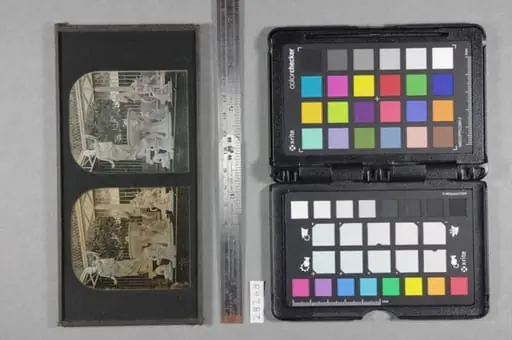 Greco-Roman Sculptures at Crystal Palace
 Sculpture Court at Crystal Palace, including 'The Wrestlers'
 Sculptures at Crystal Palace