Artwork
Hadleigh
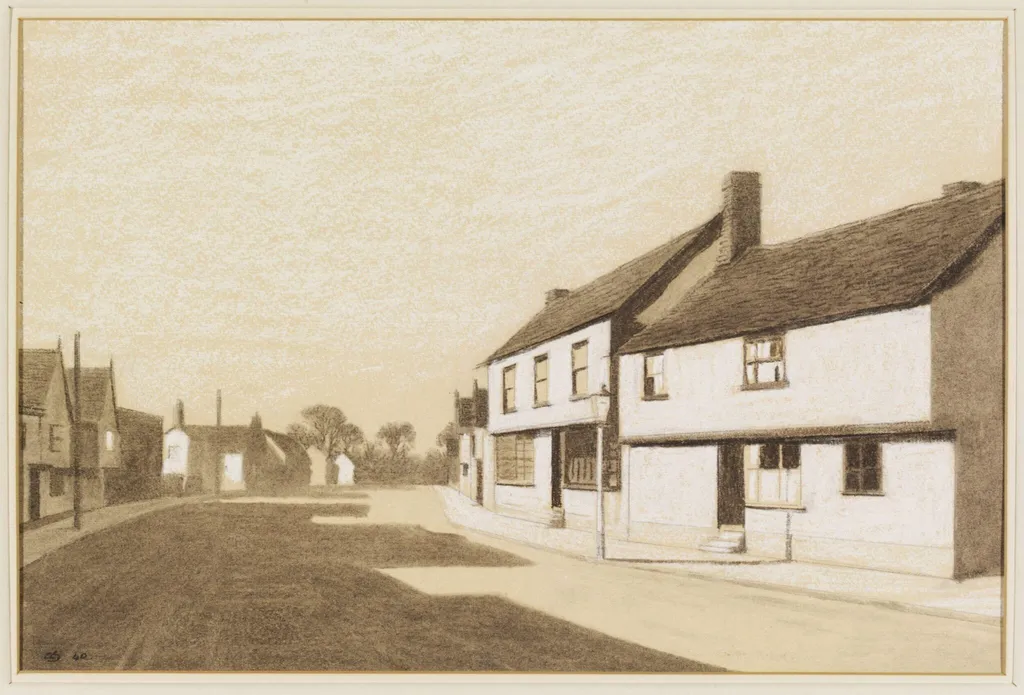
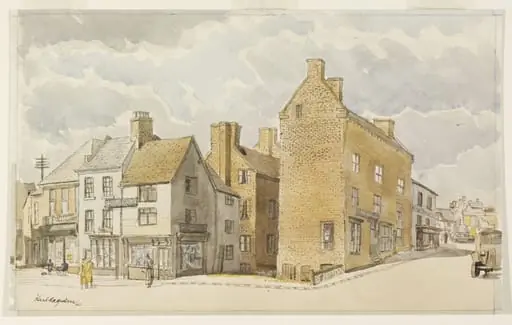
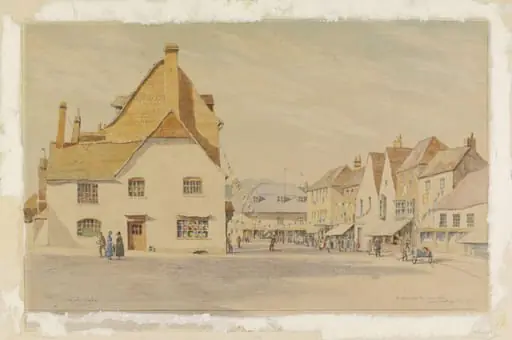
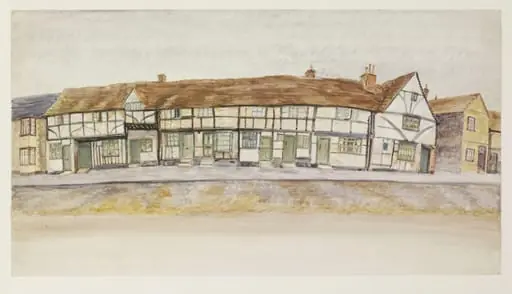
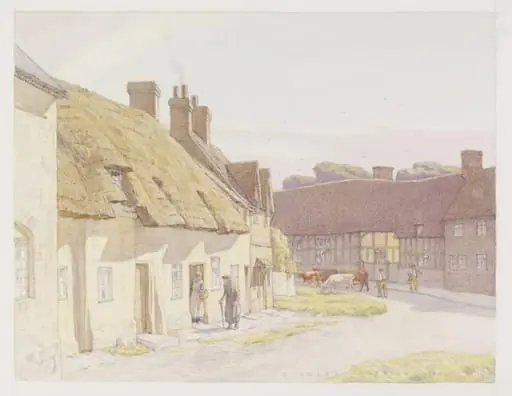
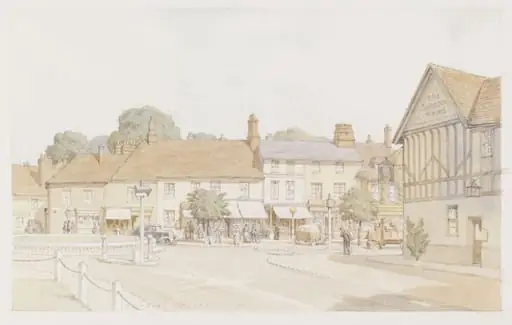
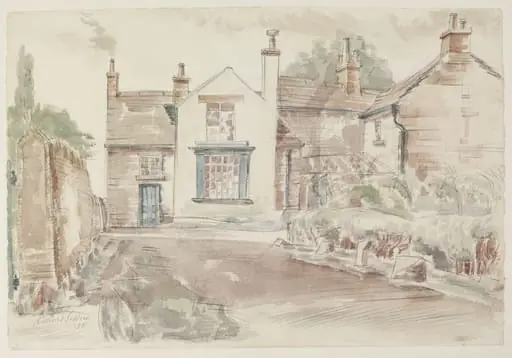
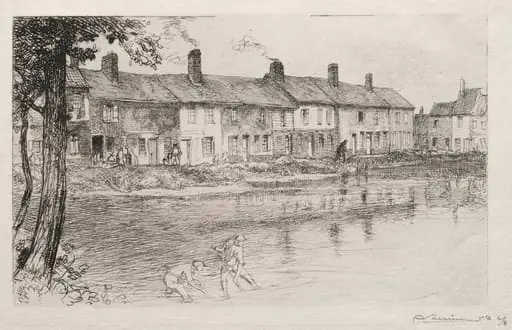
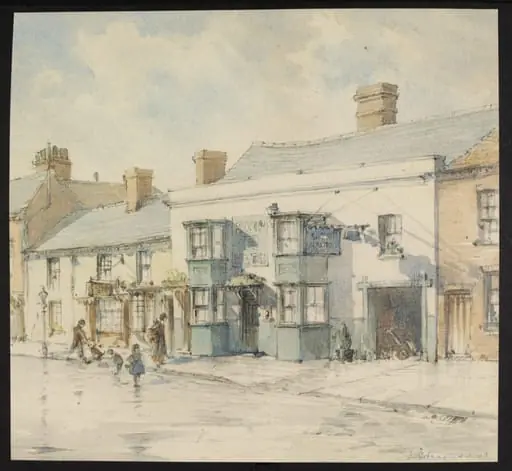
Hadleigh is a drawing by Algernon Newton. It dates from 1940 and is held in the collection of the Victoria and Albert Museum.
About this work
The drawing is titled Hadleigh, made by Algernon Newton in 1940.
It's a drawing of a deserted street in Hadleigh, a town in Suffolk.
The artist's depiction of a deserted street is interesting because Hadleigh is actually a bustling market town, which contrasts with the empty scene shown.
You can learn more about the artist's style by looking up Newton, Algernon.
Overview
Algernon Newton created this pencil drawing in 1940, capturing a quiet street in Hadleigh, Suffolk. Though the town was historically active as a market center, Newton’s rendering presents an unnerving stillness, stripping away signs of daily life. The work belongs to a series in which he transformed ordinary English towns into silent, almost surreal landscapes, emphasizing solitude over bustle.
Subject & Meaning
The drawing depicts an empty urban lane, devoid of people, vehicles, or commerce. Newton’s choice to portray Hadleigh—known for its lively market—as abandoned suggests a psychological or emotional dislocation. The scene evokes anticipation or unease, reflecting the tension of pre-war Britain, where normalcy felt fragile beneath the surface of routine.
Technique & Style
Newton used precise, controlled pencil lines to define architecture and shadow, creating a sense of depth without color. His compositions often flatten perspective slightly, enhancing the stillness. Details like shuttered windows and overgrown edges suggest neglect, while the absence of human activity amplifies the atmosphere of quiet desolation characteristic of his mature work.
History & Provenance
Made in 1940, the drawing predates Hadleigh’s later association with Raydon airfield, a wartime base for Allied squadrons. Newton’s depiction thus records the town before its transformation, preserving a moment of civilian calm just before wartime disruption. The drawing’s survival offers a visual counterpoint to the military history that would soon define the area.
Context
During the late 1930s and early 1940s, Newton focused on English towns rendered eerily empty, a departure from traditional topographical drawing. His work resonated with broader cultural anxieties of the era—uncertainty, isolation, and the looming threat of conflict. These images were not literal records but emotional responses to place, shaped by personal and national unease.
Legacy
Newton’s Hadleigh drawing exemplifies his unique contribution to British art: the transformation of mundane locations into haunting, introspective spaces. Though not widely celebrated in his lifetime, his quiet, melancholic visions have since been recognized for their psychological depth and their quiet commentary on the erosion of everyday life under the shadow of war.
Artist & collection
Artist
Algernon Newton drew quiet English landscapes in the 20th century. His pencil lines trace old towns like Hadleigh and the gentle River Brett, both from 1940. These calm scenes show brick bridges, old mills, and soft…