Artwork
La Mare de la Prairie, Crèvecoeur
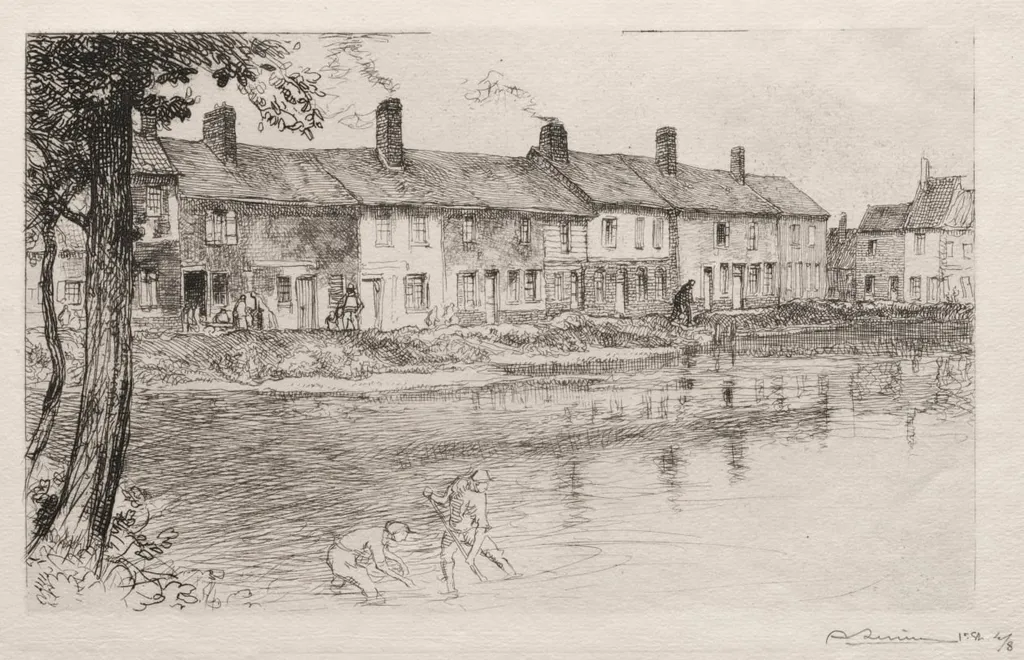
La Mare de la Prairie, Crèvecoeur is a print by Auguste Lepère. It dates from 1913 and is held in the collection of the Cleveland Museum of Art.
About this work
Overview
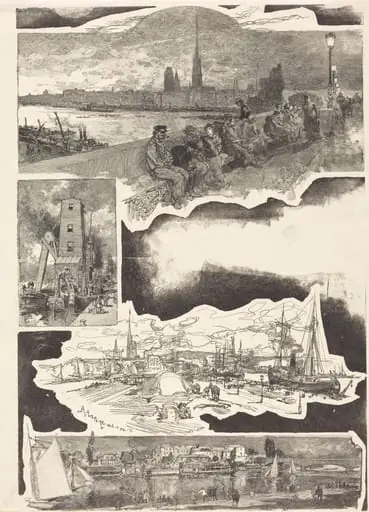
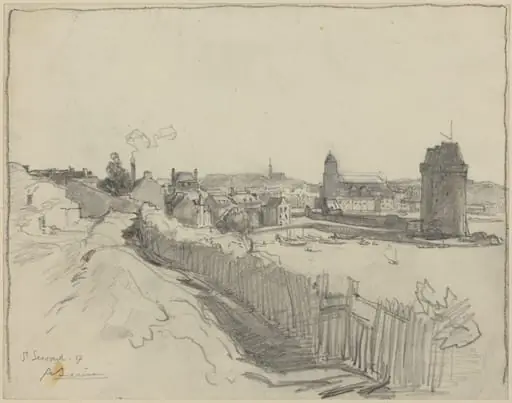
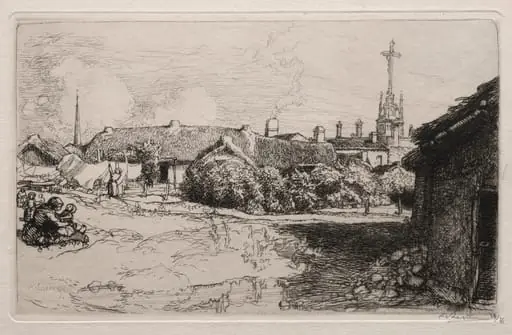
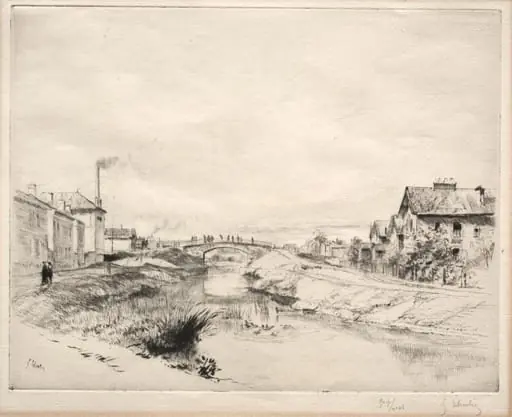
Created in 1913 by French artist Auguste Louis Lepère, *La Mare de la Prairie, Crèvecoeur* is a wood-engraved print that belongs to the collection of the Cleveland Museum of Art. The image captures a tranquil street scene in a rural setting, rendered with a restrained palette of line and tone that emphasizes atmosphere over detail.
Subject & Meaning
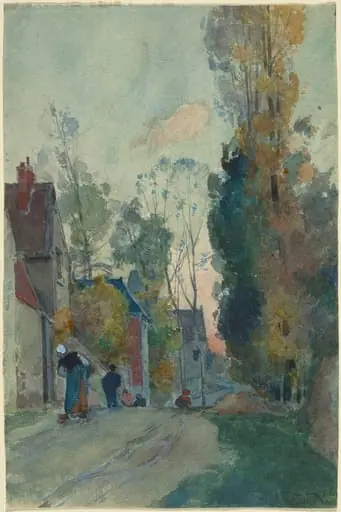
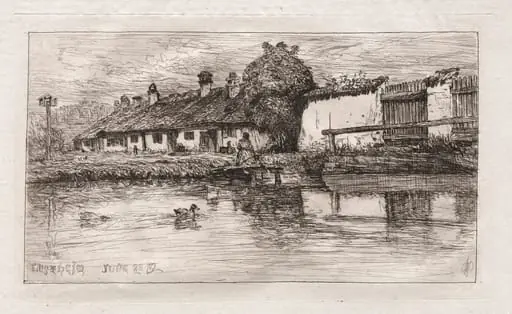
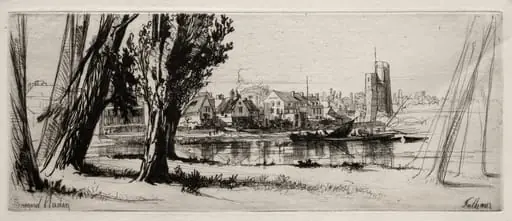
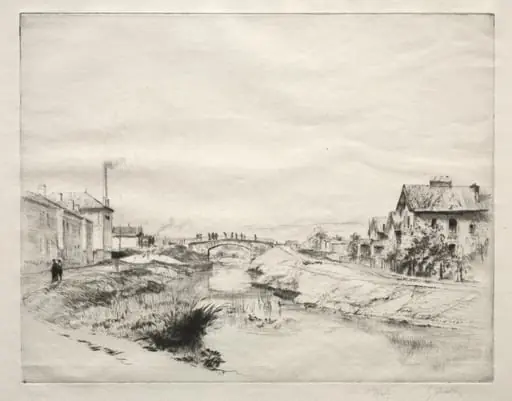
The composition presents three narrow, vertically oriented houses set beside a modest watercourse, with a leaning tree framing the left side. Pedestrians traverse the street while two children play near the water’s edge with a dog, suggesting everyday life and the simple pleasures of a countryside community.
Technique & Style
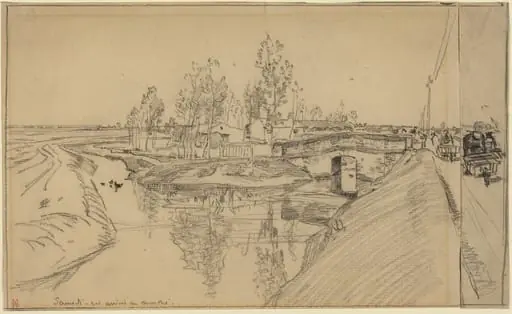
Lepère employs clean, unembellished lines and subtle gradations of shading to convey depth, particularly in the reflective surface of the water. The houses are depicted with minimal ornamentation—plain facades, modest chimneys, and small windows—highlighting the artist’s focus on structural form and the interplay of light and shadow.
History & Provenance
Renowned for revitalising wood engraving across Europe, Lepère produced this work during the later phase of his career. It entered the Cleveland Museum of Art’s holdings as part of its early 20th‑century print collection, where it remains accessible for study and public viewing.
Artist & collection
Artist
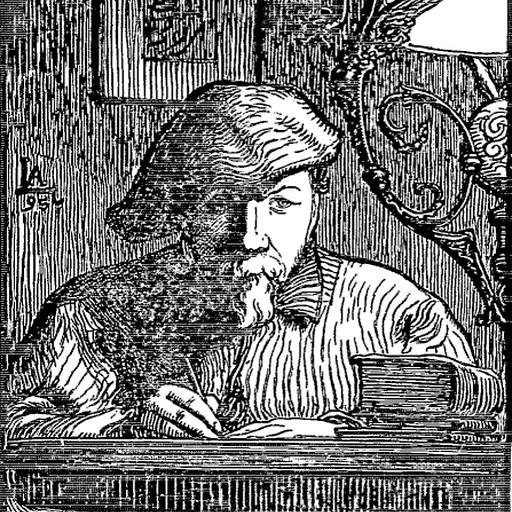
Louis-Auguste Lepère (30 November 1849 – 20 November 1918) was a French painter and etcher. Lepère is also considered a leader in the creative revival of wood engraving in Europe.