Artwork
<i>Hamlet</i> at the New Theatre
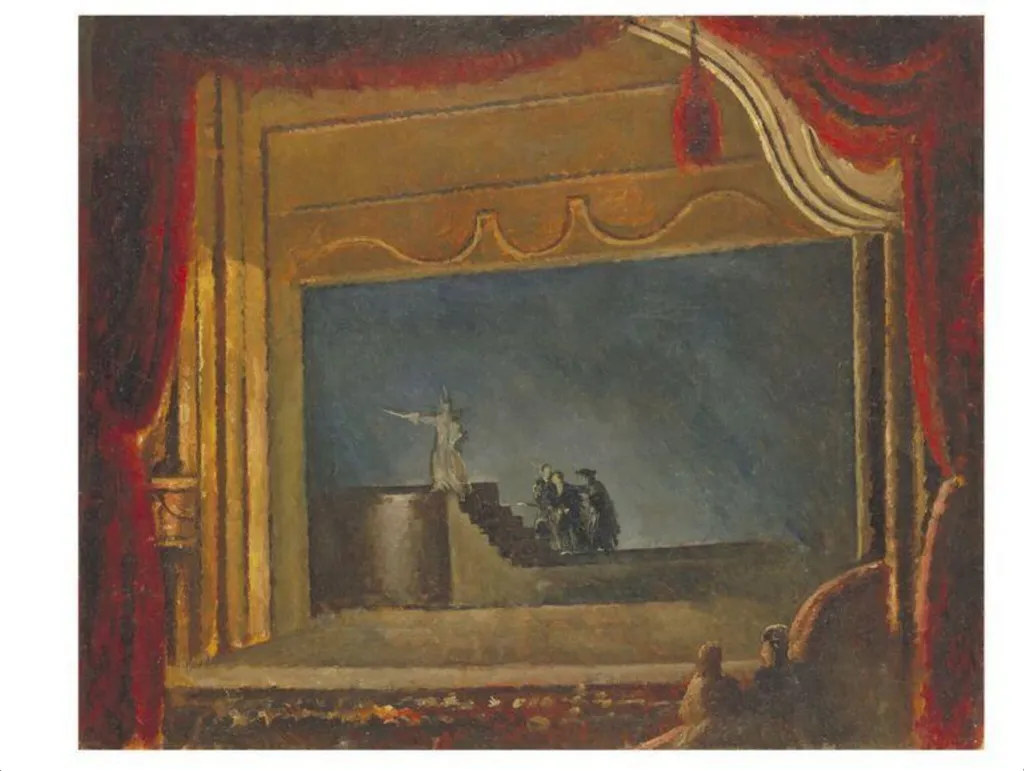
<i>Hamlet</i> at the New Theatre is a paint painting by Nigel Ramsey Newton. It dates from 1934 and is held in the collection of the Victoria and Albert Museum.
About this work
Overview
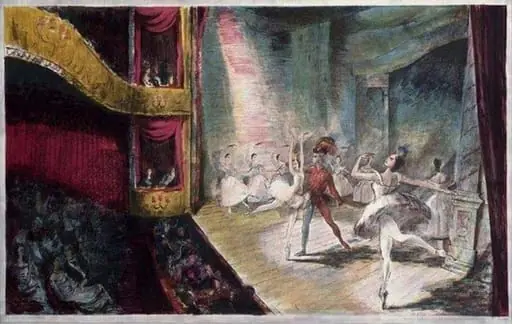
Viewed from a stage-right box, the composition frames the performance through red curtains and yellow architectural supports.
Painted in 1934 by Nigel Ramsey Newton, this oil work captures a live staging of Shakespeare’s Hamlet at the New Theatre. Viewed from a stage-right box, the composition frames the performance through red curtains and yellow architectural supports. The scene is rendered with thick, textured brushwork and a warm, uneven palette, emphasizing the physicality of the stage rather than idealized theatrical grandeur.
Subject & Meaning
The painting illustrates Act I, scene iv, with the Ghost of Hamlet’s father standing on a raised platform, arm outstretched toward the prince. Below, Horatio and Marcellus struggle to restrain Hamlet as he moves toward the spectral figure. The moment conveys tension between the supernatural and human response, rendered not as spectacle but as intimate, urgent drama within a modest performance space.
Technique & Style
Newton employs dense, tactile brushstrokes and a limited, earthy color scheme—deep blues, warm ochres, and crimson—to evoke the dim, uneven lighting of a live theater. Shadows pool in corners while spotlights carve out figures, creating a chiaroscuro effect that heightens emotional gravity. The rough texture of the paint reinforces the immediacy of the moment, rejecting polished theatrical illusion.
History & Provenance
The painting was donated to the British Theatre Museum Association in October 1966 by Sir John Gielgud, a distinguished Shakespearean actor. His donation suggests a personal connection to the production, possibly as a witness or participant. The work’s survival and transfer reflect its value as a document of mid-20th-century theatrical practice rather than as a conventional fine art object.
Context
In the 1930s, British theater emphasized textual fidelity and intimate staging over elaborate sets. Newton’s depiction aligns with this trend, portraying a stripped-down performance space where acting and presence outweigh spectacle. The painting stands as a record of how Shakespeare was staged in provincial or mid-sized venues, far from the grandeur of London’s West End.
Legacy
Though not widely exhibited, the painting remains a rare visual record of a specific theatrical moment in early 20th-century Britain. Its unidealized style and focus on performer dynamics offer insight into how Shakespeare’s tragedies were interpreted in non-commercial settings, preserving a quiet but significant chapter in the history of stage performance.
Artist & collection
Artist
Nigel Ramsey Newton made a single painting, *Hamlet at the New Theatre*, in 1934.

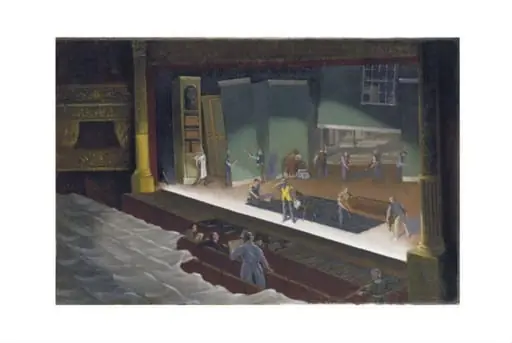 John Clements Conducting a Rehearsal of 'Pygmalion' by George Bernard Shaw
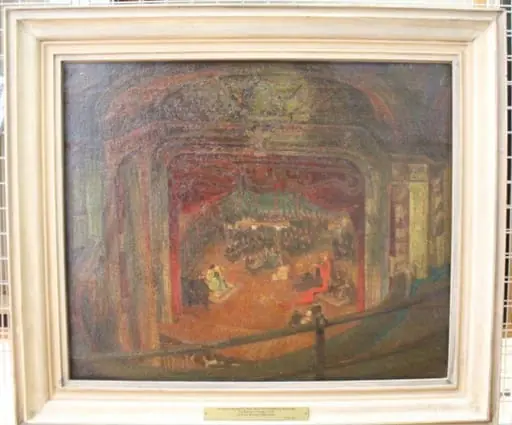 Sir Herbert Beerbohm Tree rehearsing 'Henry VIII' by William Shakespeare at His Majesty's Theatre
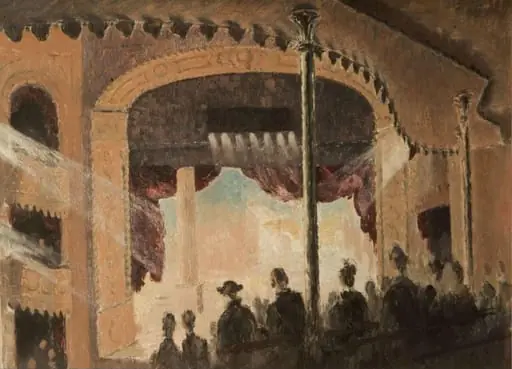 Interior of the Old Vic
 Det indvendige af Det kgl. teater under fremstillingen af Jacob v. Thyboe
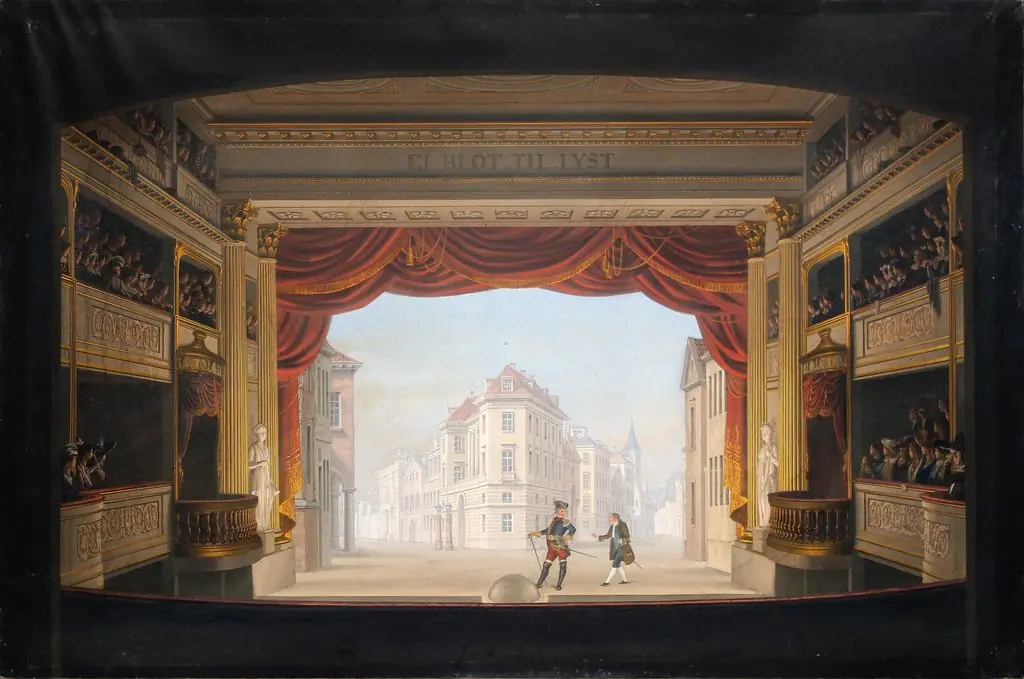 Det indvendige af Det kgl. teater under fremstillingen af Jacob v. Thyboe
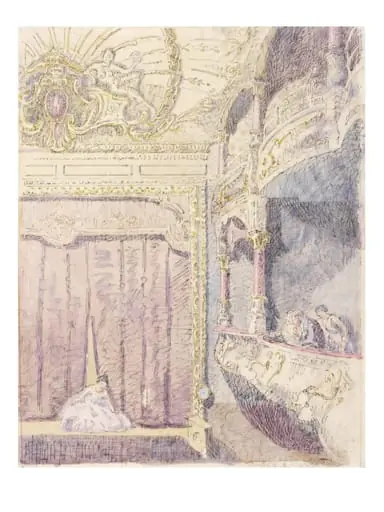 Interior, showing a box and the stage, of the Old Grand Theatre, now the Gaumont Hippodrome, Colchester
 Print Collection
 H Beard Print Collection
 Winston Collection
 Untitled
 Untitled
 The Ballet