Artwork
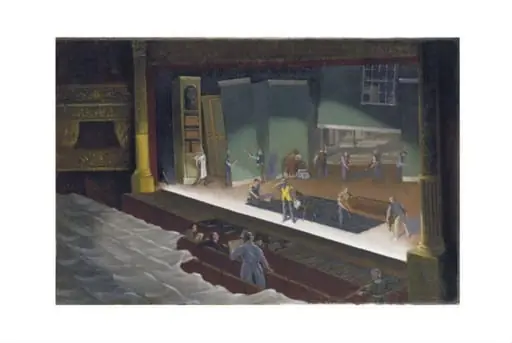
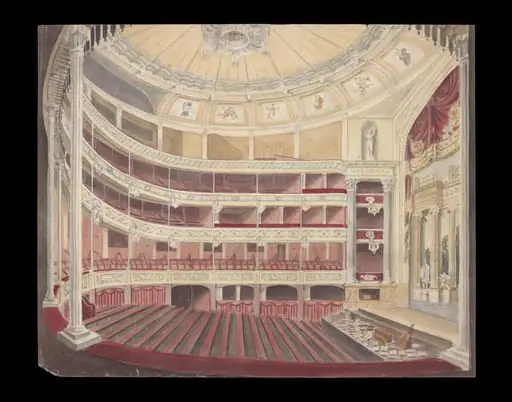
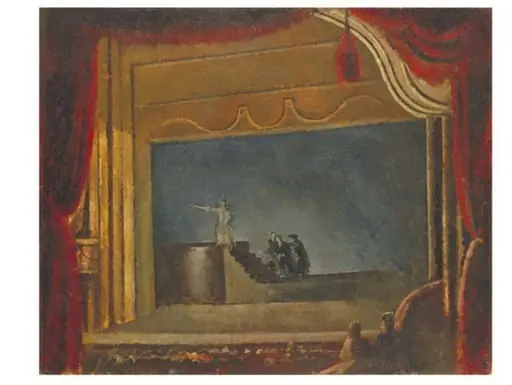
Interior, showing a box and the stage, of the Old Grand Theatre, now the Gaumont Hippodrome, Colchester
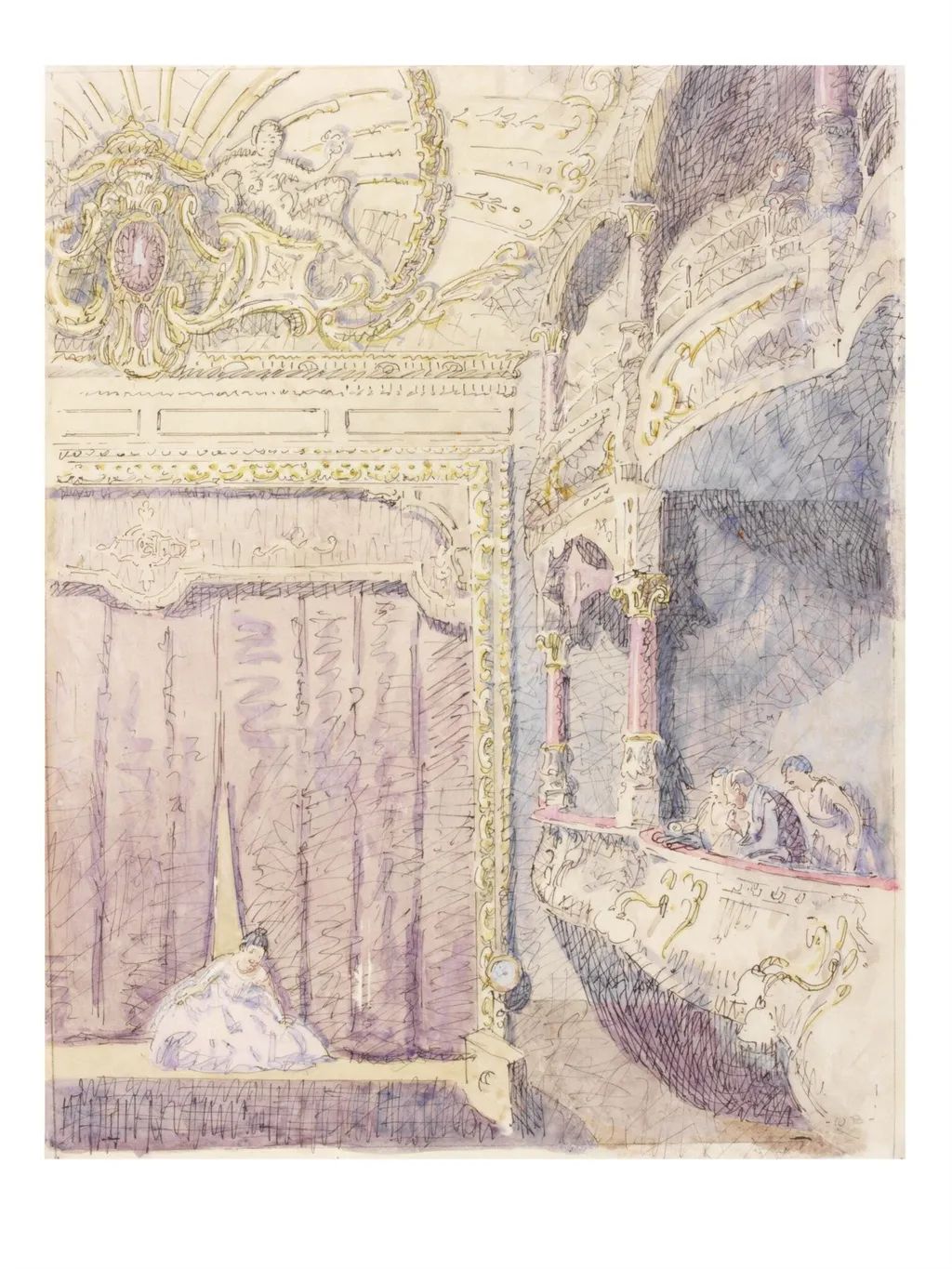
Interior, showing a box and the stage, of the Old Grand Theatre, now the Gaumont Hippodrome, Colchester is a watercolor work on paper by Walter Bayes. It dates from 1940 and is held in the collection of the Victoria and Albert Museum.
About this work
The theater’s shell-and-pearl decorations show off local pride—Colchester is famous for oysters.
This watercolor shows the inside of a theater built in 1905.
Walter Bayes painted it around 1940.
He used soft colors to catch the bright stage lights and shiny gold details.
The theater’s shell-and-pearl decorations show off local pride—Colchester is famous for oysters.
It’s the second view he made of this exact spot.
The pale tones make the pink and white walls look almost glowing.
Check out more work by the artist Walter Bayes.
Overview
Walter Bayes’s watercolour captures the interior of Colchester’s former Old Grand Theatre, later known as the Gaumont Hippodrome. Executed around 1940, the work presents a view of the auditorium and stage, highlighting the ornate shell‑and‑pearl motif that crowns the performance space. The composition records the theatre’s Edwardian décor, with its pink, white and gilt surfaces bathed in the glow of stage lighting.
Subject & Meaning
The painting emphasizes the theatrical ambience rather than individual performers, focusing on the interplay of bright electric lights and reflective ornamentation. The shell and pearl design alludes to Colchester’s historic association with oyster harvesting, embedding a local symbol within the cultural setting. By foregrounding the lavish décor, Bayes conveys the pride of a regional venue at a time when its role as a live‑performance space was waning.
Technique & Style
Bayes employs a restrained palette of pale blues, pinks and whites, allowing the luminous stage lights to dominate the scene. His wash technique renders the gilded details with a subtle sheen, while the soft edges soften the architectural forms. The overall effect contrasts with the harsher chiaroscuro favored by his contemporary Walter Sickert, offering a more delicate, light‑filled interpretation of a theatre interior.
History & Provenance
The Old Grand Theatre opened in 1905 as the Grand Palace of Varieties. By the early 1940s, when Bayes produced this view, the building was nearing the end of its era as a live‑performance venue. After a period of decline, the structure was repurposed as a cinema, then a bingo hall, and underwent a comprehensive restoration in the 1980s, emerging as a nightclub known as the Gaumont Hippodrome.
Context
Bayes was a peripheral figure in the Camden Town Group, a collective that explored urban life through modernist lenses. While the group’s leader, Walter Sickert, often highlighted the atmospheric effects of gas lighting on performers, Bayes turned his attention to the bright electric illumination of early twentieth‑century theatres. This work therefore reflects both the artistic lineage of the group and the broader shift in entertainment architecture from gas to electric lighting.
Artist & collection
Artist
Walter John Bayes was an English painter and illustrator who was a founder member of both the Camden Town Group and the London Group and also a renowned art teacher and critic.

![La lezione di violincello [The Violin Lesson], by Mosè Bianchi](https://artifactworldgallery.com/img/mose-bianchi--la-lezione-di-violincello-the-violin-lesson--409ab16368cea0c8-w320.webp)