Artwork
Poetic Thoughts in a Forest Pavilion
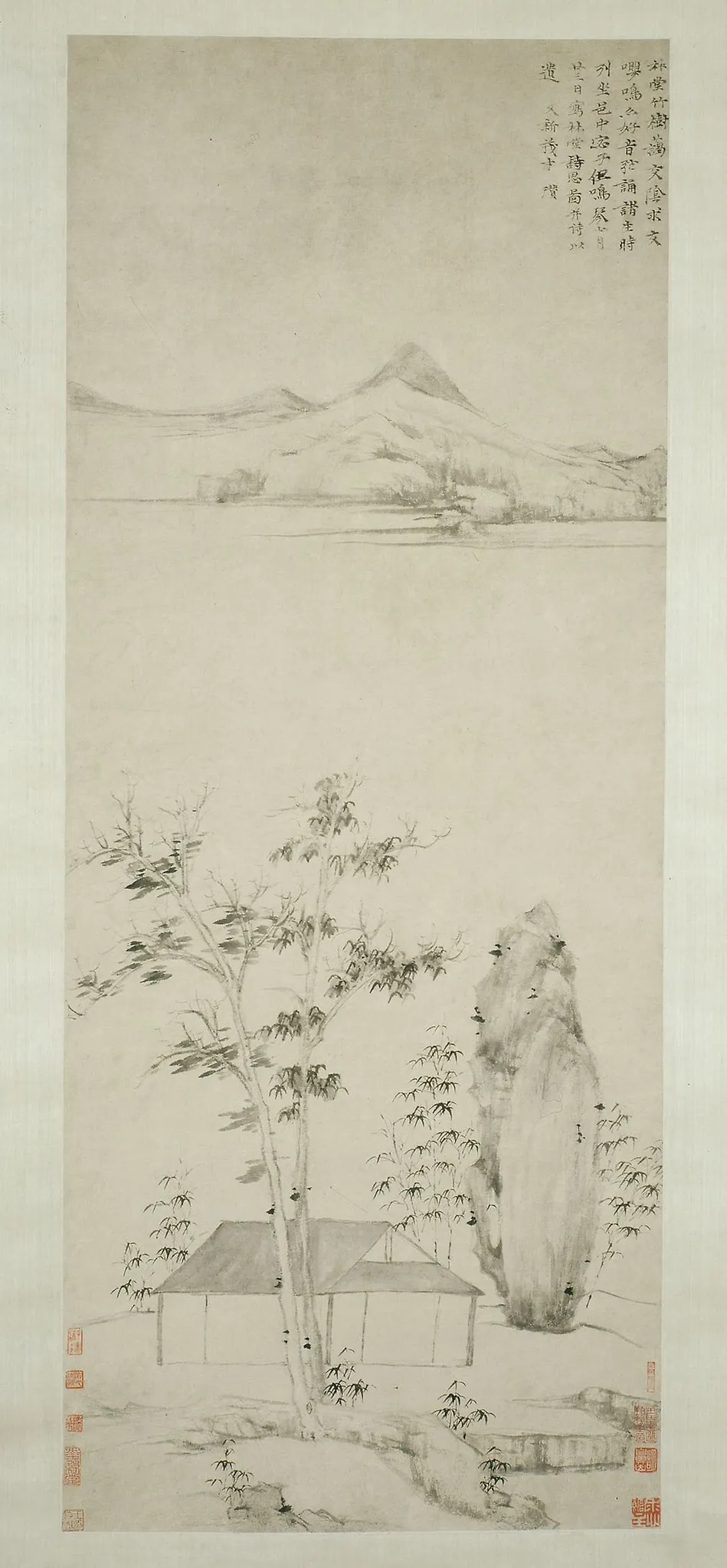
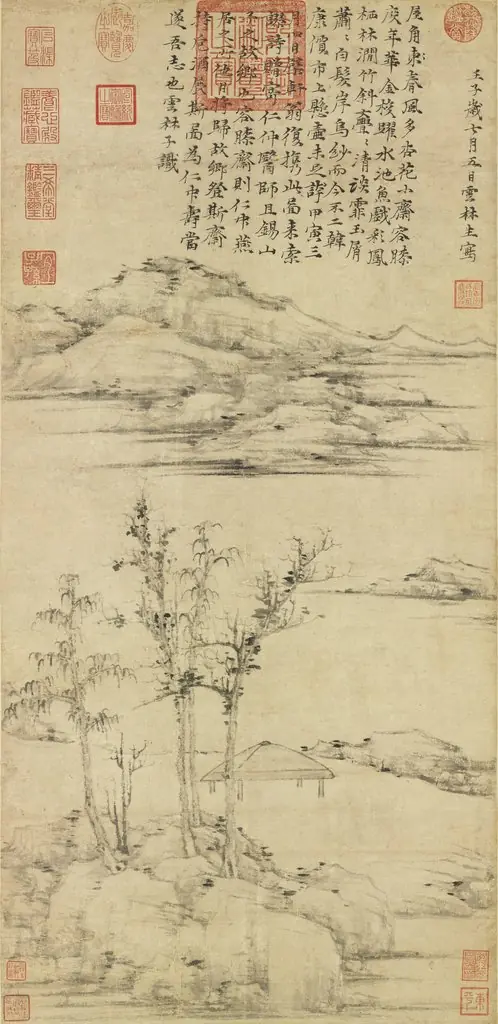
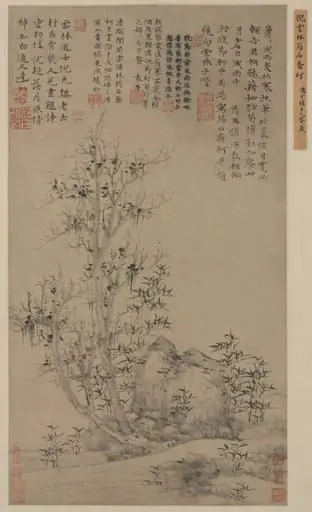
Poetic Thoughts in a Forest Pavilion is an unspecified painting by Ni Zan. It dates from 1371 and is held in the collection of the Art Institute of Chicago.
About this work
Overview
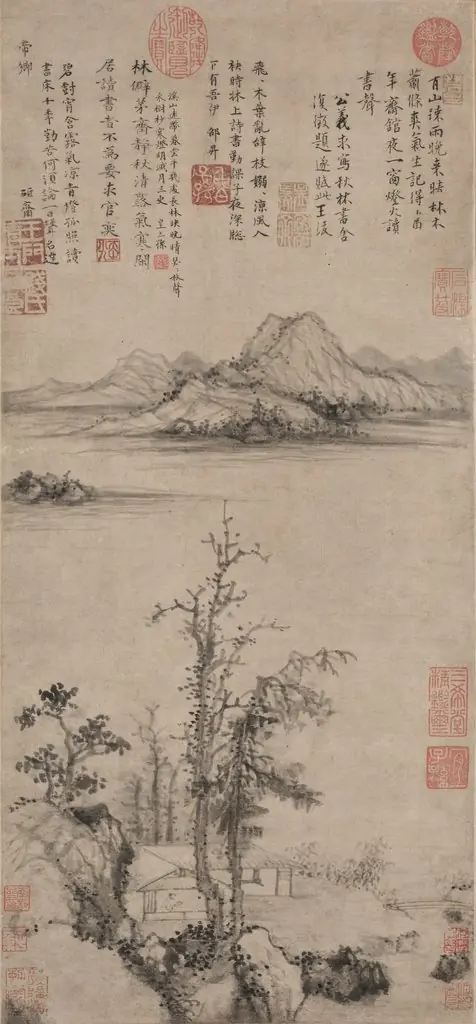
Painted in 1371 by Ni Zan, this ink landscape captures a quiet moment in nature, reflecting the aesthetic ideals of late Yuan dynasty literati painters. Executed in monochrome ink on paper, the composition avoids narrative detail, instead emphasizing stillness and solitude. The scene unfolds with deliberate restraint, inviting contemplation rather than observation.
Subject & Meaning
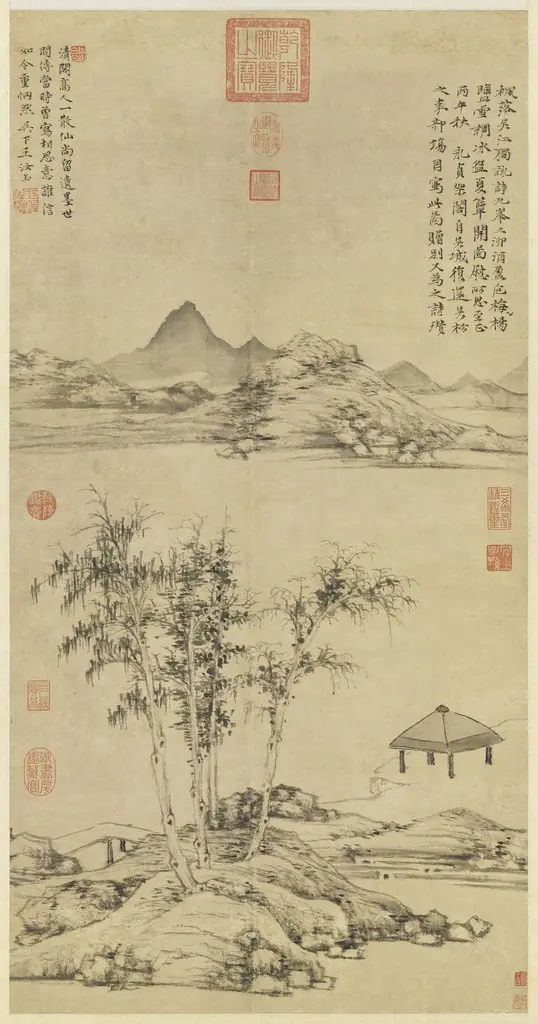
A modest pavilion stands alone near the water’s edge, surrounded by sparse trees and distant hills. The structure, neither grand nor inhabited, suggests a retreat for reflection rather than leisure. The absence of human figures and the quiet emptiness around the pavilion evoke themes of withdrawal from worldly affairs, aligning with Daoist and Buddhist ideals of seclusion and inner peace.
Technique & Style
Ni Zan employed dry, light brushstrokes to suggest texture without detail, using minimal ink washes to define form.
Ni Zan employed dry, light brushstrokes to suggest texture without detail, using minimal ink washes to define form. The composition is dominated by empty space—water, sky, and untouched paper—creating a sense of atmospheric depth. Horizontal bands of land, water, and mountain reinforce stillness, while the sparse foliage avoids ornamentation, embodying the literati preference for understated expression.
History & Provenance
Created during Ni Zan’s later years, after he had withdrawn from public life, the painting reflects his personal retreat from the political turmoil of the late Yuan. It remained within scholarly circles, likely passed among collectors who valued its quiet dignity. Its survival into modern times underscores its enduring resonance among connoisseurs of literati painting.
Context
Ni Zan was one of the Four Masters of the Yuan, a group who elevated ink landscape as a vehicle for personal expression amid Mongol rule. Unlike court painters, they rejected decorative flourish, favoring simplicity and emotional restraint. This work aligns with a broader movement where painting became a form of moral and spiritual self-cultivation, not mere representation.
Legacy
The painting’s austerity influenced later Ming and Qing literati painters who sought to emulate its quiet intensity. Its emphasis on negative space and emotional economy became a touchstone for East Asian ink traditions. Though not widely exhibited in its time, its reputation grew among scholars who saw in it a model of artistic integrity and philosophical depth.
Artist & collection

Artist
Ni Zan (simplified Chinese: 倪瓒; traditional Chinese: 倪瓚; Wade–Giles: Ni2 Tsan4; 1301–1374) was a Chinese painter during the Yuan and early Ming periods.

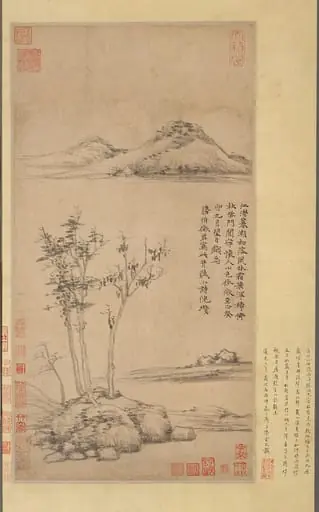
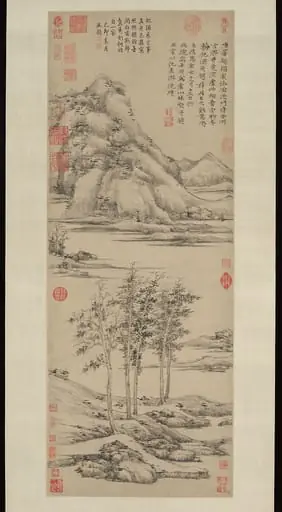
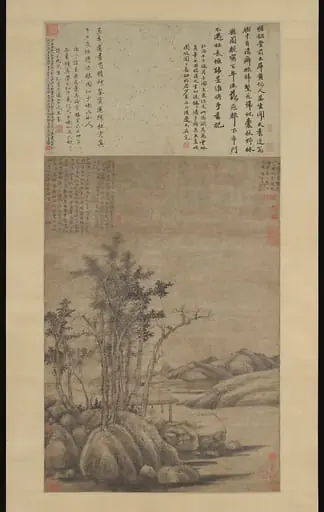
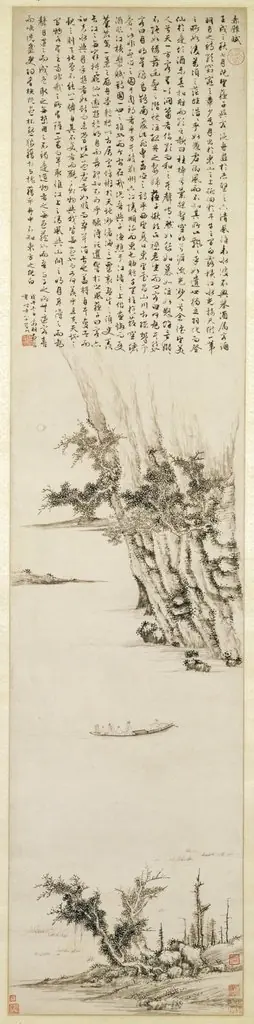 The First Prose Poem on the Red Cliff
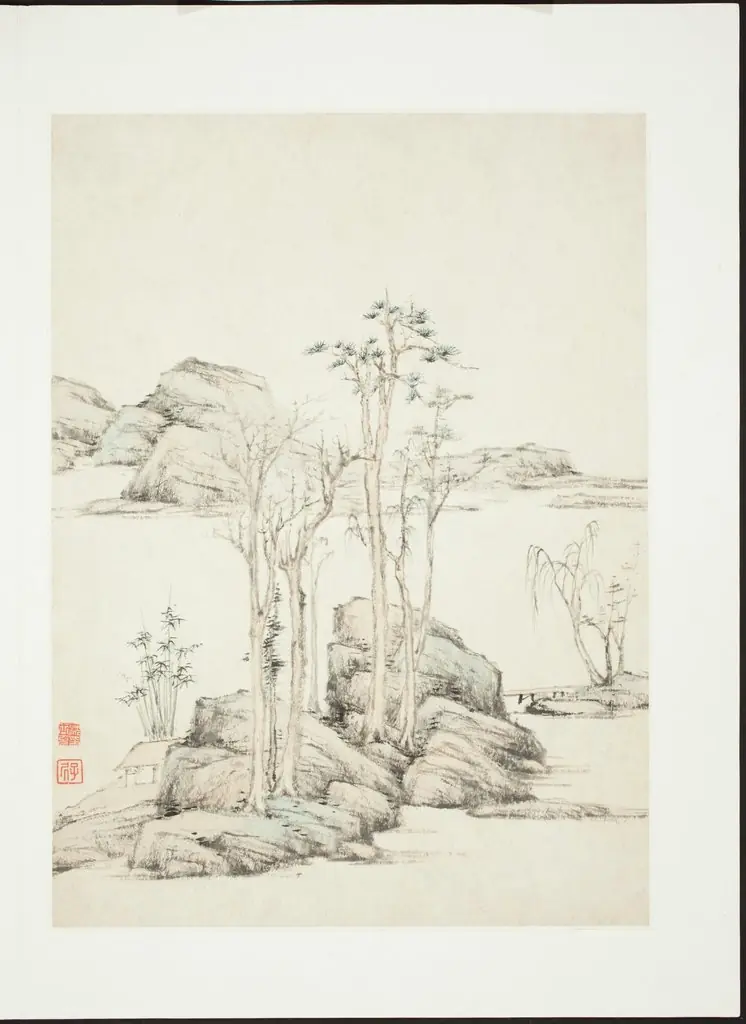 Landscapes After Old Masters
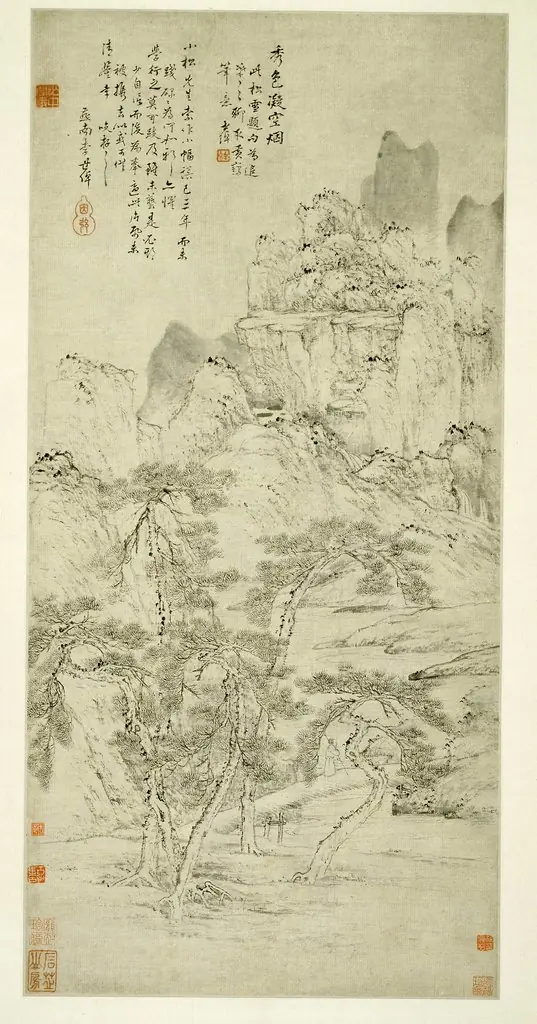 Landscape: Beautiful Scenery Frozen in Mist
 A Scholar's Retreat amid Autumn Trees
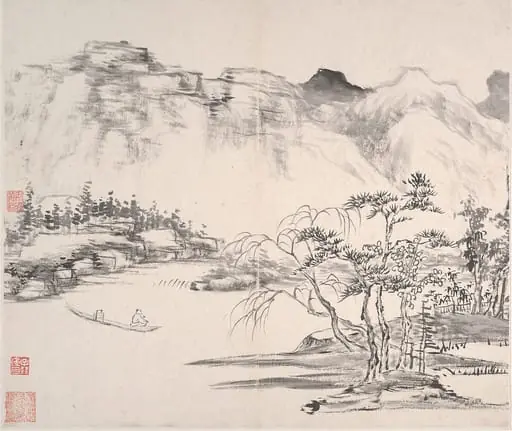 清 伊秉綬 山水 冊|Landscapes
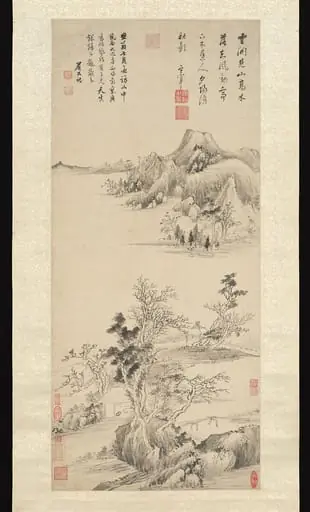 明 董其昌 秋山圖 軸|Autumn Mountains
![Daoist Retreat in Mountain and Stream (Landscape after Ni Zan [1301–1374]), by Lu Zhi](https://artifactworldgallery.com/img/lu-zhi--daoist-retreat-in-mountain-and-stream-landscape-after-ni-zan--766e576a4810a8bc-w320.webp) Daoist Retreat in Mountain and Stream (Landscape after Ni Zan [1301–1374])
Daoist Retreat in Mountain and Stream (Landscape after Ni Zan [1301–1374])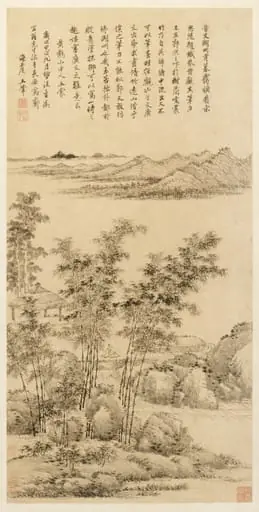 Tall Bamboo and Distant Mountains, after Wang Meng