Artwork
Horses and Mounted Groom
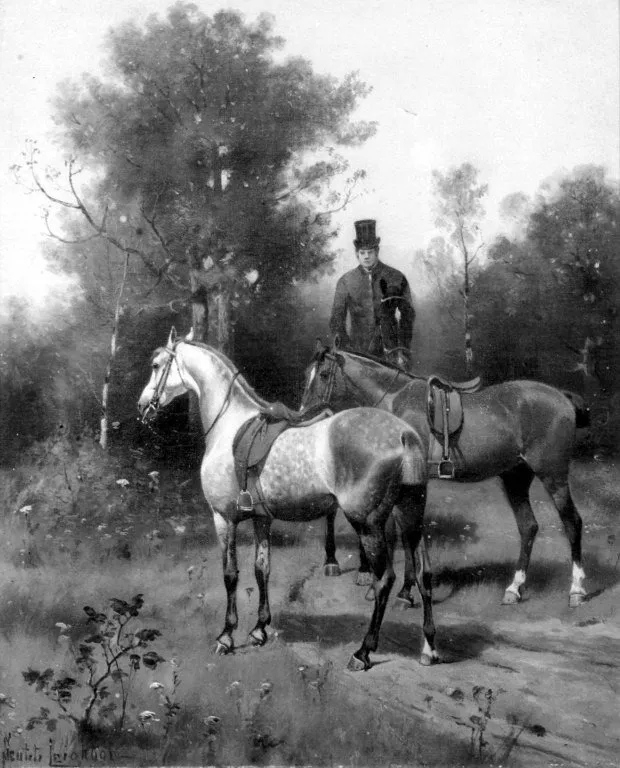
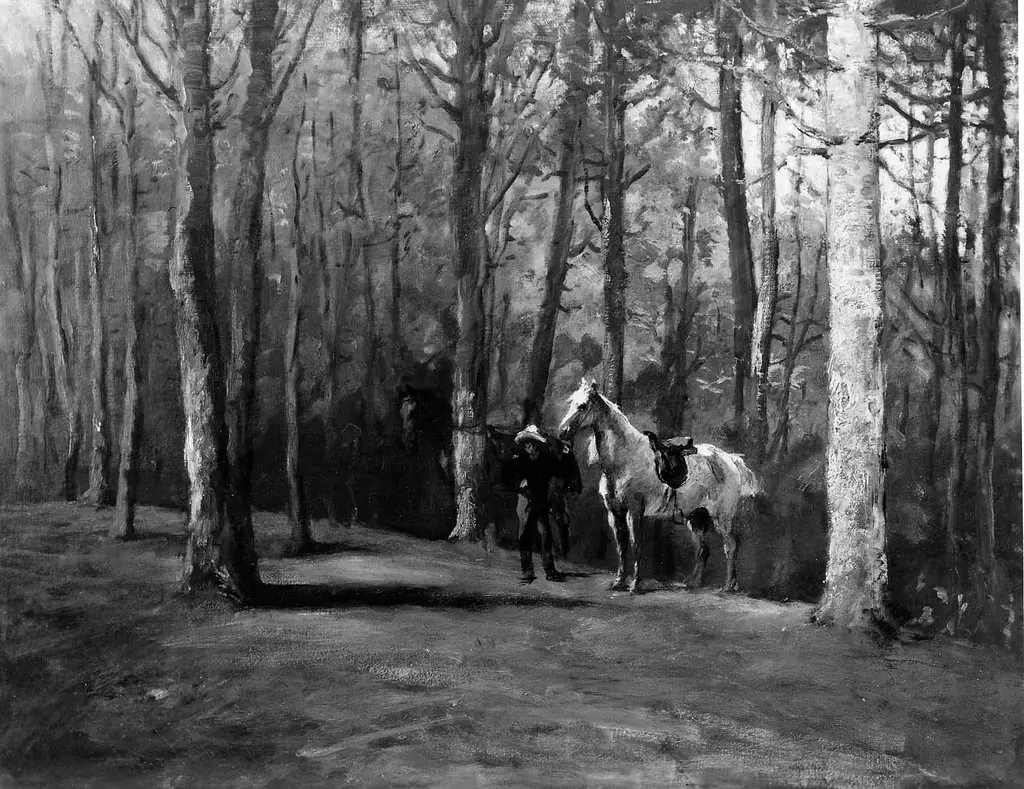
Horses and Mounted Groom is an oil painting by the Impressionist artist Nicholas Winfield Scott Leighton. It dates from 1896 and is held in the collection of the Brooklyn Museum.
About this work
Overview
Its subdued palette and composed arrangement convey a moment of stillness, emphasizing the relationship between human and animal without overt drama.
Painted in 1896 by Nicholas Winfield Scott Leighton, this oil on canvas depicts a groom between two horses in a quiet woodland setting. The work is part of the Brooklyn Museum’s collection and reflects the artist’s interest in equine subjects and rural labor. Its subdued palette and composed arrangement convey a moment of stillness, emphasizing the relationship between human and animal without overt drama.
Subject & Meaning
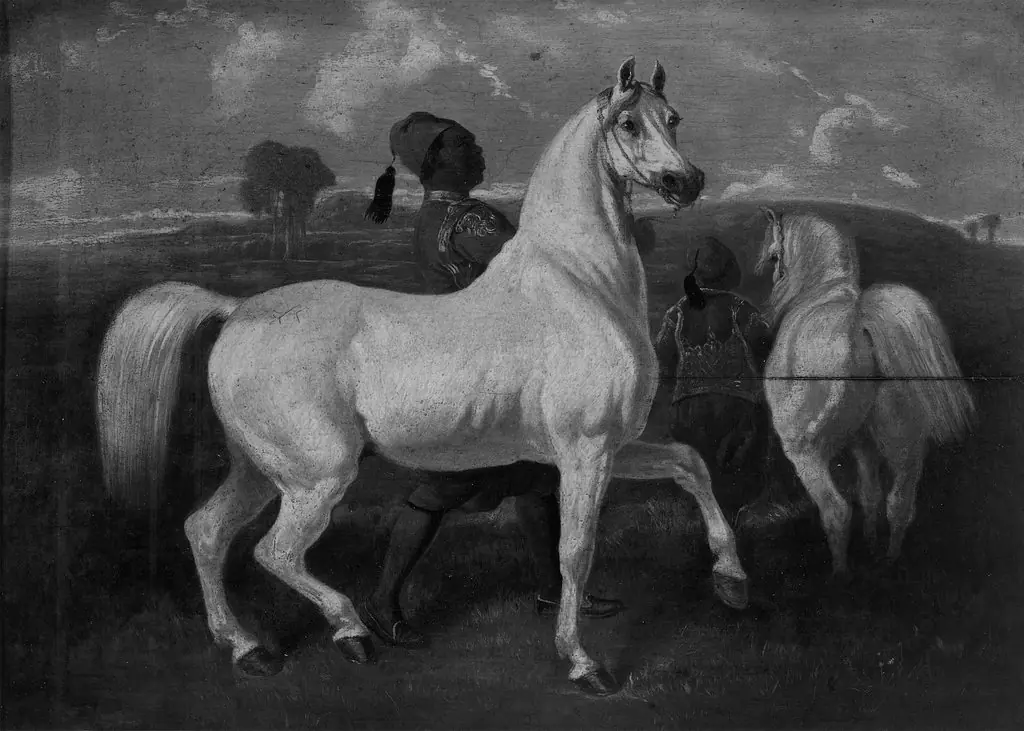
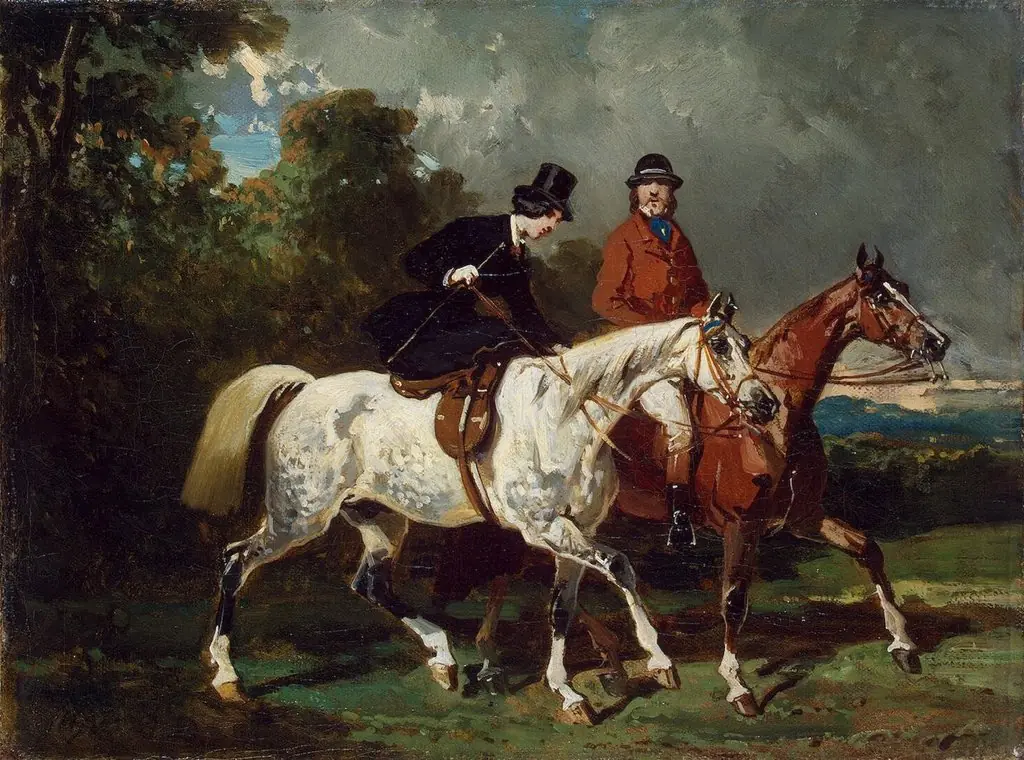
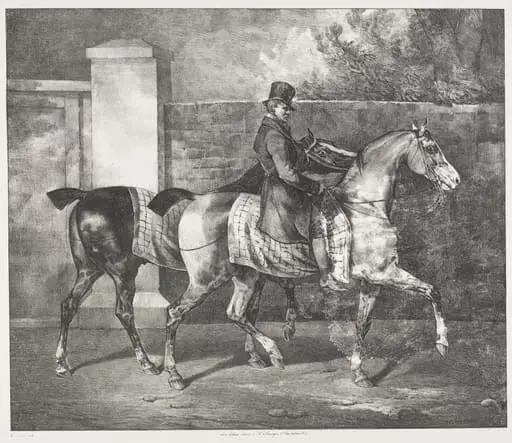
The painting centers on a groom in formal attire—top hat and dark jacket—holding the reins of two light-coated horses with darker limbs and manes. The figures face left, their posture relaxed, while the groom observes them with quiet attention. The scene suggests a pause in routine care, hinting at mutual trust and quiet discipline. No narrative climax is present; instead, dignity is found in the ordinary rhythms of stable life.
Technique & Style
Leighton employs chiaroscuro to model the forms of the horses and groom, lending volume and spatial depth against the dim woodland backdrop. Brushwork is controlled, with soft transitions between light and shadow, particularly on the animals’ flanks and the groom’s jacket. The background trees and foliage are rendered with loose, atmospheric strokes, grounding the figures in a natural setting without distracting detail.
History & Provenance
Created in 1896, the painting entered the Brooklyn Museum’s collection shortly after its completion. Little is documented about its early ownership or exhibition history, but its preservation in a major American institution suggests early recognition of its quiet craftsmanship. No major alterations or restorations are recorded, and the work remains in its original state.
Context
In late 19th-century America, equestrian themes were common in academic and genre painting, often tied to aristocratic leisure or agricultural life. Leighton’s focus on a working groom, rather than a rider, aligns with a growing interest in laboring figures. The wooded setting reflects contemporary tastes for naturalism, while the groom’s attire hints at the formality expected in elite stables of the era.
Legacy
Though not widely reproduced or studied, the painting endures as a thoughtful example of American realist equine portraiture. Its restrained composition and attention to quiet interaction distinguish it from more theatrical equestrian works of the period. It contributes to a broader understanding of how everyday rural labor was visually acknowledged in fine art at the turn of the century.
Artist & collection