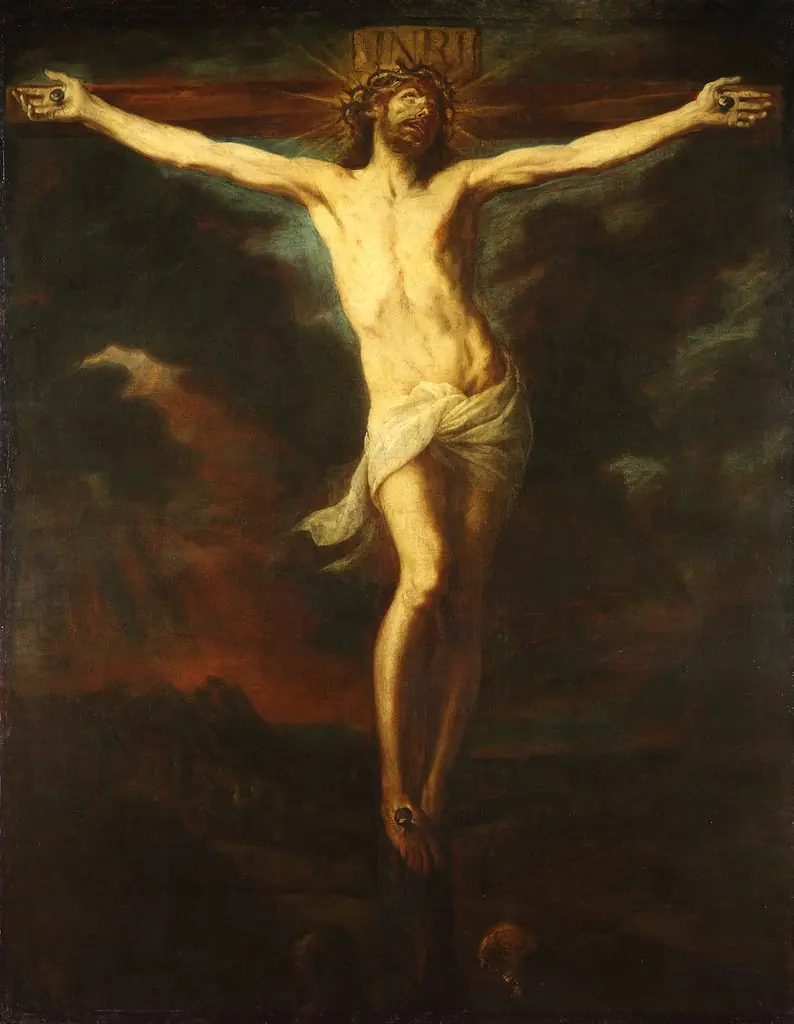
Artwork
The Crucifixion (La crucifixión)
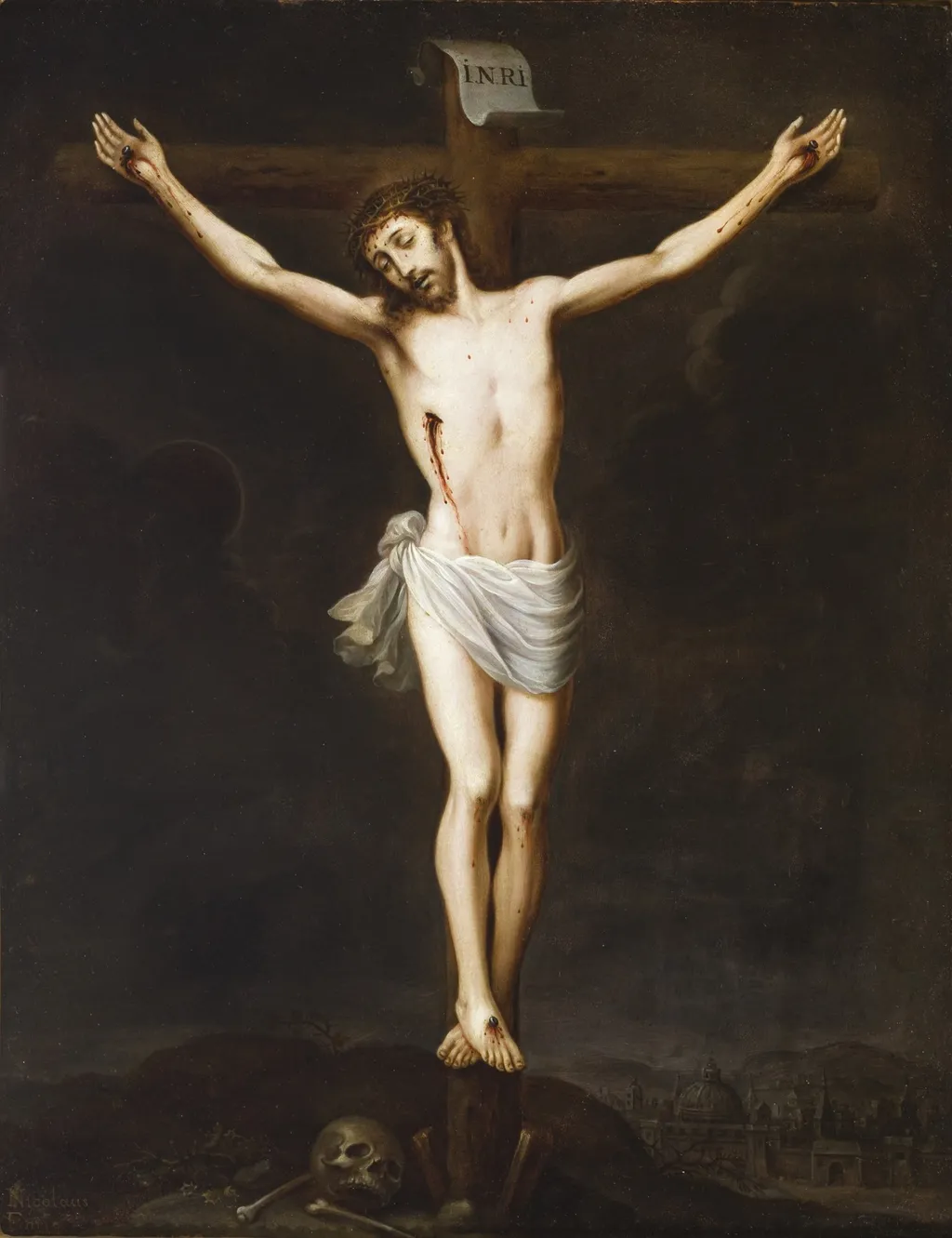
The Crucifixion (La crucifixión) is an unspecified painting by Nicolás Enríquez. It is held in the collection of the Los Angeles County Museum of Art.
About this work
Overview
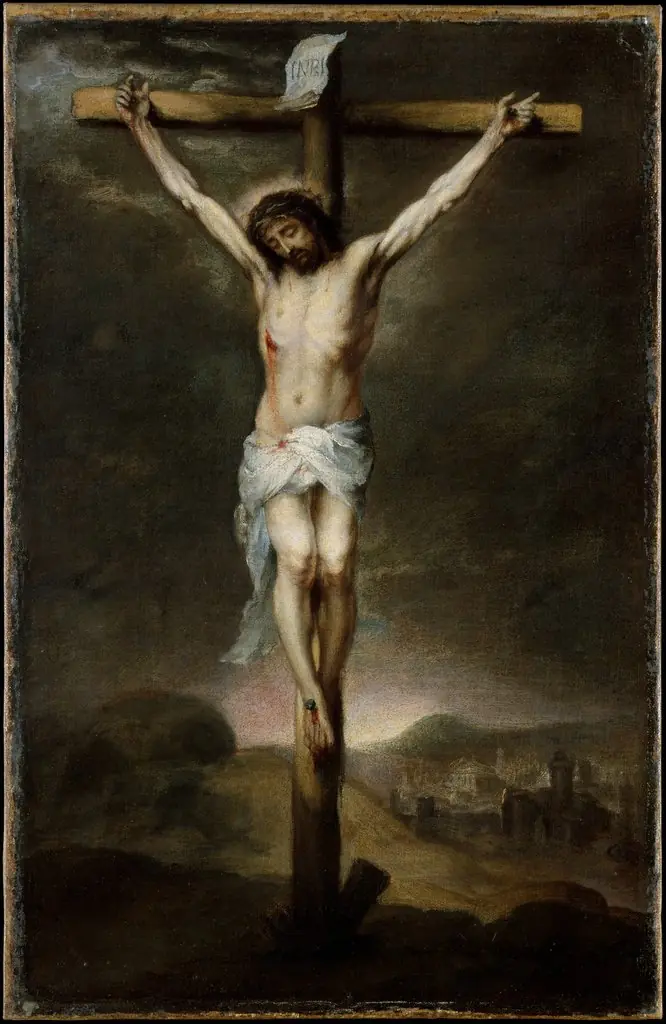
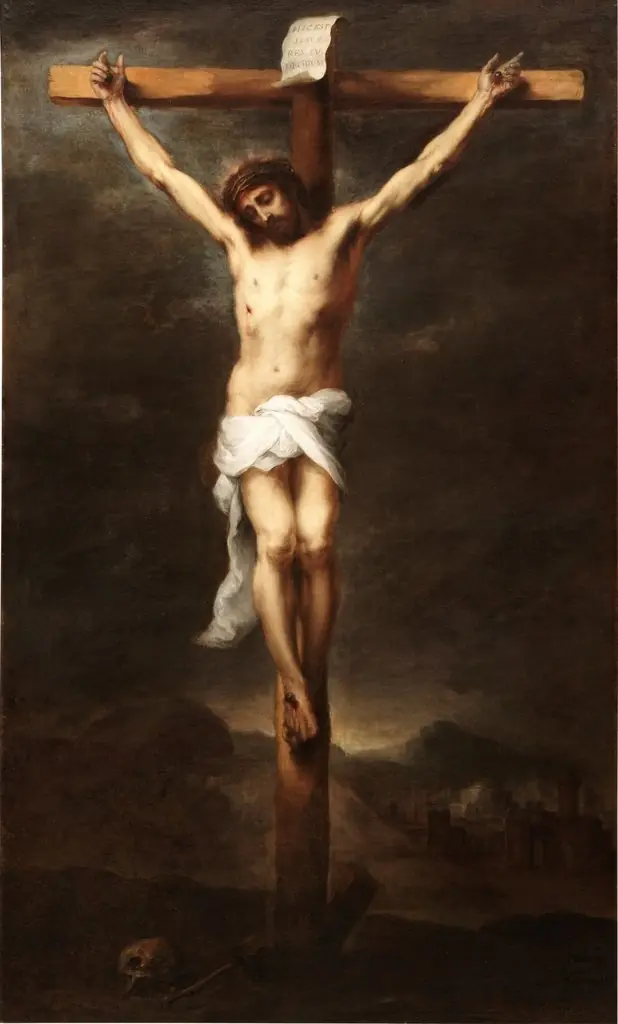
Nicolás Enríquez’s 1796 oil on canvas titled *The Crucifixion* depicts the traditional Christian scene of Christ on the cross. The work is part of the collection at the Los Angeles County Museum of Art, where it is displayed among other colonial-era religious paintings.
Subject & Meaning
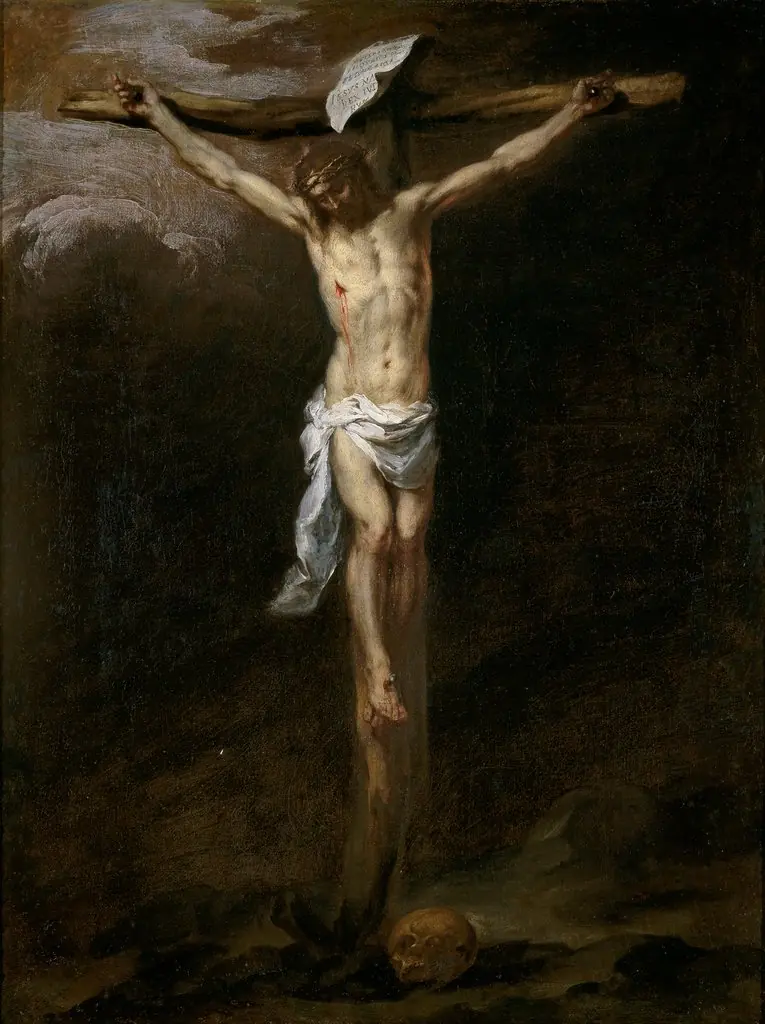
The central figure is a gaunt man nailed to a wooden cross, his torso wrapped in a white cloth and his head bowed in apparent surrender. Blood stains his hands, feet and side, while a small INRI banner hovers above, identifying the figure as Jesus. A skull and crossbones lie at the foot of the cross, recalling the biblical reference to Golgotha, the place of the skull.
Technique & Style
Enríquez employs a muted palette dominated by earth tones and deep blues, creating a somber atmosphere. The chiaroscuro treatment emphasizes the illuminated body against a dark, cloud‑filled sky, heightening the drama. Fine brushwork renders the wounds and the texture of the cloth, while broader strokes suggest the turbulent clouds and the indistinct objects at the base of the cross.
History & Provenance
Painted in 1796, the work reflects the late colonial artistic production of New Spain. After changing hands among private collectors, it entered the Los Angeles County Museum of Art’s holdings in the late 20th century, where it has been catalogued as a representative example of Mexican religious art from the period.
Context
The composition follows the iconographic conventions established by European Baroque masters, yet it incorporates local sensibilities evident in the stark realism of the figure’s suffering. Such depictions were common in Mexican churches of the era, serving both devotional and didactic purposes for congregations.
Own this work as a print
Artist & collection