Artwork
Fazenda em Teresópolis (atribuído)
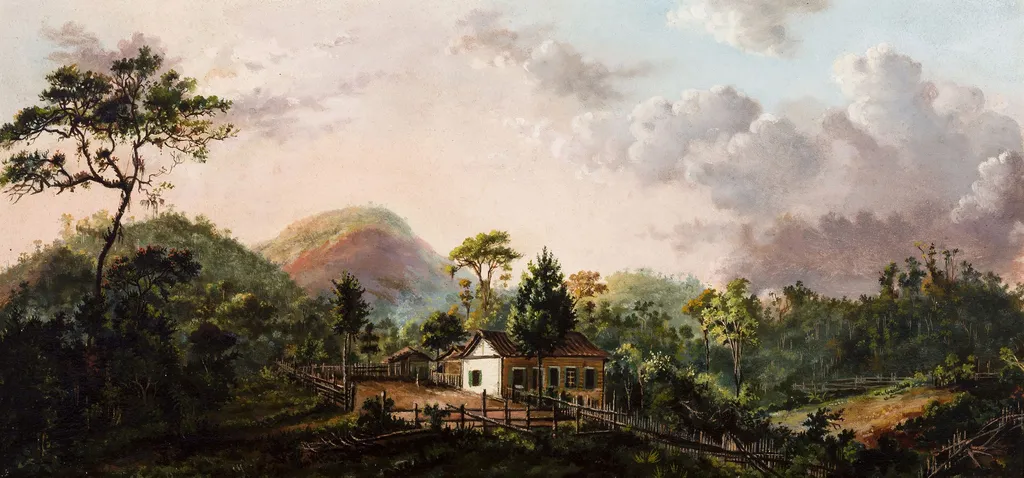
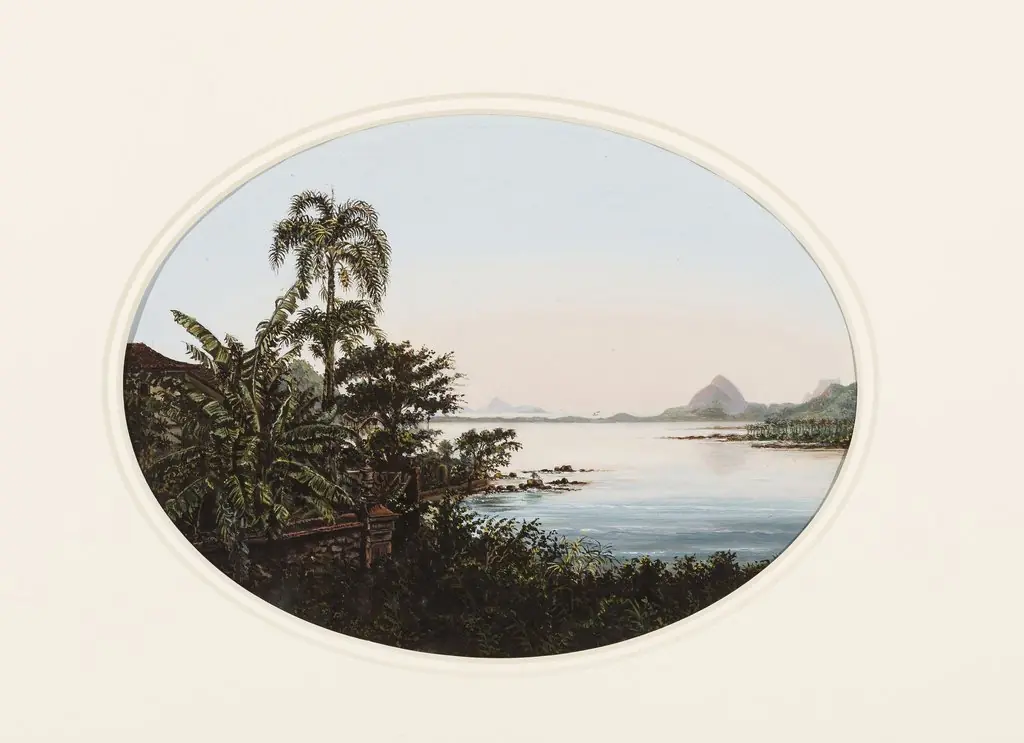
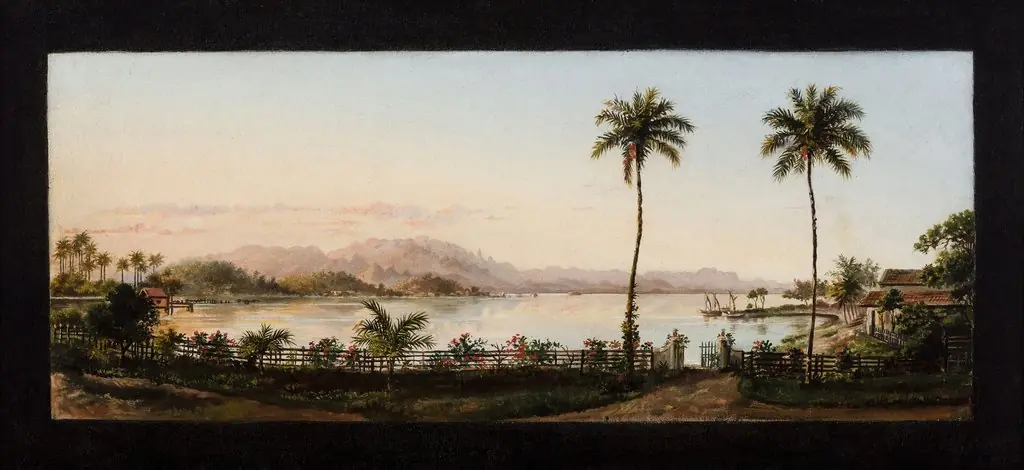
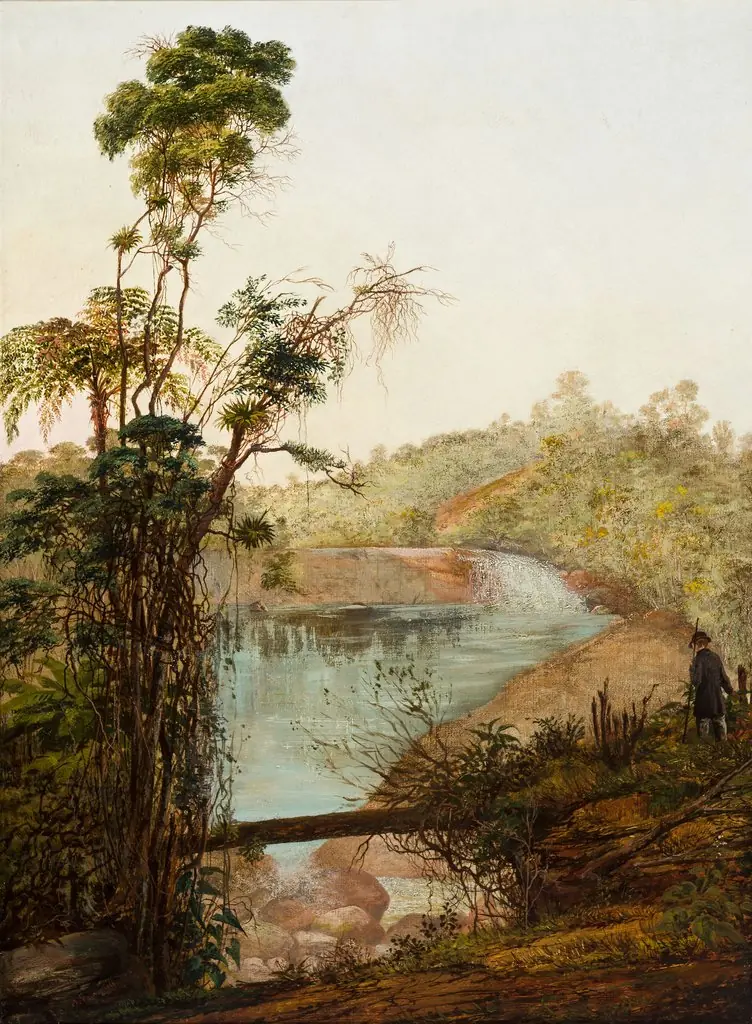
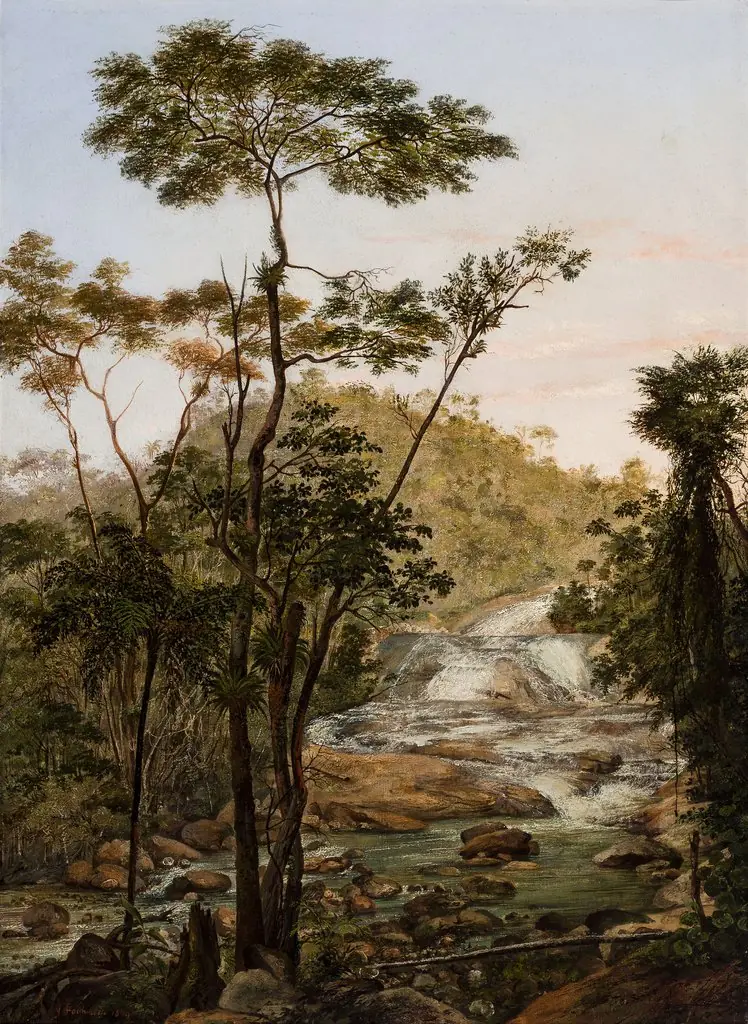
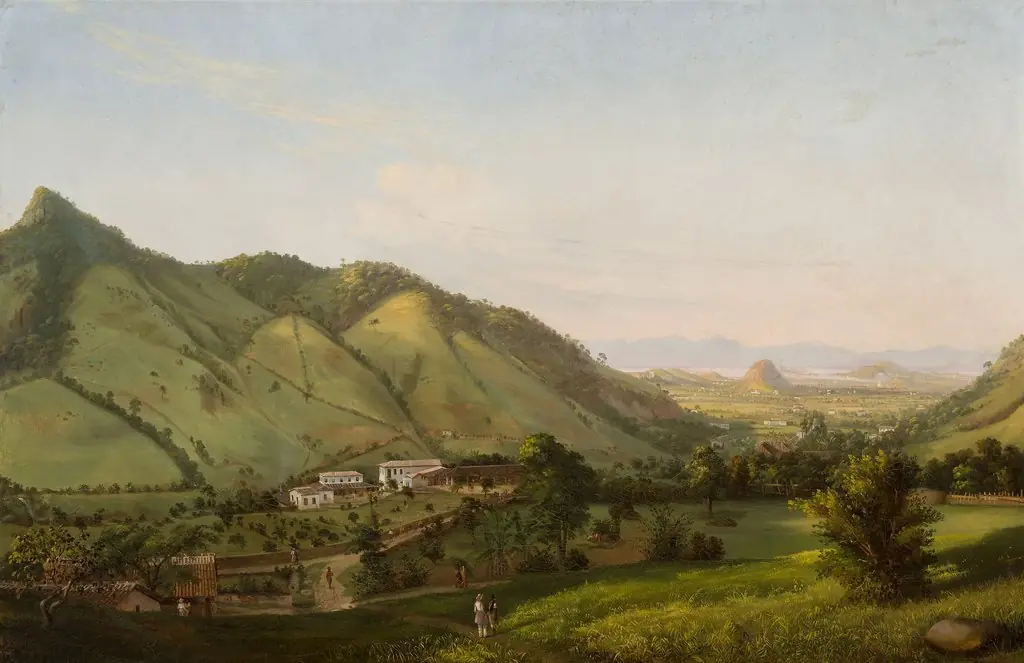
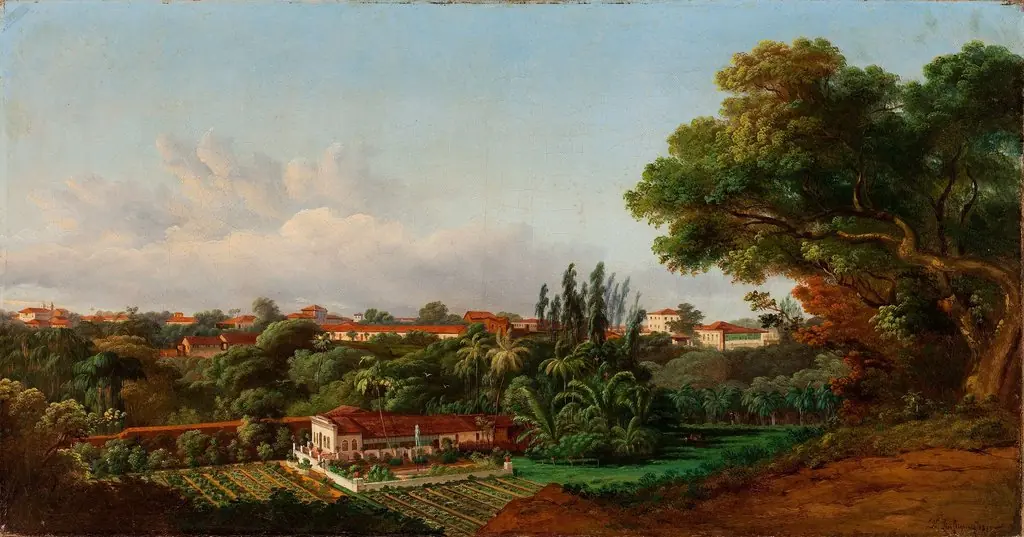
Fazenda em Teresópolis (atribuído) is an oil painting by the Impressionist artist Nicola Antonio Facchinetti. It dates from 1872 and is held in the collection of the Pinacoteca de São Paulo.
About this work
Overview
The work belongs to a period when Brazilian artists began turning toward local landscapes as subjects, moving away from European academic traditions.
Attributed to Nicola Antonio Facchinetti, this oil painting dates to around 1872 and portrays a rural property in Teresópolis, Brazil. It is part of the Pinacoteca do Estado de São Paulo’s collection. The work belongs to a period when Brazilian artists began turning toward local landscapes as subjects, moving away from European academic traditions. Its quiet composition and attention to regional detail reflect an emerging national visual identity.
Subject & Meaning
The painting centers on a modest farmhouse surrounded by dense vegetation and rolling hills. The structure, with its white walls and brown tiled roof, suggests a working rural estate rather than a grand residence. A low wooden fence demarcates the property, reinforcing a sense of domestic order within the wilder landscape. The scene evokes stillness and self-sufficiency, capturing a moment of everyday life in the Brazilian interior during the late 19th century.
Technique & Style
Facchinetti employs soft, blended brushwork to render the sky and distant hills, creating a gentle atmospheric perspective. Warm tones in the building contrast with the cool greens of the foliage and the pale hues of the clouds. The composition leads the eye from the foreground fence through the house to the horizon, enhancing spatial depth. Light is diffused, suggesting early morning or late afternoon, contributing to the scene’s calm mood without dramatic contrast.
History & Provenance
The painting’s attribution to Facchinetti is based on stylistic comparison and archival records, though no definitive documentation of its commission or early ownership exists. It entered the Pinacoteca do Estado de São Paulo’s collection in the 20th century, likely through state acquisition efforts to preserve regional art. Its presence in the museum underscores its value as a representative example of provincial landscape painting from the period.
Context
Created during Brazil’s imperial era, the painting reflects a growing interest in depicting the nation’s natural and rural environments. While urban centers like Rio de Janeiro were modernizing, artists like Facchinetti turned to the countryside, documenting landscapes that symbolized continuity and national character. This work aligns with broader trends in 19th-century Latin American art that sought to define identity through place rather than imported aesthetics.
Legacy
Though not widely exhibited outside Brazil, the painting contributes to the understanding of regional painting practices in the late 1800s. It stands as a quiet testament to artists who documented everyday rural life with observational care rather than idealization. Its preservation in a major public collection ensures its role in ongoing studies of Brazilian visual culture and the evolution of landscape representation in the country.
Artist & collection
Artist
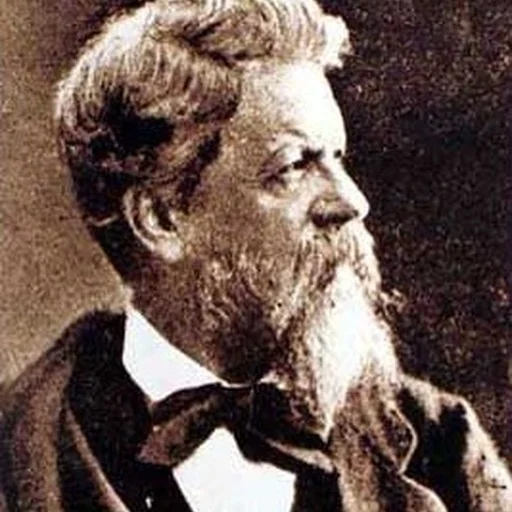
Nicola Antonio Facchinetti (1824–1900) was an artist, born in Treviso.