Artwork
Ruins in Italy
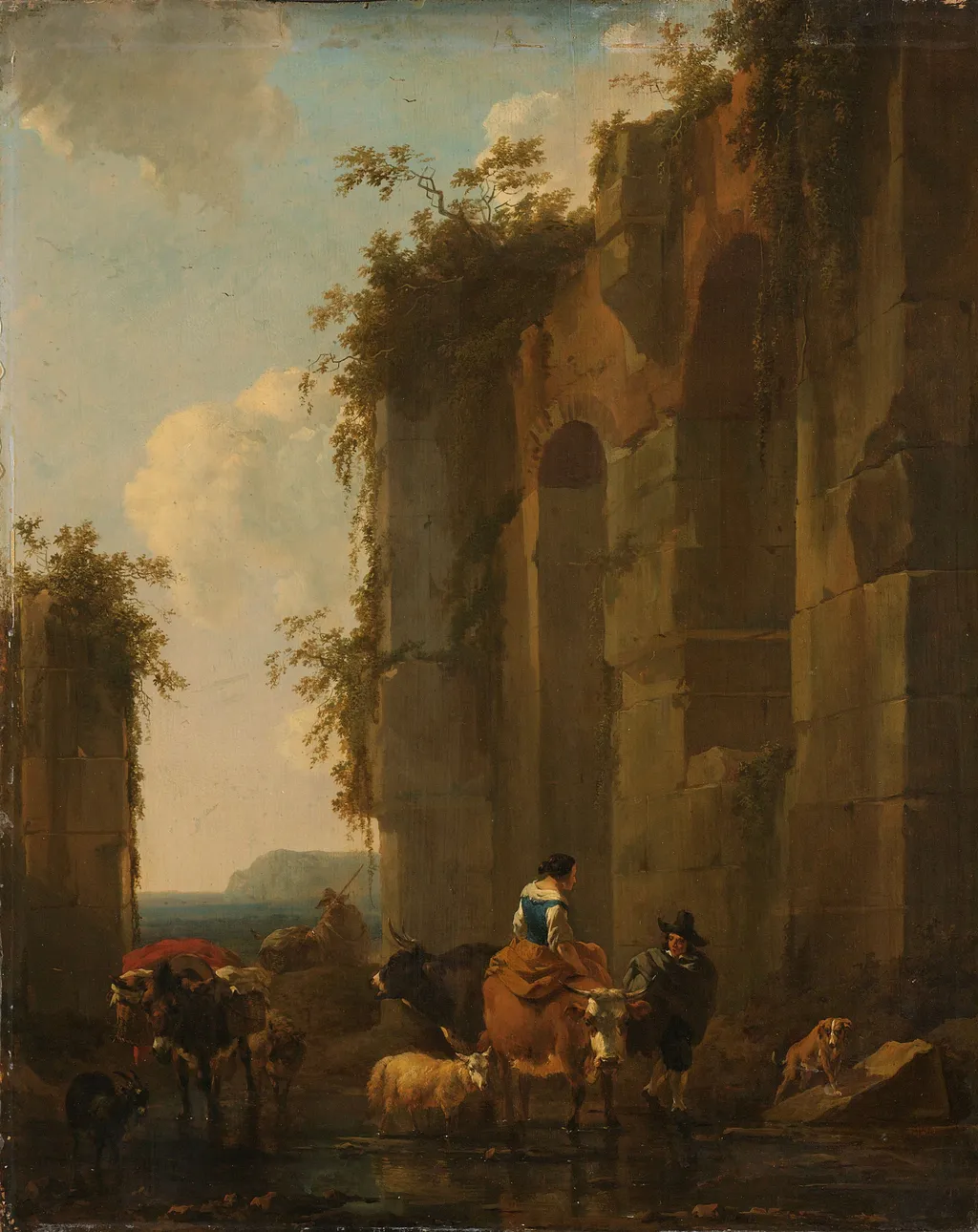
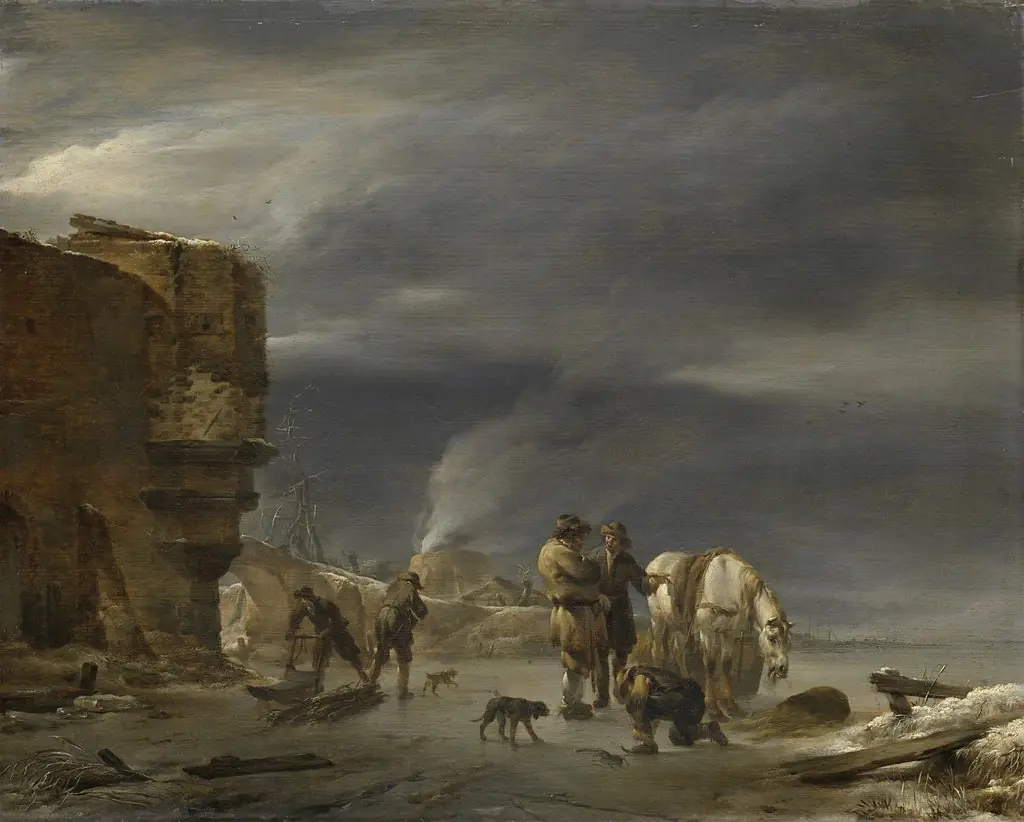
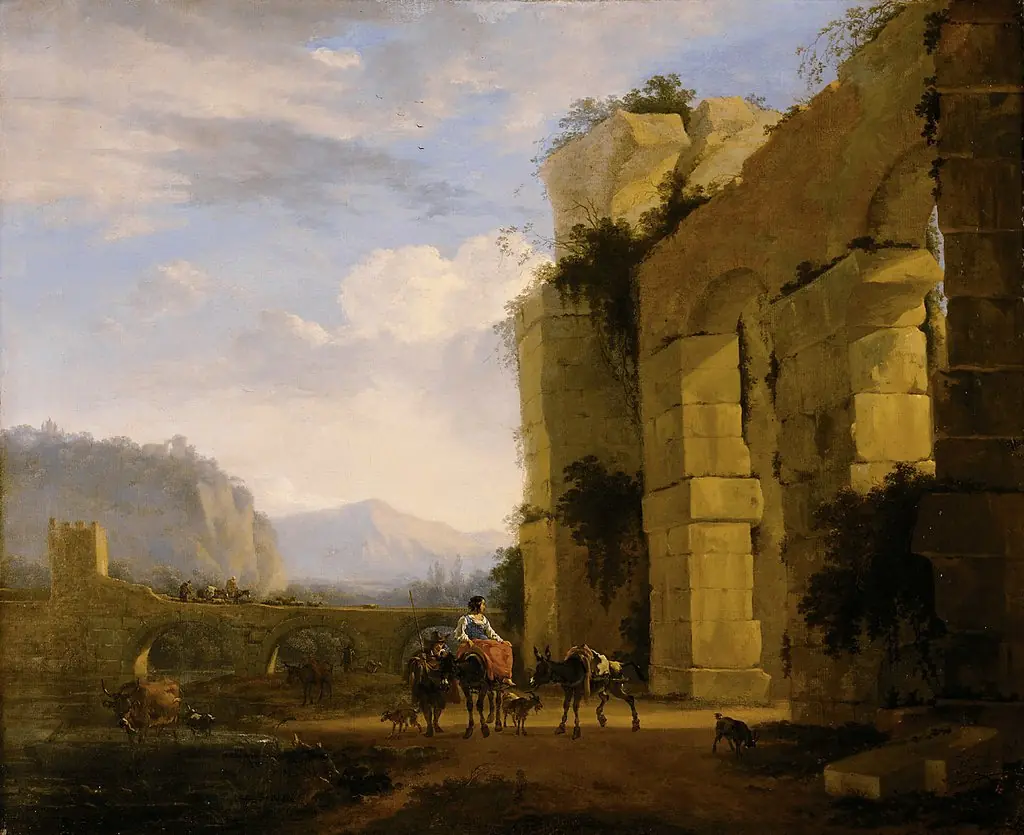
Ruins in Italy is an oil painting by the Dutch Golden Age artist Nicolaes Pieterszoon Berchem. It dates from 1658 and is held in the collection of the Rijksmuseum.
About this work
Overview
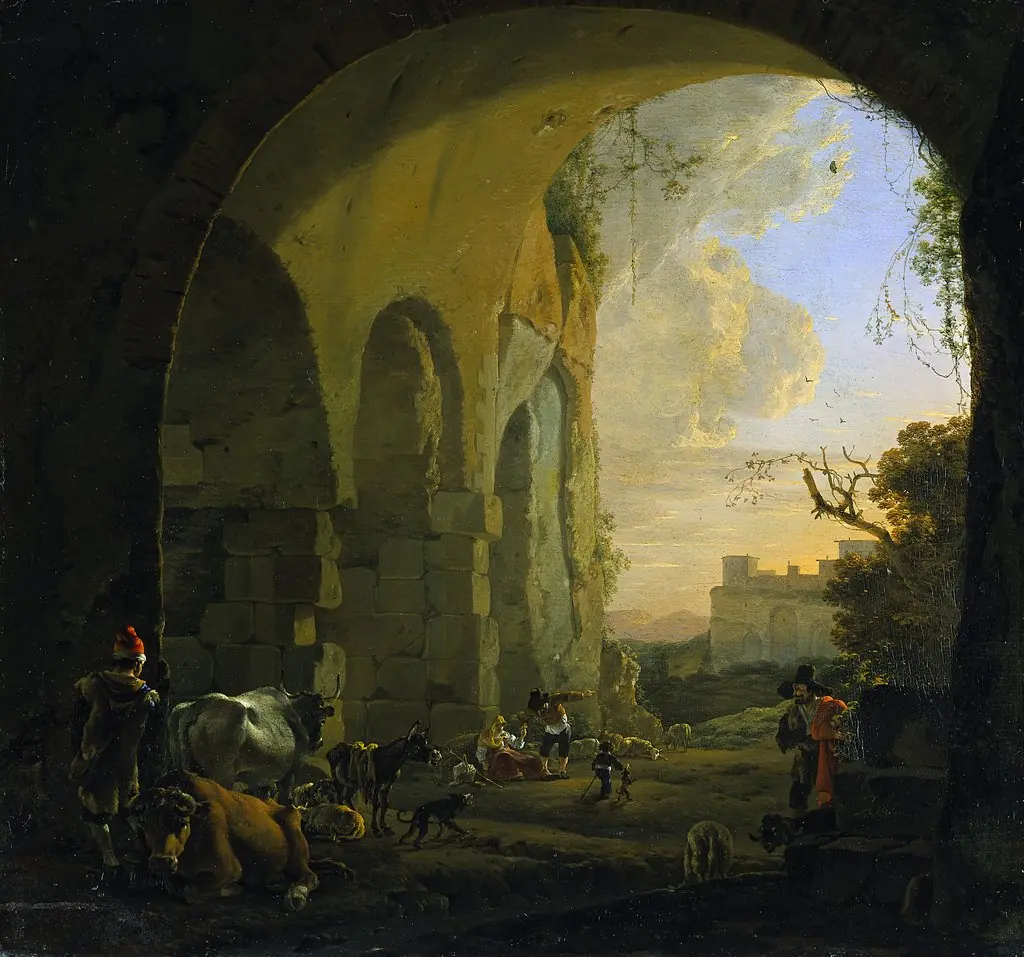
Nicolaes Pieterszoon Berchem’s 1658 oil painting *Ruins in Italy* presents a tranquil Italian landscape where ancient stone fragments stand amid verdant growth. A solitary, gnarled tree dominates the foreground, while gentle hills and distant mountains recede under a lightly clouded sky, creating a balanced composition that merges natural and architectural elements.
Subject & Meaning
The work juxtaposes the decay of classical ruins with the vitality of a thriving tree, suggesting a dialogue between past grandeur and present renewal. Vines and shrubs entwine the crumbling structures, emphasizing the passage of time, while the tree’s prominence may symbolize resilience and the enduring presence of nature within human history.
Technique & Style
Berchem employs chiaroscuro to model forms, using warm, sunlit tones against cooler shadows to convey depth. Thin glazes build atmospheric perspective, allowing distant hills to recede softly. The brushwork balances detailed rendering of stone and foliage with broader, more lyrical treatment of sky and terrain, characteristic of Dutch Italianate landscape painters.
History & Provenance
Created during Berchem’s mature period as a second‑generation Dutch Italianate artist, the painting reflects his fascination with Italian antiquity despite limited travel. *Ruins in Italy* entered the Rijksmuseum’s collection, where it remains part of the museum’s holdings of 17th‑century Dutch landscape paintings.
Artist & collection
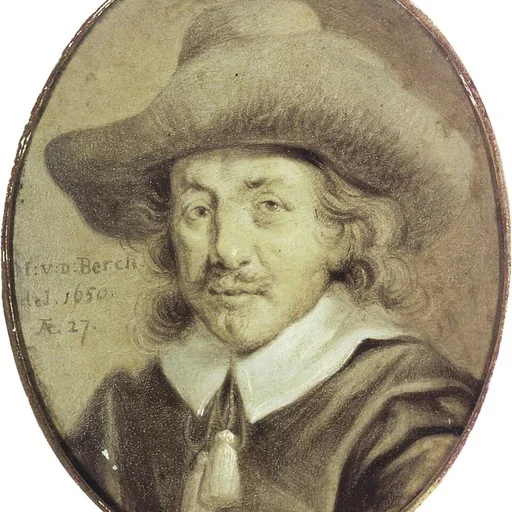
Artist
Nicolaes Pieterszoon Berchem (1 October 1620 – 18 February 1683) was a highly esteemed and prolific Dutch Golden Age painter of pastoral landscapes, populated with mythological or biblical figures, but also of a number of allegories and…