Artwork
The Rape of Europa
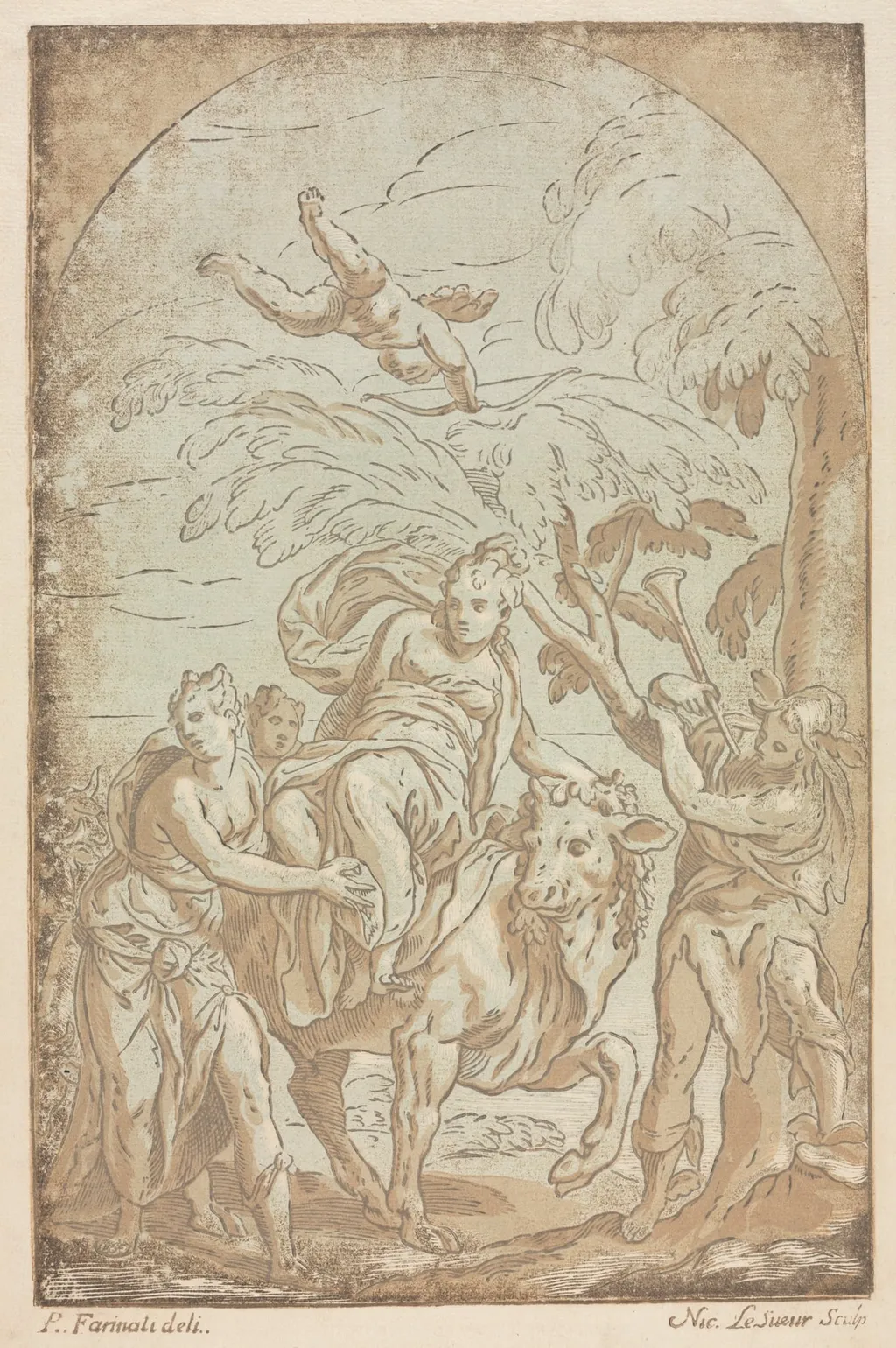
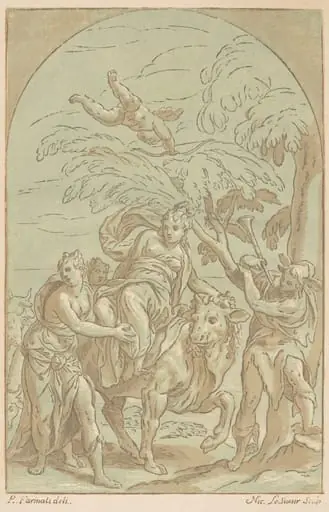
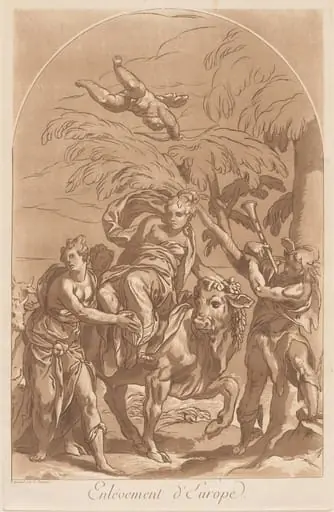
The Rape of Europa is a print by the Baroque artist Nicolas LeSueur. It dates from 1734 and is held in the collection of the Cleveland Museum of Art.
About this work
Overview
It stands out for its hand-carved blocks, a rare departure from the norm where etched metal plates were typically employed.
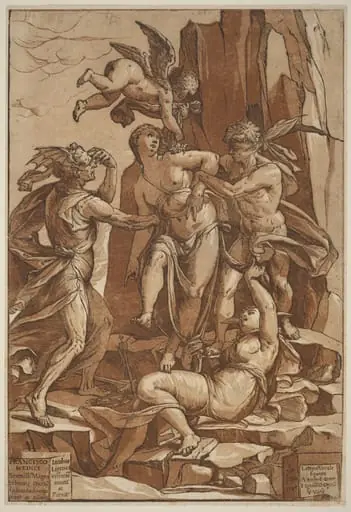
The Rape of Europa is an 18th-century chiaroscuro woodcut that reinterprets a classical myth through a technique traditionally used to reproduce Renaissance masterpieces. Unlike earlier examples, which often originated as original designs, this print was part of a broader 18th-century effort to document and disseminate celebrated works from French collections. It stands out for its hand-carved blocks, a rare departure from the norm where etched metal plates were typically employed.
Subject & Meaning
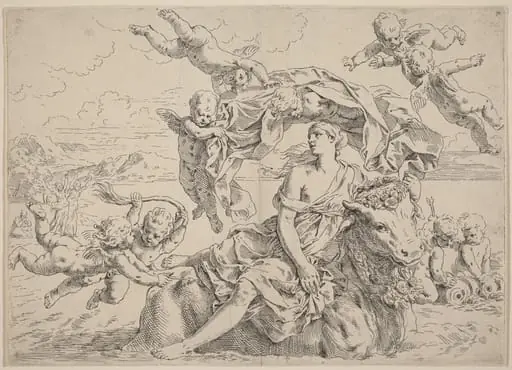
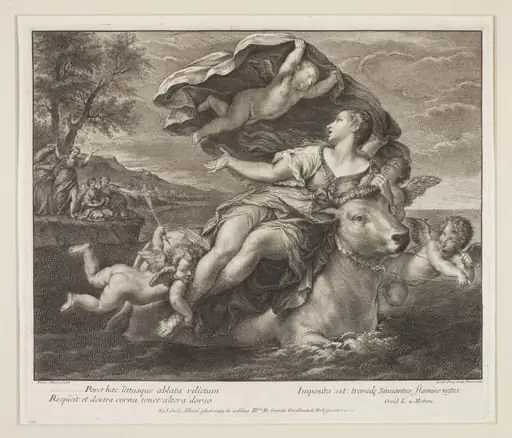
The print illustrates the myth of Europa’s abduction by Zeus, who had taken the form of a bull. The scene captures the moment of sudden movement and tension as Europa clings to the bull’s back, surrounded by swirling drapery and a turbulent sea. The narrative, drawn from Ovid’s Metamorphoses, was a favored subject in European art, symbolizing both divine power and the vulnerability of mortals, resonating with Enlightenment-era fascination with antiquity.
Technique & Style
Unlike most chiaroscuro prints of the period, which relied on etched metal plates for outlines, Le Sueur personally carved all four woodblocks for this work—two for tone and two for contour. This labor-intensive method allowed for nuanced gradations of light and shadow, enhancing the drama of the scene. The layered printing process produced a painterly effect, mimicking the chiaroscuro of oil paintings while retaining the graphic clarity of printmaking.
History & Provenance
Created as part of a series commissioned by the Cabinet Crozat, the print was included in two volumes published by Count Caylus and Pierre Crozat in 1729 and 1742. These publications aimed to catalog significant artworks from French private collections. Le Sueur’s involvement reflected the growing role of printmaking in preserving and circulating high art among elite patrons, bridging the gap between private collections and public artistic discourse.
Context
In the 18th century, classical mythology remained a vital source of subject matter for artists, even as tastes shifted toward neoclassicism. Chiaroscuro woodcuts served not merely as reproductions but as tools for education and cultural preservation. The choice to render Europa’s abduction in this medium underscores the period’s reverence for Renaissance models and the desire to make them accessible beyond the confines of aristocratic collections.
Legacy
Le Sueur’s hand-carved blocks for The Rape of Europa represent a transitional moment in printmaking, where traditional techniques were applied to reproduce canonical works with increasing technical precision. While chiaroscuro woodcuts declined in popularity after the 18th century, this work exemplifies the medium’s capacity to bridge painting and print, preserving the visual language of earlier masters for future generations.
Artist & collection