Artwork
Diana and Endymion
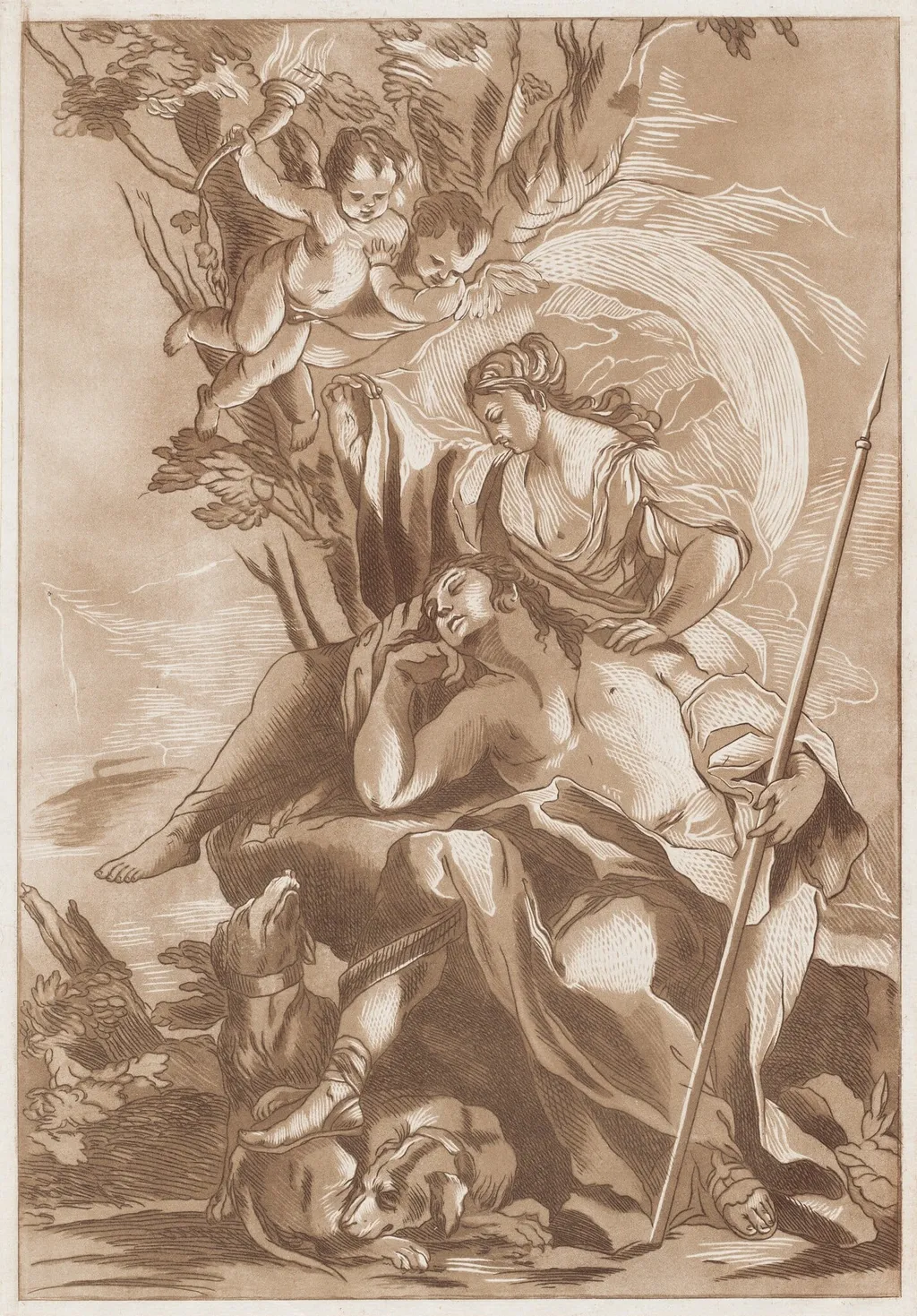
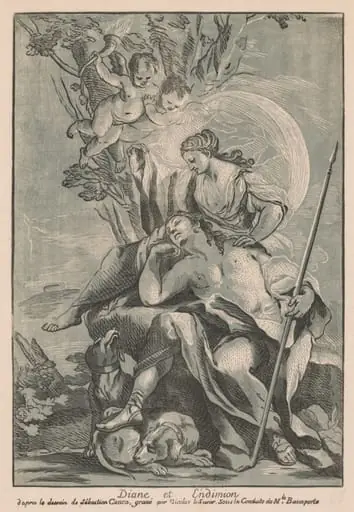
Diana and Endymion is an ink print by the Romanticist artist François-Philippe Charpentier. It dates from 1763 and is held in the collection of the National Gallery of Art.
About this work
Overview
The print is held in the National Gallery of Art, Washington, and reflects his technical experimentation with aquatint, a method he helped refine.
François-Philippe Charpentier, a French engraver born in Blois in 1734, produced this brown-toned etching and aquatint in 1763 on laid paper. The print is held in the National Gallery of Art, Washington, and reflects his technical experimentation with aquatint, a method he helped refine. Charpentier, trained in Paris and the son of a bookbinder, was known for advancing printmaking processes during the mid-18th century.
Subject & Meaning
The scene illustrates the myth of Diana, goddess of the hunt, and Endymion, a mortal shepherd favored by the moon. Diana is depicted leaning over the sleeping Endymion, her spear resting nearby, while two cherubs hover above with a bow and arrow. A dog lies at their feet, reinforcing the pastoral setting. The image conveys a quiet, otherworldly intimacy, capturing the myth’s theme of divine love and eternal slumber.
Technique & Style
Charpentier employed etching for fine linear detail and aquatint to achieve subtle tonal gradations in brown ink, enhancing the atmospheric depth of the scene. The soft transitions between light and shadow, along with delicate textures in foliage and fabric, demonstrate his mastery of the medium. The composition avoids dramatic intensity, favoring a calm, contemplative mood through restrained contrasts and gentle contours.
History & Provenance
Created in 1763, the print emerged during Charpentier’s active period in Paris, where he was developing innovations in aquatint. It entered the National Gallery of Art’s collection through established acquisition channels, likely as part of a broader effort to document European printmaking advancements. No record of earlier ownership or exhibition history is widely documented beyond its current institutional custody.
Context
Though often associated with Romanticism, this work predates the movement’s formal emergence by several decades. Its emotional tone and mythological subject align with 18th-century tastes for classical themes rendered with sensitivity. Charpentier’s technique reflects the era’s interest in expanding printmaking’s expressive range beyond line engraving, bridging academic tradition and emerging aesthetic sensibilities.
Legacy
Charpentier’s contributions to aquatint printing influenced later generations of printmakers seeking tonal richness without color. While *Diana and Endymion* is not among his most widely reproduced works, it exemplifies his technical precision and quiet poetic sensibility. His innovations helped establish aquatint as a legitimate medium for artistic expression in print culture.
Artist & collection

Artist
François-Philippe Charpentier (b. Blois, 1734; d. there 22 July 1817) was a French engraver and inventor. His father was a bookbinder, a poor man who reportedly made many sacrifices so that his son might attend the…

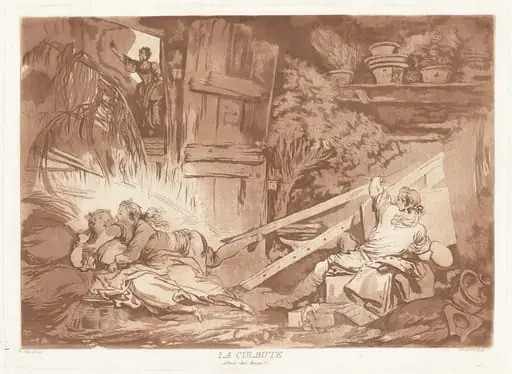 La Culbute (The Tumble)
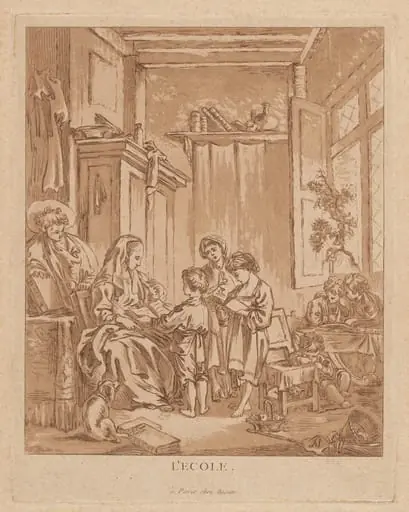 L’École (The School)
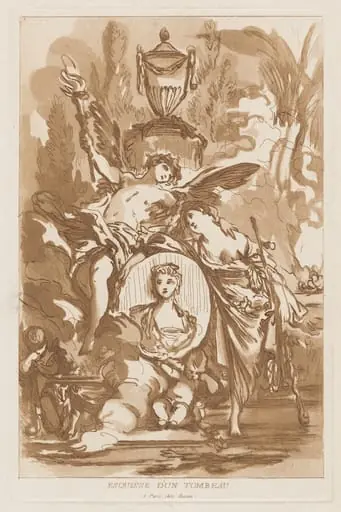 Esquisse d’un tombeau (Sketch for a Tomb)
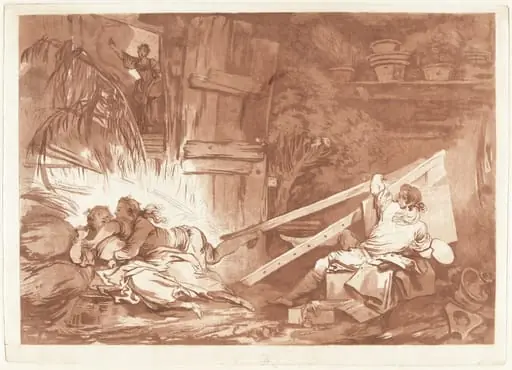 The Tumble
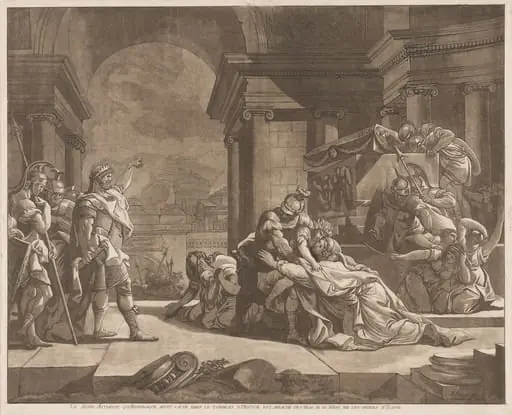 Le Jeune Astianax qu’Andromaque avoit caché dans le tombeau d’Hector est arraché des bras de sa Mere par les ordres d'Ulisse (Young Astianax, who Andromache Hid in Hector's Tomb, is Seized from his Mother's Arms by Ulysses' Orders)
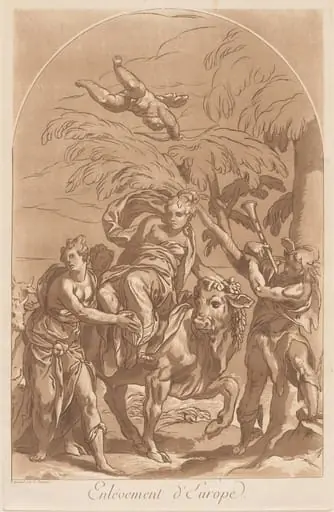 Rape of Europa
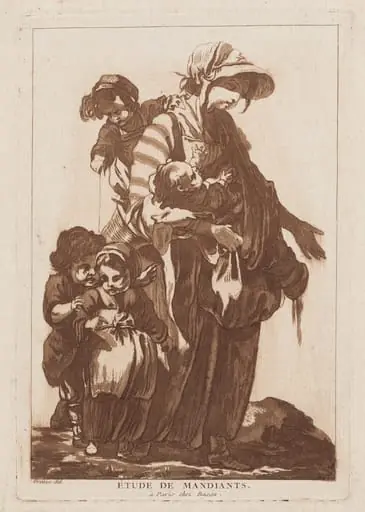 Étude de Mandiants (Study of Beggars)
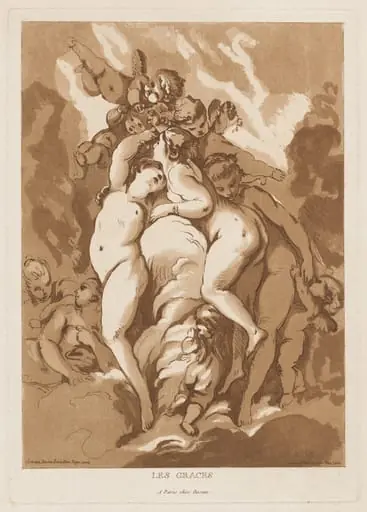 Les Graces (The Graces)