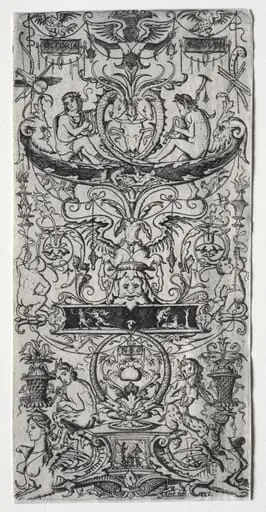
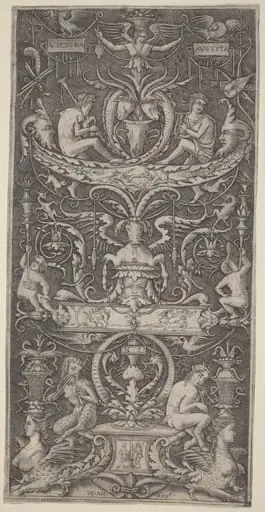
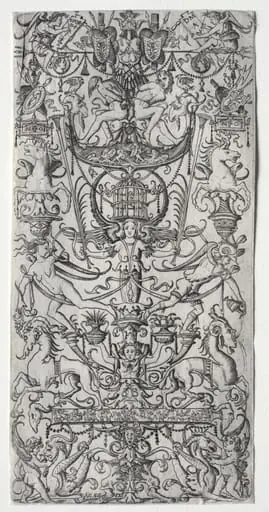
Artwork
Panel of Ornament Inscribed Victoria Augusta
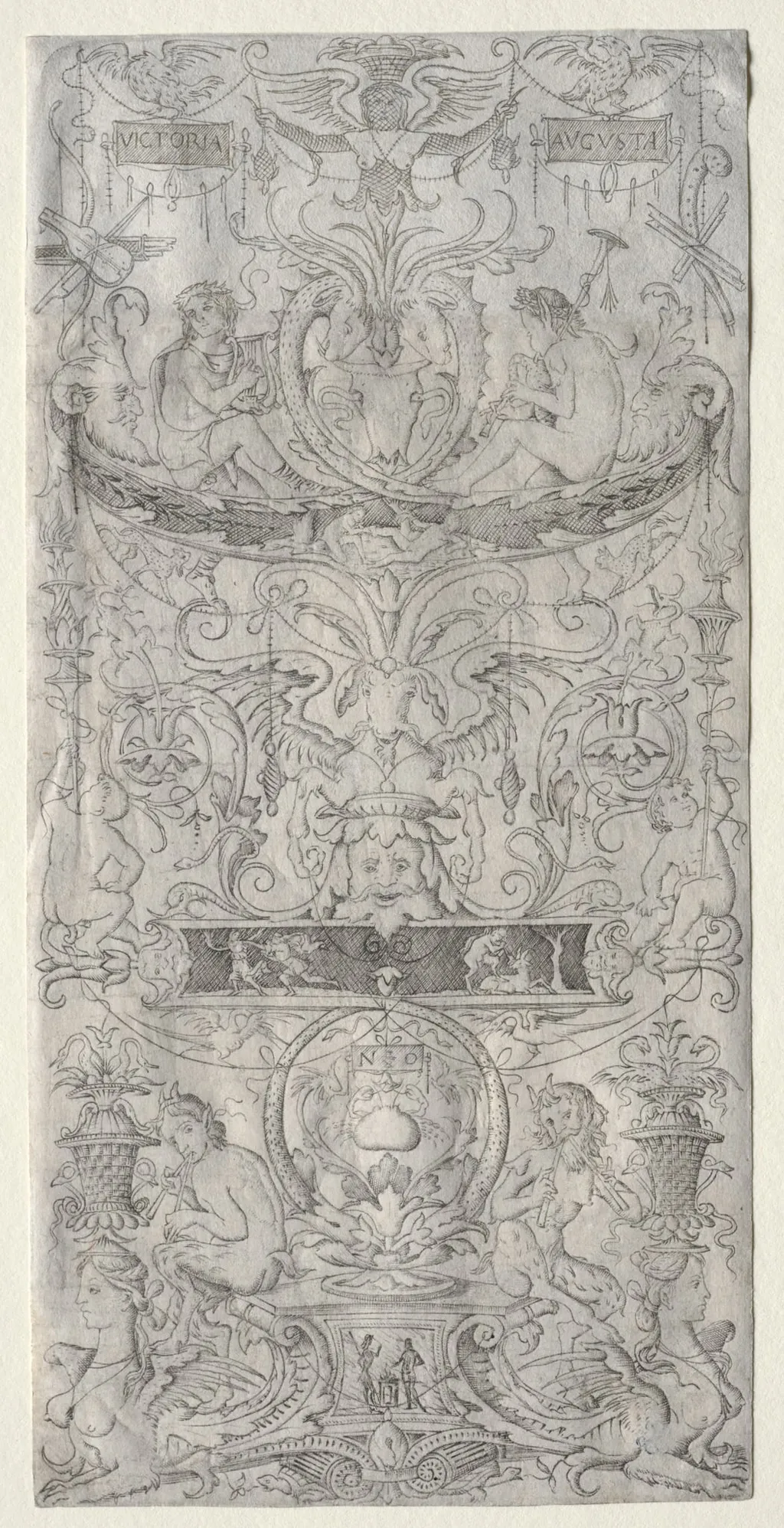
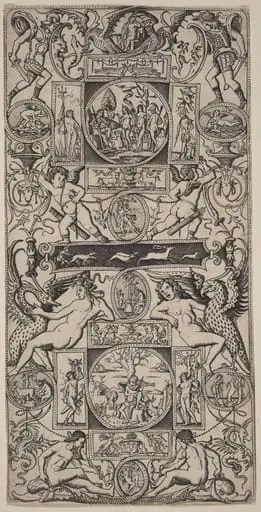
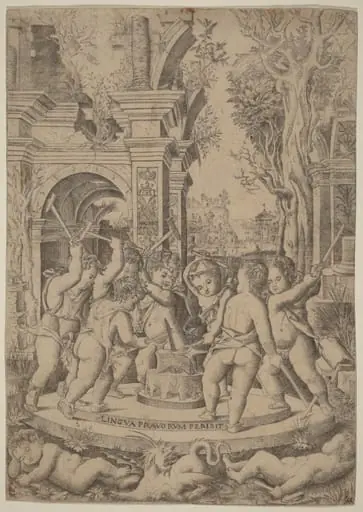
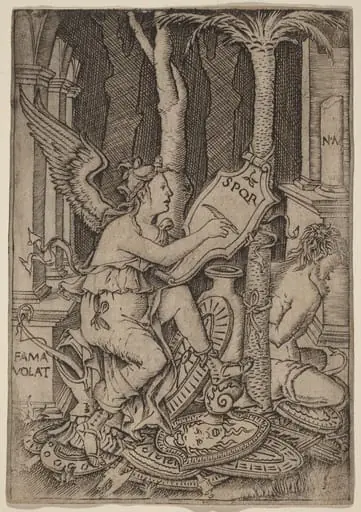
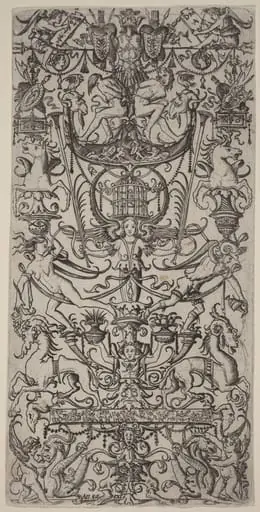
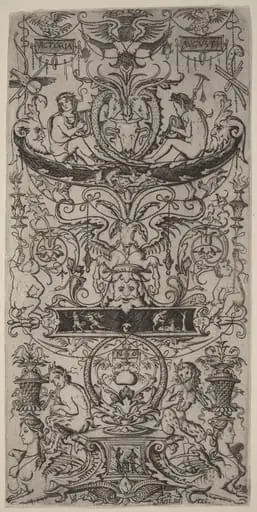
Panel of Ornament Inscribed Victoria Augusta is a print by the Renaissance artist Nicoletto da Modena. It dates from 1507 and is held in the collection of the Cleveland Museum of Art.
About this work
Overview
Created around 1507 by the Italian artist Nicoletto da Modena, this printed panel—titled *Panel of Ornament Inscribed Victoria Augusta*—is part of the Cleveland Museum of Art’s collection. The composition consists of an intricate ornamental framework filled with miniature figures, heraldic motifs, and textual elements that together form a dense decorative scheme.
Subject & Meaning
At the upper centre, two winged angels support a banner bearing the inscription *Victoria Augusta*, a phrase that evokes triumph and imperial dignity. Beneath, a central shield crowned with a regal diadem is encircled by foliage, while flanking angels either play musical instruments or hold objects such as a basket and a tower, suggesting a celebratory or heraldic purpose.
Technique & Style
The precision of the incised lines and the balanced distribution of ornamental elements reflect the period’s interest in complex, decorative visual programs.
Executed as a print, the work displays fine, controlled line work typical of early sixteenth‑century Italian engraving. The design relies on tightly packed, interlacing patterns and miniature figurative details, creating a tapestry‑like effect. The precision of the incised lines and the balanced distribution of ornamental elements reflect the period’s interest in complex, decorative visual programs.
History & Provenance
The panel dates to the early 1500s, a time when Nicoletto da Modena was active in the Emilia region. It entered the Cleveland Museum of Art’s holdings through acquisition (specific acquisition details are recorded in the museum’s catalog). The work has remained in the museum’s collection, where it is displayed as an example of Renaissance ornamental printmaking.
Context
The piece belongs to a broader Renaissance tradition of creating elaborate decorative panels for coats of arms, ceremonial objects, or architectural embellishments. Its combination of heraldic symbols, angelic figures, and musical motifs aligns with contemporary practices that merged visual splendor with allegorical references to victory, authority, and cultural refinement.
Artist & collection