Artwork
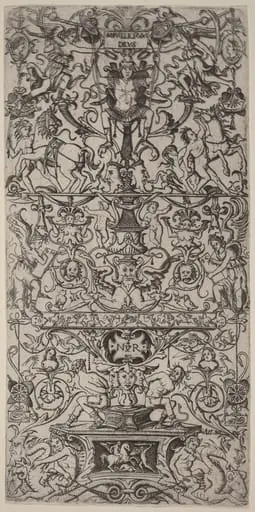
Ornament Panel: Victoria Augusta
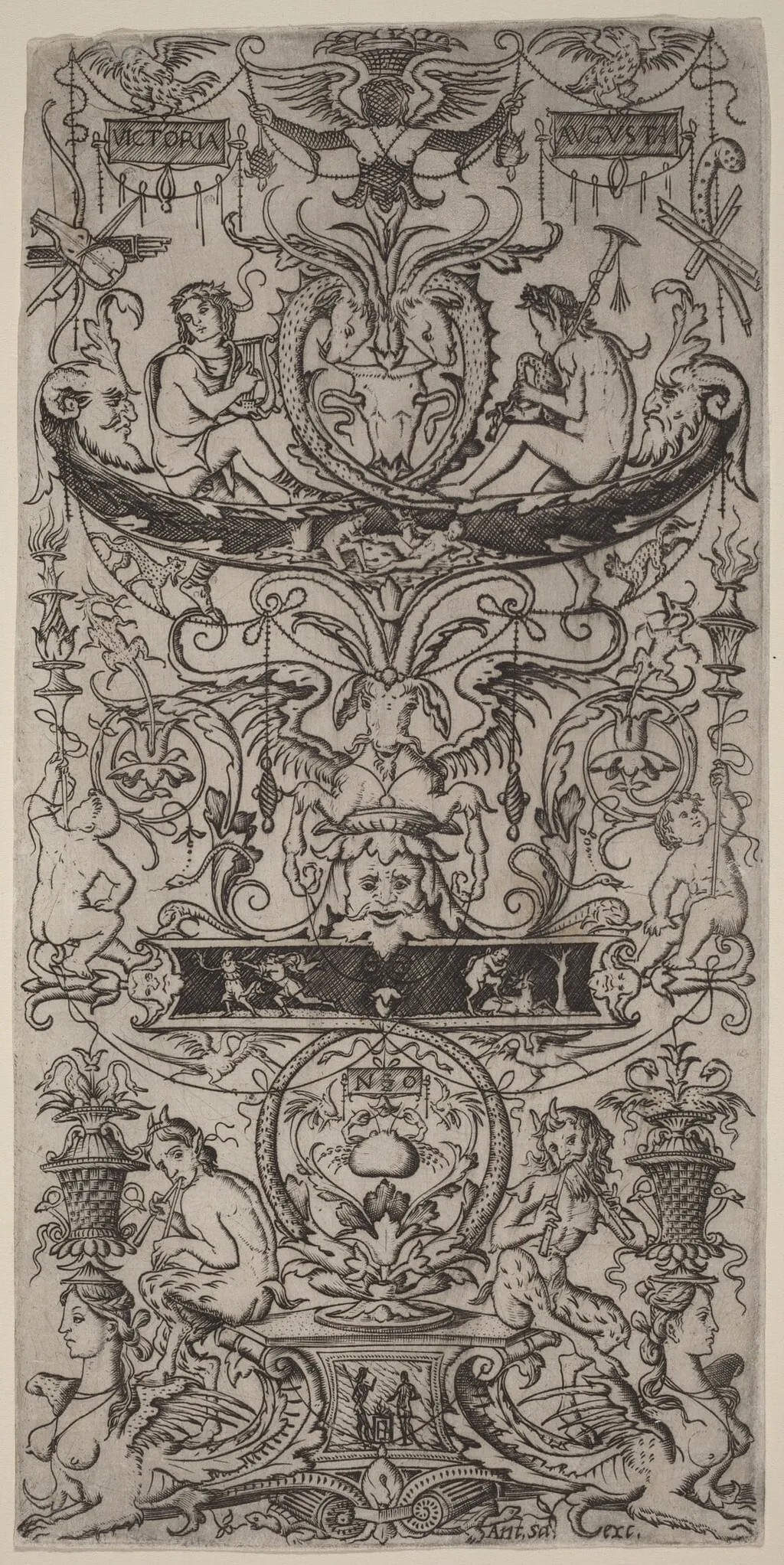
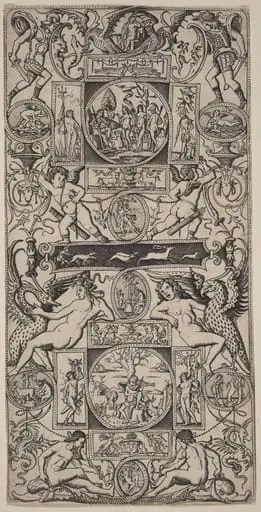
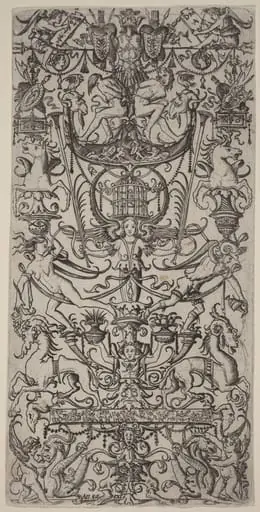
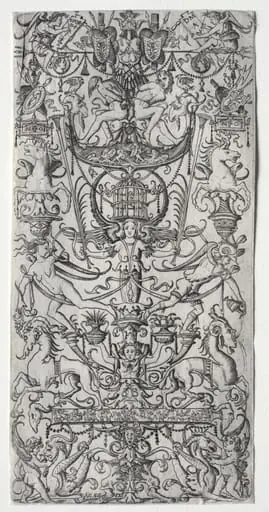
Ornament Panel: Victoria Augusta is an ink print by the Renaissance artist Nicoletto da Modena. It dates from 1507 and is held in the collection of the National Gallery of Art.
About this work
Overview
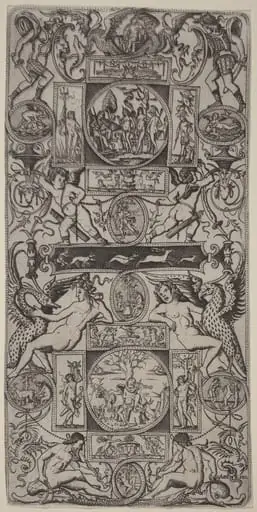
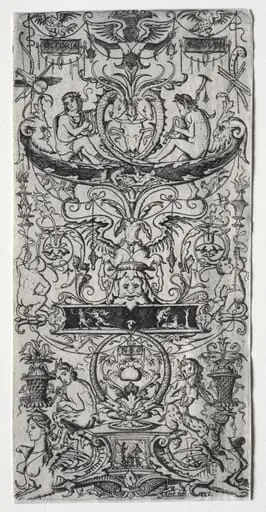
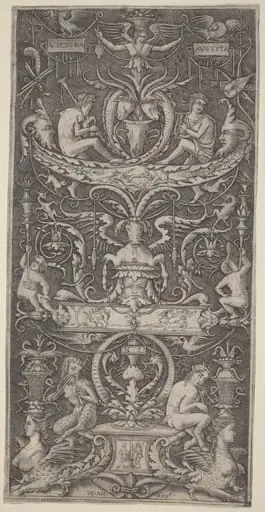
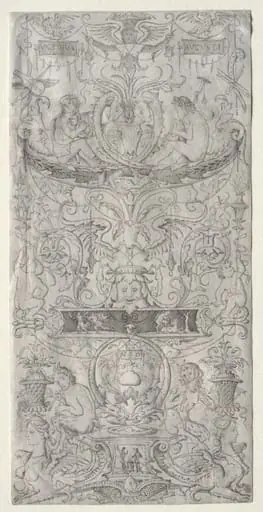
Ornament Panel: Victoria Augusta is an engraving attributed to Nicoletto da Modena, dating to approximately 1507. Characterized by dense, swirling black lines on a light background, the composition is densely populated with figures, symbols, and architectural elements.
Subject & Meaning
The panel features two small figures atop a curved ledge, supporting a shield bearing a deer and a crown, potentially alluding to a name or symbolic reference. A crowned face emerges from a leafy wreath below, while additional figures interact with buildings and musical instruments on the sides.
Technique & Style
Executed with meticulous precision, the engraving showcases the artist's skill in carving intricate, curved lines into metal using a sharp tool, resulting in tightly packed, minute details.
History & Provenance
Created circa 1507, the work's provenance and historical context beyond its creation date and attribution to Nicoletto da Modena are not detailed in available information.
Context
As an ornamental panel, it reflects the Renaissance interest in intricate design and symbolism, possibly intended for decorative or illustrative purposes, though its specific use or commission context is unclear.
Legacy
While its direct influence or renown in the broader art historical canon is not highlighted in provided sources, it remains a testament to the technical prowess and design sensibilities of early 16th-century engravers.
Artist & collection