Artwork
Fate of an Evil Tongue
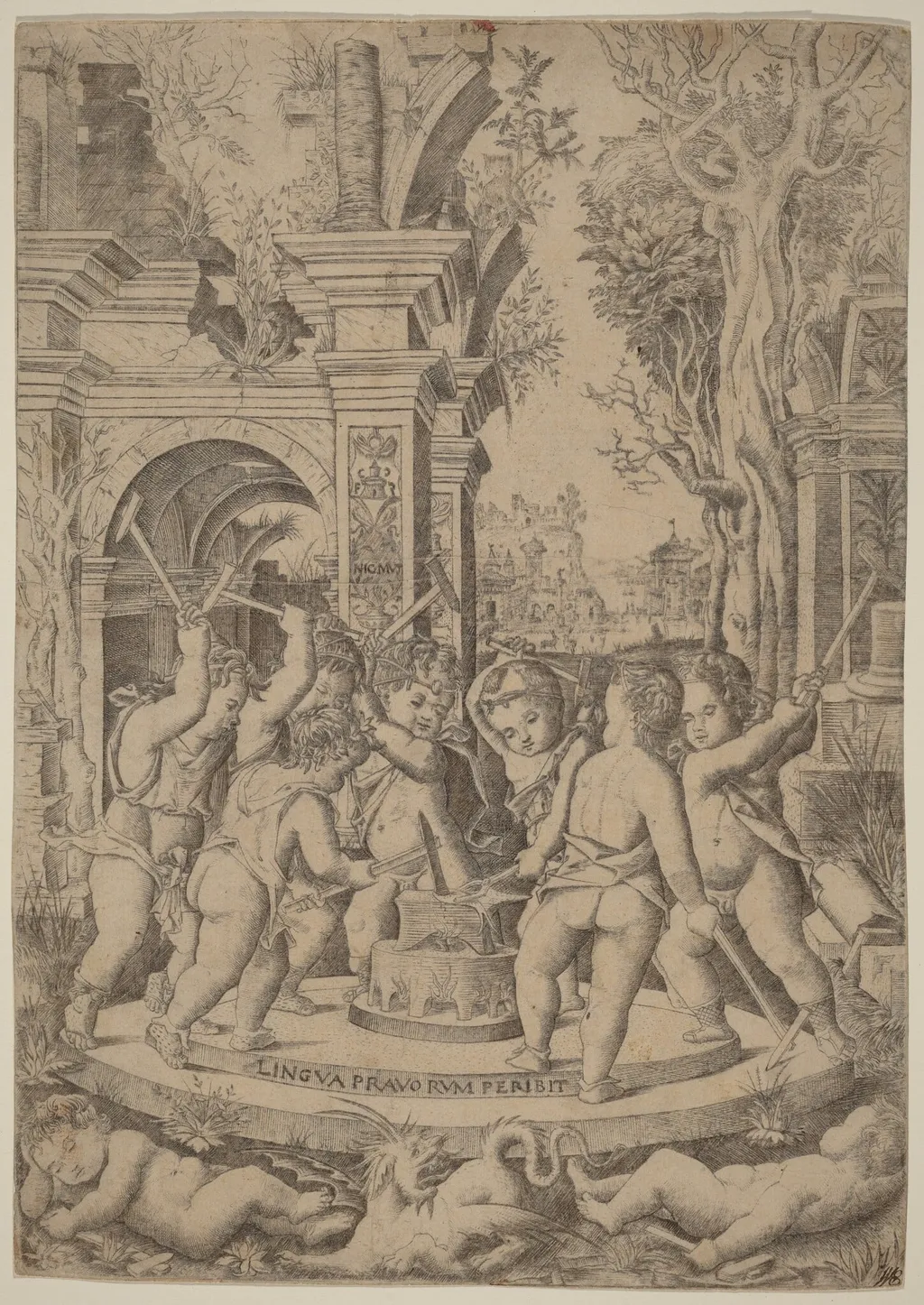
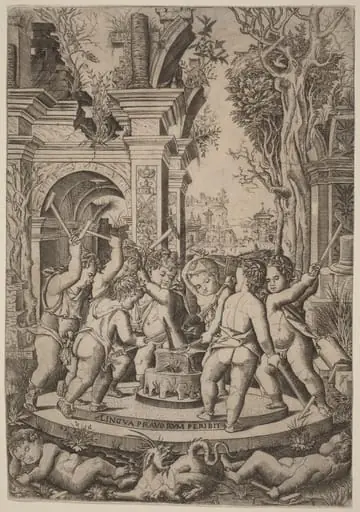
Fate of an Evil Tongue is an ink print by the Renaissance artist Nicoletto da Modena. It dates from 1507 and is held in the collection of the National Gallery of Art.
About this work
Overview
Created around 1507 by Nicoletto da Modena, this engraving depicts a symbolic punishment centered on a large, severed tongue.
Created around 1507 by Nicoletto da Modena, this engraving depicts a symbolic punishment centered on a large, severed tongue. Five nude figures interact with the tongue and surrounding elements, each engaged in acts of destruction or removal. A building with arches bears an inscription in Latin, while a distant cityscape recedes into the background, framing the scene as a moral allegory rather than a literal narrative.
Subject & Meaning
The image conveys a moral warning against deceit and slander, personified by the tongue as a physical object under assault. Figures wield tools to dismantle it—hammering, pulling, and uprooting—as if eradicating falsehood itself. The Latin inscription, meaning 'The tongue of the wicked shall perish,' reinforces the theme, aligning the scene with medieval and Renaissance moral traditions that equated speech with moral consequence.
Technique & Style
The artist employed fine, precise lines typical of early 16th-century engraving to render texture and depth. Shadows are built through cross-hatching, giving volume to the figures and the tongue’s fleshy form. The architectural details and distant landscape are rendered with restrained detail, directing focus to the central act of symbolic destruction while maintaining spatial coherence.
History & Provenance
The work originates from the circle of Northern Italian printmakers active in the early 1500s, though its exact provenance before modern collections remains undocumented. As a standalone print, it likely circulated among educated audiences familiar with moral allegories and Latin inscriptions, serving as both artistic object and ethical reminder in private or scholarly settings.
Context
Produced during a period when printed images were increasingly used to convey religious and ethical lessons, the engraving reflects broader cultural anxieties about speech, sin, and divine retribution. Similar themes appear in contemporary sermons and moralizing literature, where the tongue was frequently condemned as a source of social corruption and spiritual danger.
Legacy
Though not widely reproduced or studied today, the engraving exemplifies the use of visual allegory in early print culture. Its combination of classical form, moral symbolism, and technical precision places it within a tradition of Northern Italian prints that sought to instruct through visual metaphor, influencing later emblematic and satirical imagery.
Own this work as a print
Artist & collection


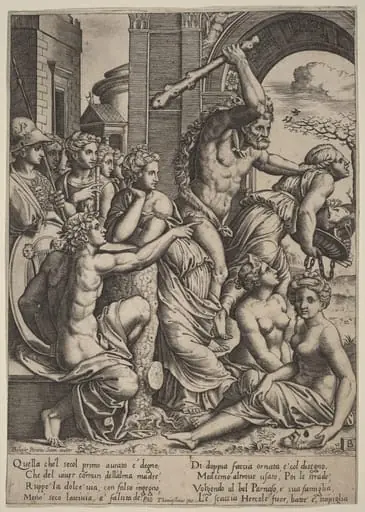 Envy Driven from the Temple of the Muses
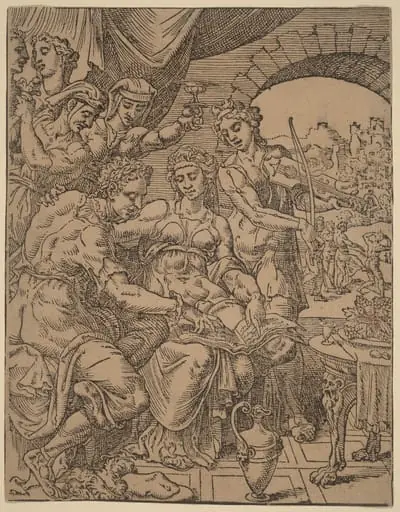 The Prodigal Son Squandering His Inheritance on Harlots
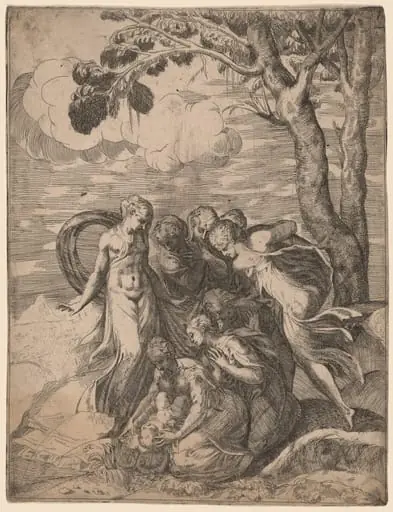 The Finding of Moses
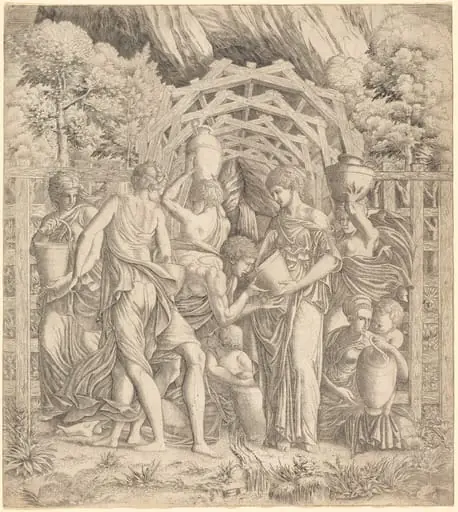 Young Man Drinking Water (Rebecca and Eliezer?)
 Untitled
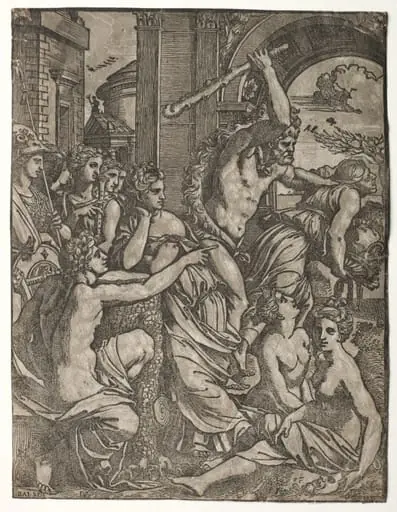 Hercules Driving Envy from the Temple of the Muses
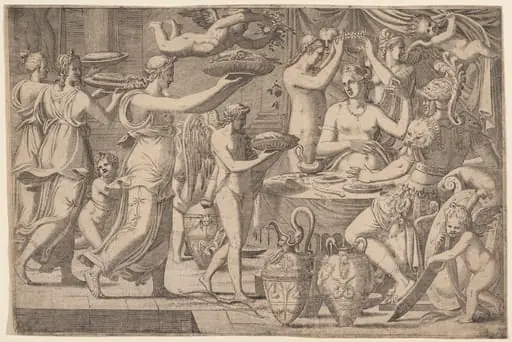 Venus and Mars Served by Cupid and the Three Graces
 Narcissus at the Fountain
 Temporalitas Aeternitas