Artwork
Castle of Nieuw Teylingen
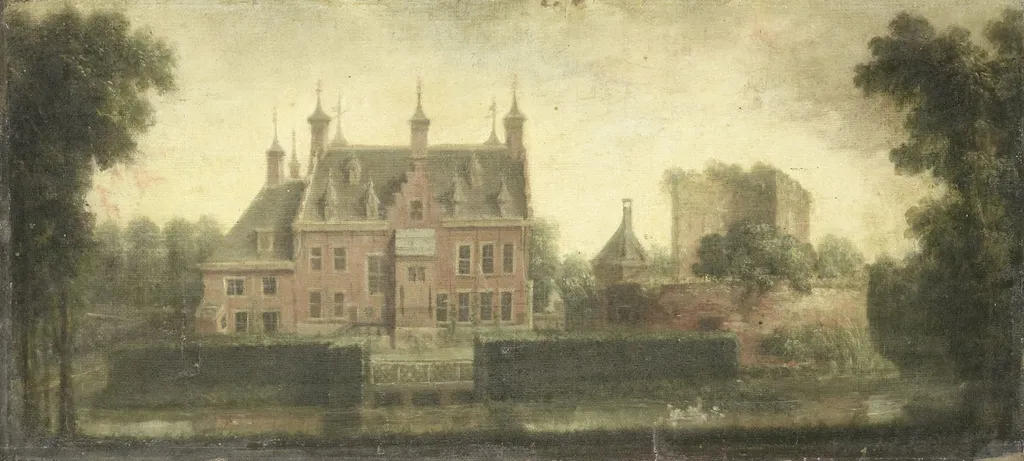
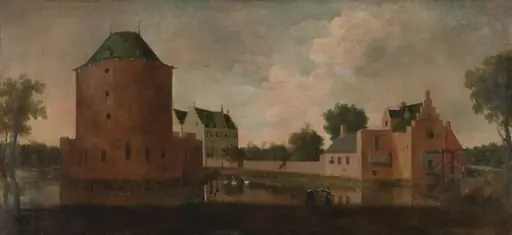
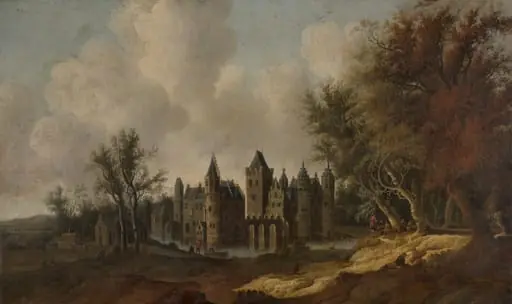
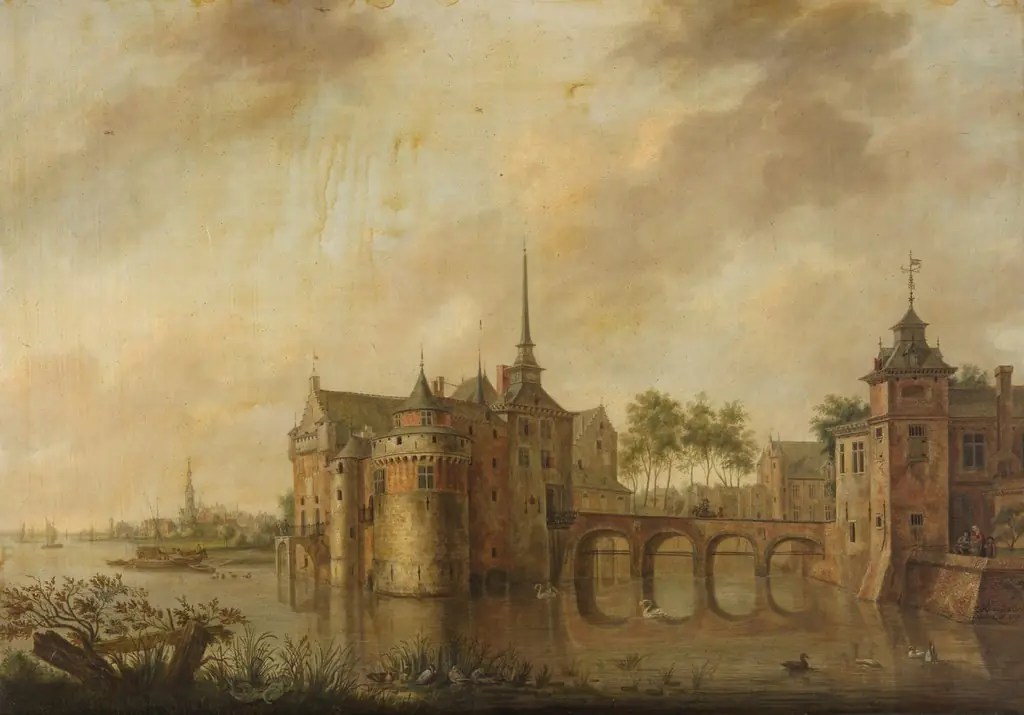
Castle of Nieuw Teylingen is an unspecified painting by the Rococo painting artist Niels Rode. It dates from 1785 and is held in the collection of the Rijksmuseum. This painting depicts Nieuw Teylingen Castle, a modest medieval structure encircled by a broad moat.
About this work
The quiet, almost forgotten building feels like a snapshot of a place that was about to disappear.
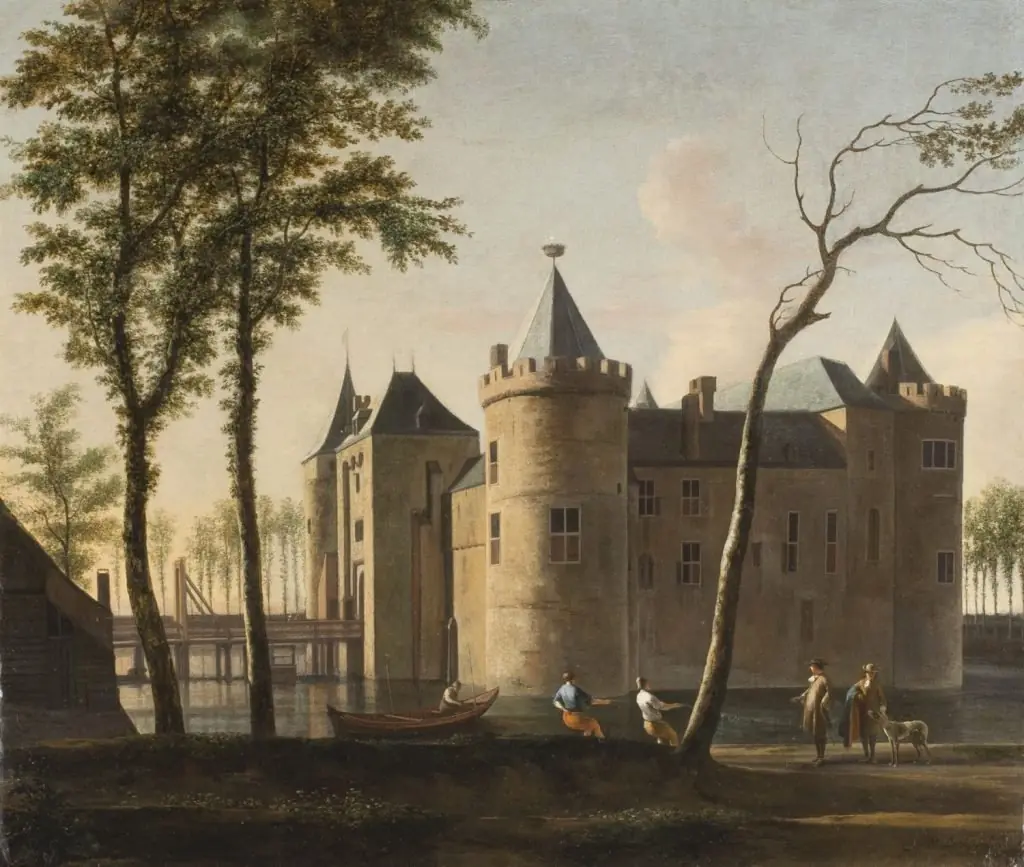
You see a small castle surrounded by a wide moat, trees on both sides framing the scene.
This painting is one of the last views of the castle before it was torn down in 1802. The artist didn’t sign it, so we don’t know who held the brush. The quiet, almost forgotten building feels like a snapshot of a place that was about to disappear.
To see more Dutch castles painted before they vanished, visit the Rijksmuseum.
Overview
This painting depicts Nieuw Teylingen Castle, a modest medieval structure encircled by a broad moat. Flanked by trees on either side, the composition frames the building with quiet symmetry. Executed in the late 18th century, it captures the castle shortly before its demolition in 1802. The artist remains unidentified, as no signature or documented attribution survives. The work serves as a visual record of a structure soon to vanish from the landscape.
Subject & Meaning
The castle, once a seat of regional authority, appears solitary and unadorned, stripped of its former prominence. Its stillness and isolation suggest a moment of transition—neither thriving nor in active decay, but suspended between use and obsolescence. The absence of human figures or activity reinforces a sense of quiet abandonment, as if the painting preserves a final, unnoticed glimpse before erasure.
Technique & Style
Rendered with restrained brushwork and muted tones, the painting favors clarity over drama. The moat reflects the sky with subtle gradations, while the trees frame the scene with loose, naturalistic forms. There is no embellishment or idealization; the architecture is rendered with documentary precision. The composition’s balance and calm atmosphere reflect a Dutch tradition of topographical observation rather than romanticized landscape.
History & Provenance
Nieuw Teylingen Castle was dismantled in 1802, making this image one of the last known depictions of the structure. The painting’s origins are undocumented, with no record of its commission or early ownership. Its survival suggests it was preserved as a historical record rather than a decorative piece. It now resides in a public collection, likely acquired after the castle’s demolition to preserve its memory.
Context
In the late 18th century, many medieval castles across the Netherlands were abandoned or demolished as their military and aristocratic functions faded. This painting reflects a broader trend: the quiet disappearance of feudal architecture amid shifting social and economic priorities. Similar views of vanishing structures were occasionally made by local artists, often without formal patronage, serving as unintended archives of a changing countryside.
Legacy
Though unsigned and uncelebrated in its time, the painting now functions as a historical document. It contributes to the visual record of Dutch architectural heritage, offering insight into how modest castles appeared before their removal. Its quiet presence in museum collections underscores the value of unassuming works that preserve what official histories often overlook.
Artist & collection