Artwork
De Nieuwe Kerk en het stadhuis op de Dam in Amsterdam
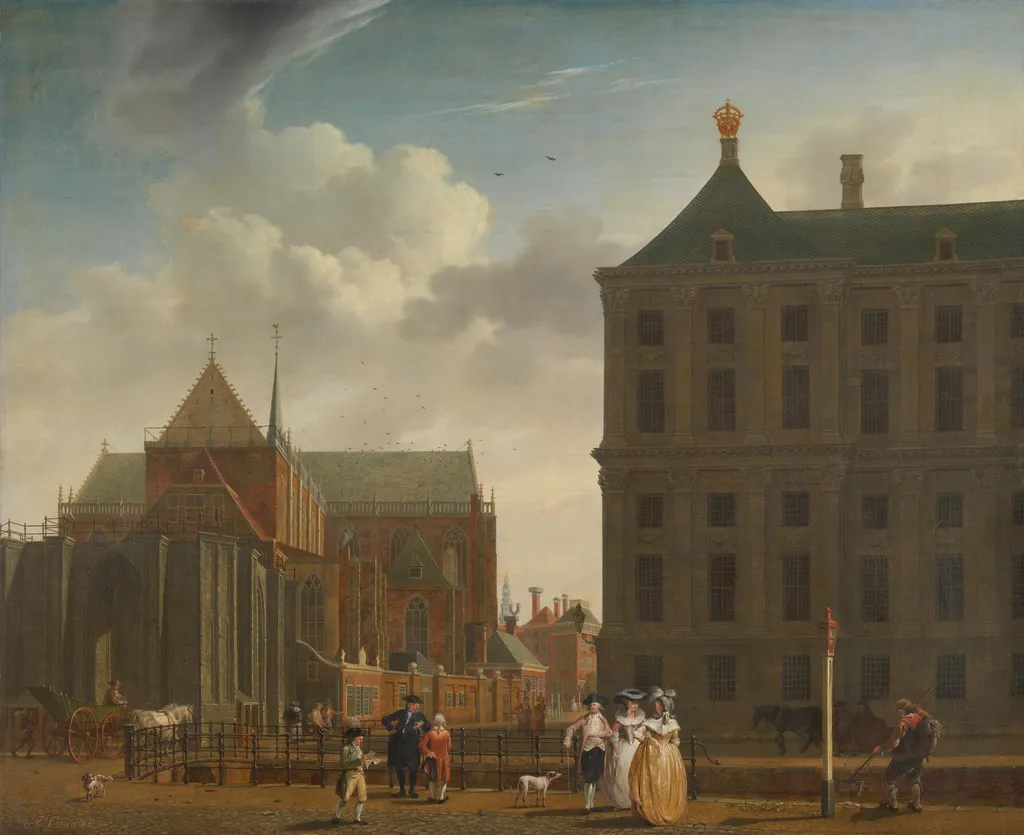
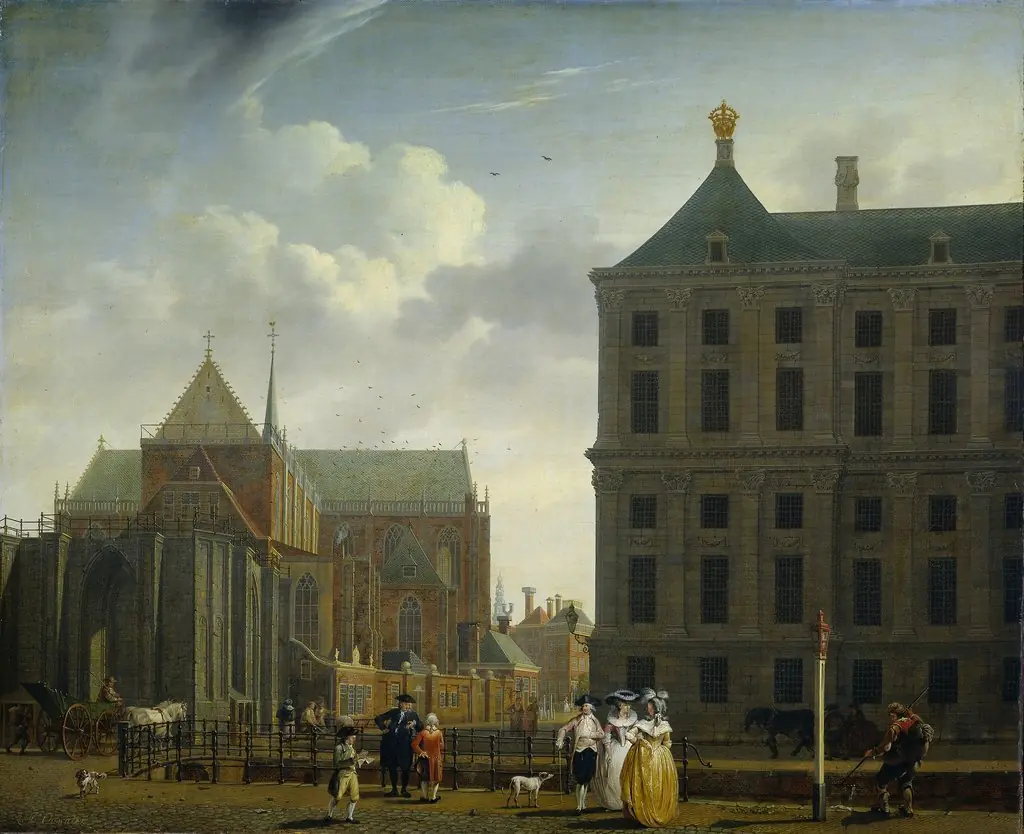
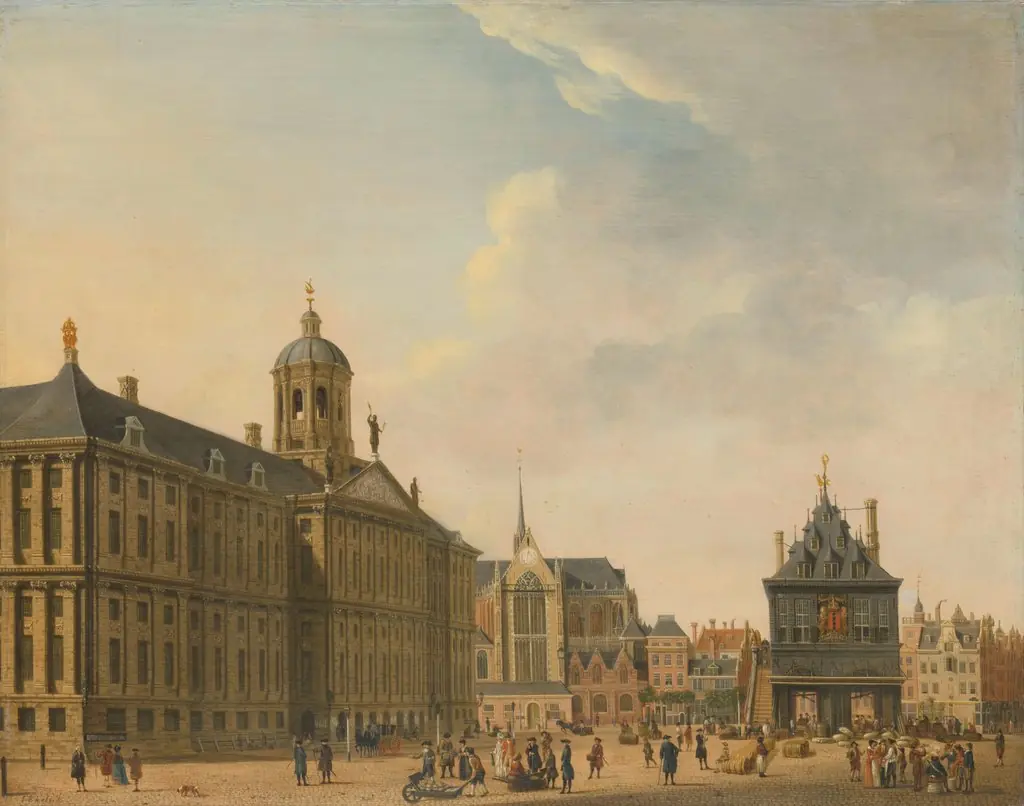
De Nieuwe Kerk en het stadhuis op de Dam in Amsterdam is an unspecified painting by the Rococo painting artist Isaac Ouwater. It dates from 1780 and is held in the collection of the Rijksmuseum. This painting depicts Amsterdam’s Dam Square, featuring the Stadhuis and the Nieuwe Kerk under a turbulent sky.
About this work
Overview
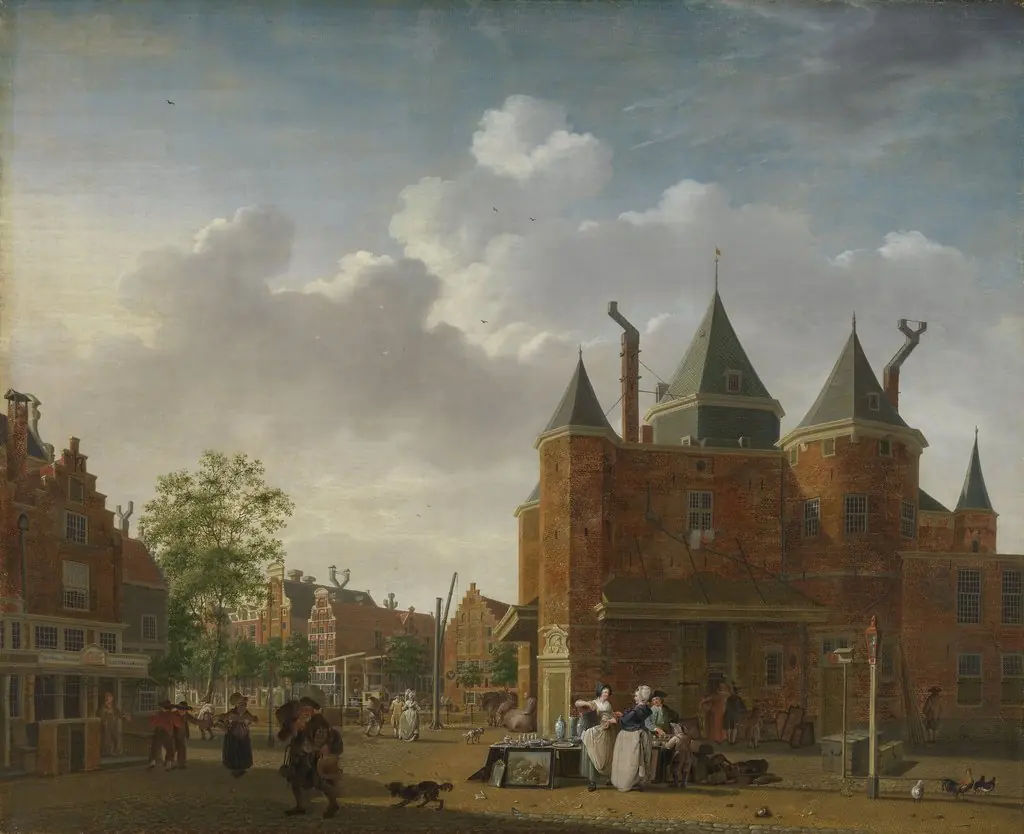
Created as a companion piece to The Sint-Antoniuswaag, it forms part of a deliberate pair exploring contrasting lighting effects.
This painting depicts Amsterdam’s Dam Square, featuring the Stadhuis and the Nieuwe Kerk under a turbulent sky. Created as a companion piece to The Sint-Antoniuswaag, it forms part of a deliberate pair exploring contrasting lighting effects. The composition emphasizes spatial depth through the interplay of shadow and illumination, with the town hall in darkness and the church illuminated by diffuse sunlight.
Subject & Meaning
The scene captures two of Amsterdam’s most significant civic and religious structures, positioned to highlight their symbolic roles. The Stadhuis, in deep shadow, suggests authority and solidity, while the Nieuwe Kerk, bathed in light, conveys spiritual presence. The contrast may reflect the balance between secular power and religious life in the city’s identity during the late 17th century.
Technique & Style
Ouwater employs subtle chiaroscuro to model form and space, using atmospheric clouds to diffuse light across the scene. The buildings are rendered with precise architectural detail, yet the lighting creates a theatrical effect, as if the square were a stage. The sky’s movement and the gradation of tones enhance the sense of depth without overt realism, favoring mood over topographical accuracy.
History & Provenance
Painted in the 1670s, the work was intended as a pendant to another view of Amsterdam’s Sint-Antoniuswaag, suggesting a planned series of civic landmarks. Both paintings likely served private collectors interested in urban identity and light studies. Their survival as a pair is rare, offering insight into early Dutch interest in documenting cityscapes through controlled lighting.
Context
During this period, Amsterdam’s civic pride was expressed through architecture and art. The Stadhuis, recently completed, symbolized the city’s wealth and autonomy. Artists like Ouwater responded to this by portraying public buildings with dramatic lighting, aligning with broader trends in Dutch painting that favored atmosphere and structure over narrative.
Legacy
Though not widely known today, Ouwater’s approach to light and architecture influenced later topographical painters who sought to capture urban environments with emotional resonance. His paired compositions helped establish a visual language for representing civic spaces, where lighting became a tool to convey meaning beyond mere representation.
Own this work as a print
Artist & collection

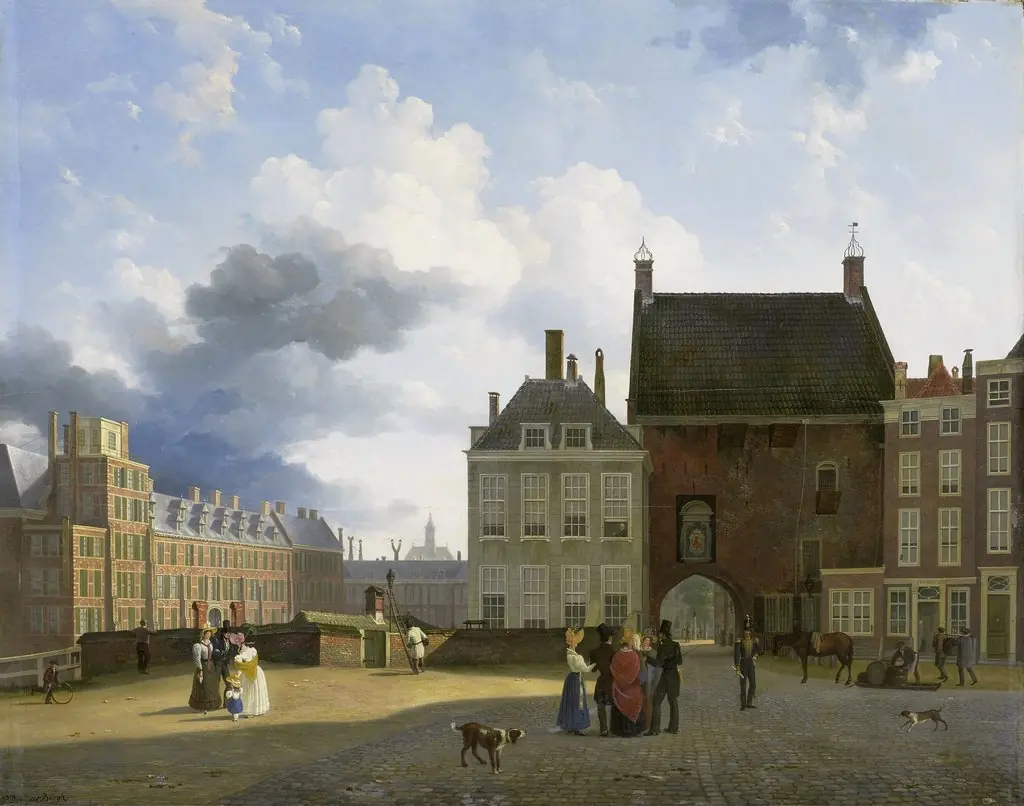 The Gevangenpoort and the Plaats, The Hague
 View of the Dam in Amsterdam
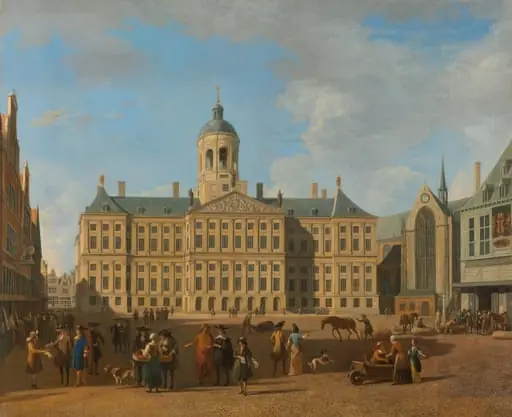 Het stadhuis op de Dam in Amsterdam
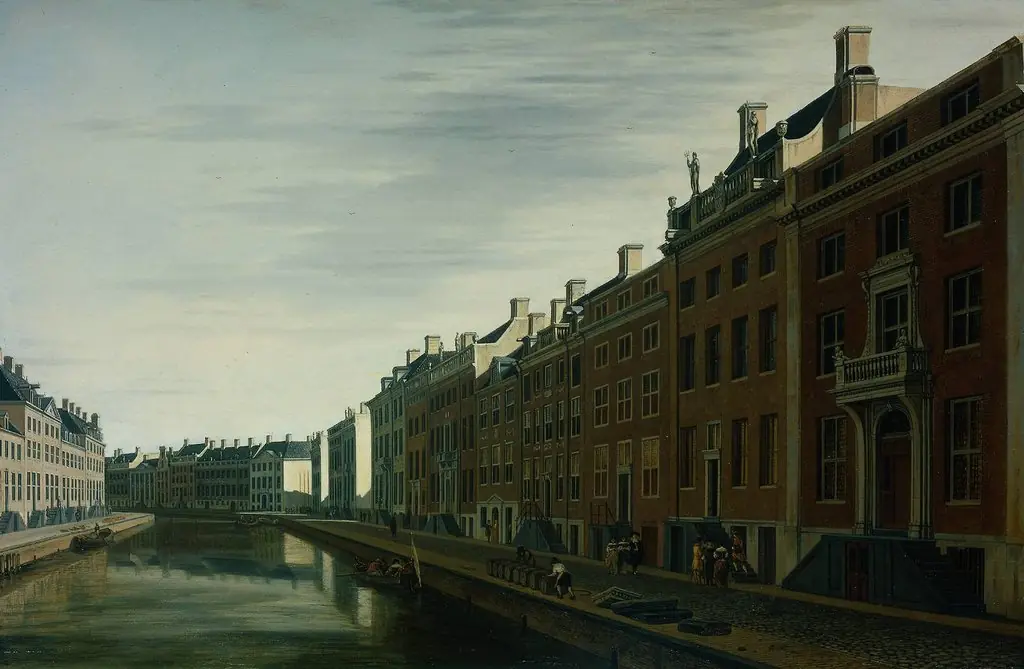 The ‘Golden Bend’ in the Herengracht, Amsterdam, Seen from the West
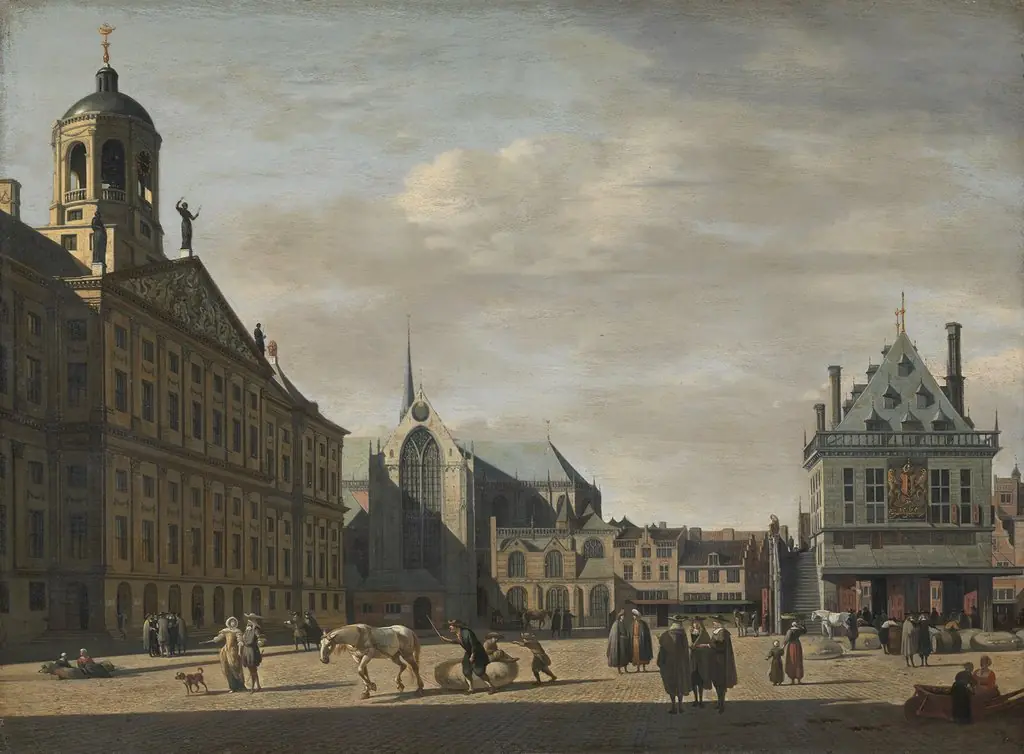 View of Dam Square, with the Old Weigh House
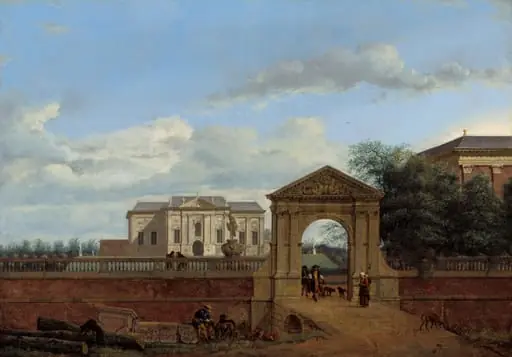 An Architectural Fantasy
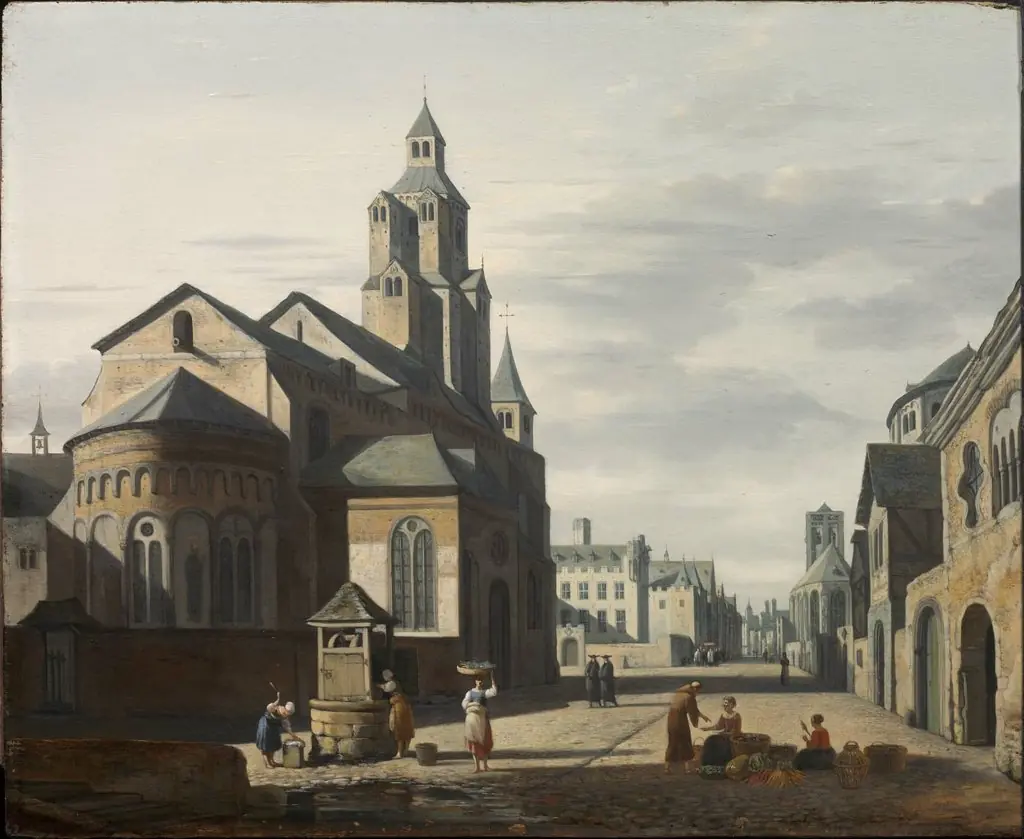 Church of Saint Cecilia, Cologne
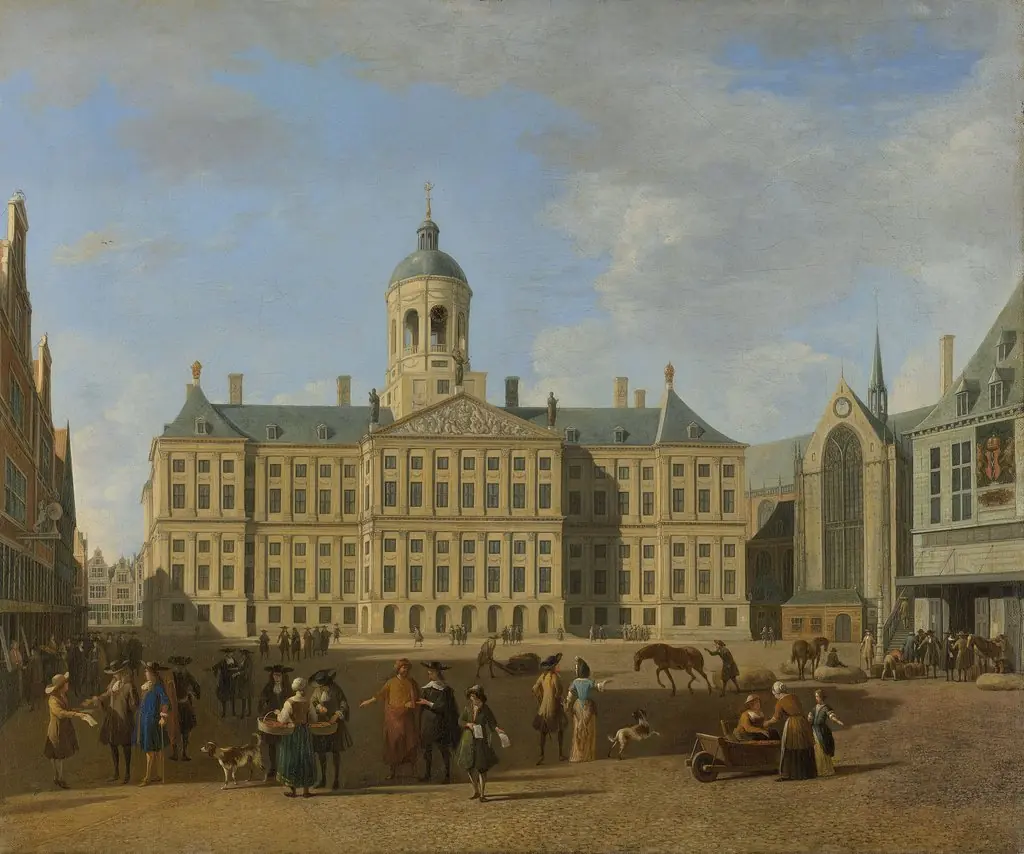 The town hall on the Dam in Amsterdam
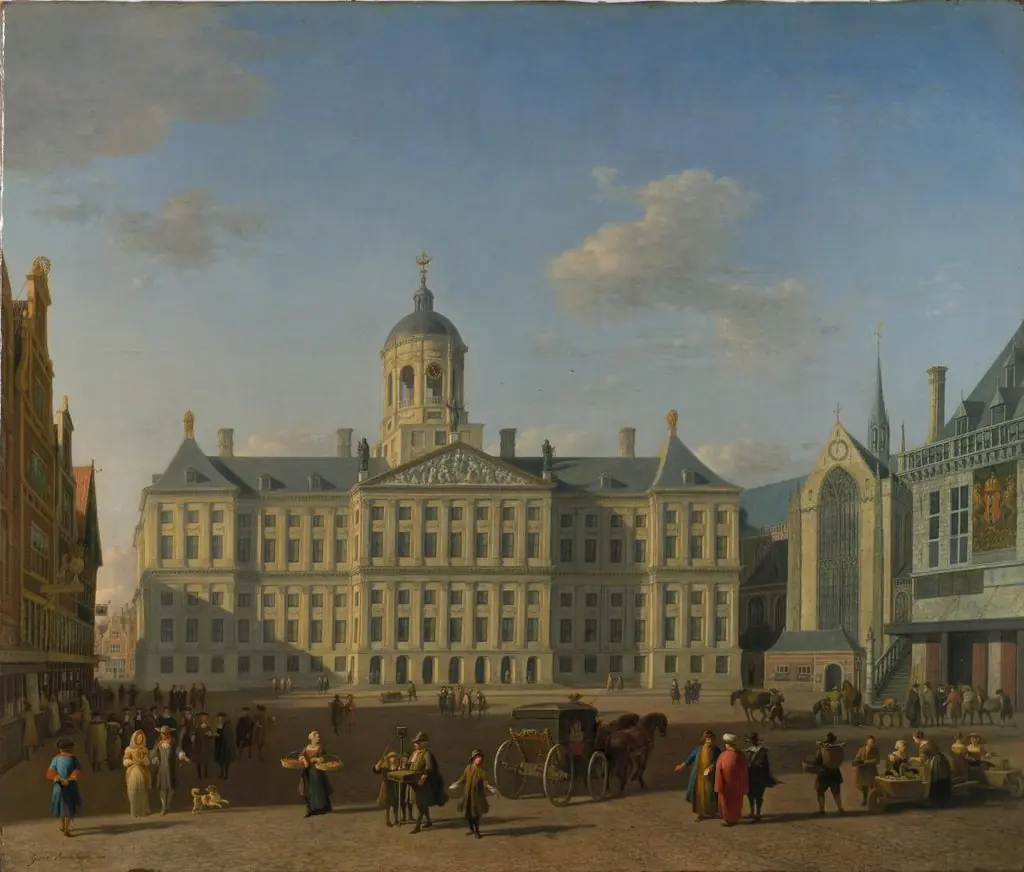 The Town Hall, Amsterdam
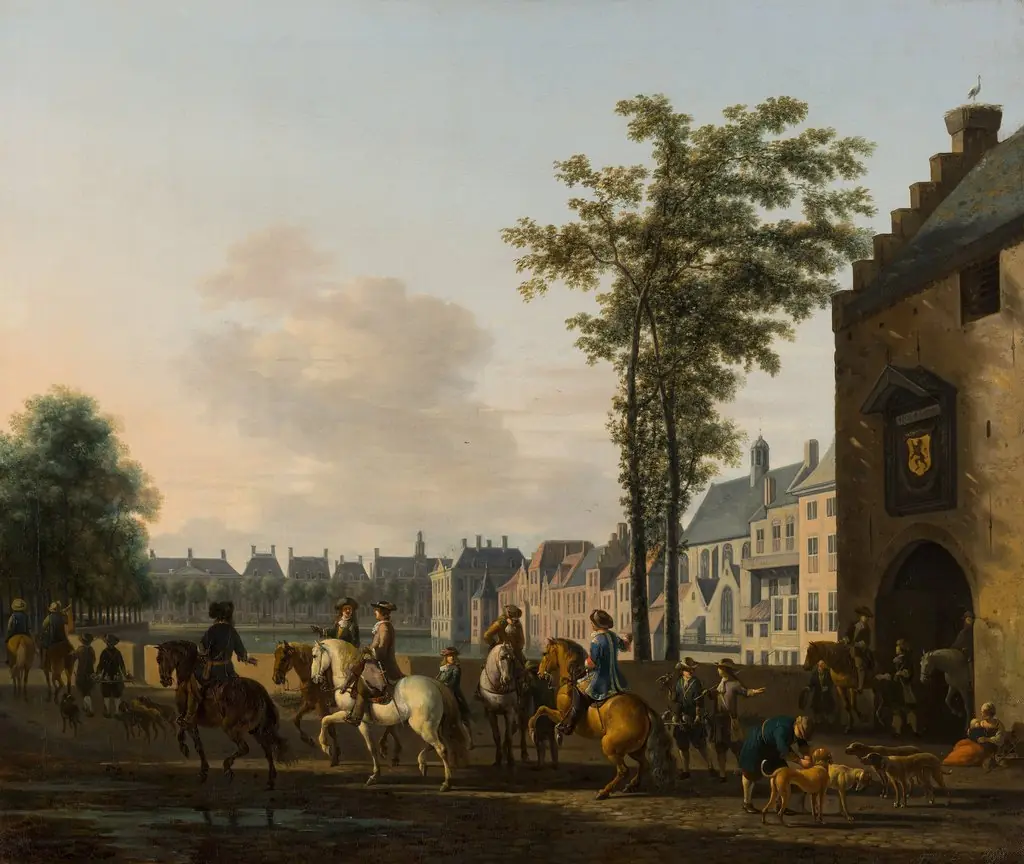 A hunting party near the Hofvijver in The Hague, seen from the South