Artwork
Kvindedansen i Megara
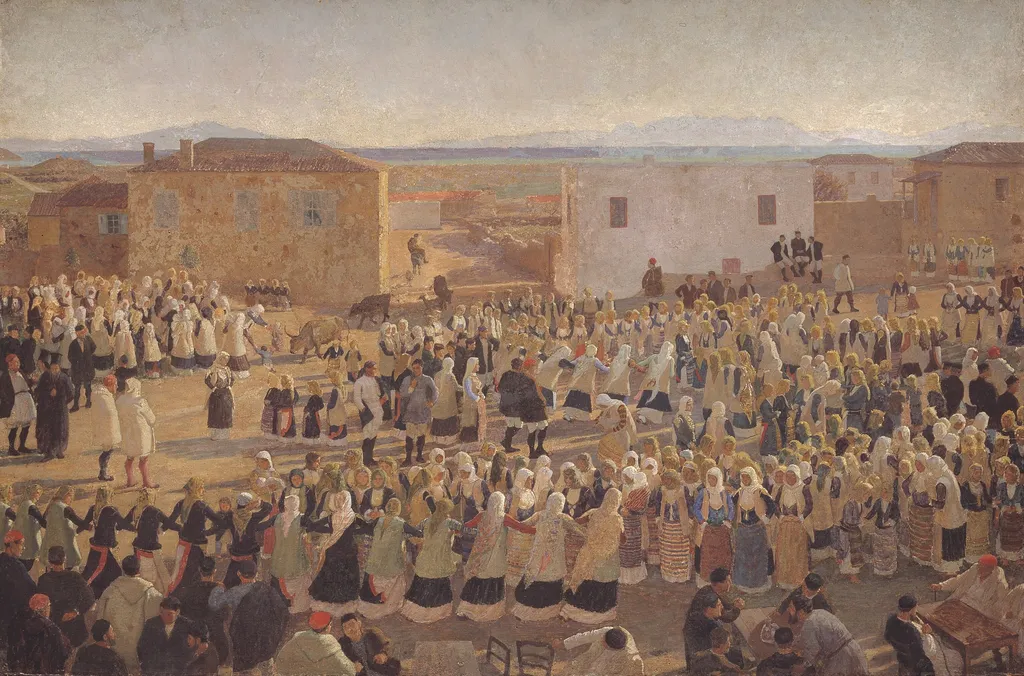
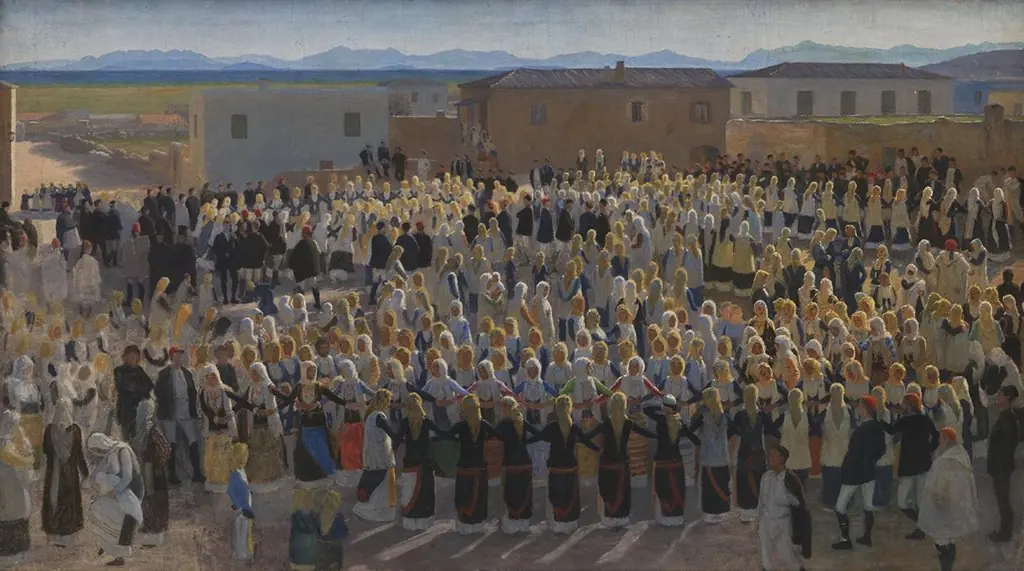
Kvindedansen i Megara is an unspecified painting by the Post-Impressionist artist Niels Skovgaard. It dates from 1899 and is held in the collection of the Statens Museum for Kunst.
About this work
Overview
Niels Skovgaard painted *Kvindedansen i Megara* in 1899, reflecting his engagement with post-impressionist tendencies in Danish art.
Niels Skovgaard painted *Kvindedansen i Megara* in 1899, reflecting his engagement with post-impressionist tendencies in Danish art. Though primarily known for sculpture, including a prominent statue of N.F.S. Grundtvig, Skovgaard also produced narrative paintings rooted in everyday life. This work belongs to the collection of Statens Museum for Kunst in Copenhagen, where it remains a quiet example of his interest in communal rituals and regional identity.
Subject & Meaning
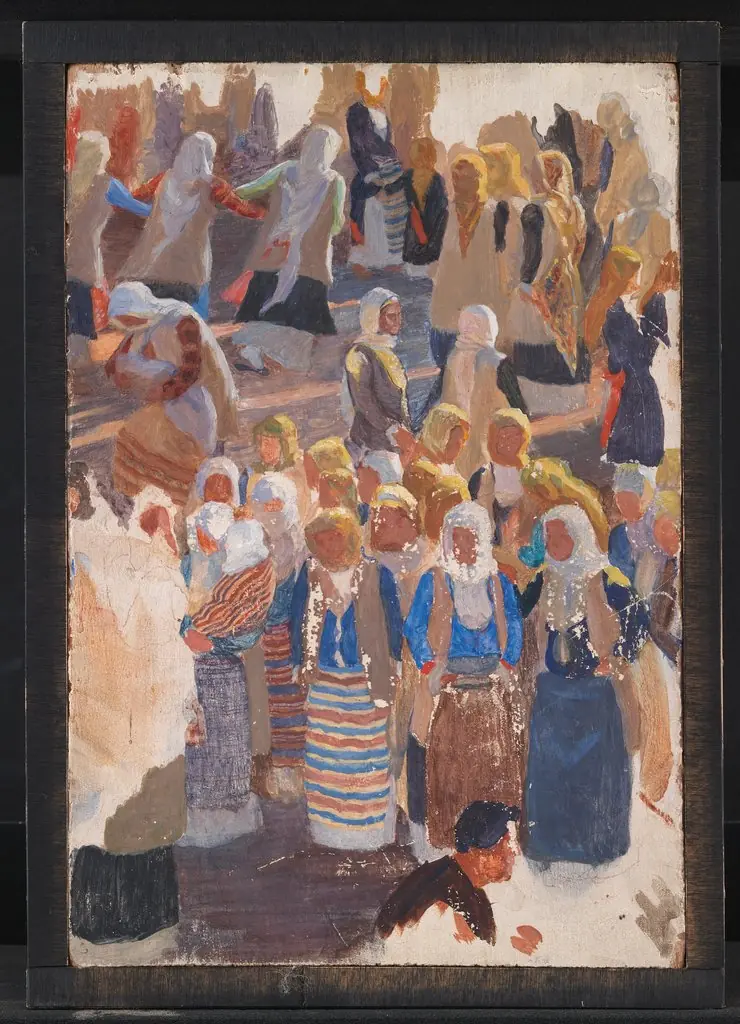
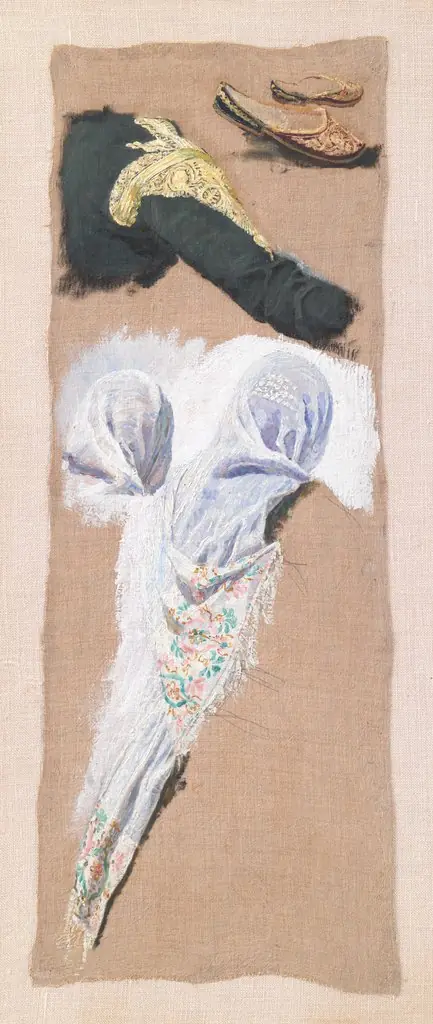
The painting portrays a group of women dancing in a village square, their movements synchronized and grounded in tradition. Dressed in regional attire—long skirts and headscarves—they form a circle, some holding hands, others playing simple instruments. The scene conveys collective joy and continuity, suggesting a local festival or seasonal rite. No specific myth or event is named; instead, the focus lies in the quiet dignity of communal practice.
Technique & Style
Skovgaard employed loose, expressive brushwork and muted, earthy tones to render the scene, aligning with post-impressionist approaches that prioritized emotional resonance over realism. Forms are simplified, light is diffused, and the background landscape recedes softly behind the figures. The composition centers the dancers, drawing attention to their rhythm and unity, while architectural elements frame the space without dominating it.
History & Provenance
Completed in 1899, the painting entered the collection of Statens Museum for Kunst shortly after its creation. It has remained in Danish public ownership since, with no record of private sale or international exhibition. Its preservation within the national collection reflects its status as a representative work of late 19th-century Danish genre painting, valued for its cultural rather than commercial significance.
Context
In late 19th-century Denmark, artists increasingly turned to rural life as a source of national identity amid industrialization. Skovgaard’s depiction of a dance in Megara—likely inspired by folk traditions—echoes broader European interests in vernacular customs. Though not overtly political, the painting aligns with a cultural movement that sought to affirm local heritage through visual storytelling.
Legacy
While not widely reproduced or studied outside Denmark, *Kvindedansen i Megara* endures as a modest but authentic record of Skovgaard’s dual practice in painting and sculpture. It contributes to the understanding of how Danish artists interpreted community life during a period of social change, offering a restrained yet resonant vision of collective ritual.
Own this work as a print
Artist & collection
Artist
Niels Kristian Skovgaard (2 November 1858 – 3 February 1938) was a Danish painter and sculptor. His statue of N.F.S. Grundtvig is considered to be a masterpiece of Danish sculpture.