Artwork
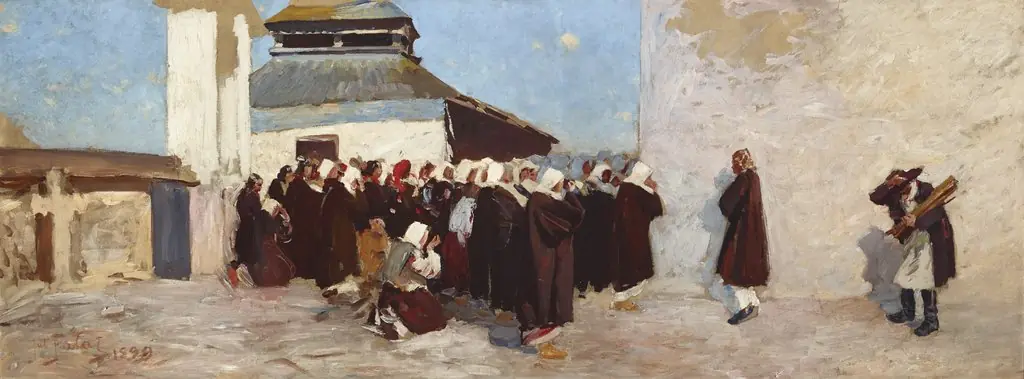
Blessing of Easter Food
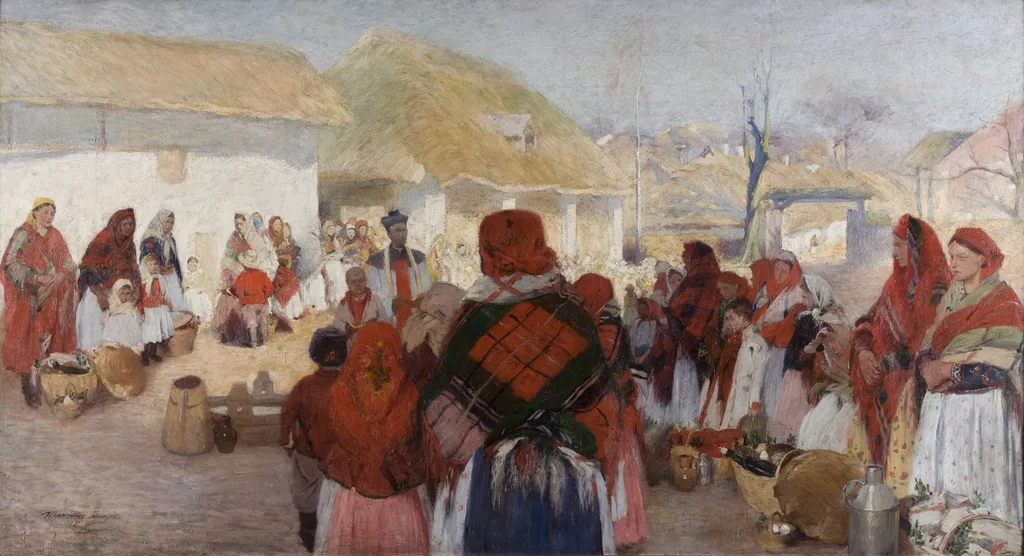
Blessing of Easter Food is an oil painting by Włodzimierz Tetmajer. It dates from 1899 and is held in the collection of the National Museum in Kraków.
About this work
Overview
Tetmajer, active during the late 19th and early 20th centuries, was known for documenting folk customs in his native region.
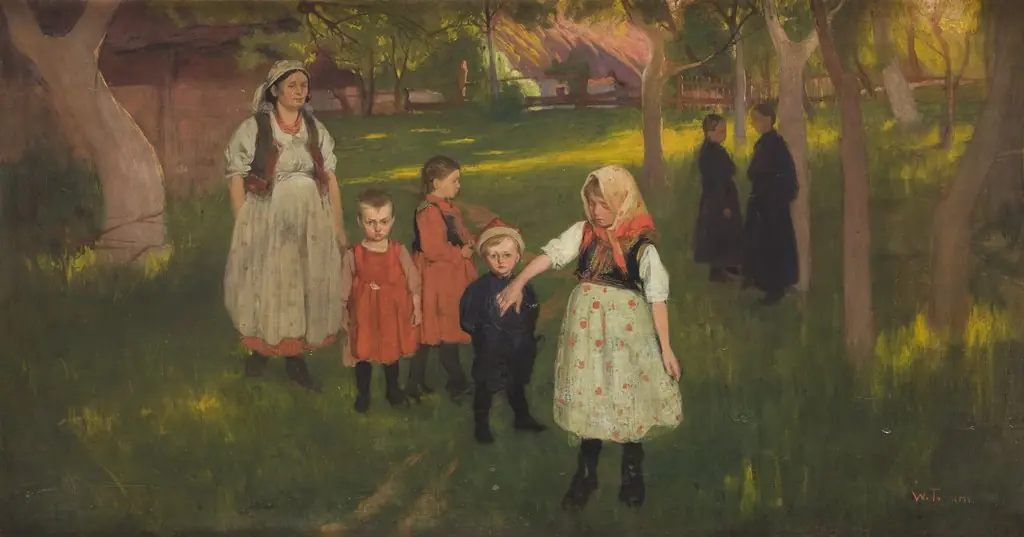
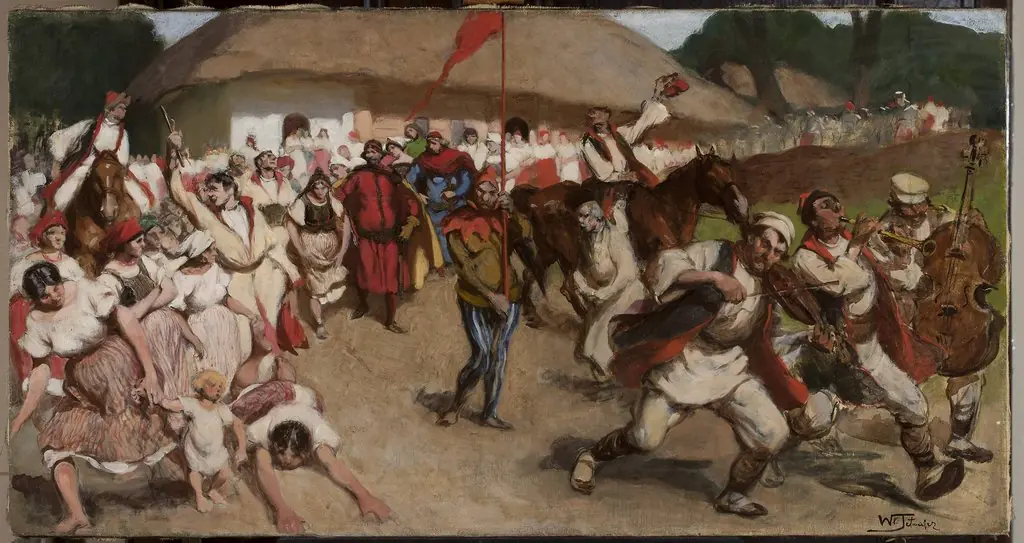
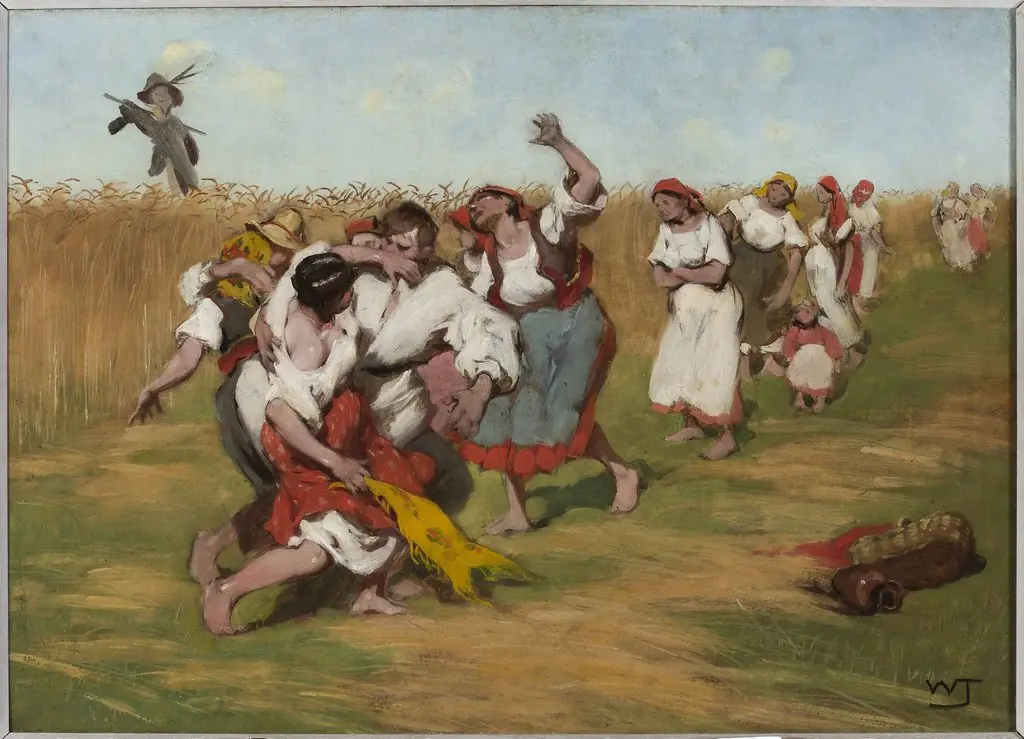
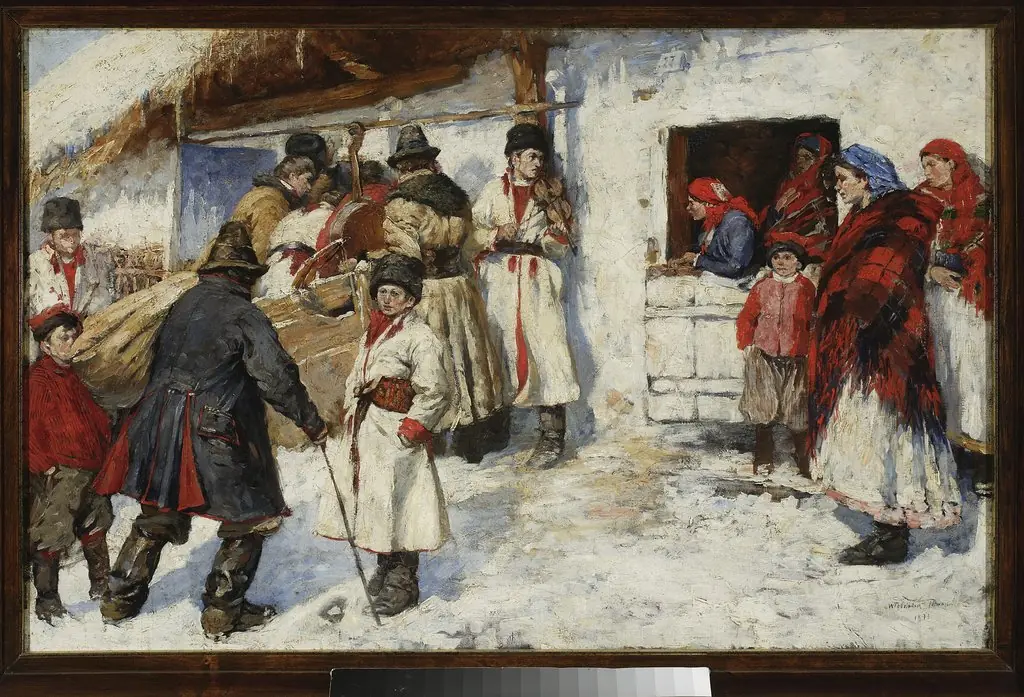
Włodzimierz Tetmajer painted *Blessing of Easter Food* in 1899 using oil on canvas. The work captures a rural Polish Easter tradition and is part of the National Museum in Kraków’s permanent collection. Tetmajer, active during the late 19th and early 20th centuries, was known for documenting folk customs in his native region. His paintings often reflect a quiet realism, grounded in everyday life rather than idealized narratives.
Subject & Meaning
The painting portrays a communal Easter ritual in which food—baskets of eggs, bread, and other items—is blessed before the holiday meal. Figures gather around a table, their postures and expressions suggesting reverence and shared anticipation. The scene emphasizes continuity of tradition, with elders and children participating together. No religious figures are present; the sacred moment is embedded in domestic and seasonal practice.
Technique & Style
Tetmajer employed a restrained palette of earth tones—ochres, browns, muted greens—to evoke the textures of rural life. Brushwork is precise but unobtrusive, focusing on the folds of fabric, woven baskets, and wooden surfaces. The composition is tightly arranged, drawing attention to the central table while the background fades into soft, indistinct village structures. Lighting is even, avoiding dramatic contrast to preserve the scene’s quiet solemnity.
History & Provenance
Created in 1899, the painting entered the National Museum in Kraków’s collection shortly after its completion. Tetmajer’s works were widely recognized in Polish cultural circles, and several are held in the National Museum in Warsaw. The painting’s preservation reflects its significance as a document of regional customs during a period of national identity formation under foreign partitions.
Context
In late 19th-century Poland, artists like Tetmajer turned to folk life as a source of cultural authenticity amid foreign domination. Rural traditions, once seen as provincial, were revalued as expressions of national spirit. This painting aligns with broader efforts to record and preserve customs threatened by urbanization and political suppression, offering a visual archive of peasant life.
Legacy
Tetmajer’s depiction of the Easter blessing remains a reference point for studies of Polish folk rituals. While not widely exhibited internationally, the work is consistently included in national art surveys. Its enduring presence in Kraków’s collection underscores its role as a quiet but vital record of cultural memory, valued for its sincerity rather than its spectacle.
Artist & collection
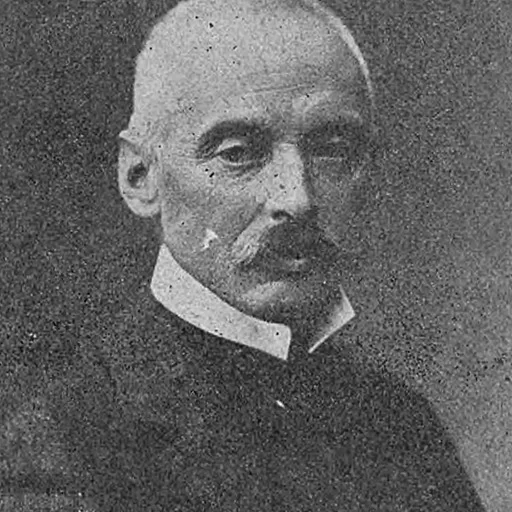
Artist
Włodzimierz Tetmajer (December 31, 1861 in Harklowa – December 26, 1923 in Kraków) was a Polish painter with works in collections of the National Museum in Warsaw and Kraków.