Artwork
Portrait of Grand Duke Nikolai Nikolayevich (the Younger) on Horseback
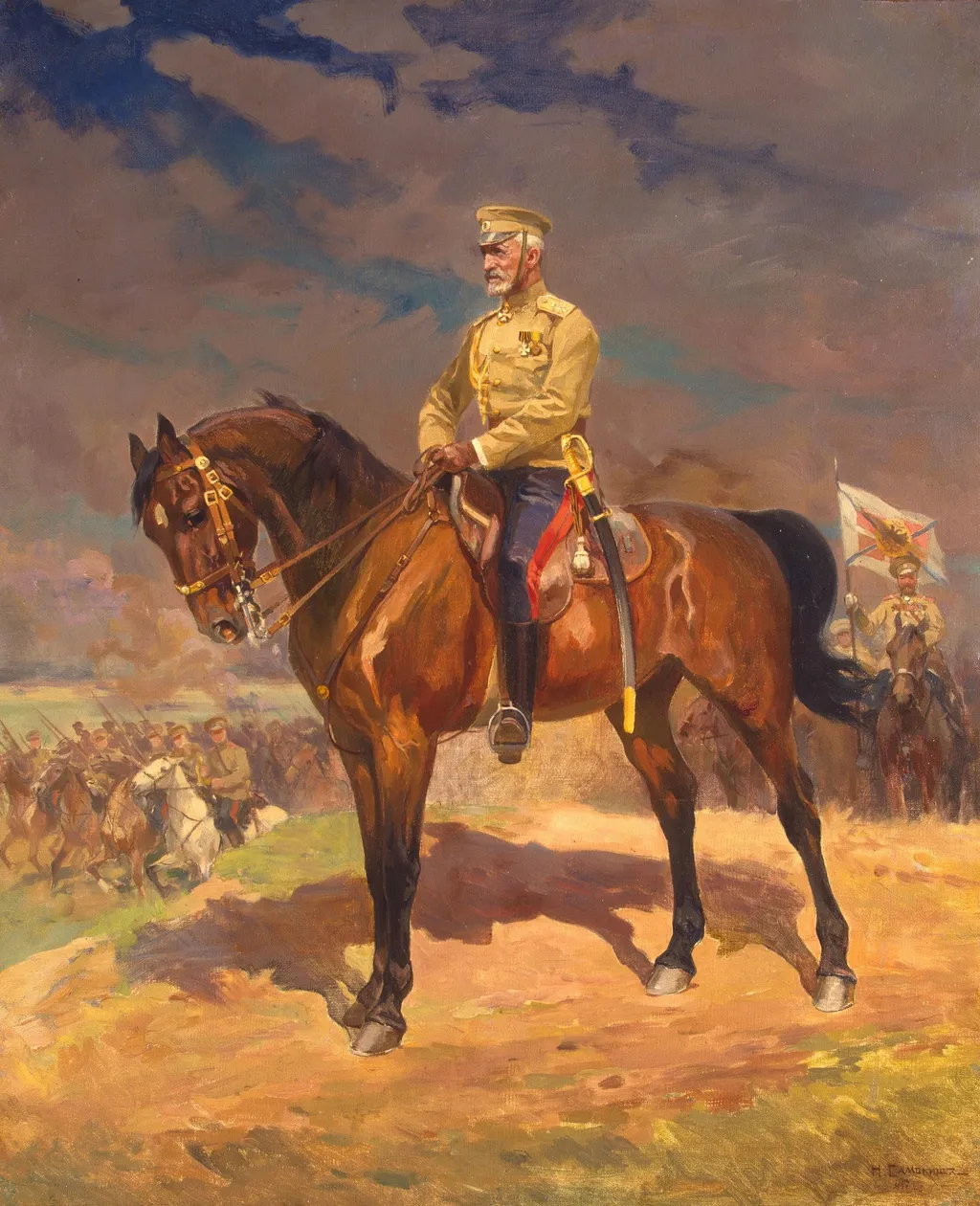
Portrait of Grand Duke Nikolai Nikolayevich (the Younger) on Horseback is an oil painting by the Realist artist Nikolai Samokysh. It dates from 1915 and is held in the collection of the Hermitage Museum.
About this work
Overview
The painting reflects the Grand Duke’s role as a commander and was likely created in his capacity as a war correspondent for the journal *The Russian Sun*.
Painted in 1915 by Ukrainian artist Nikolai Samokysh, this oil portrait captures Grand Duke Nikolai Nikolayevich, the Younger, mounted on horseback. Samokysh, known for his focus on military themes, rendered the scene with precise realism during World War I. The painting reflects the Grand Duke’s role as a commander and was likely created in his capacity as a war correspondent for the journal *The Russian Sun*. It is now part of the State Hermitage Museum’s collection.
Subject & Meaning
The Grand Duke is depicted in full military uniform, seated with composed authority on a dark horse. His loose grip on the reins and forward gaze suggest vigilance and leadership rather than static formality. Behind him, troops advance across a dusty landscape under a waving banner, reinforcing his role as a figurehead in wartime. The emphasis on his medals and polished equipment contrasts with the muted, earth-toned surroundings, signaling rank and duty amid the chaos of conflict.
Technique & Style
Samokysh employed a realist approach with controlled brushwork to render textures: the gleam of the horse’s harness, the fabric of the uniform, and the grain of the battlefield. The sky is rendered in loose, warm strokes that blend into the ground, creating atmospheric depth without romanticism. Details like the shadow cast by the cap and the subtle sheen on metal are rendered with quiet precision, anchoring the figure in a tangible, unidealized environment.
History & Provenance
Commissioned during the Grand Duke’s active command in World War I, the painting was likely intended to reinforce morale and national identity. Samokysh, serving as a war artist, had access to military circles and produced numerous portraits of officers. The work entered the State Hermitage Museum’s holdings in the early 20th century, where it remains as part of its extensive collection of Russian imperial and wartime art.
Context
Created in 1915, the portrait emerged during a period of intense national mobilization in Russia. Military leaders were frequently portrayed to project strength and continuity amid war. Samokysh’s role as a correspondent for *The Russian Sun* placed him at the intersection of journalism and visual propaganda, where art served both documentary and ideological functions, capturing the hierarchy and discipline of the imperial army.
Legacy
The painting endures as a representative example of early 20th-century Russian military portraiture, reflecting the values of duty and hierarchy in the final years of the empire. While not widely exhibited outside institutional settings, it contributes to the historical record of how authority was visually constructed during wartime. Samokysh’s focus on authenticity over grandeur distinguishes his work from more ceremonial imperial portraits of the era.
Own this work as a print
Artist & collection
Artist
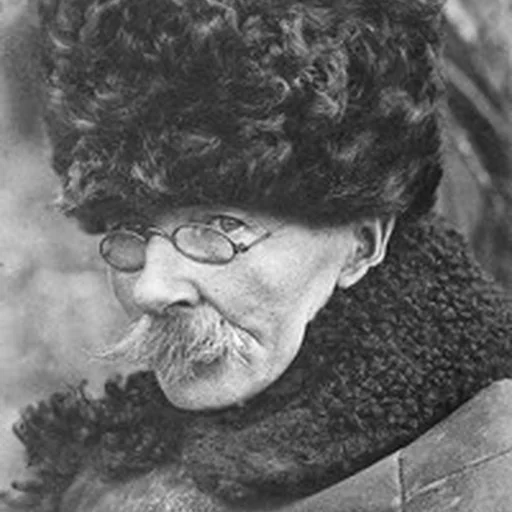
Nikolay Semyonovich Samokish (Russian: Николай Семёнович Самокиш; Ukrainian: Микола Семенович Самокиш, romanized: Mykola Semenovych Samokysh; 25 October 1860, Nezhin, Government of Chernigov, Russian Empire – 18 January…

 Regele Carol I Portret ecvestru
 The Hussar
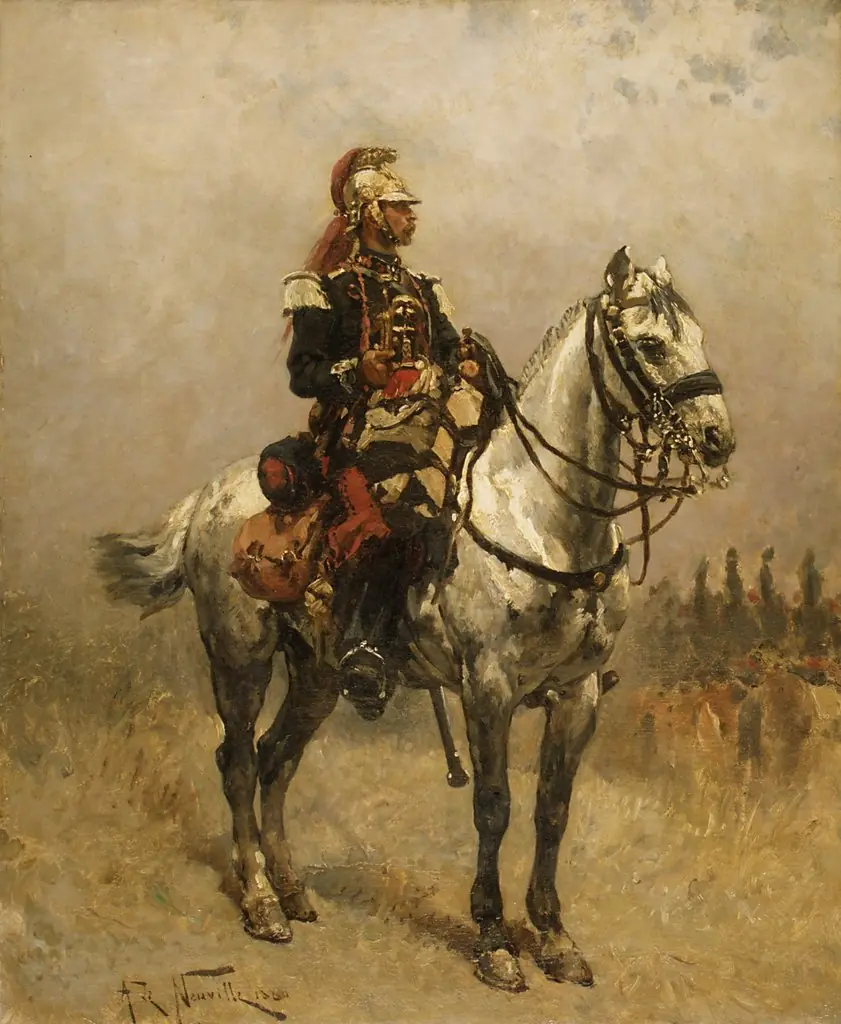 A Cavalryman
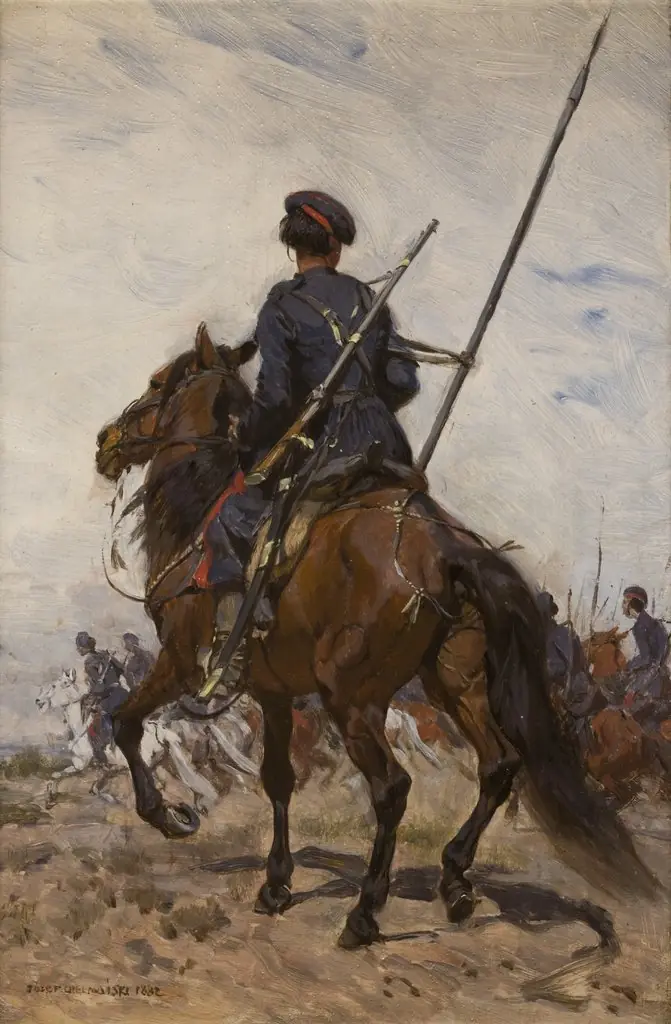 A Cossack
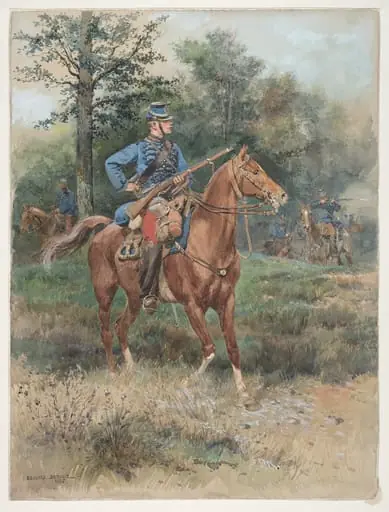 Chasseur à Cheval (Soldier on Horseback)
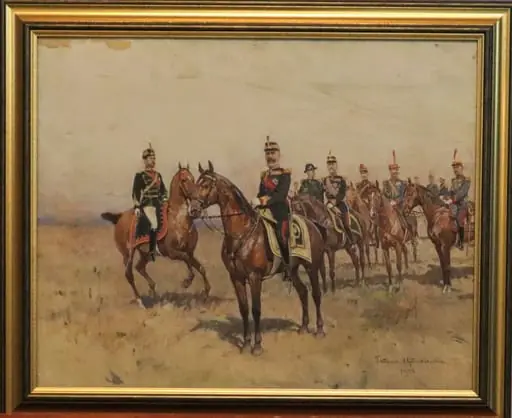 Regele Carol I, Prințul Ferdinand și Statul Major 1903
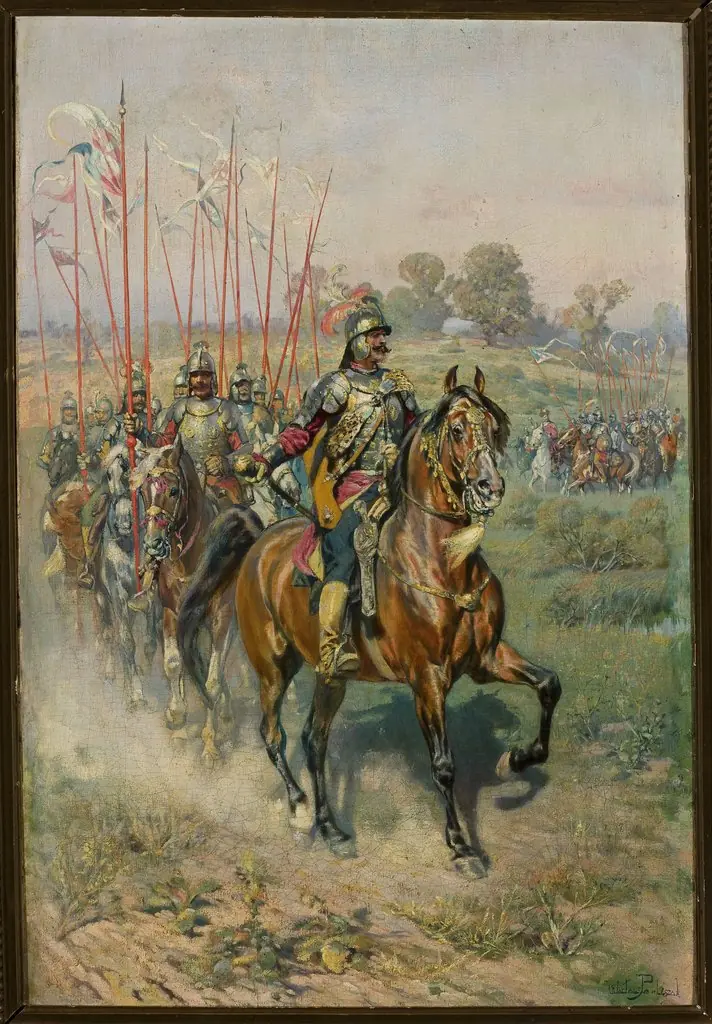 Procession of hussars
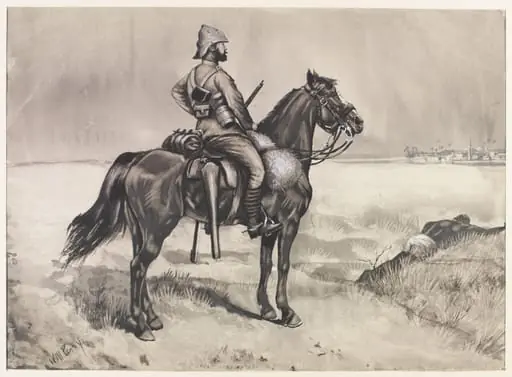 19th Hussars - Vedette at Metemneh 1885
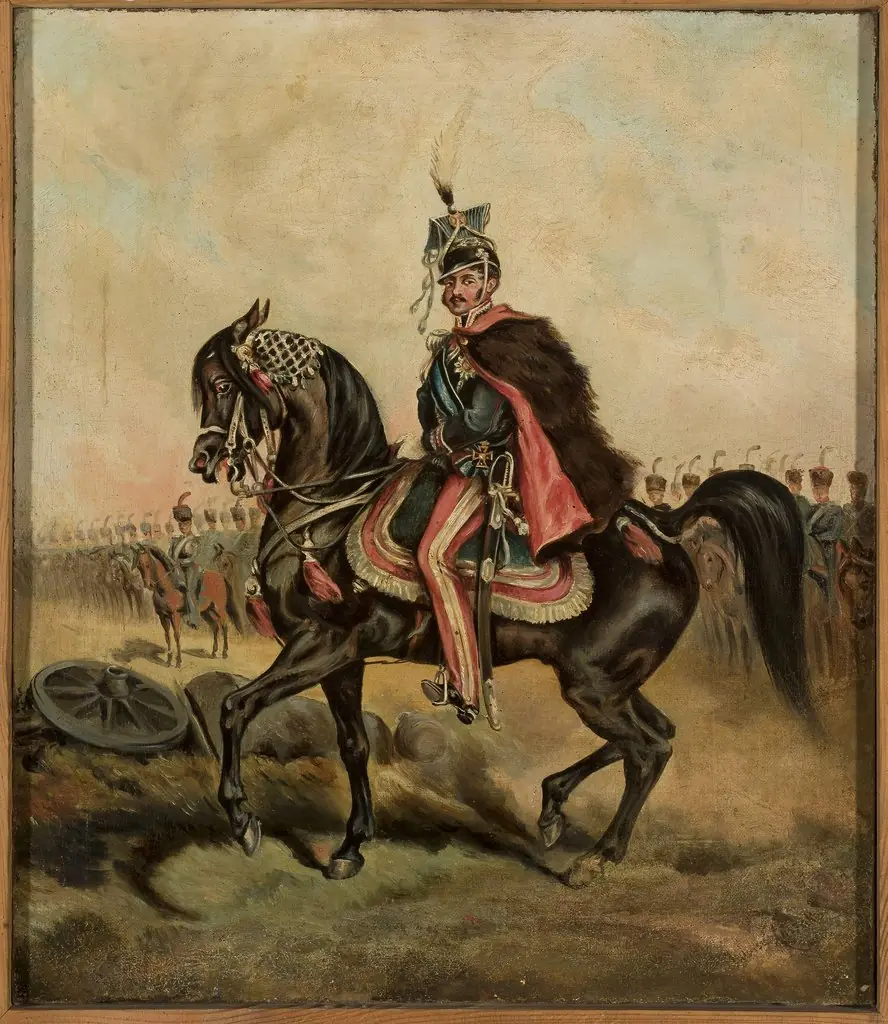 Prince Józef Poniatowski on the “Szuma” mare from Sanguszka stud farm
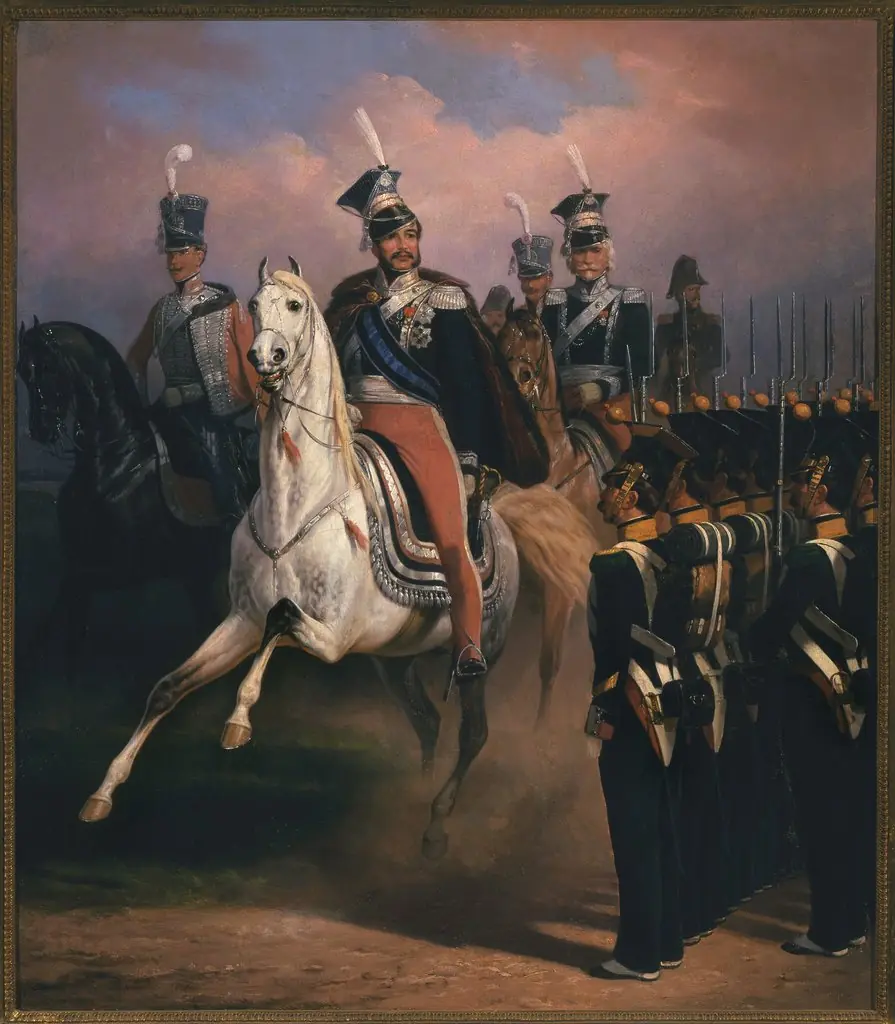 Prince Józef Poniatowski before the front of grenadiers
 Alfonso XIII con uniforme de campaña
 Portrait of Grand Duke Pavel Aleksandrovich