Artwork
Fragment of an Inscribed Architrave, Tomb of Amenemhat Surer
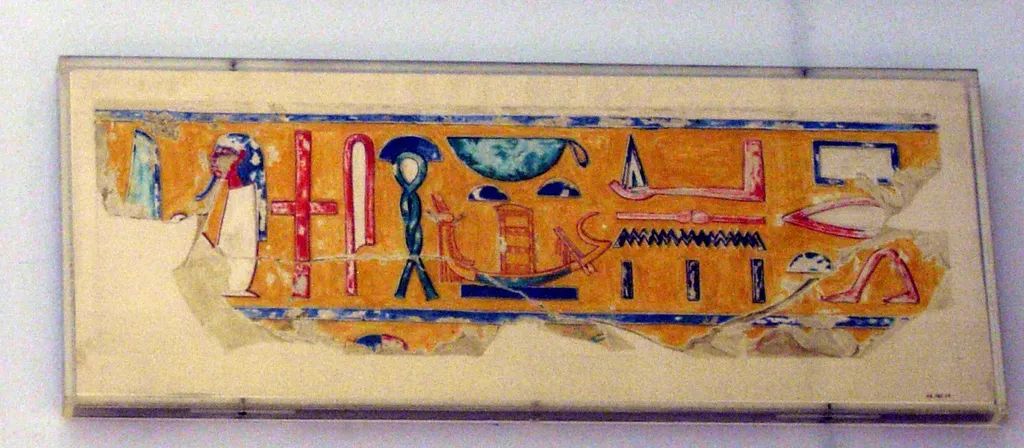
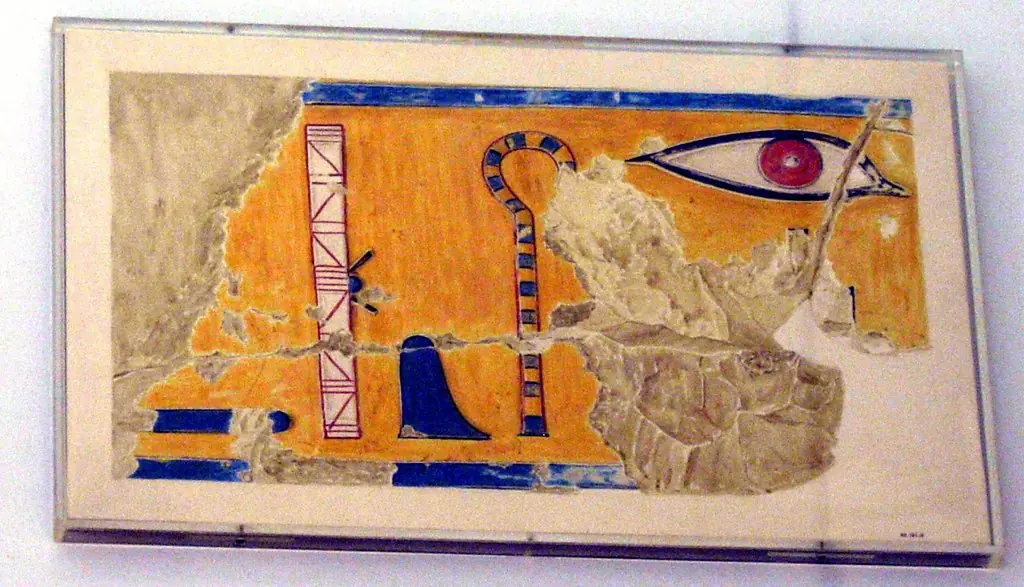
Fragment of an Inscribed Architrave, Tomb of Amenemhat Surer is an unspecified painting by Nina M. Davies. It dates from 1396 and is held in the collection of the Metropolitan Museum of Art. The object is a painted fragment of an architectural architrave originally belonging to the tomb of the official Amenemhat Surer.
About this work
Overview
The object is a painted fragment of an architectural architrave originally belonging to the tomb of the official Amenemhat Surer. It now resides in the Metropolitan Museum of Art and was documented in the early twentieth century by the Egyptologists Nina M. Davies and her husband Norman de Garis Davies, who specialized in recording tomb decoration.
Subject & Meaning
Adjacent symbols—a blue bowl, a patterned jar, a sailing boat, and a coiled snake—appear to reference funerary provisions and the journey of the deceased.
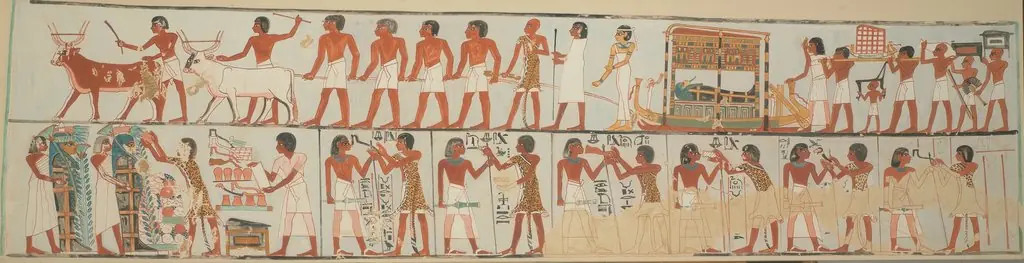
The painted surface combines hieroglyphic inscriptions with a small narrative scene. Two stylized figures, one in a white kilt with a blue headdress and the other in blue garments with a red cap, stand beside a tall red cross‑shaped element, suggesting a ritual or offering context. Adjacent symbols—a blue bowl, a patterned jar, a sailing boat, and a coiled snake—appear to reference funerary provisions and the journey of the deceased.
Technique & Style
Executed in flat, vivid pigments, the fragment displays a limited palette of reds, blues, yellows and an orange background typical of New Kingdom tomb decoration. The figures are rendered in a simplified, stick‑like manner, while the decorative motifs such as the zigzag pattern on the jar are painted in precise, linear strokes, reflecting the conventional Egyptian approach to architectural relief painting.
History & Provenance
The architrave was recorded by Nina M. Davies during her systematic copying of Theban tombs in the 1920s‑1930s, a period when many Egyptian monuments were being photographed and drawn for scholarly archives. After its documentation, the fragment entered the collection of the Metropolitan Museum of Art, where it has been catalogued as part of the museum’s Egyptian holdings.
Context
Amenemhat Surer served as a high‑ranking official in the reign of Pharaoh Amenhotep III, and his tomb would have been decorated with texts and scenes intended to ensure his safe passage to the afterlife. The inclusion of offering items, a boat, and protective symbols such as the snake aligns with broader Egyptian funerary iconography that emphasizes sustenance and safe travel across the Nile and the underworld.
Artist & collection
Artist
The Egyptologists Nina M. Davies (6 January 1881 – 21 April 1965) and Norman de Garis Davies (1865–5 November 1941) were a married couple of illustrators and copyists who worked in the early and mid-twentieth century…

 Menna and Family Hunting in the Marshes, Tomb of Menna
 Amenhotep III and his Mother, Mutemwia, in a Kiosk
 Queen Nefertari Playing Senet
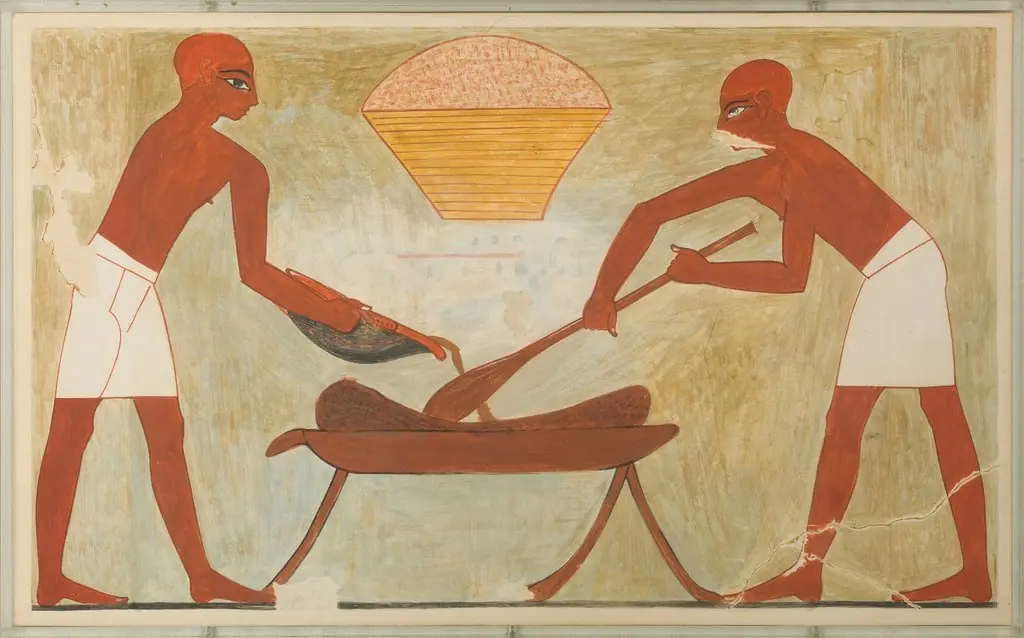 Preparing Dough, Tomb of Rekhmire
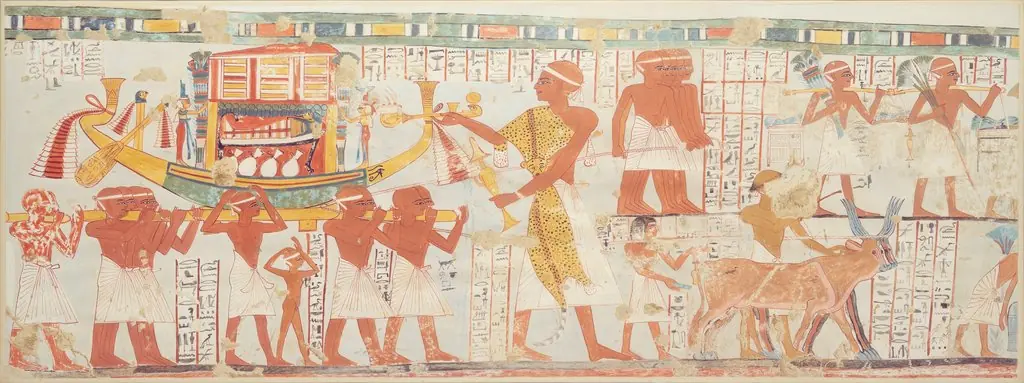 Nakhtamun's Funeral Procession, Tomb of Nakhtamun
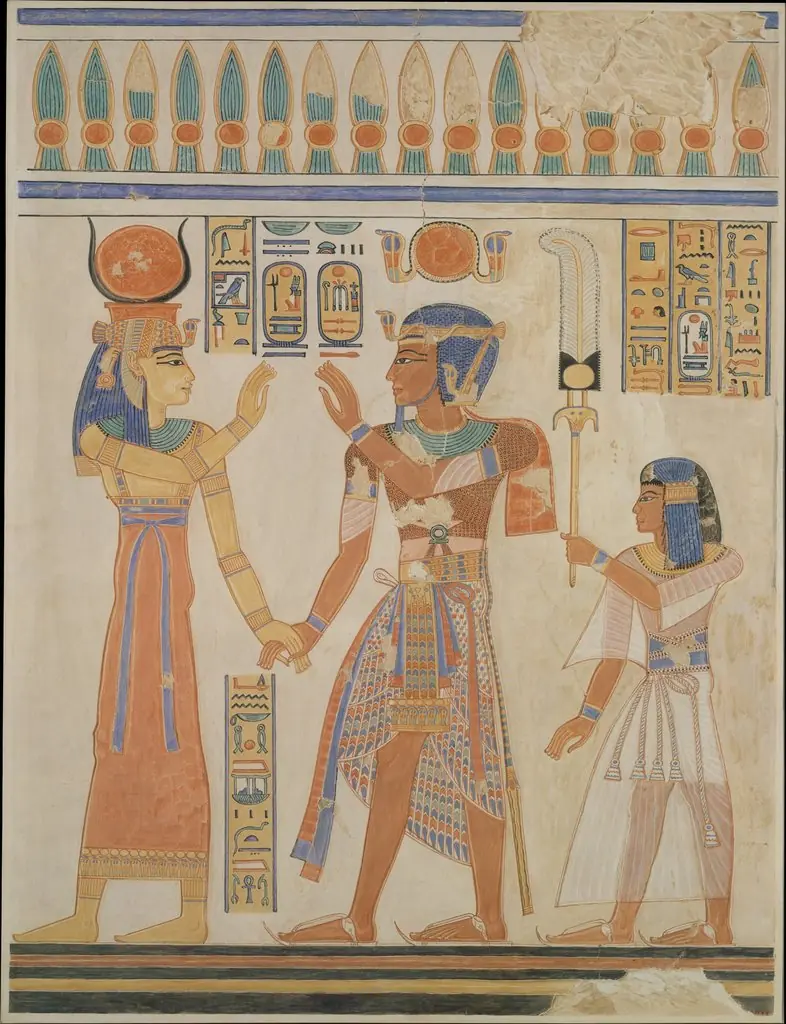 Ramesses III and Prince Amenherkhepeshef before Hathor
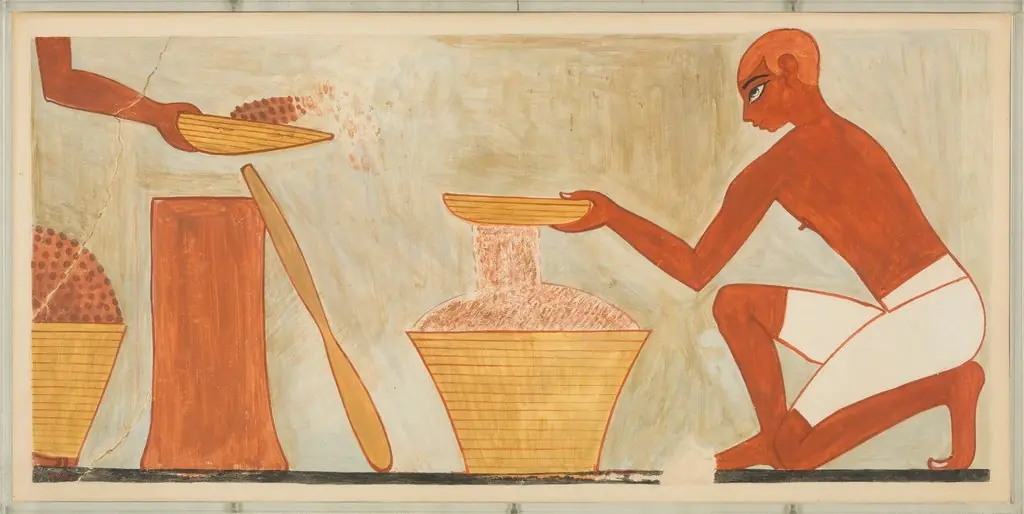 Sifting Meal, Tomb of Rekhmire
 Funeral Procession, Tomb of Pairy