Artwork
Painted Restoration of the Hathor-Head Frieze in the Tomb of Senenmut
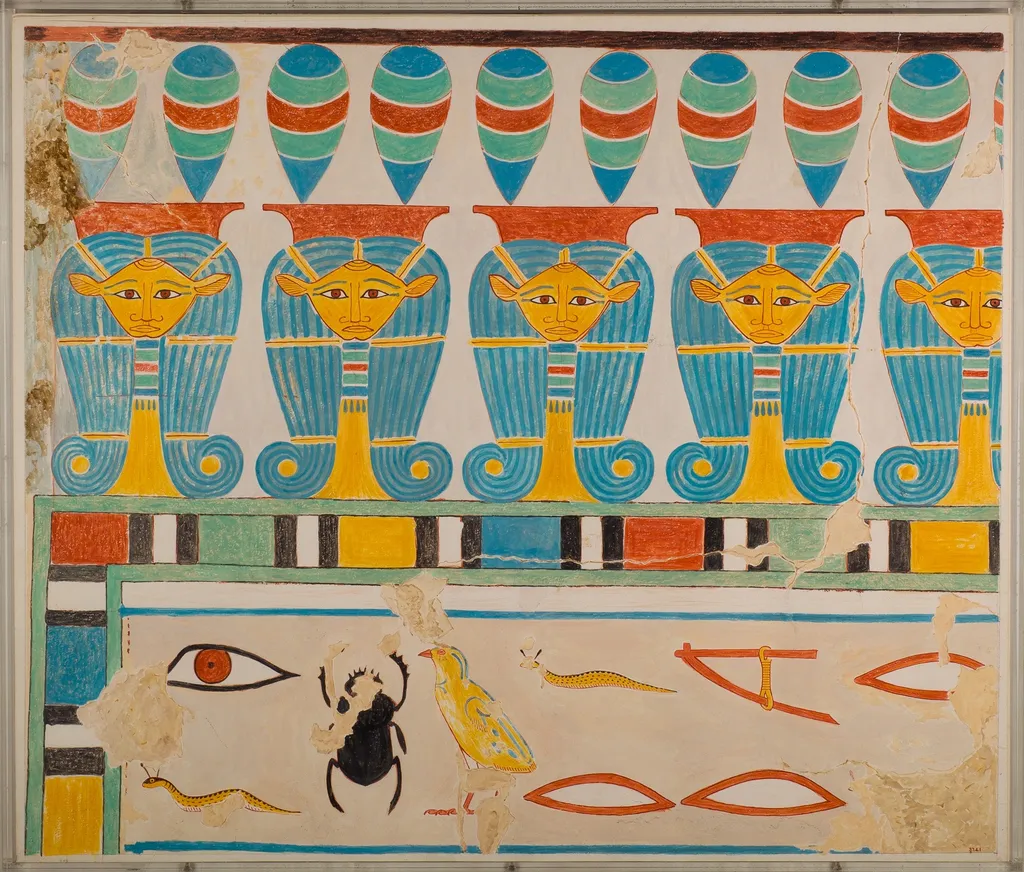
Painted Restoration of the Hathor-Head Frieze in the Tomb of Senenmut is an unspecified painting by Nina M. Davies. It dates from 1490 and is held in the collection of the Metropolitan Museum of Art. Around 1490, British Egyptologist and illustrator Nina M.
About this work
Overview
Around 1490, British Egyptologist and illustrator Nina M. Davies produced a painted restoration of a fragment from the Hathor-head frieze in the tomb of Senenmut. The work, now part of the Metropolitan Museum of Art’s collection, reconstructs a portion of the original wall decoration that featured the goddess Hathor and her attendant figures.
Subject & Meaning
The composition centers on a series of stylized figures bearing the cow’s ears and horns associated with Hathor, the Egyptian deity of music, fertility, and the afterlife. Their golden faces, sun disks and bovine attributes identify them as protective attendants, a visual cue that the scene was intended to guard a sacred threshold within the tomb.
Technique & Style
Davies employed a careful, hand‑painted approach that mirrors the ancient palette of blues, yellows, reds and greens. The figures are arranged in orderly rows, each clothed in striped garments of blue and yellow, while a patterned border below incorporates a black beetle, a yellow bird and a snake rendered in the same vivid hues, echoing the rhythmic geometry of the original Egyptian mural.
History & Provenance
Nina M. Davies, who worked closely with her husband Norman de Garis Davies, dedicated her career to documenting and reconstructing Egyptian tomb paintings. This particular restoration was created as part of that scholarly effort and later entered the Metropolitan Museum’s holdings, where it serves both as a research resource and a visual aid for understanding Senenmut’s tomb decoration.
Context
The original frieze belonged to the tomb of Senenmut, a high‑ranking official under Pharaoh Hatshepsut in the 15th century BCE. Hathor’s presence in tomb art reflects her role as a guide for the deceased, and the repetitive, regimented arrangement of her attendants underscores the Egyptian emphasis on order and protection in the afterlife.
Legacy
Davies’s restoration remains a valuable reference for Egyptologists studying the visual language of New Kingdom funerary art. By reproducing the colors and motifs with scholarly precision, the piece aids contemporary viewers in visualizing the lost original and contributes to ongoing research on the iconography of Hathor and her cult.
Artist & collection
Artist
The Egyptologists Nina M. Davies (6 January 1881 – 21 April 1965) and Norman de Garis Davies (1865–5 November 1941) were a married couple of illustrators and copyists who worked in the early and mid-twentieth century…

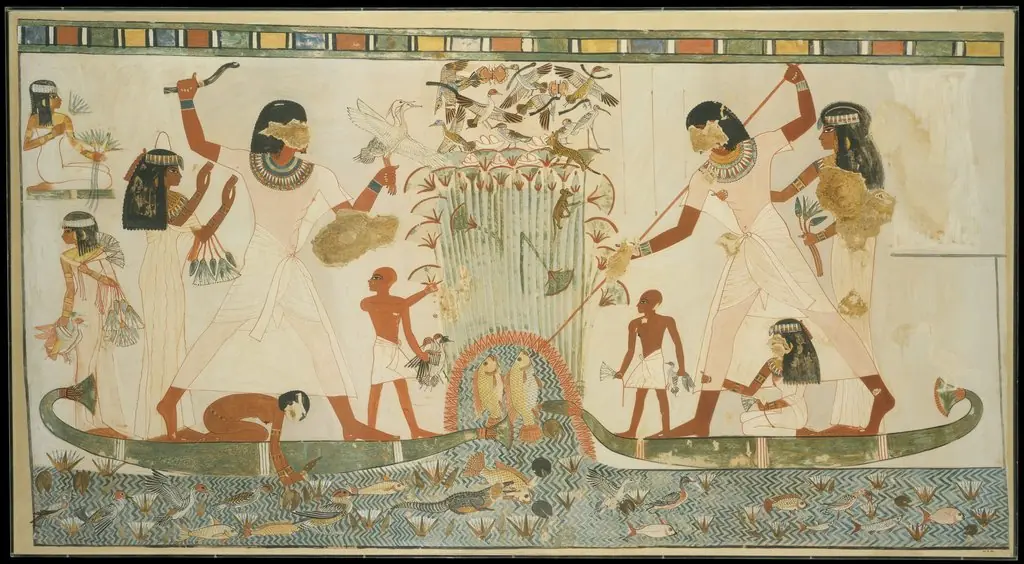 Menna and Family Hunting in the Marshes, Tomb of Menna
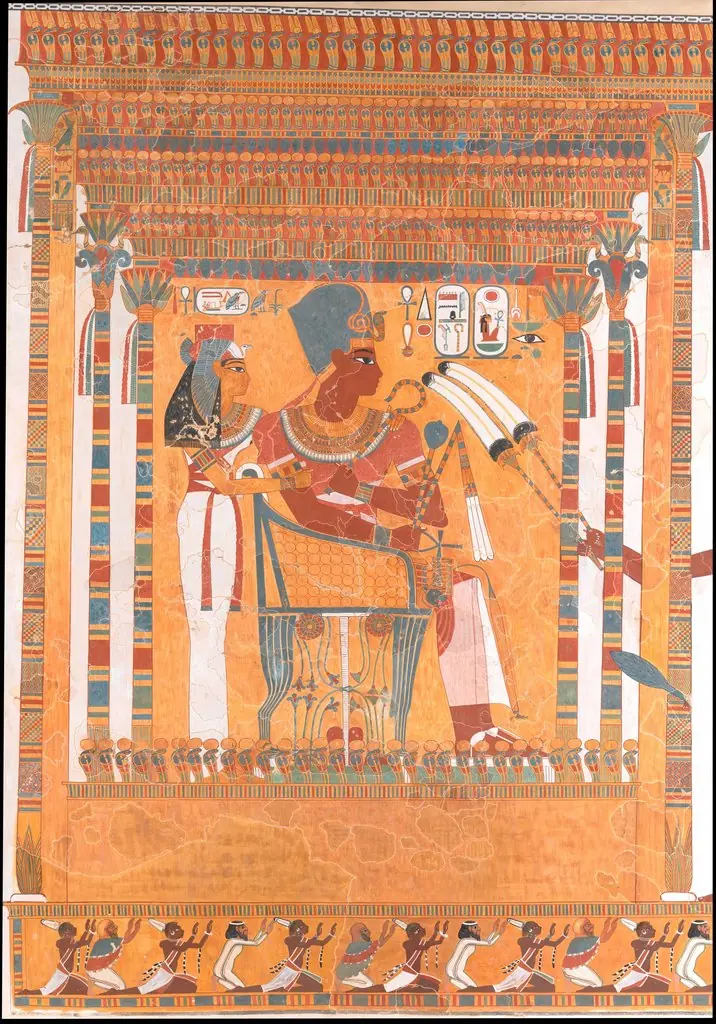 Amenhotep III and his Mother, Mutemwia, in a Kiosk
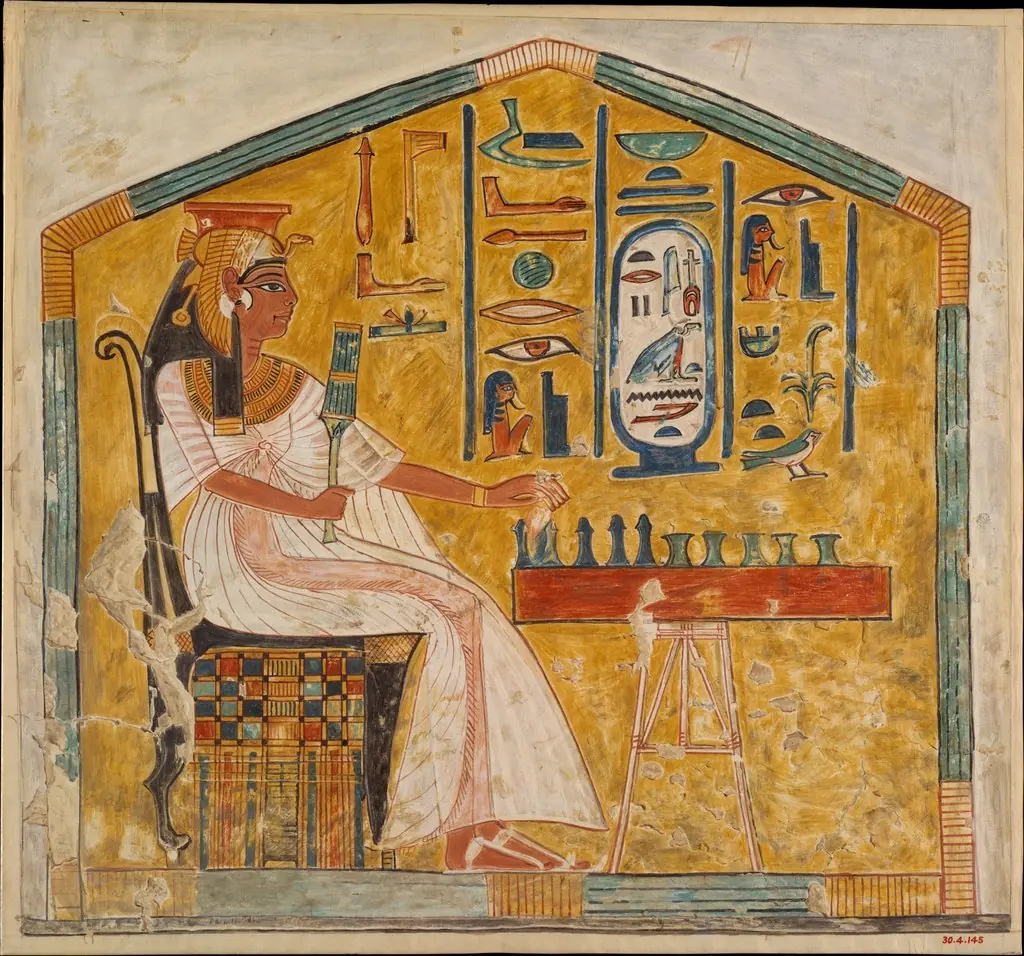 Queen Nefertari Playing Senet
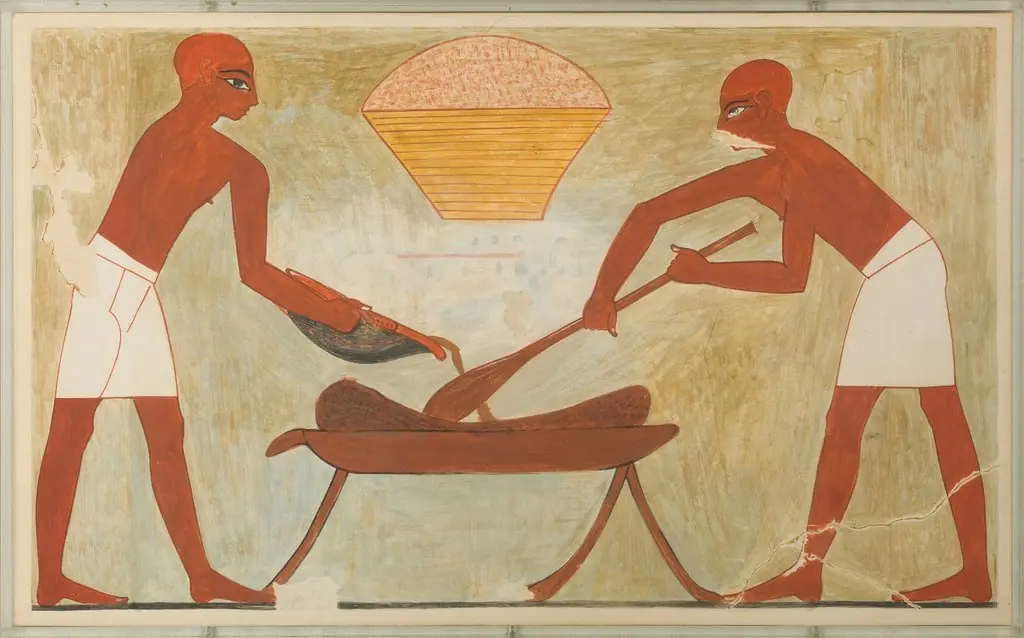 Preparing Dough, Tomb of Rekhmire
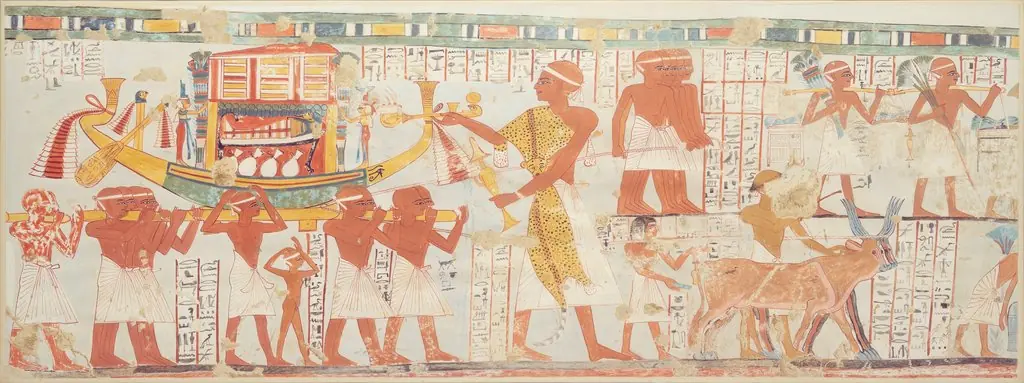 Nakhtamun's Funeral Procession, Tomb of Nakhtamun
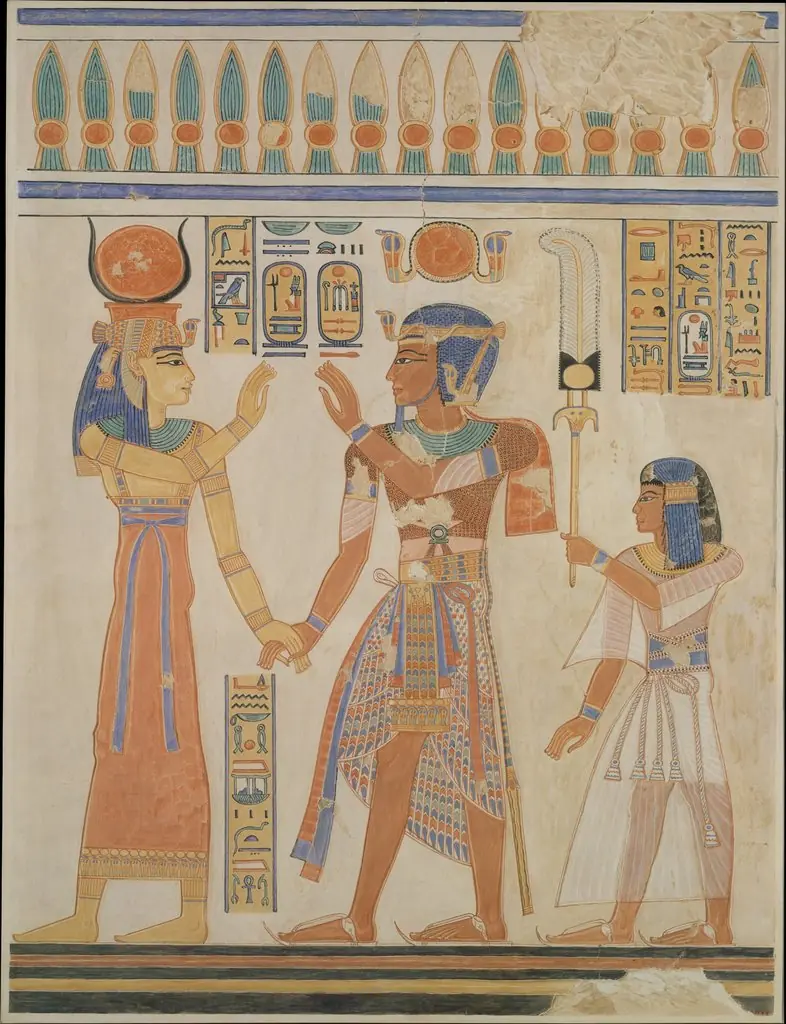 Ramesses III and Prince Amenherkhepeshef before Hathor
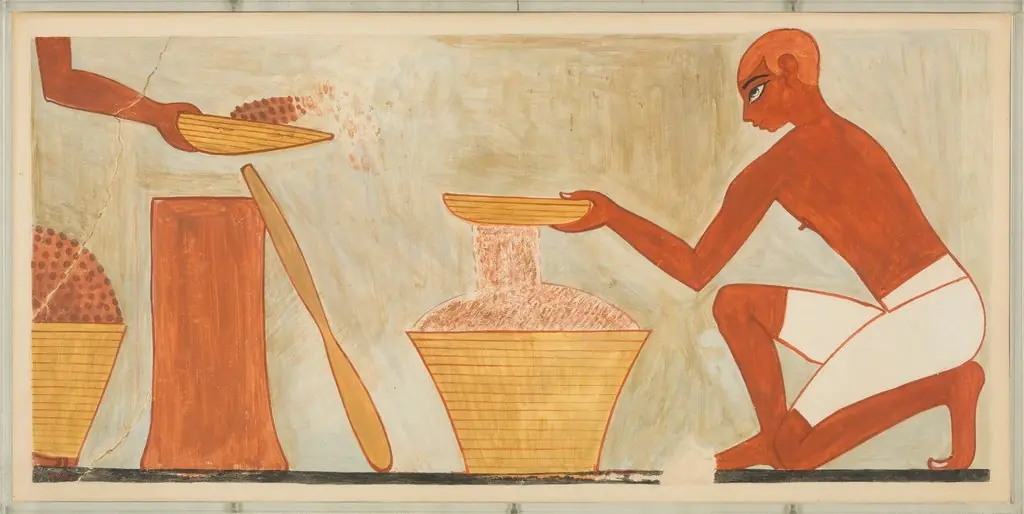 Sifting Meal, Tomb of Rekhmire
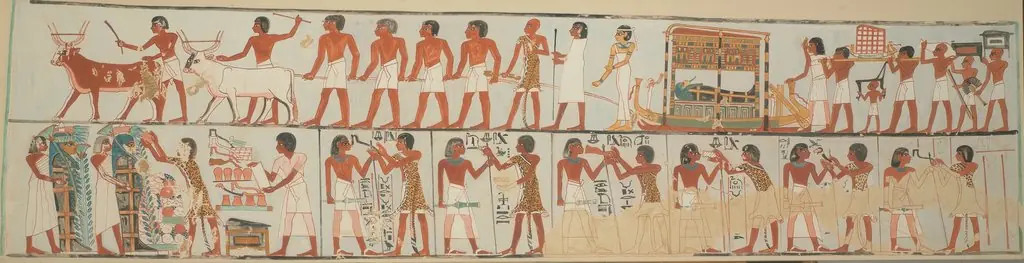 Funeral Procession, Tomb of Pairy