Artwork
H Beard Print Collection
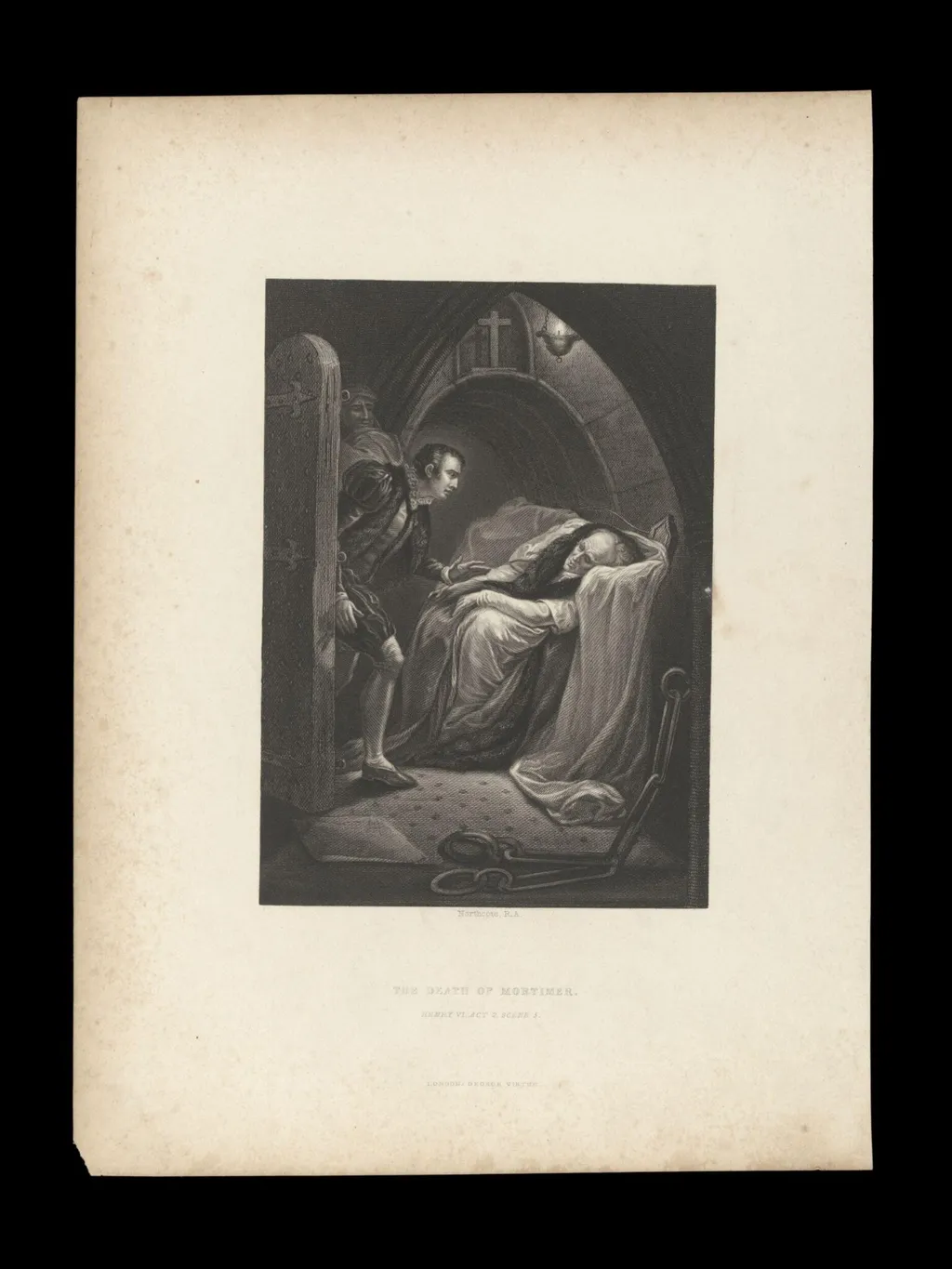
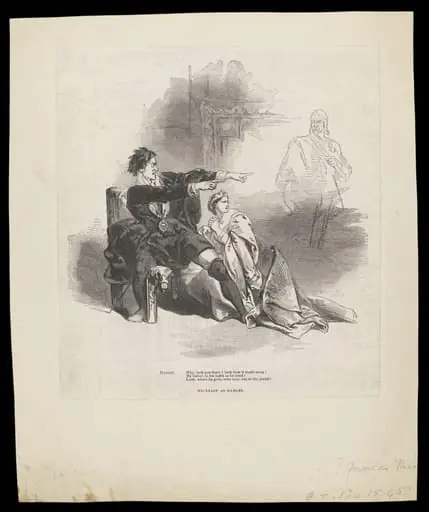
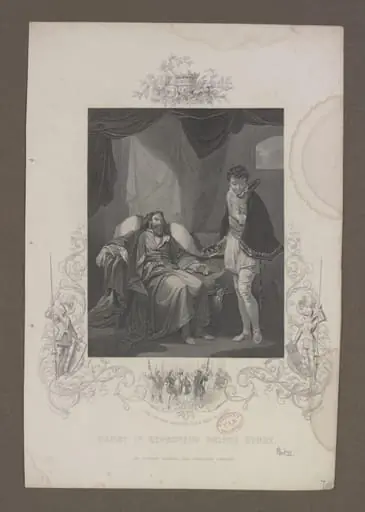
H Beard Print Collection is a print by James Northcote. It dates from 1750 and is held in the collection of the Victoria and Albert Museum. This 19th‑century print illustrates the climactic moment of Mortimer’s death in Act II, scene 5 of Shakespeare’s *Henry VI, Part 1*.
About this work
Overview
This 19th‑century print illustrates the climactic moment of Mortimer’s death in Act II, scene 5 of Shakespeare’s *Henry VI, Part 1*. Produced by the publisher G. Vertue, the image captures the violent resolution of a key plot point from the early Tudor drama.
Subject & Meaning
The composition centers on a fallen, armored figure—Mortimer—while two standing men attend him, one brandishing a sword as if delivering the fatal blow. The scene conveys the themes of betrayal and the brutal costs of political ambition that permeate the play.
Technique & Style
Executed as a black‑ink print, the work relies on stark, sharply defined lines to render the figures and their armor. The contrast of deep shadows against the white paper heightens the drama, emphasizing the immediacy of the violent act.
History & Provenance
Although the original drama dates to the late 16th century, this visual interpretation was created and issued in the 1800s, reflecting a Victorian‑era interest in Shakespearean subjects. The print was circulated by G. Vertue, a known publisher of theatrical prints during that period.
Context
Shakespeare’s *Henry VI* chronicles the turbulence of the Wars of the Roses, and Mortimer’s death marks a turning point in the power struggle between rival factions. The print serves as a visual record of how 19th‑century audiences imagined and staged these historic‑mythic events.
Artist & collection
Artist
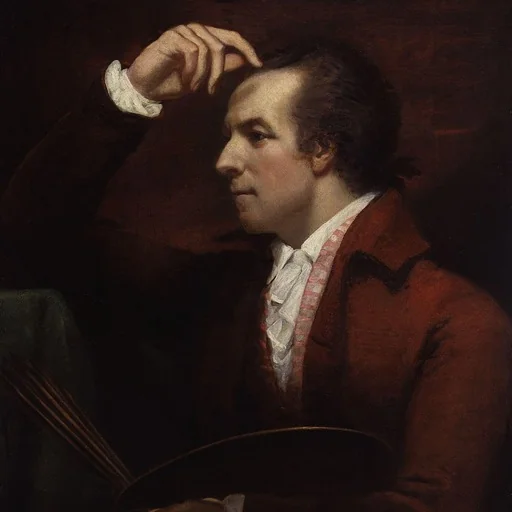
James Northcote was a British painter. He became a member of the Royal Academy in 1787, and a member of the Royal Institute of the Netherlands in 1809.