Artwork
The Shipwreck
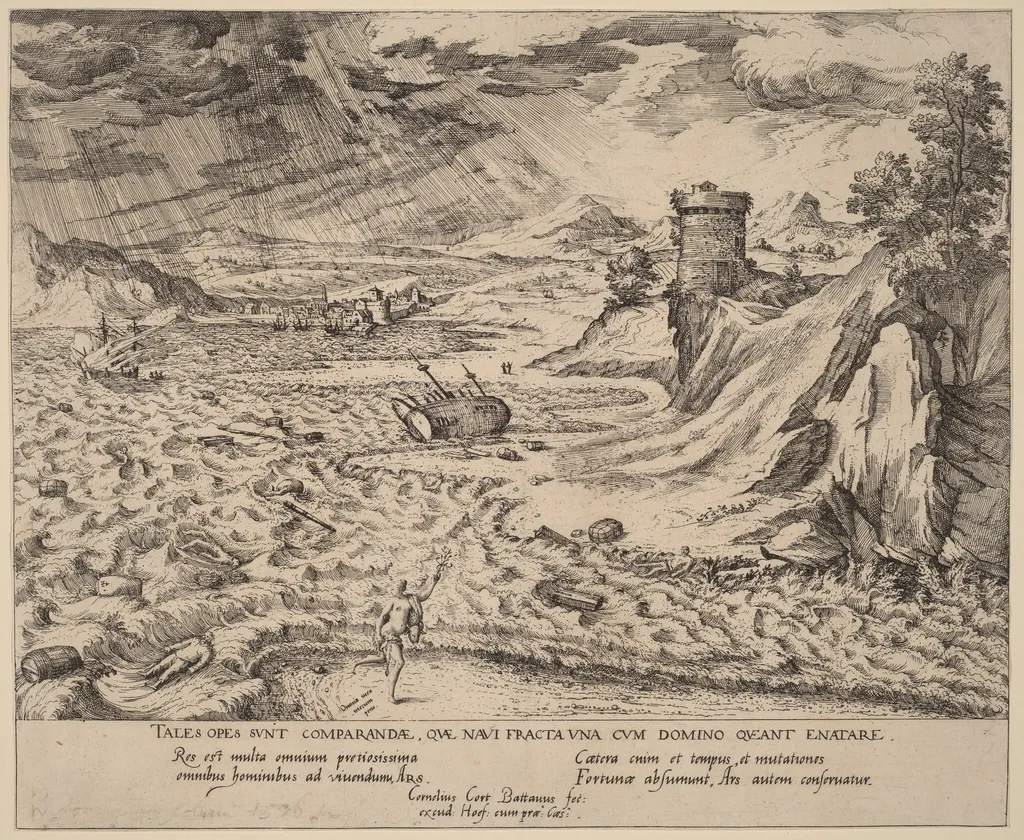
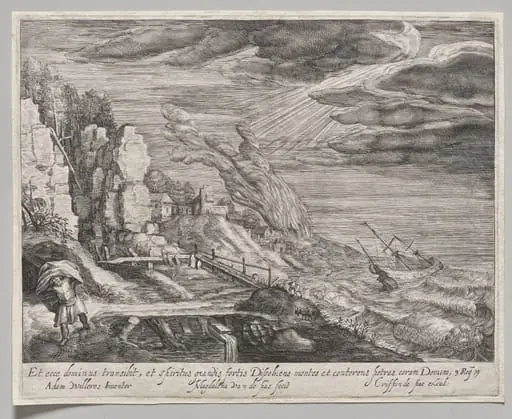
The Shipwreck is an ink print by the Renaissance artist Simon Novellanus. It dates from 1595 and is held in the collection of the National Gallery of Art.
About this work
Overview
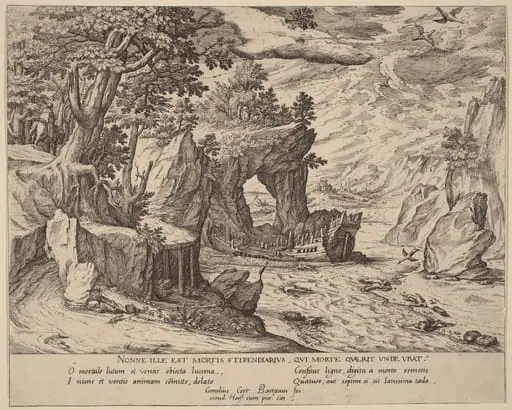
A broken vessel is battered by crashing waves near a jagged shoreline, while a solitary figure clings desperately to the wreckage.
Simon Novellanus’s print titled *The Shipwreck*, executed around 1595, presents a turbulent maritime disaster. A broken vessel is battered by crashing waves near a jagged shoreline, while a solitary figure clings desperately to the wreckage. In the distance, a castle and town perch atop a cliff, seemingly insulated from the storm’s fury. The composition balances dramatic chaos with meticulous detail, inviting contemplation of human vulnerability.
Subject & Meaning
The central motif depicts a lone survivor struggling against the sea, a visual metaphor for the precariousness of human existence. A Latin inscription beneath the image alludes to the capriciousness of fate and the moral lesson that individuals must confront forces beyond their control. The juxtaposition of the storm‑torn foreground with the calm, elevated settlement underscores a contrast between worldly turmoil and distant stability.
Technique & Style
Created through a combination of etching and engraving, the work relies on fine, intersecting lines to render texture. The artist delineates the frothy surf, the craggy rocks, and the figure’s grip with precise hatching, achieving a sense of depth and movement. The chiaroscuro effect emerges from dense cross‑hatching in shadowed areas, while lighter strokes suggest the translucency of clouds and water, exemplifying late‑Renaissance printmaking practices.
History & Provenance
The engraving is attributed to the German printmaker Simon Novellanus, active in the late sixteenth century. Its dating to circa 1595 places it among his later productions, a period marked by increased interest in narrative prints with moralizing themes. While the original plate’s whereabouts are unknown, surviving impressions have appeared in several European collections, indicating the work’s circulation among collectors of didactic imagery.
Artist & collection