Artwork
Pink Roses in a Vase
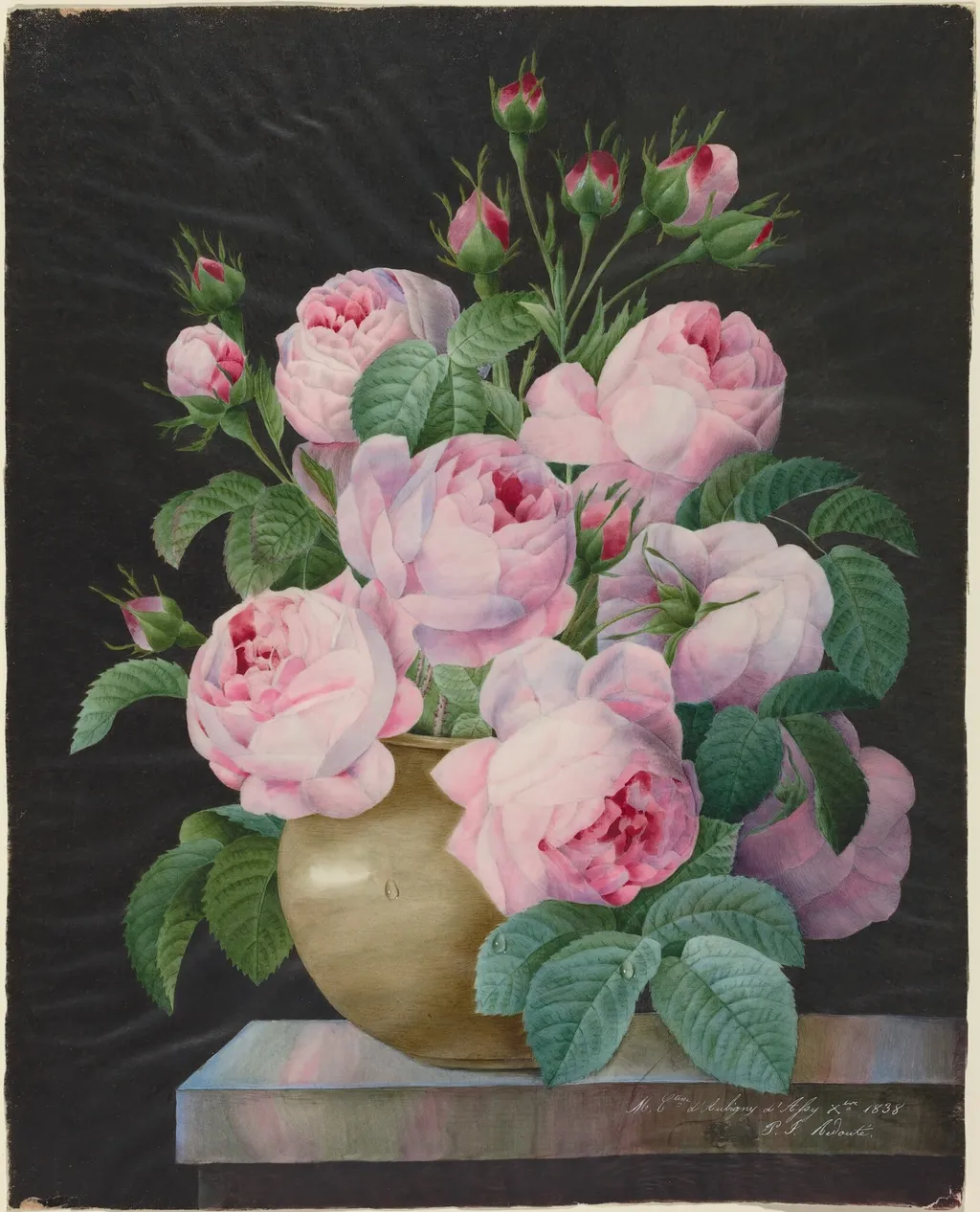
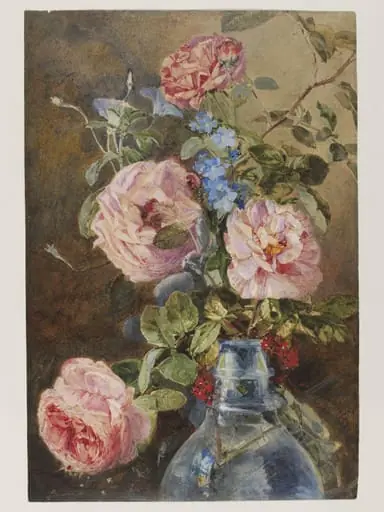
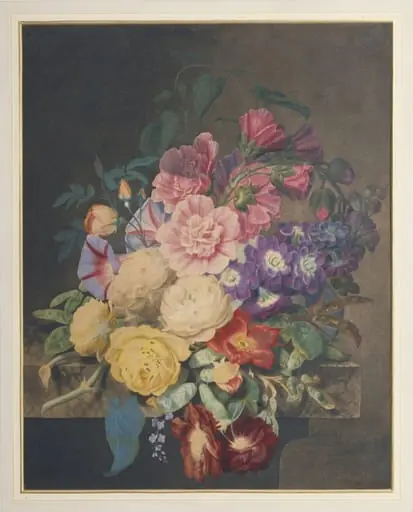
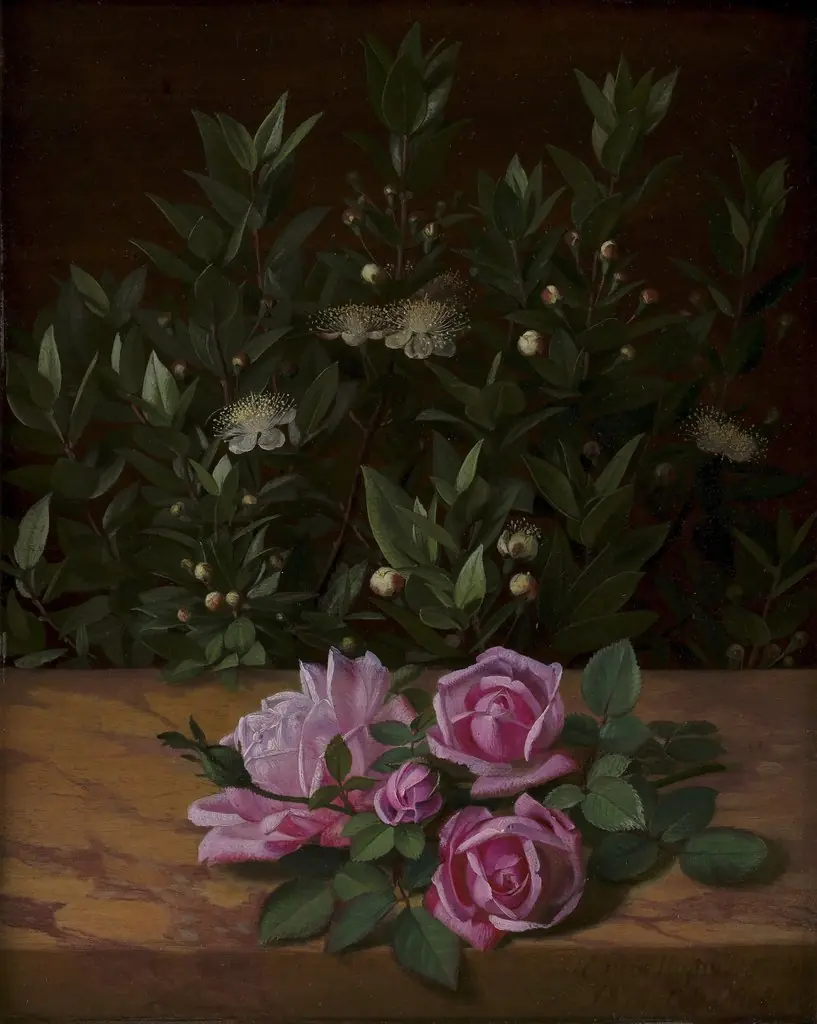
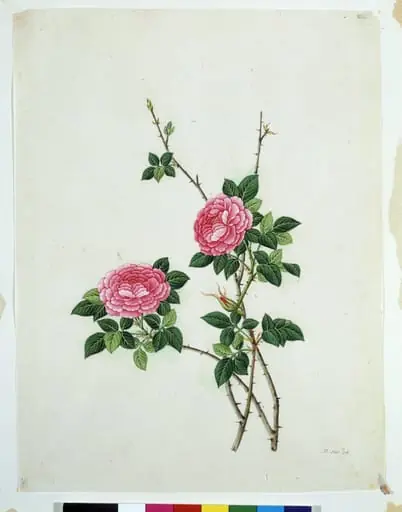
Pink Roses in a Vase is a gouache drawing by the Romanticist artist Pierre Joseph Redouté. It dates from 1838 and is held in the collection of the National Gallery of Art.
About this work
Overview
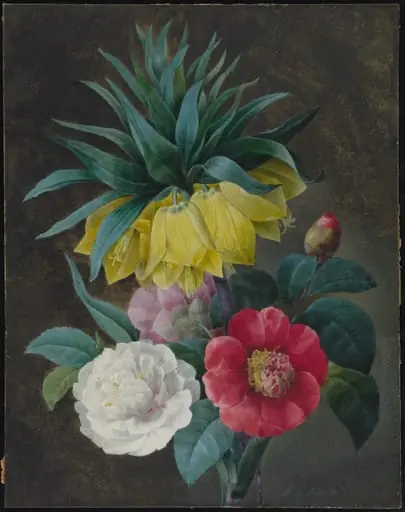
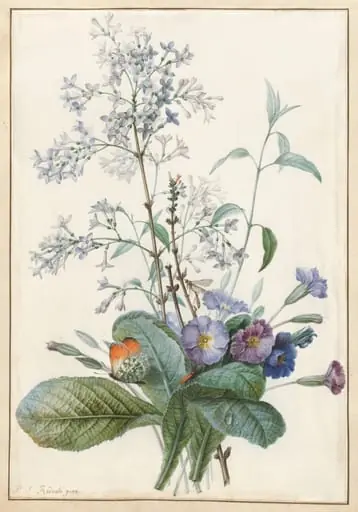
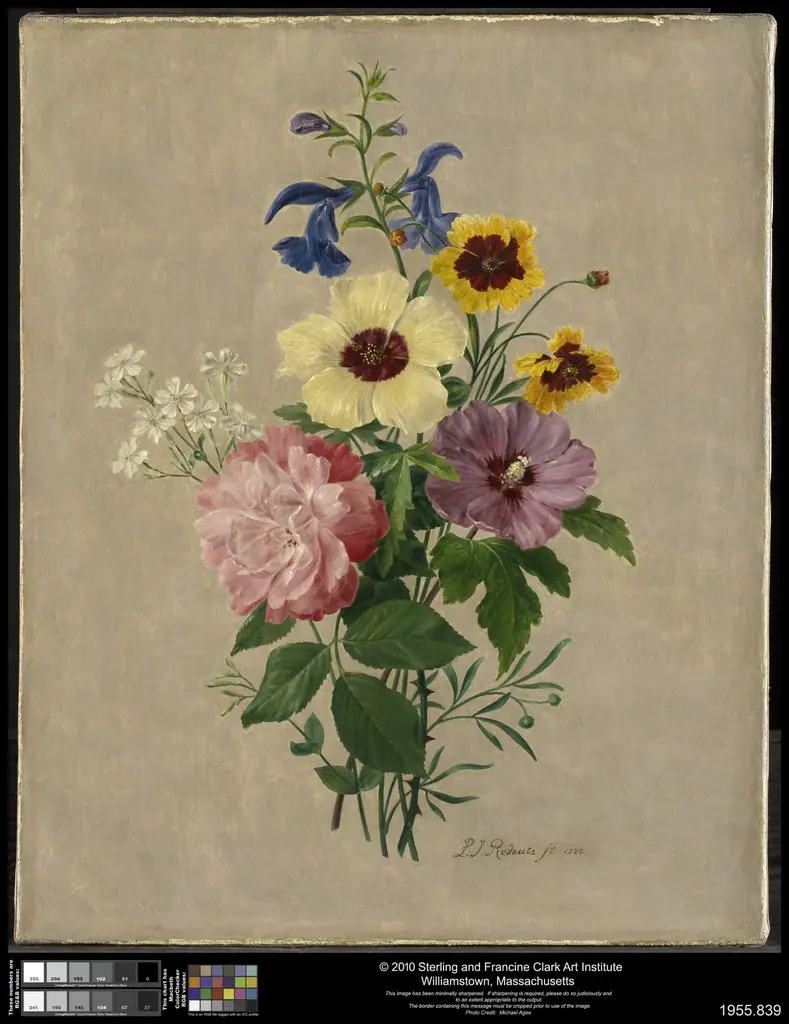
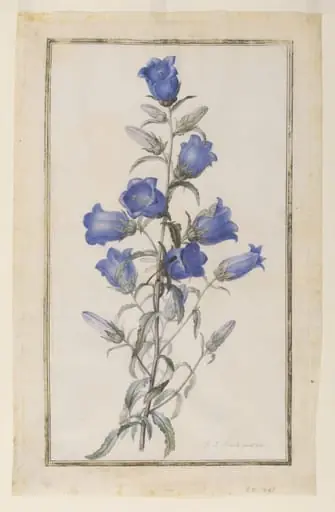
Pink Roses in a Vase is a drawing executed in 1838 by Pierre-Joseph Redouté, utilizing watercolor, gouache, and graphite on vellum. Characterized by its meticulous depiction of floral subjects, the work exemplifies Redouté's signature blend of scientific precision and artistic delicacy.
Subject & Meaning
The subject is a vase containing pink roses at various stages of bloom, accompanied by dark, glossy leaves. The composition focuses attention on the flowers, set against a dark, nondescript background. The careful rendering of botanical details reflects Redouté's lifelong dedication to capturing the natural world with accuracy and beauty.
Technique & Style
Redouté employed thin, layered applications of paint to achieve a lifelike quality in the petals. The use of watercolor and gouache over graphite on vellum allowed for both delicacy and vibrancy, showcasing his technical skill in botanical illustration.
History & Provenance
Created in 1838, Pink Roses in a Vase is part of Redouté's extensive oeuvre produced during his time at the Château de Malmaison. While specific provenance details are not provided, the work aligns with his body of art later widely reproduced as colored stipple engravings.
Context
In the 19th century, such detailed botanical artworks were highly valued for their dual appeal to art and science. Redouté's work, in particular, was renowned for its precision, earning him the esteemed title 'the Raphael of flowers' among his contemporaries.
Artist & collection

Artist
Pierre-Joseph Redouté (French pronunciation: , 10 July 1759 – 19 June 1840), was a painter and botanist from the Austrian Netherlands, known for his watercolours of roses, lilies and other flowers at the Château de…