Artwork
It Is a Skull Wreathed with Roses. It Dominates a Woman's Torso of Pearly Whiteness
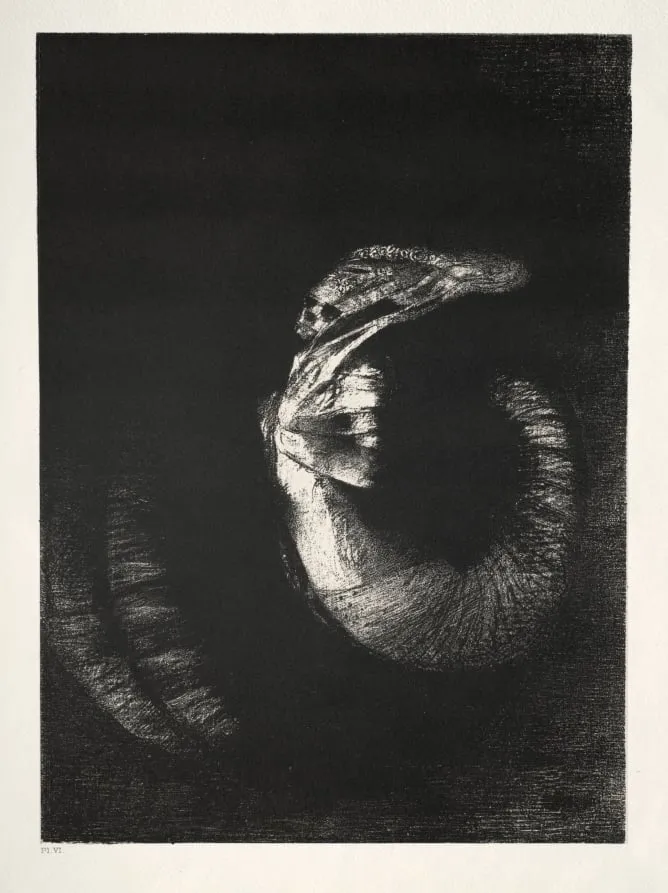
It Is a Skull Wreathed with Roses. It Dominates a Woman's Torso of Pearly Whiteness is a print by the Impressionist artist Odilon Redon. It dates from 1888 and is held in the collection of the Cleveland Museum of Art.
About this work
Overview
This lithograph belongs to a trio of prints created by Odilon Redon after he read Gustave Flaubert’s 1874 novel The Temptation of Saint Anthony. Rather than illustrating specific episodes, Redon sought to capture the work’s nightmarish atmosphere, rendering a floating, pallid female torso surrounded by a stark black void and topped with a skull entwined in roses.
Subject & Meaning
The central figure—a luminous, almost translucent torso—appears suspended in darkness, its crown of a rose‑laden skull suggesting a quiet meditation on mortality rather than overt horror. The composition evokes the ambiguous, dream‑like trials described in Flaubert’s text, translating the novel’s moral and visionary tensions into a visual meditation on life, death, and the uncanny.
Technique & Style
Redon employed lithographic processes to imitate the dense blackness of his earlier charcoal studies, achieving dramatic chiaroscuro through stark tonal contrasts. The print’s limited palette of deep blacks against pale whites heightens the otherworldly ambience, while the delicate rendering of roses against the skull demonstrates his skill in balancing softness with starkness.
History & Provenance
The series was produced in the early 1890s, a period when Redon’s symbolist experiments were often met with confusion. Contemporary viewers struggled to interpret the prints, which diverged from narrative illustration toward a more subjective, atmospheric expression of literary mood.
Context
Redon’s work reflects the broader Symbolist interest in inner experience and the subconscious, aligning with contemporaneous literary explorations of spiritual trial. By abstracting Flaubert’s narrative into a visual language of shadows and light, the print situates itself within late‑19th‑century efforts to visualize the unseen realms of imagination.
Legacy
Although initially misunderstood, the lithograph has come to exemplify Redon’s capacity to render literary atmospheres in visual form, influencing later surrealist and modernist artists who pursued similar juxtapositions of the macabre and the beautiful.
Artist & collection
Artist
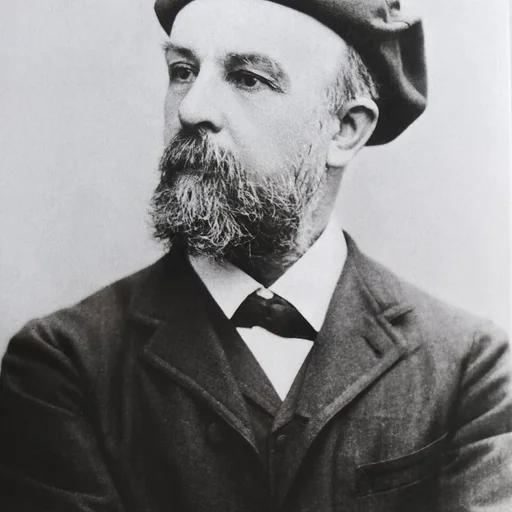
Born Bertrand-Jean Redon on 20 April 1840 in Bordeaux, the artist adopted the name Odilon from his mother, Marie-Odile.

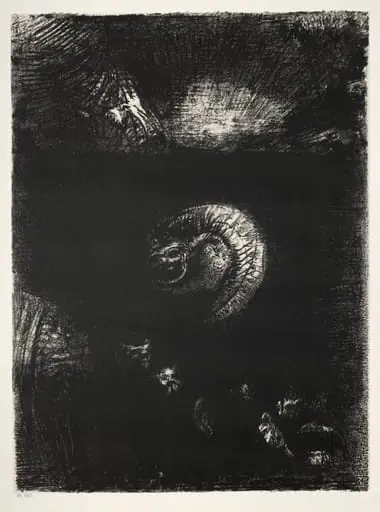 And All Manner of Frightful Creatures Arise
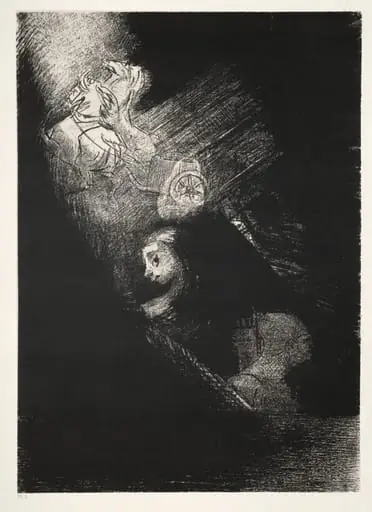 First a Pool of Water, Then a Prostitute, the Corner of a Temple, a Soldier's Face, a Chariot with Two White, Rearing Horses
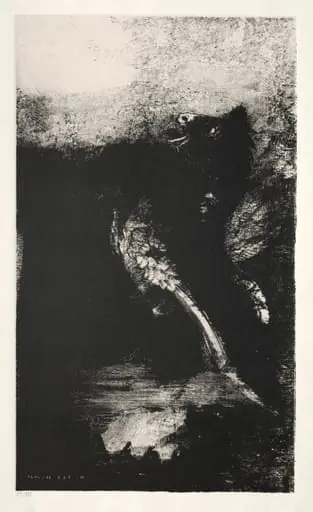 The Chimera with Green Eyes Turns, Bays
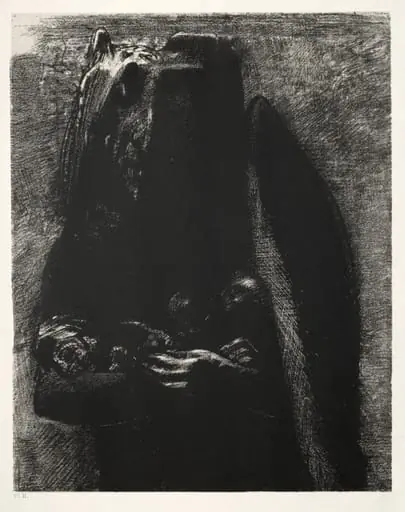 It Is the Devil, Bearing Beneath His Two Wings the Seven Deadly Sins
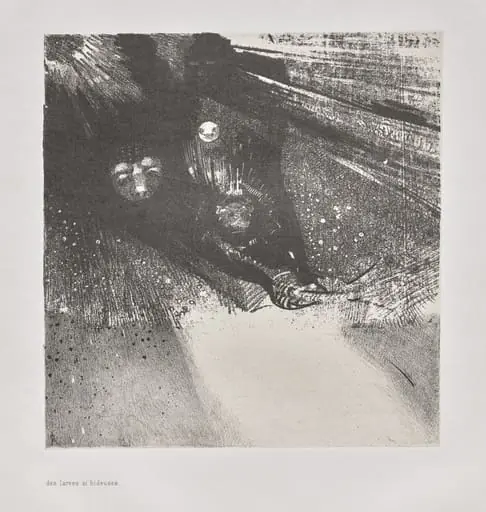 Hideous Larvae
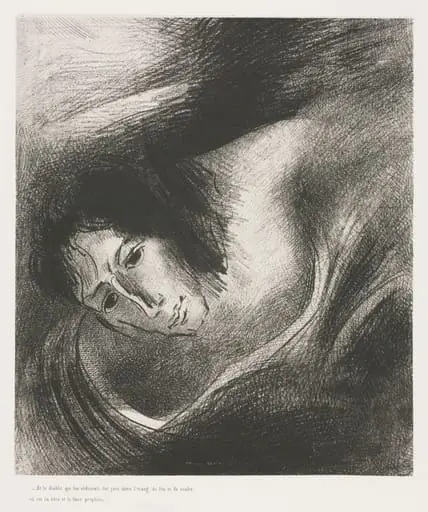 And the Devil That Deceived Them was Cast into the Lake of Fire and Brimstone, Where the Beast and the False Prophet Are