Artwork
And All Manner of Frightful Creatures Arise
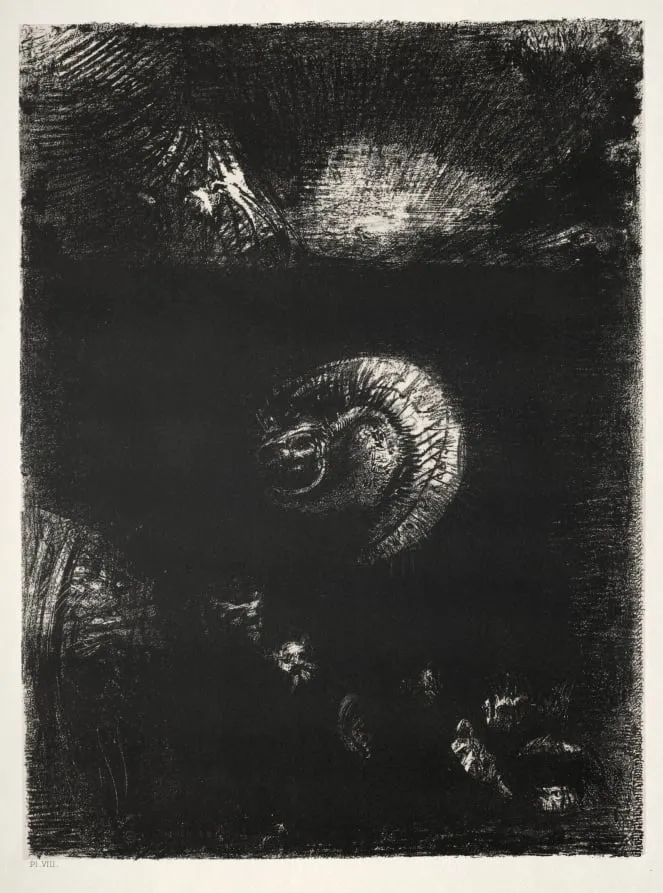
And All Manner of Frightful Creatures Arise is a print by the Impressionist artist Odilon Redon. It dates from 1888 and is held in the collection of the Cleveland Museum of Art.
About this work
Overview
This print portfolio by Odilon Redon is one of three series inspired by Gustave Flaubert’s novel The Temptation of Saint Anthony. Rather than illustrating scenes directly, Redon sought to translate the novel’s psychological atmosphere into visual form. He used lithography to mimic the dense, smoky textures of charcoal, creating images that feel emergent from darkness rather than clearly defined.
Subject & Meaning
Redon aimed to convey the inner turmoil and spiritual dread experienced by Saint Anthony, transforming literary suggestion into a visual language of unease.
The imagery depicts hallucinatory figures—floating eyes, distorted skulls, and amorphous beasts—drawn not from the novel’s narrative but from its emotional core. Redon aimed to convey the inner turmoil and spiritual dread experienced by Saint Anthony, transforming literary suggestion into a visual language of unease. The creatures are symbolic, not literal, representing fears and temptations beyond the physical world.
Technique & Style
Redon employed lithography to achieve deep, velvety blacks and subtle gradations, emulating the tactile richness of charcoal. He avoided sharp outlines, allowing forms to dissolve into shadow, creating a sense of ambiguity and instability. The contrast between void and faintly rendered detail heightens the eerie, dreamlike quality, prioritizing mood over clarity or realism.
History & Provenance
Created in the 1880s, the portfolio emerged during Redon’s transition from dark, symbolic drawings to more colorful works. Though aligned with Symbolist ideals, the prints received limited recognition in his lifetime, often dismissed as obscure or overly fantastical. Their significance grew later, as audiences came to appreciate their psychological depth and innovative use of printmaking.
Context
Redon’s work responded to late 19th-century interests in the subconscious, spiritualism, and literary symbolism. Flaubert’s novel, with its blend of religious asceticism and surreal visions, resonated with artists exploring inner experience over external reality. Redon’s prints align with broader movements rejecting naturalism, favoring intuition and emotional resonance in art.
Legacy
Though initially overlooked, the portfolio influenced later Surrealists and expressionist printmakers drawn to its exploration of the unconscious. Redon’s mastery of tone and ambiguity demonstrated how printmaking could evoke psychological states, expanding the medium’s expressive potential beyond illustration. His approach to darkness as a creative force remains a touchstone in modern graphic art.
Artist & collection
Artist
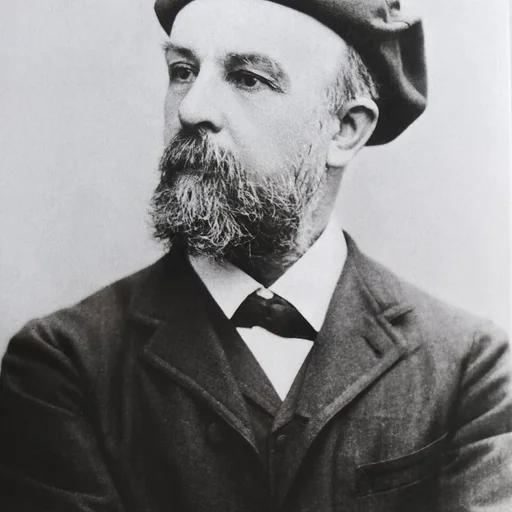
Born Bertrand-Jean Redon on 20 April 1840 in Bordeaux, the artist adopted the name Odilon from his mother, Marie-Odile.

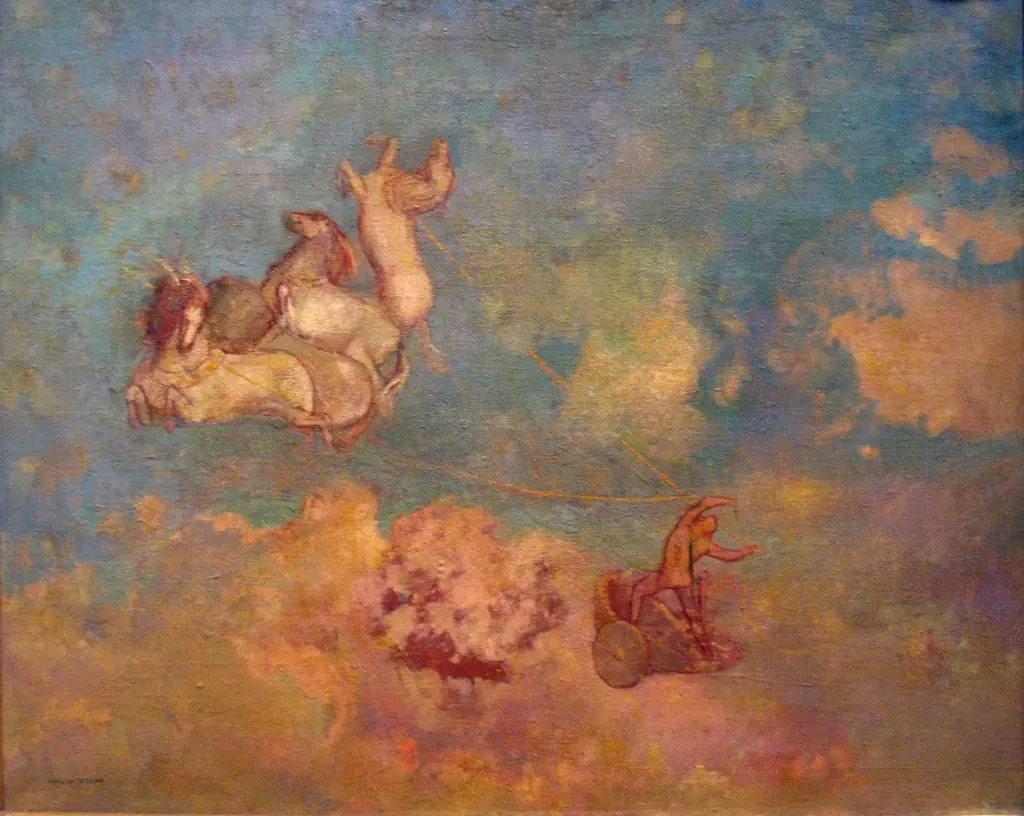
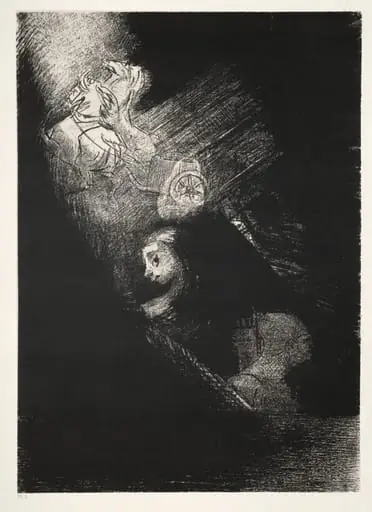 First a Pool of Water, Then a Prostitute, the Corner of a Temple, a Soldier's Face, a Chariot with Two White, Rearing Horses
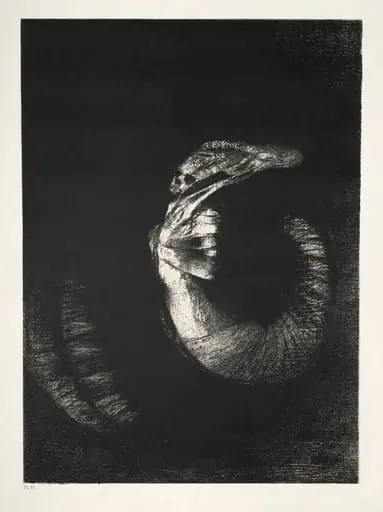 It Is a Skull Wreathed with Roses. It Dominates a Woman's Torso of Pearly Whiteness
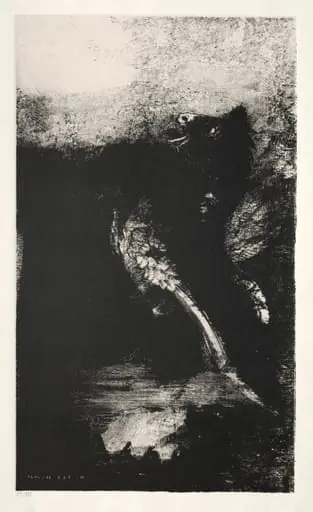 The Chimera with Green Eyes Turns, Bays
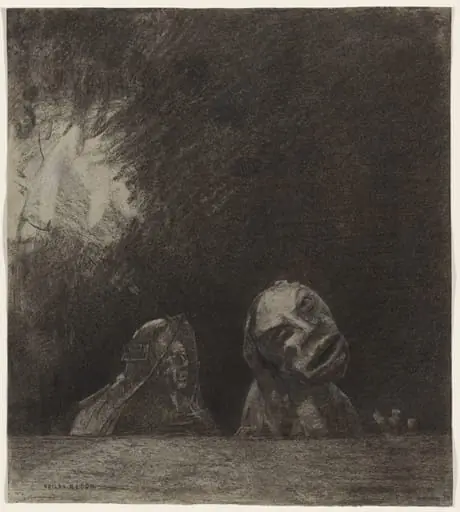 Quasimodo
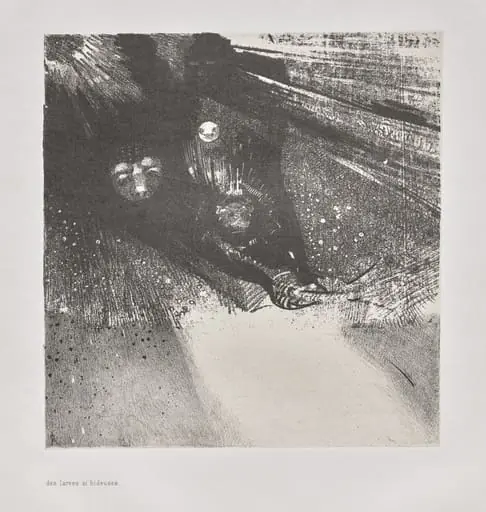 Hideous Larvae
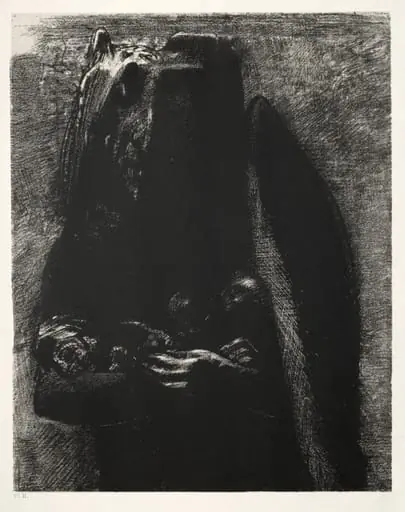 It Is the Devil, Bearing Beneath His Two Wings the Seven Deadly Sins
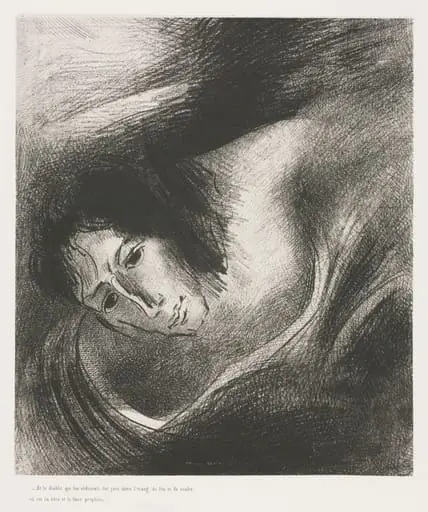 And the Devil That Deceived Them was Cast into the Lake of Fire and Brimstone, Where the Beast and the False Prophet Are
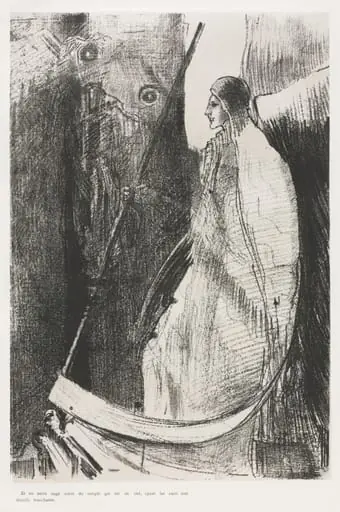 And Another Angel Came Out of the Temple which is in Heaven, and He also Having a Sharp Sickle