Artwork
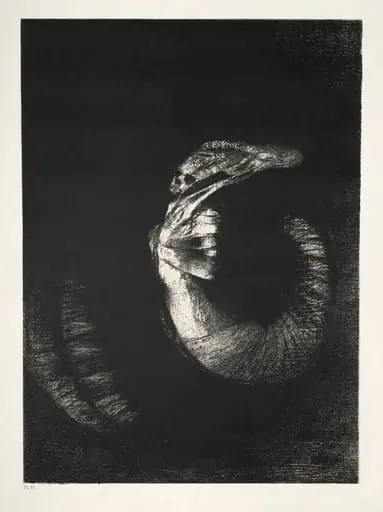
And the Devil That Deceived Them was Cast into the Lake of Fire and Brimstone, Where the Beast and the False Prophet Are
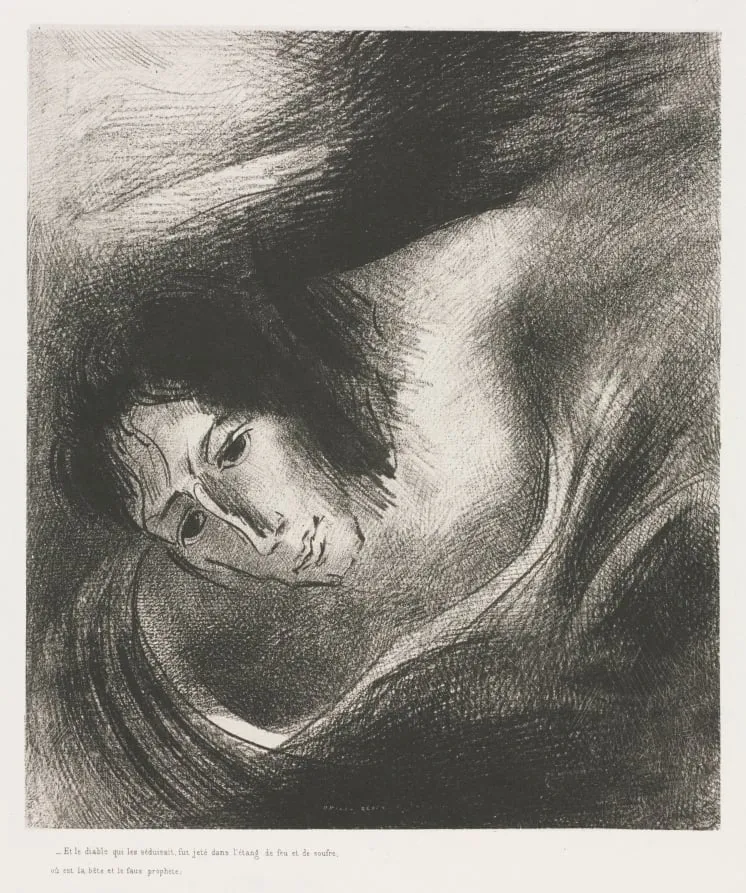
And the Devil That Deceived Them was Cast into the Lake of Fire and Brimstone, Where the Beast and the False Prophet Are is a print by the Impressionist artist Odilon Redon. It dates from 1899 and is held in the collection of the Cleveland Museum of Art.
About this work
Overview
It visually interprets twelve passages from the Book of Revelation, marking a rare direct engagement with biblical text in his career.
This lithographic series by Odilon Redon, completed in 1903, is the final of eleven portfolios he produced. It visually interprets twelve passages from the Book of Revelation, marking a rare direct engagement with biblical text in his career. Published by Ambroise Vollard, the set reflects Redon’s mature style and established reputation, bridging his earlier symbolic works with a more structured narrative framework.
Subject & Meaning
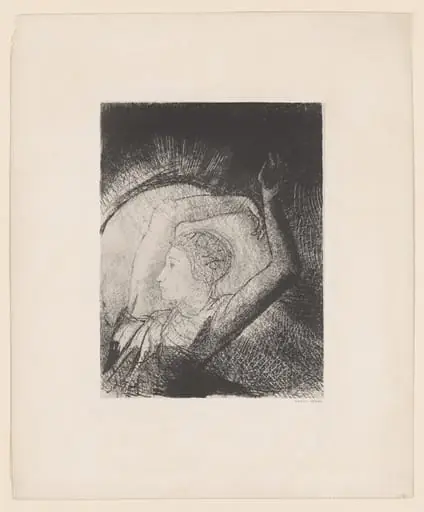
The series depicts apocalyptic scenes from Revelation, including the fall of a great star, a woman clothed in the sun, and the devil cast into fire. Rather than offering moral instruction, Redon transforms these visions into psychological landscapes—evoking dread and dissolution rather than divine judgment. The imagery leans into the subconscious, aligning with his lifelong interest in the unseen and the uncanny.
Technique & Style
Redon employed lithography to achieve dense, atmospheric contrasts of black and white. Swirling forms and blurred edges dissolve figures into their surroundings, creating a sense of cosmic chaos. The absence of color heightens the eerie, dreamlike quality, while the fluid lines suggest movement and instability, reinforcing the theme of unraveling order.
History & Provenance
Produced in 1903, the portfolio was published by Ambroise Vollard, who had begun promoting Redon’s prints in Paris just over a year earlier. Vollard’s support helped establish Redon’s market beyond France, particularly among collectors interested in Symbolist and print-based modernism. This series was among the last major works Redon completed before shifting focus to pastels and color.
Context
While Redon typically avoided literal narratives, this series engaged with a tradition of apocalyptic imagery dating to medieval and Renaissance art, including Albrecht Dürer’s woodcuts. Yet Redon’s approach diverged sharply: his visions are interiorized, emotional, and devoid of doctrinal clarity, reflecting fin-de-siècle anxieties about faith, science, and the limits of perception.
Legacy
The portfolio stands as one of Redon’s most cohesive engagements with textual sources, influencing later artists drawn to psychological and mythic themes in printmaking. Its emphasis on mood over doctrine expanded the possibilities of illustration as a vehicle for inner experience, distancing it from religious pedagogy and aligning it with modernist explorations of the unconscious.
Artist & collection
Artist
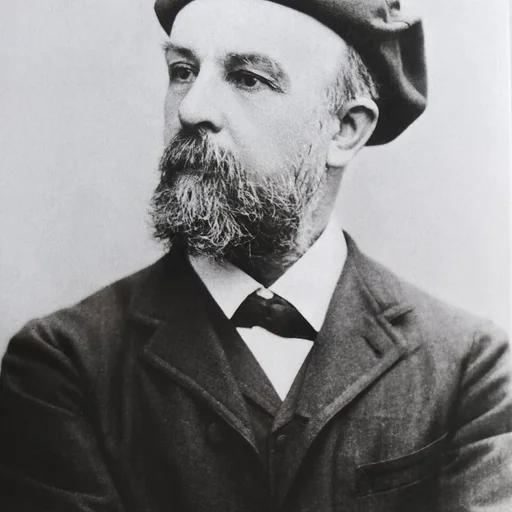
Born Bertrand-Jean Redon on 20 April 1840 in Bordeaux, the artist adopted the name Odilon from his mother, Marie-Odile.

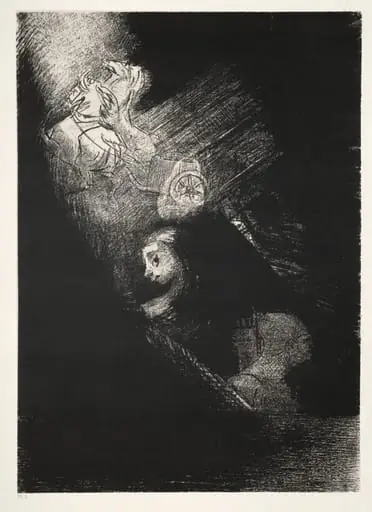 First a Pool of Water, Then a Prostitute, the Corner of a Temple, a Soldier's Face, a Chariot with Two White, Rearing Horses
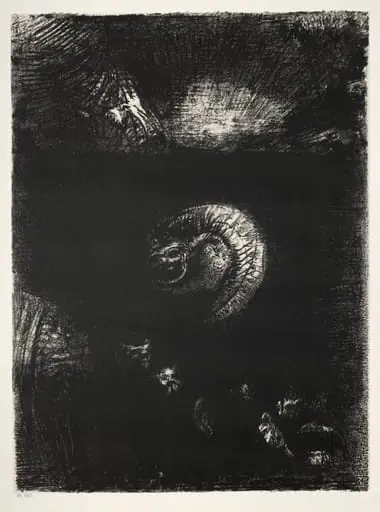 And All Manner of Frightful Creatures Arise
 It Is a Skull Wreathed with Roses. It Dominates a Woman's Torso of Pearly Whiteness
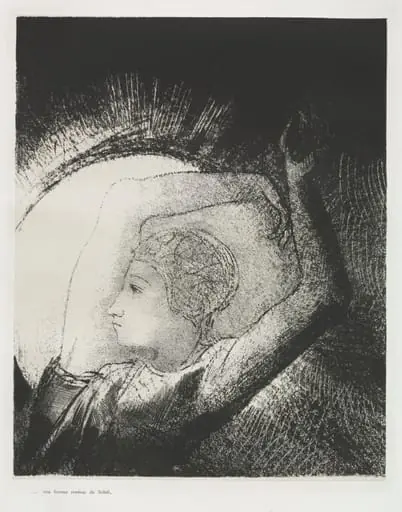 A Woman Clothed with the Sun
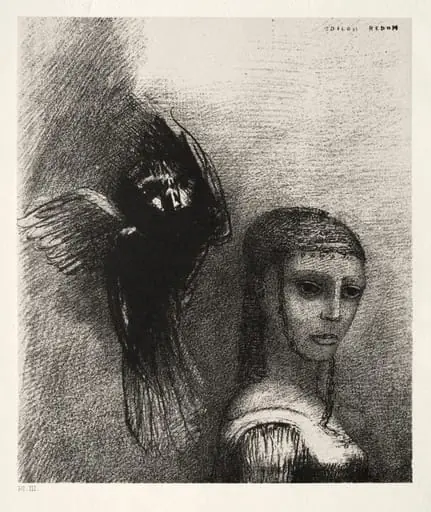 And a Large Bird, Descending from the Sky, Hurls Itself against the Topmost Point of Her Hair
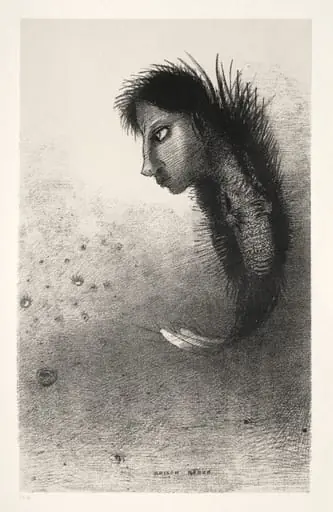 Then There Appears a Singular Being, Having the Head of a Man on the Body of a Fish
 Closed Eyes
 Untitled