Artwork
Roger et Angélique
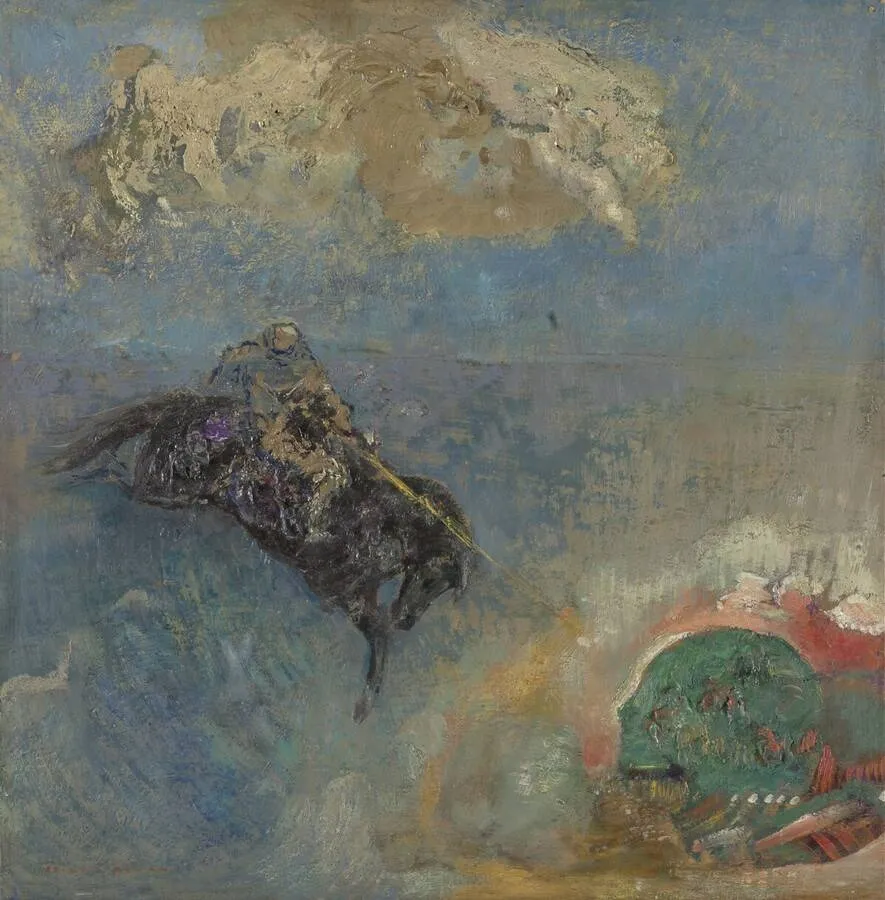
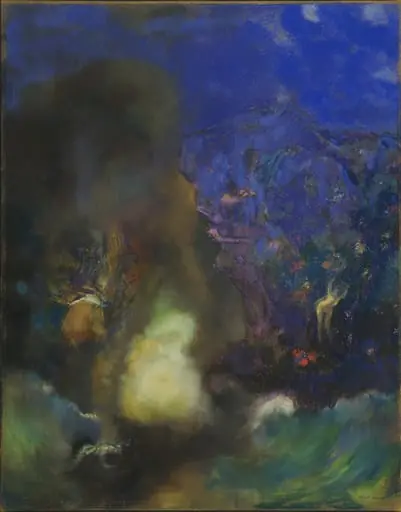
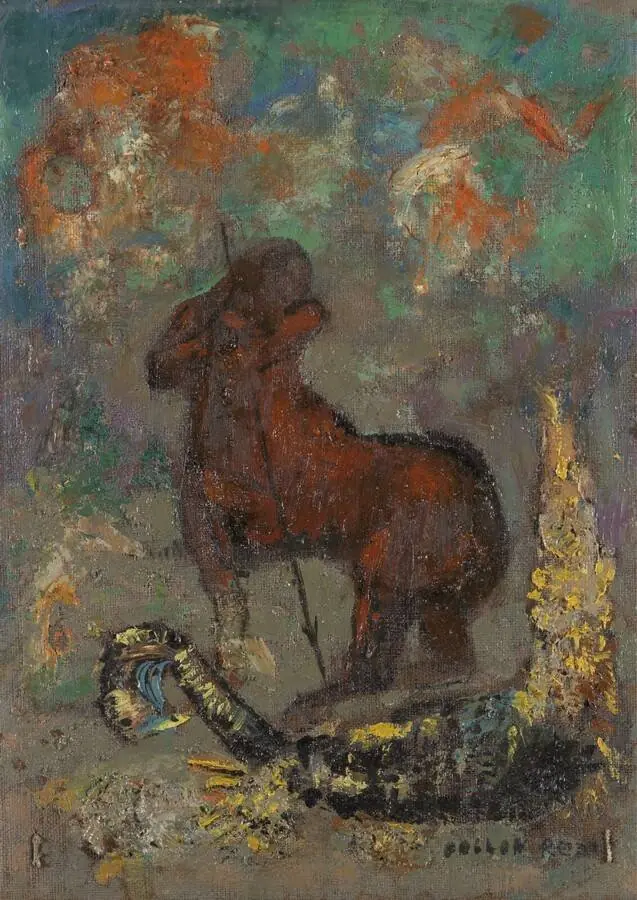
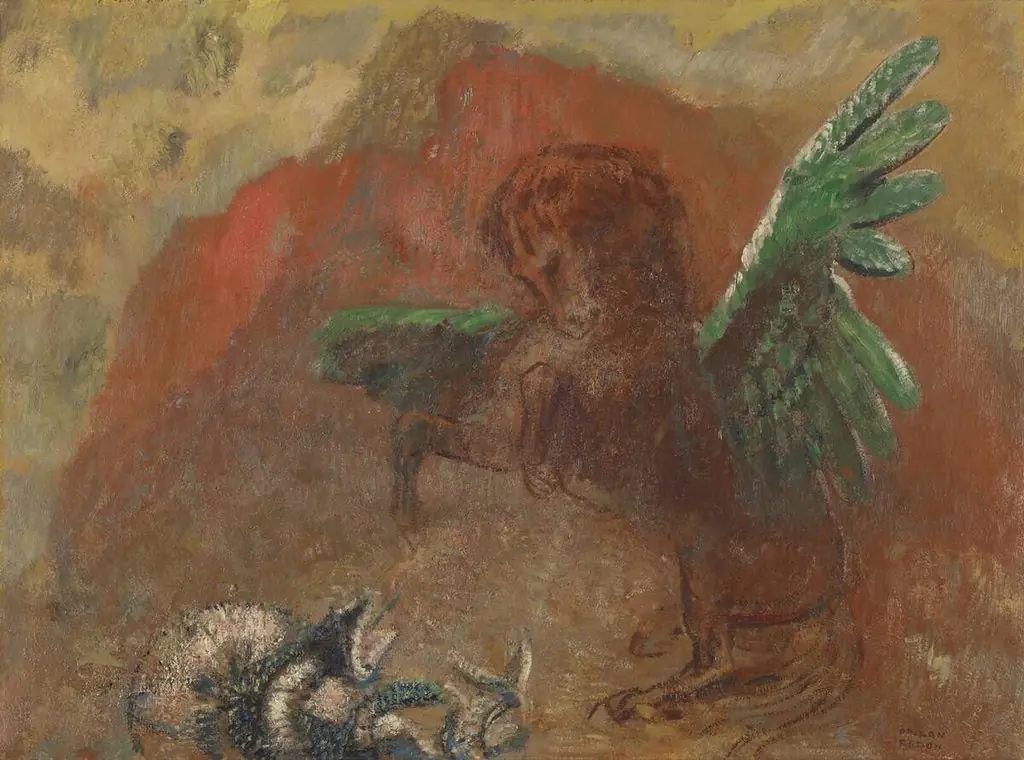
Roger et Angélique is an unspecified painting by Odilon Redon. It dates from 1888 and is held in the collection of the Kröller-Müller Museum.
About this work
Overview
Created circa 1888, *Roger et Angélique* belongs to Odilon Redon’s late‑nineteenth‑century output when he was chiefly exploring charcoal and lithographic techniques. The work emerges from his celebrated “noirs” series, a period marked by monochromatic, dream‑like imagery that solidified his reputation as a French Symbolist.
Subject & Meaning
The composition draws on an episode from Ludovico Ariosto’s epic *Orlando Furioso*, in which the knight Roger comes to the aid of the bewitched princess Angélique. Redon’s rendering emphasizes the rescue narrative, embedding the mythic rescue within a mood of mystery and otherworldliness.
Technique & Style
Executed in a limited palette of dark tones, the painting features a stark, almost silhouette‑like horse and rider set against a muted blue‑gray sky. The brushwork suggests swift motion, with the horse’s legs extended as if leaping. A small, ambiguous green‑and‑red form appears in the lower right, adding a subtle accent to the otherwise restrained chromatic scheme.
History & Provenance
Redon’s interest in the scene was sparked after his drawings were cited in Joris‑Karl Huysmans’s 1884 novel *À rebours*, which helped bring his Symbolist visions to a wider literary audience. The painting later entered private collections before being acquired by a public institution in the early twentieth century, though exact ownership details remain sparse.
Context
The work reflects Redon’s transition from the earlier, more lyrical watercolors to the darker, more introspective noirs that dominated his output in the 1880s. By invoking a chivalric romance, he aligns his modern Symbolist concerns—dream, myth, and the unconscious—with a classical literary source.
Legacy
*Roger et Angélique* exemplifies Redon’s capacity to fuse literary inspiration with a visual language of shadow and movement. It continues to be referenced in studies of Symbolist art as a key illustration of how nineteenth‑century painters reinterpreted epic narratives through a personal, psychological lens.
Artist & collection
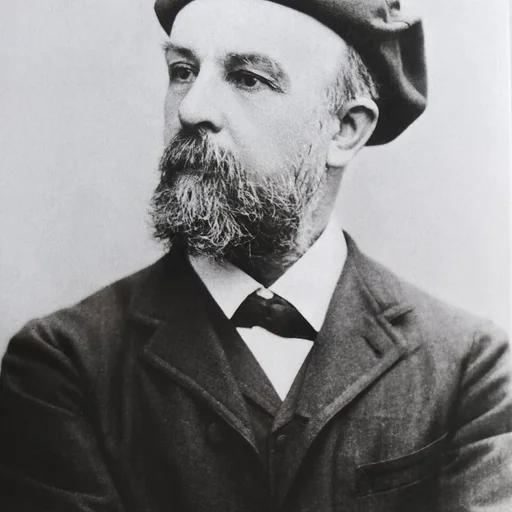
Artist
Born Bertrand-Jean Redon on 20 April 1840 in Bordeaux, the artist adopted the name Odilon from his mother, Marie-Odile.