Artwork
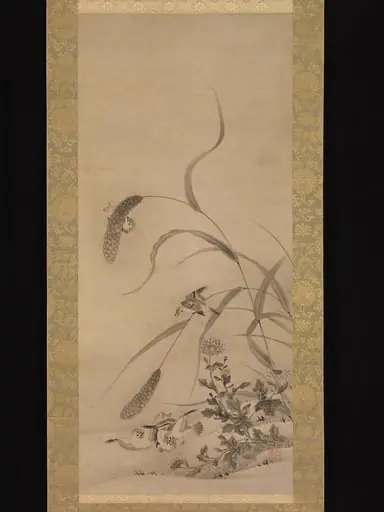
Pheasant and Grasses
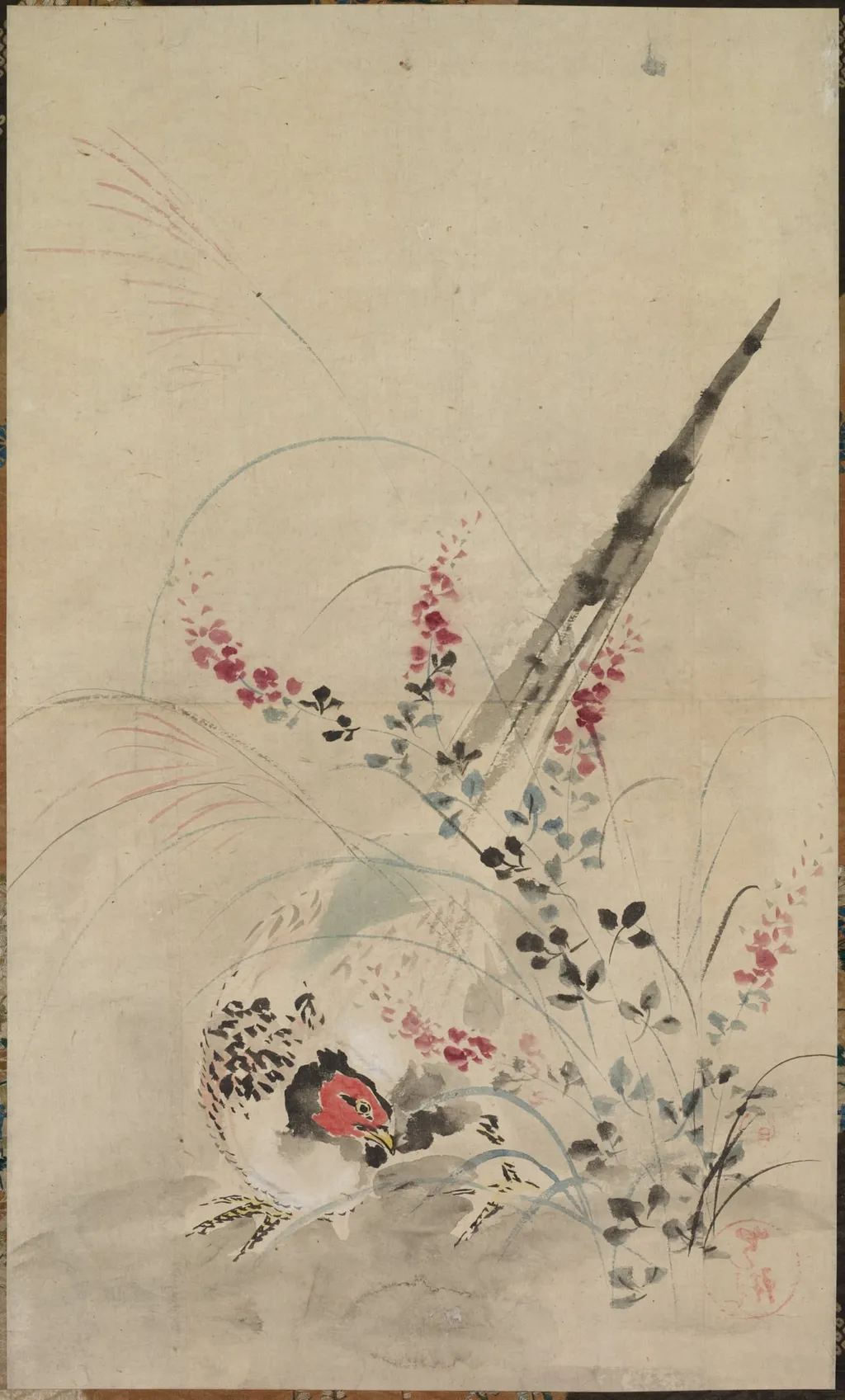
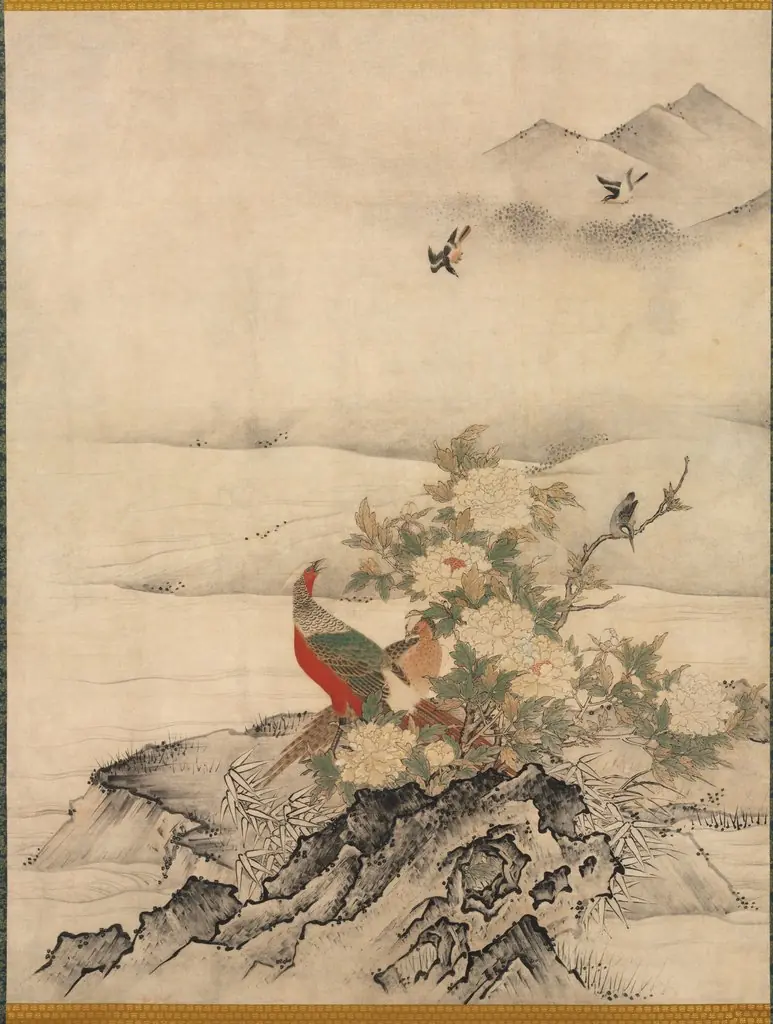
Pheasant and Grasses is an unspecified painting by the Baroque artist Ogata Kōrin. It dates from 1698 and is held in the collection of the Cleveland Museum of Art.
About this work
Overview
Created in the latter part of the 17th century, this work by the Japanese painter Ogata Kōrin presents a solitary pheasant amid a field of reeds. The composition is rendered in broad, flat areas of color, with a gold‑leaf background that eliminates any sense of depth, emphasizing the decorative qualities characteristic of the Rimpa school.
Subject & Meaning
The central figure, a pheasant, is rendered with a vivid red face that contrasts sharply with the surrounding green and gold vegetation. In Japanese iconography the bird is traditionally linked to the autumn season, a motif Kōrin frequently employed to evoke the changing landscape.
Technique & Style
Kōrin employs a stylized approach, favoring bold, simplified shapes over intricate detail. The painting relies on flat planes of pigment and the reflective quality of gold leaf, avoiding chiaroscuro or perspective, thereby reinforcing the ornamental aesthetic that defines the Rimpa movement.
History & Provenance
Executed in the late 1600s, the piece reflects Kōrin’s role as a founder of the decorative Rimpa school and his keen observation of natural subjects. The work entered the collection of a major American institution, where it is displayed alongside other examples of Japanese decorative painting.
Artist & collection

Artist
Ogata Kōrin (Japanese: 尾形光琳; 1658 – June 2, 1716) was a Japanese landscape illustrator, lacquerer, painter, and textile designer of the Rinpa School.