Artwork
Untitled
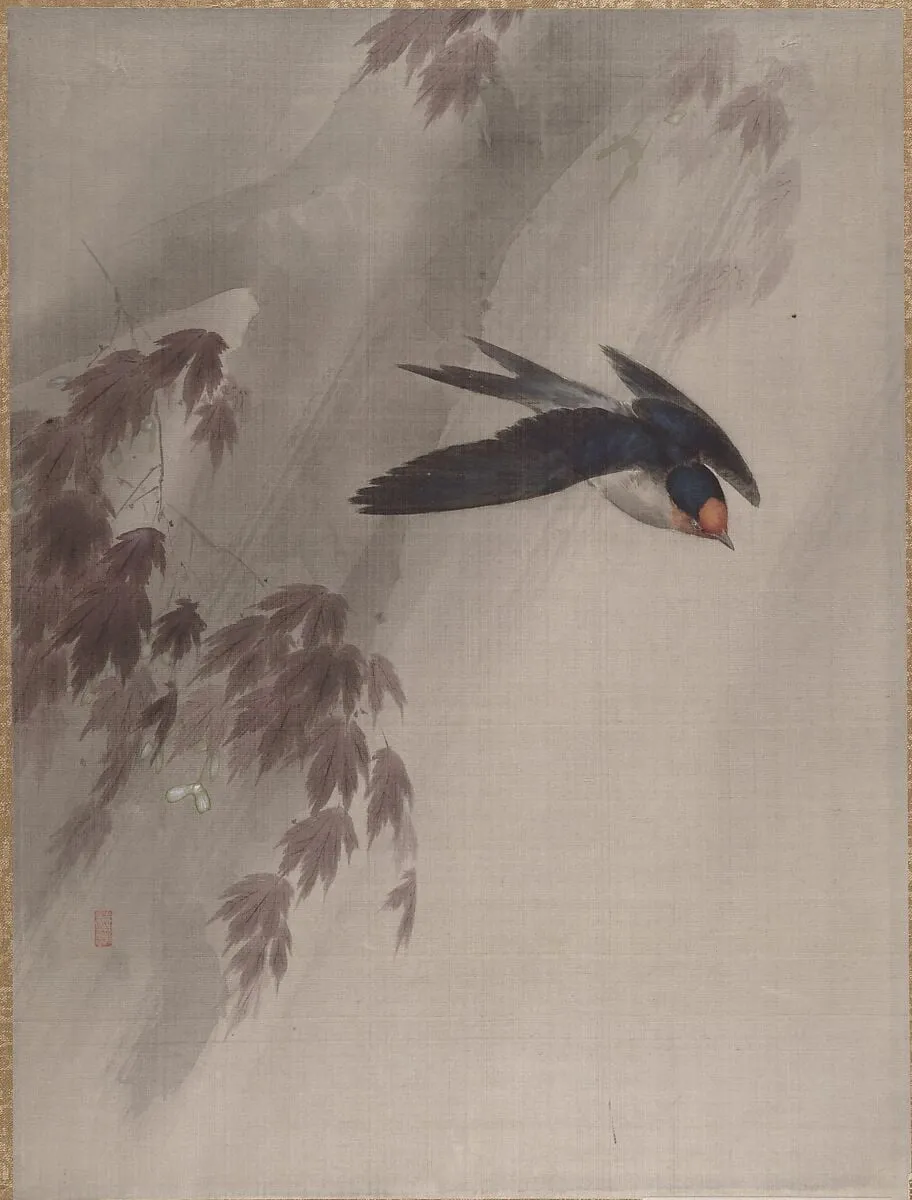
Untitled is an ink painting by the Impressionist artist Okada Baison. It dates from 1892 and is held in the collection of the Metropolitan Museum of Art.
About this work
Overview
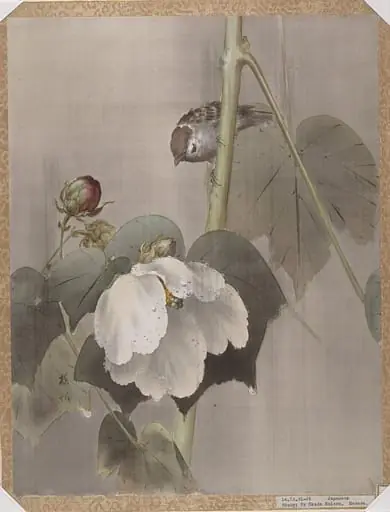
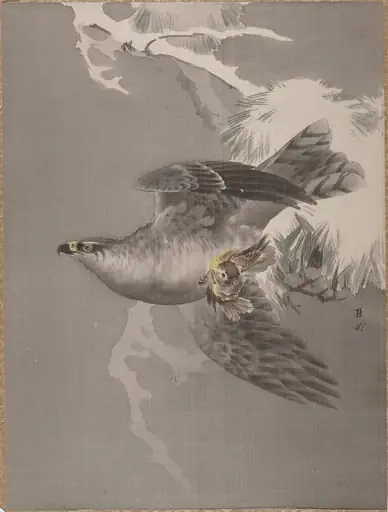
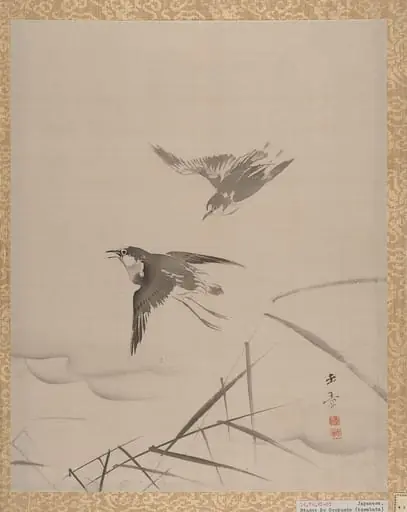
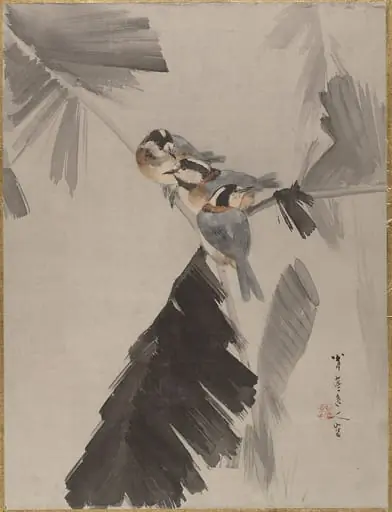
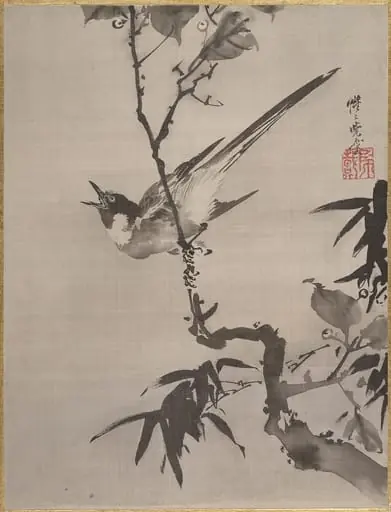
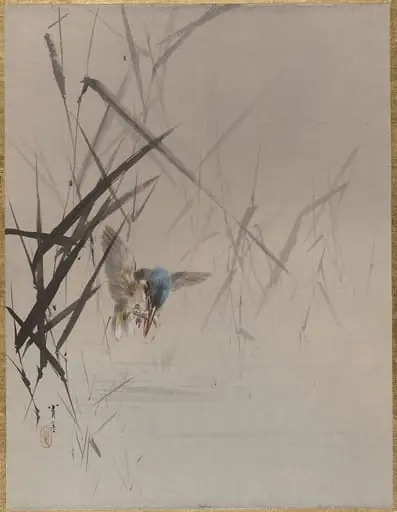
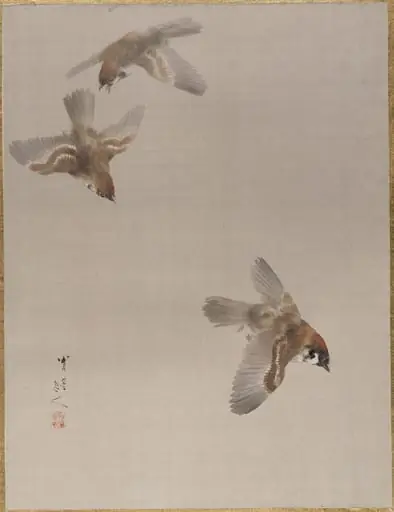
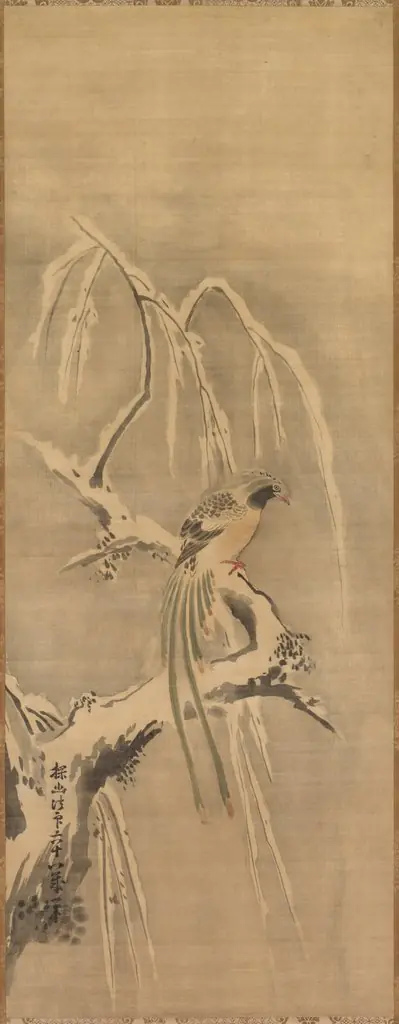
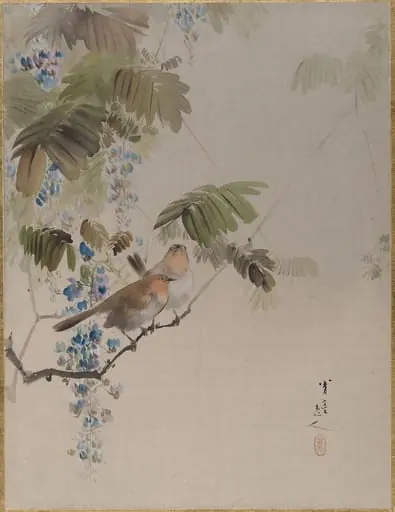
Created around 1892, this album leaf by Okada Baison presents a compact still‑life composition rendered on silk. The work measures only a few centimeters, typical of the miniature format used for personal albums in the late Meiji period. Ink and subtle color combine to depict two small birds perched on a scarcely suggested branch, giving the scene a delicate, almost weightless quality.
Subject & Meaning
The composition features a pair of birds, one turned toward the left and the other toward the right, positioned on a bare twig. Their mirrored gazes and the minimal surrounding space emphasize a quiet observation of nature, a common theme in Japanese still‑life that invites contemplation of fleeting moments and the balance between presence and emptiness.
Technique & Style
Okada employs fine ink lines to suggest the branch, while the birds’ feathers are rendered with soft washes of color and delicate cross‑hatching that builds volume and shadow. The use of silk as a support allows the pigments to glide smoothly, creating a luminous effect that contrasts with the restrained, almost calligraphic brushwork characteristic of Meiji‑era experimentation.
History & Provenance
The piece belongs to a private collection of Meiji‑era album leaves, a format popular among literati and collectors for its portability and intimacy. Its attribution to Okada Baison is based on stylistic analysis and a signature seal typical of his work, confirming its place within the artist’s output during a period of rapid artistic exchange.
Context
Produced during the Meiji Restoration, the work reflects a transitional moment when Japanese artists incorporated Western techniques such as perspective and shading while retaining traditional brush methods. The subtle integration of color with ink exemplifies the era’s hybrid aesthetic, bridging centuries‑old conventions with emerging modern sensibilities.
Artist & collection