Artwork
Boat in Rain
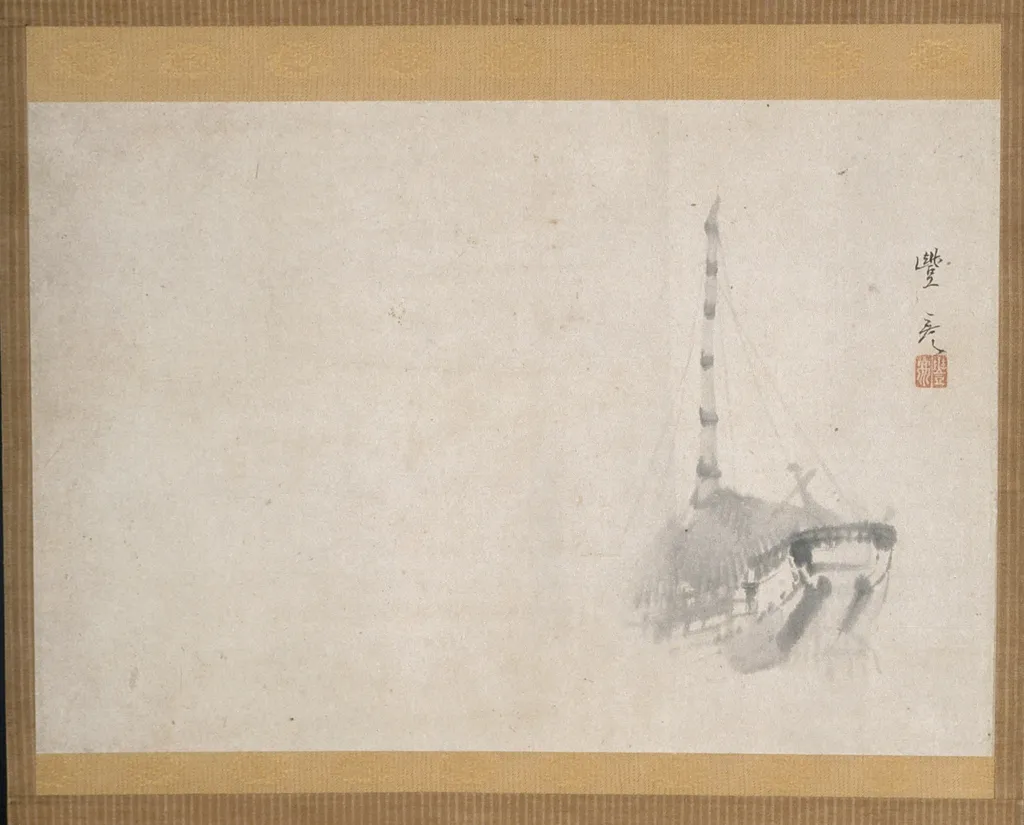
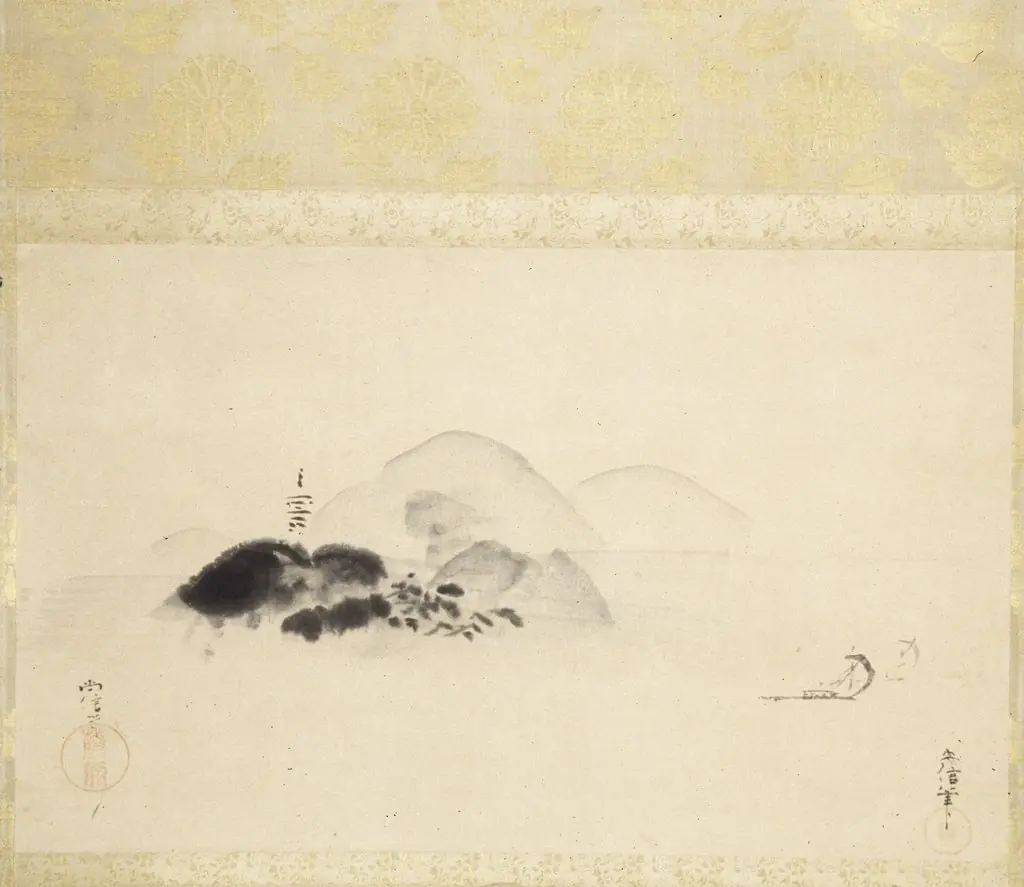
Boat in Rain is an unspecified painting by Okamoto Toyohiko. It dates from 1819 and is held in the collection of the Los Angeles County Museum of Art.
About this work
Overview
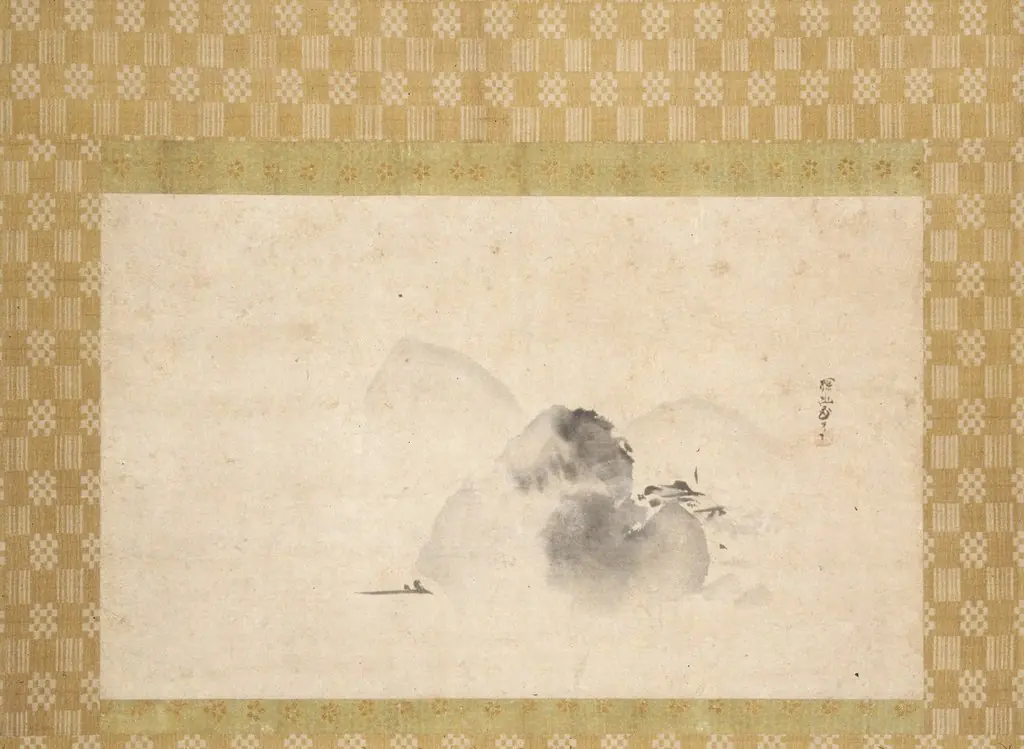
The background, rendered in pale gray washes, suggests a vast, wet atmosphere without depicting sky or water explicitly.
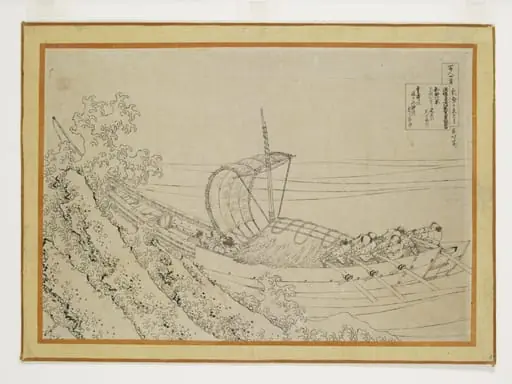
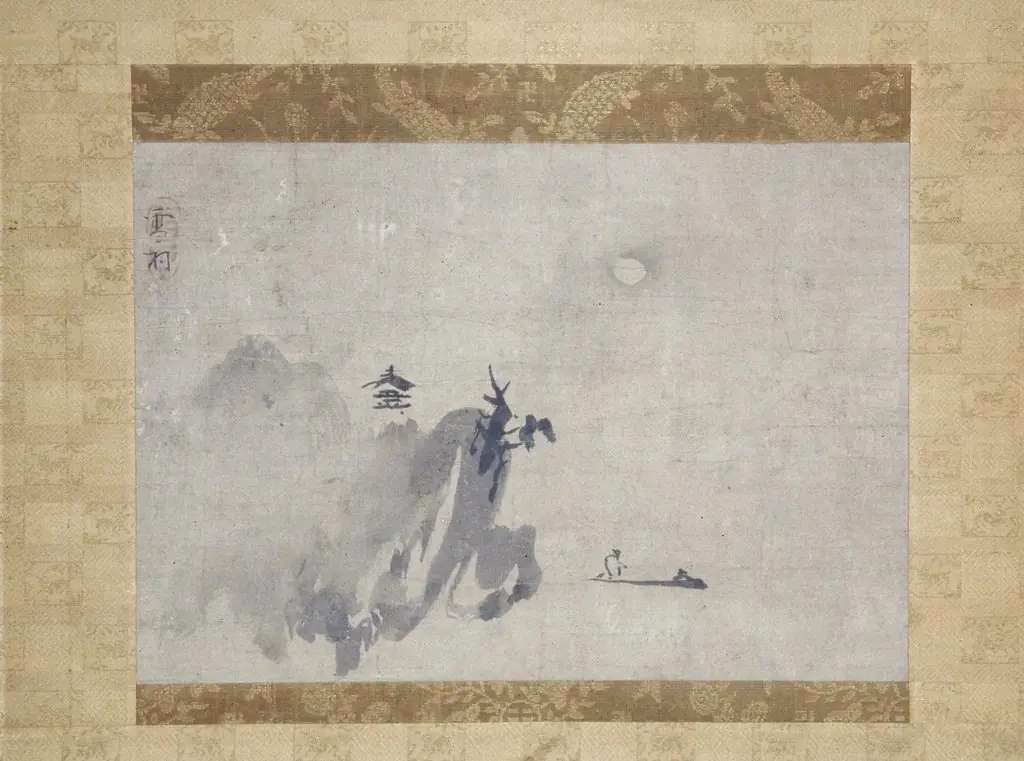
Painted around 1819 by Okamoto Toyohiko, this ink-and-wash work captures a solitary boat adrift in steady rain. The composition is spare, with the vessel placed near the right edge, oriented diagonally toward the picture’s border. The background, rendered in pale gray washes, suggests a vast, wet atmosphere without depicting sky or water explicitly. The mood remains quiet, avoiding drama in favor of stillness.
Subject & Meaning
The boat, a common motif in East Asian landscape traditions, appears not as a symbol of journey or struggle, but as a quiet presence within nature’s rhythm. Its isolated position and the absence of human figures emphasize solitude and impermanence. The rain, rendered as a uniform haze, dissolves boundaries between elements, reinforcing a sense of unity between vessel and environment.
Technique & Style
Toyohiko employed soft, diluted ink washes to suggest moisture and diffusion, avoiding sharp outlines. The boat’s hull is defined by a single dark stroke, while the mast rises as a thin vertical line, its sail omitted—implied by context rather than detail. Brushwork is restrained, with subtle tonal gradations creating depth without contrast. This approach aligns with literati ideals favoring suggestion over description.
History & Provenance
The painting entered the collection of the Los Angeles County Museum of Art in the 20th century, though its earlier ownership history remains undocumented. It is one of few surviving works by Toyohiko, a lesser-known artist of the Edo period whose output was modest compared to contemporaries. Its preservation reflects late modern interest in understated Japanese ink painting.
Context
Created during the late Edo period, the work reflects the influence of Chinese literati painting traditions adapted by Japanese artists. While urban ukiyo-e flourished, a quieter circle of painters like Toyohiko pursued introspective landscapes using minimal means. Rain scenes were common in this genre, evoking transience and contemplative solitude rather than narrative action.
Legacy
Though not widely exhibited or studied, the painting contributes to the broader understanding of Edo-period ink painting beyond dominant styles. Its restraint and atmospheric sensitivity offer a counterpoint to more elaborate works of the time. Scholars recognize it as an example of how everyday scenes could be transformed into meditative visual poetry through economy of form.
Artist & collection