Artwork
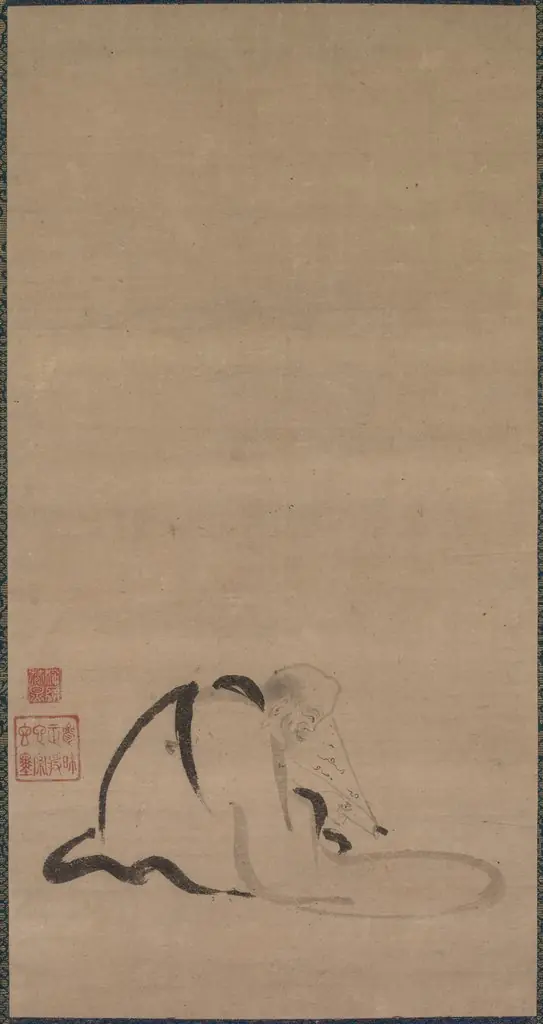
Kenshu, Monk with Shrimp
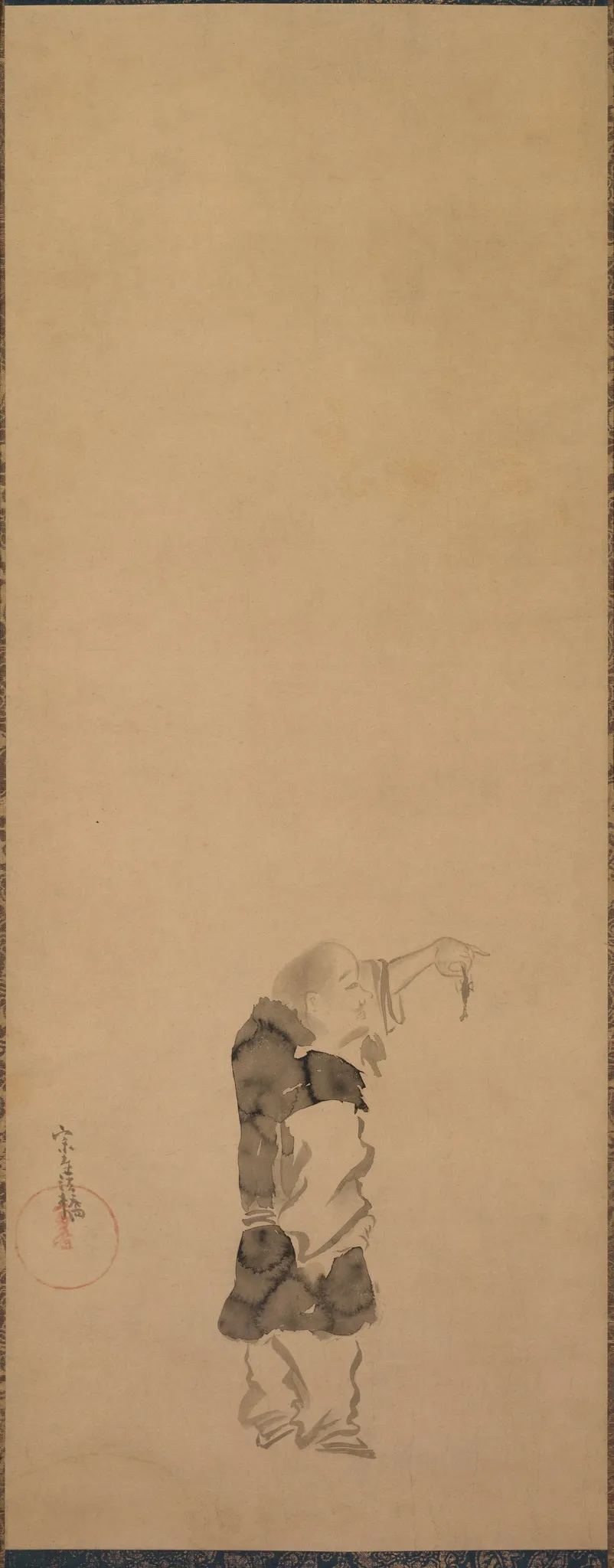
Kenshu, Monk with Shrimp is an unspecified painting by Tawaraya Sōtatsu. It dates from 1620 and is held in the collection of the Cleveland Museum of Art.
About this work
Overview
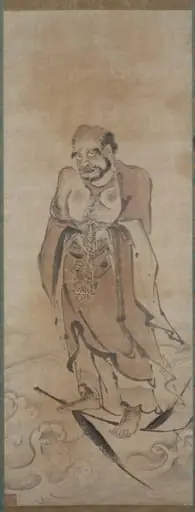
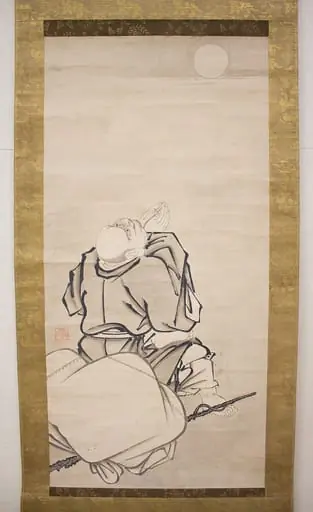
Created circa 1620, *Kenshu, Monk with Shrimp* is a small-scale painting by Tawaraya Sōtatsu, a leading figure of the early Rinpa movement. The work presents a solitary monk, bent forward, lifting a shrimp with one hand against an unadorned, light background, allowing the figure and the tiny creature to dominate the visual field.
Subject & Meaning
The composition centers on a Buddhist monk, identifiable by his shaved head and loose, dark robe, whose careful attention to a minuscule shrimp suggests a moment of contemplation or a teaching about mindfulness. The juxtaposition of the monk’s solemn posture with the delicate crustacean invites reflection on the relationship between the spiritual and the mundane.
Technique & Style
Sōtatsu employs the Rinpa hallmark of bold, decorative patterning combined with restrained brushwork. Simple, fluid lines define the monk’s silhouette, while subtle shading conveys the shrimp’s form. The artist’s use of tarashikomi—dropping wet pigment onto still-wet layers—creates nuanced tonal variations, enhancing the sense of depth without elaborate detail.
History & Provenance
Attributed to Sōtatsu, the painting belongs to the period when he frequently collaborated with calligrapher Hon'ami Kōetsu and produced works for aristocratic patrons. Though its early ownership records are sparse, the piece has been recognized as part of the artist’s oeuvre that exemplifies the early development of Rinpa aesthetics, and it now resides in a public collection dedicated to Japanese art.
Artist & collection
Artist
Tawaraya Sōtatsu (俵屋 宗達; c. 1570 – c. 1640) was a Japanese furniture designer and painter of the Rinpa school. Sōtatsu is best known for his decorations of calligraphic works by his partner Hon'ami Kōetsu (1558–1637),…

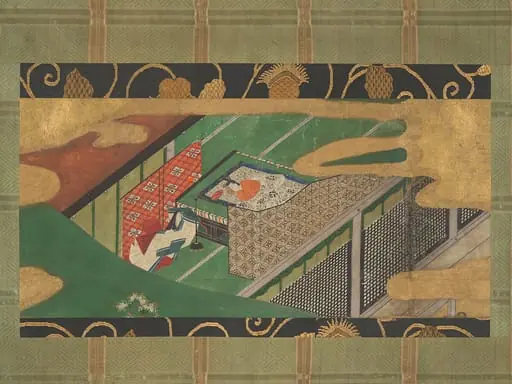 伝俵屋宗達筆 源氏物語図「宿木」 |“Trees Encoiled in Vines of Ivy” (Yadorigi)
 Untitled
 Untitled
 Selections from the New Collection of Japanese Poems from Ancient and Modern Times (Shinkokin wakashū) with Printed Designs of Chinese Lions and Crab Finger Grass
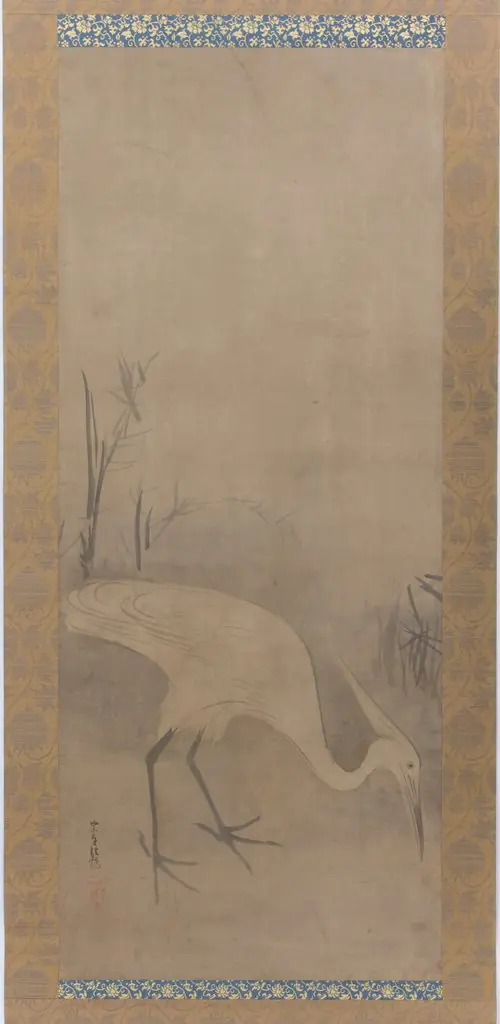 White Heron (Shirosagi zu)
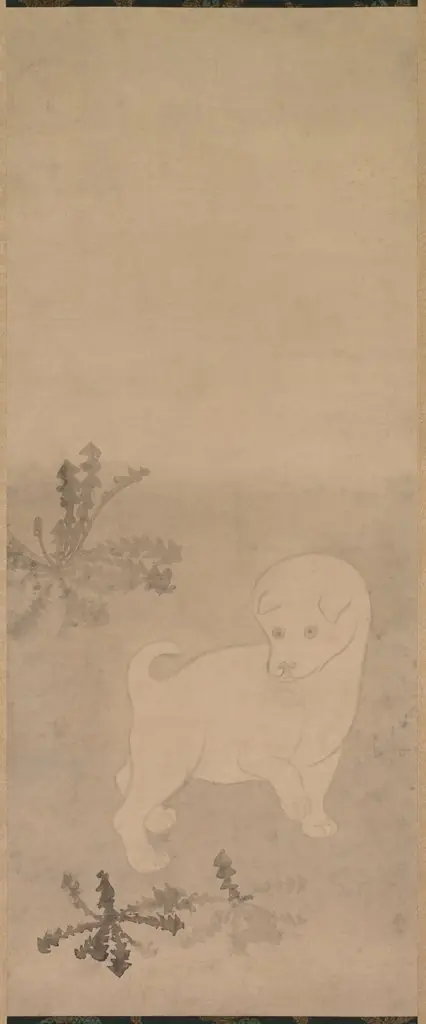 Puppy with Dandelions
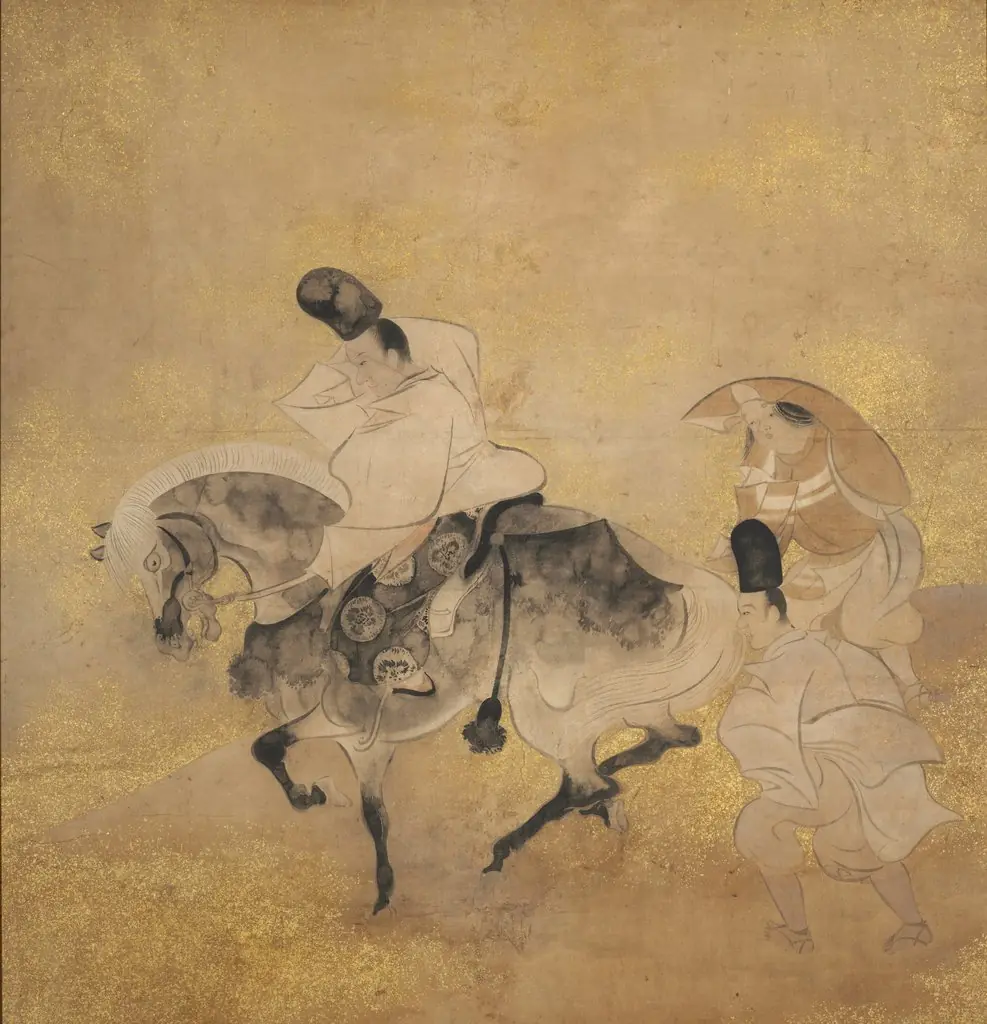 Crossing at Sano
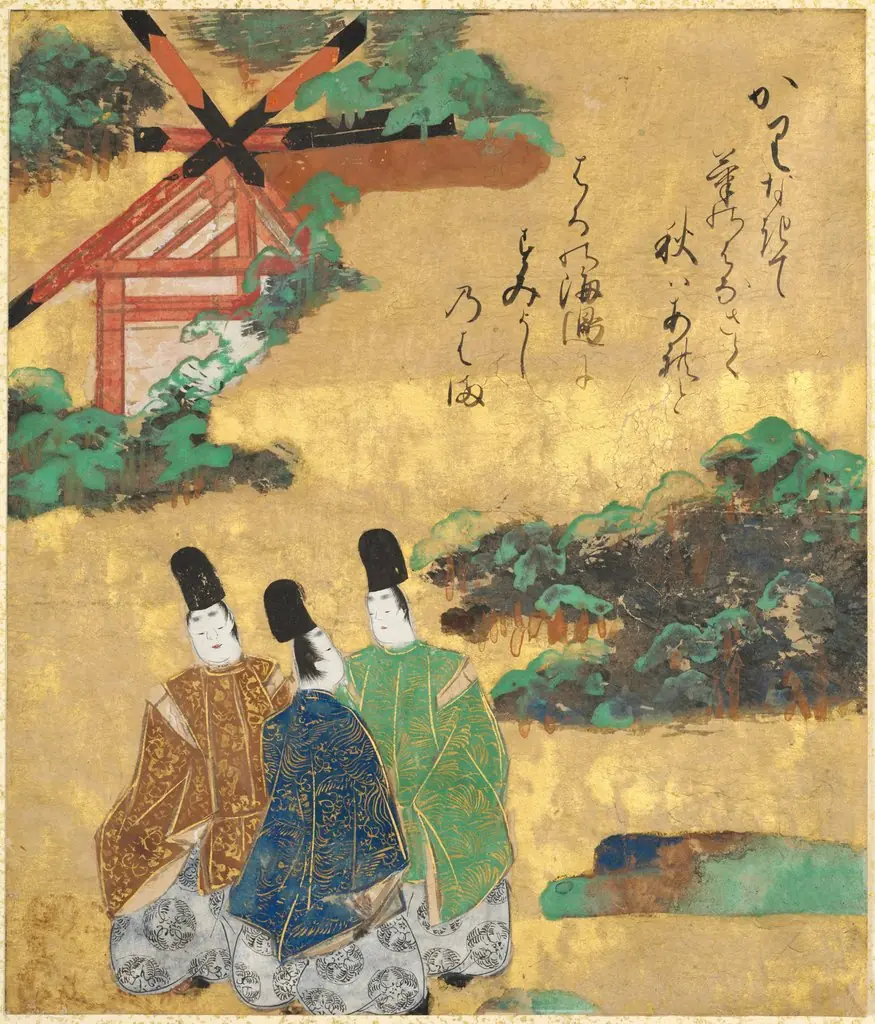 The Beach at Sumiyoshi from the Tales of Ise