Artwork
Blasse Rosen
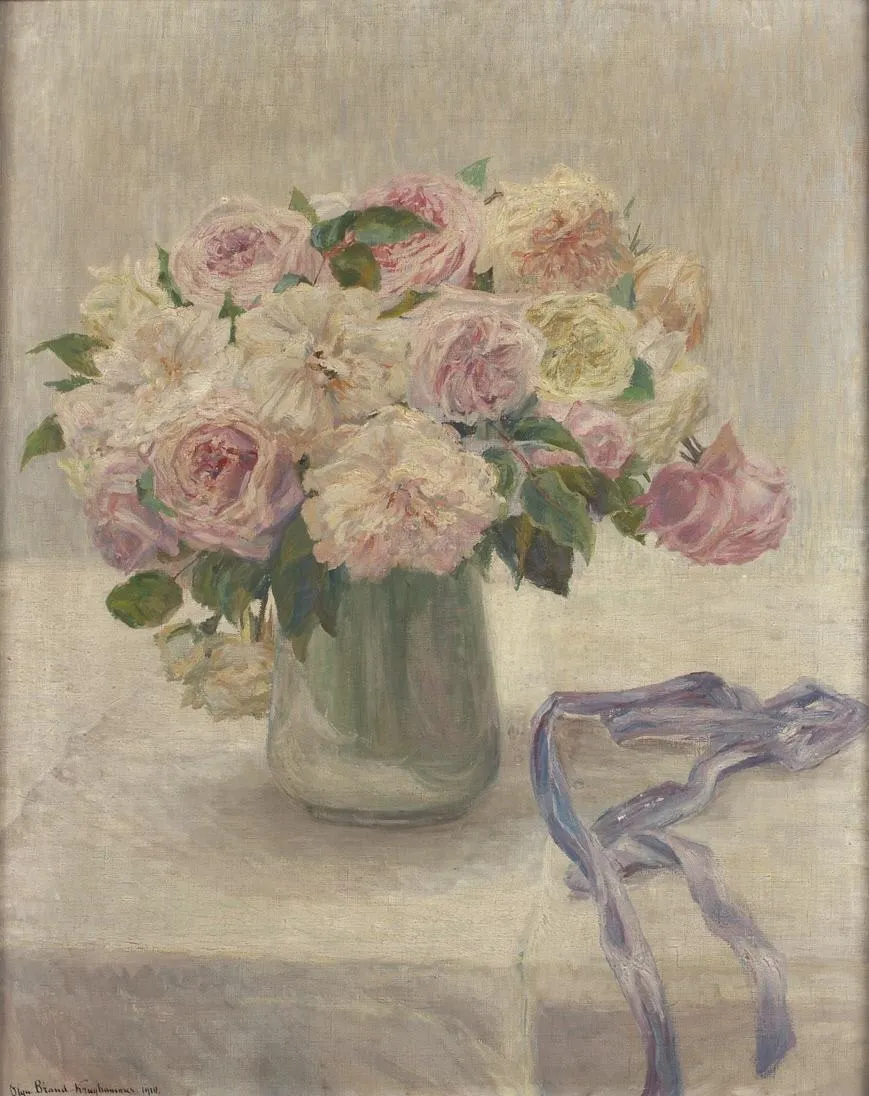
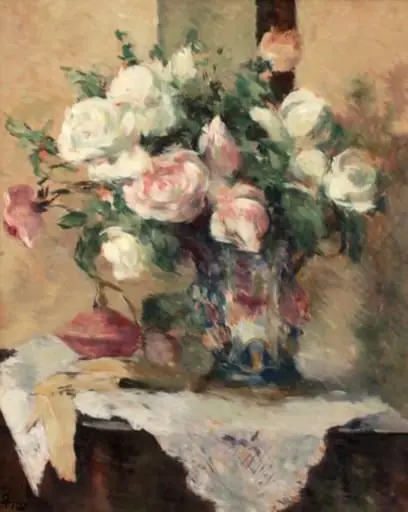
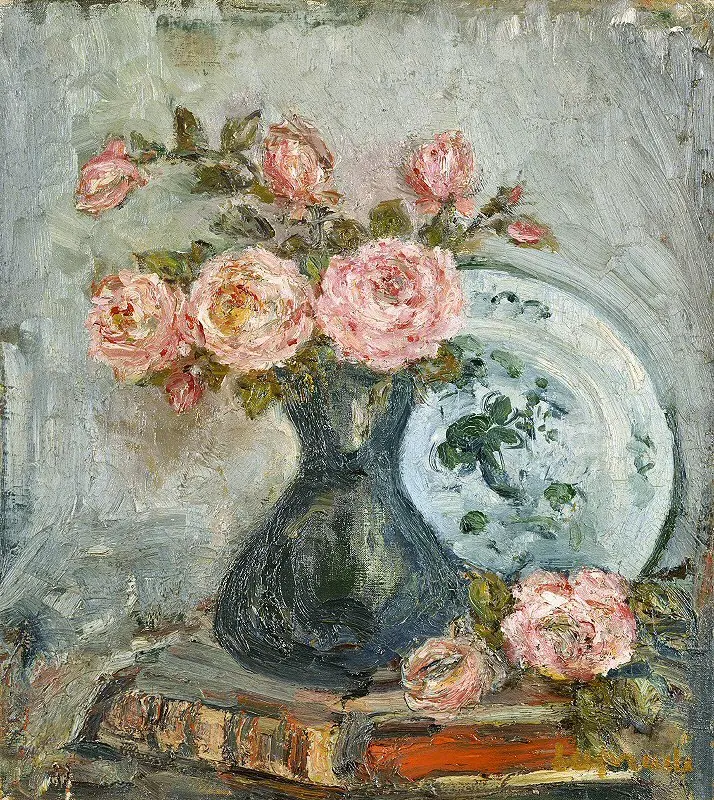
Blasse Rosen is an oil painting by the Post-Impressionist artist Olga Krieghammer. It dates from 1910 and is held in the collection of the Kunsthistorisches Museum.
About this work
Overview
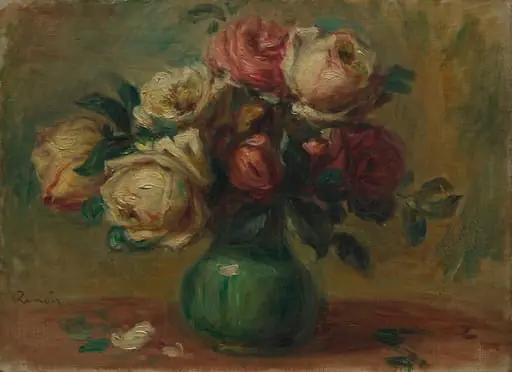
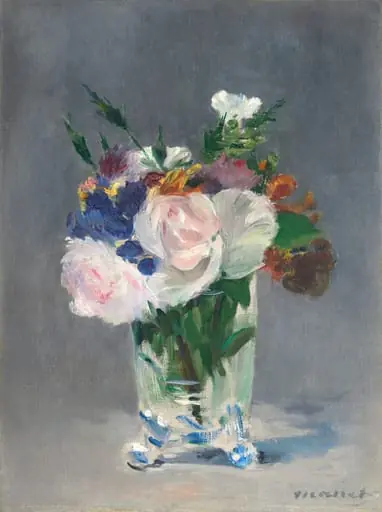
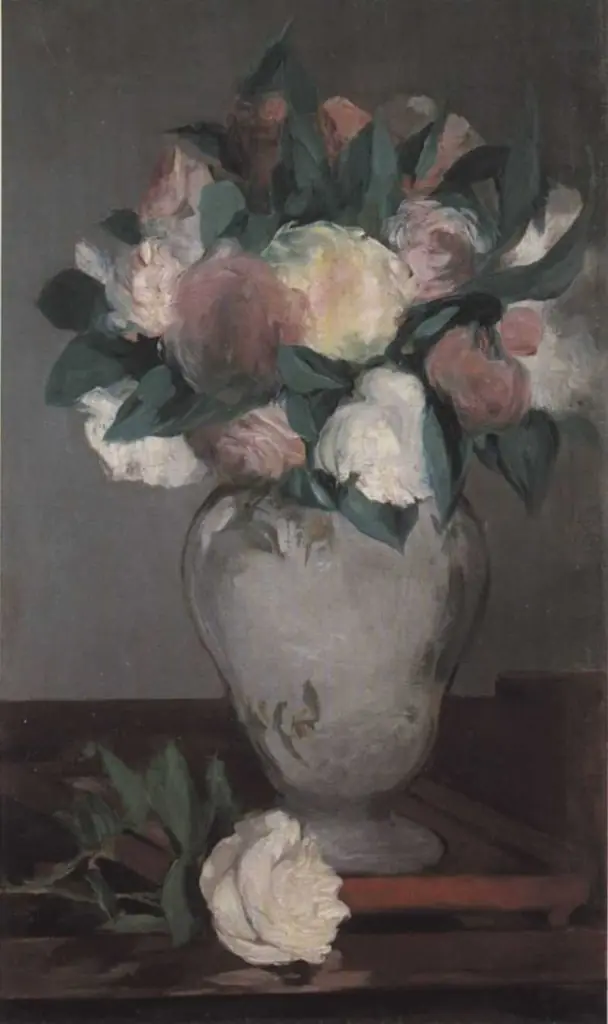
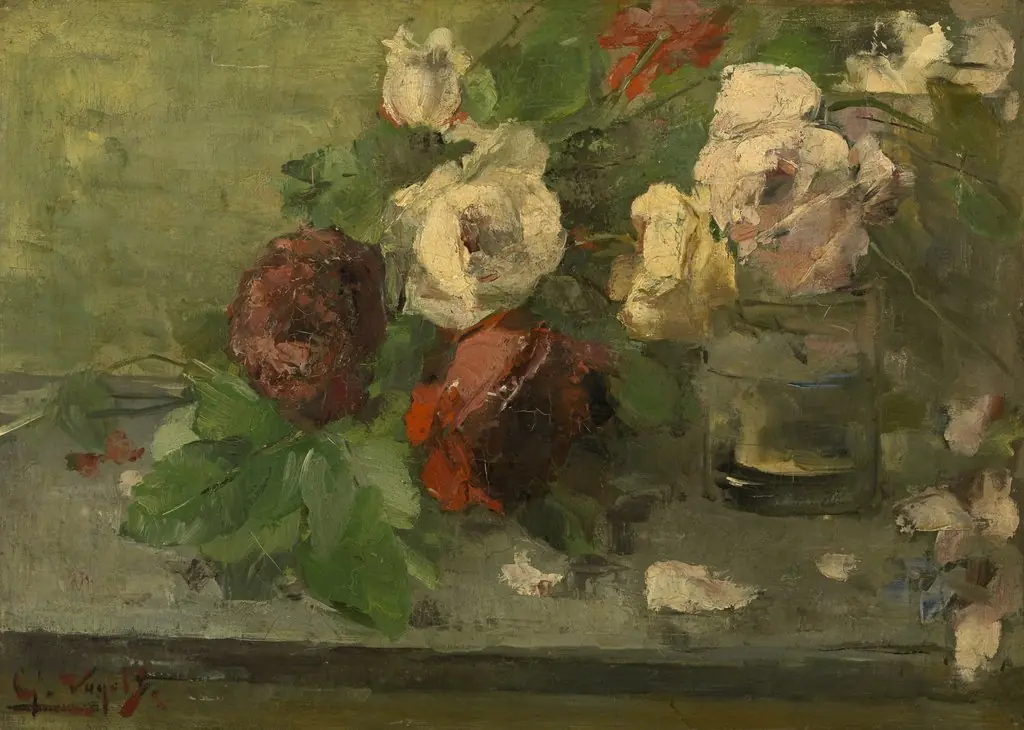
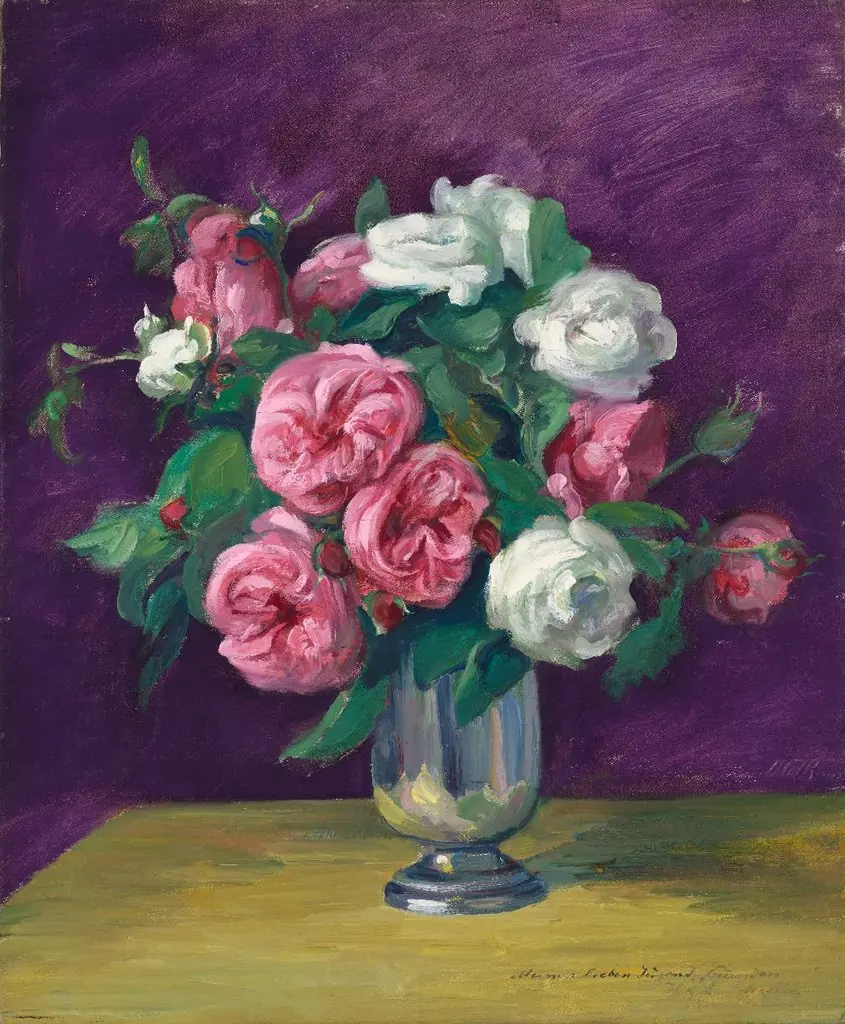
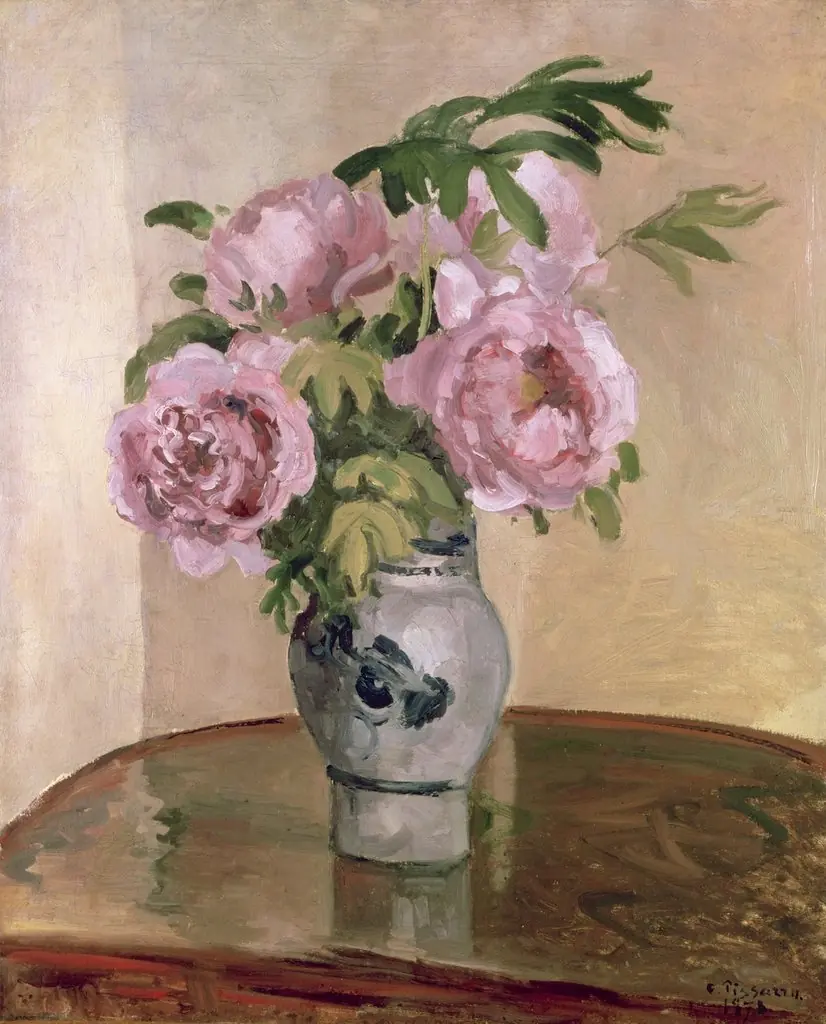
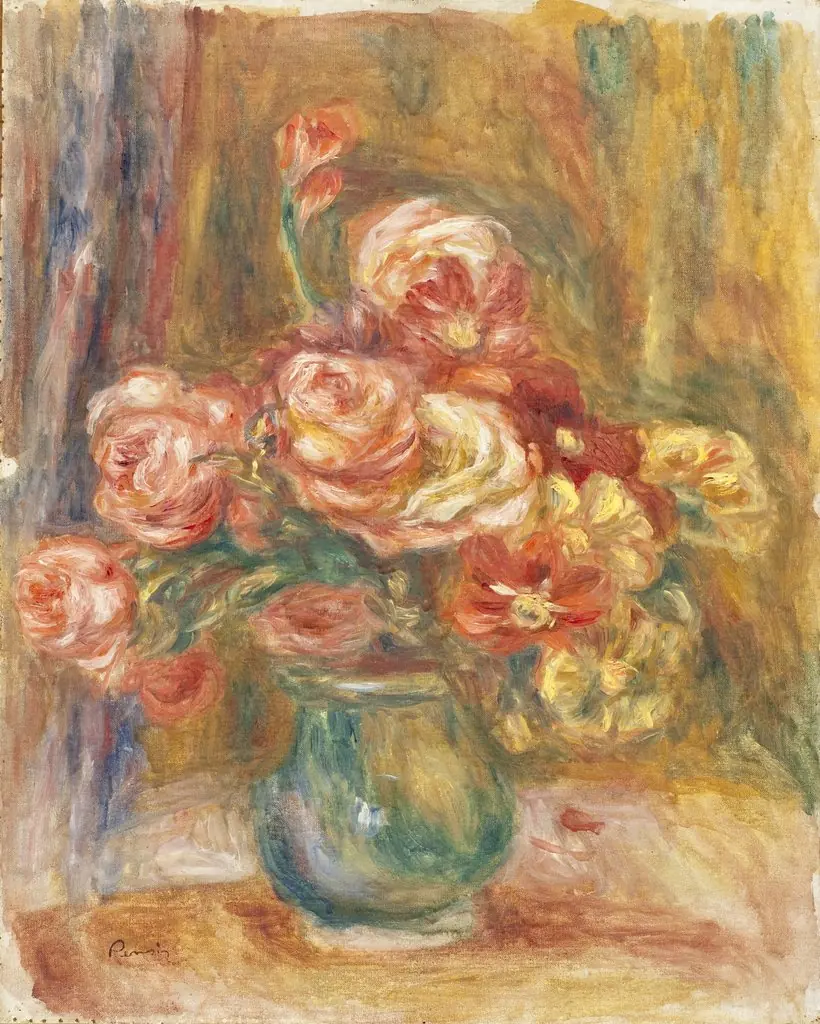
It depicts a modest still life centered on a vase of roses, arranged simply on a table with a white cloth.
Blasse Rosen is an oil painting completed in 1910 by Austrian artist Olga Krieghammer. It depicts a modest still life centered on a vase of roses, arranged simply on a table with a white cloth. The composition is restrained, emphasizing quiet observation over dramatic effect. The work resides in the collection of the Kunsthistorisches Museum in Vienna, where it is presented as an example of early 20th-century Austrian domestic still life.
Subject & Meaning
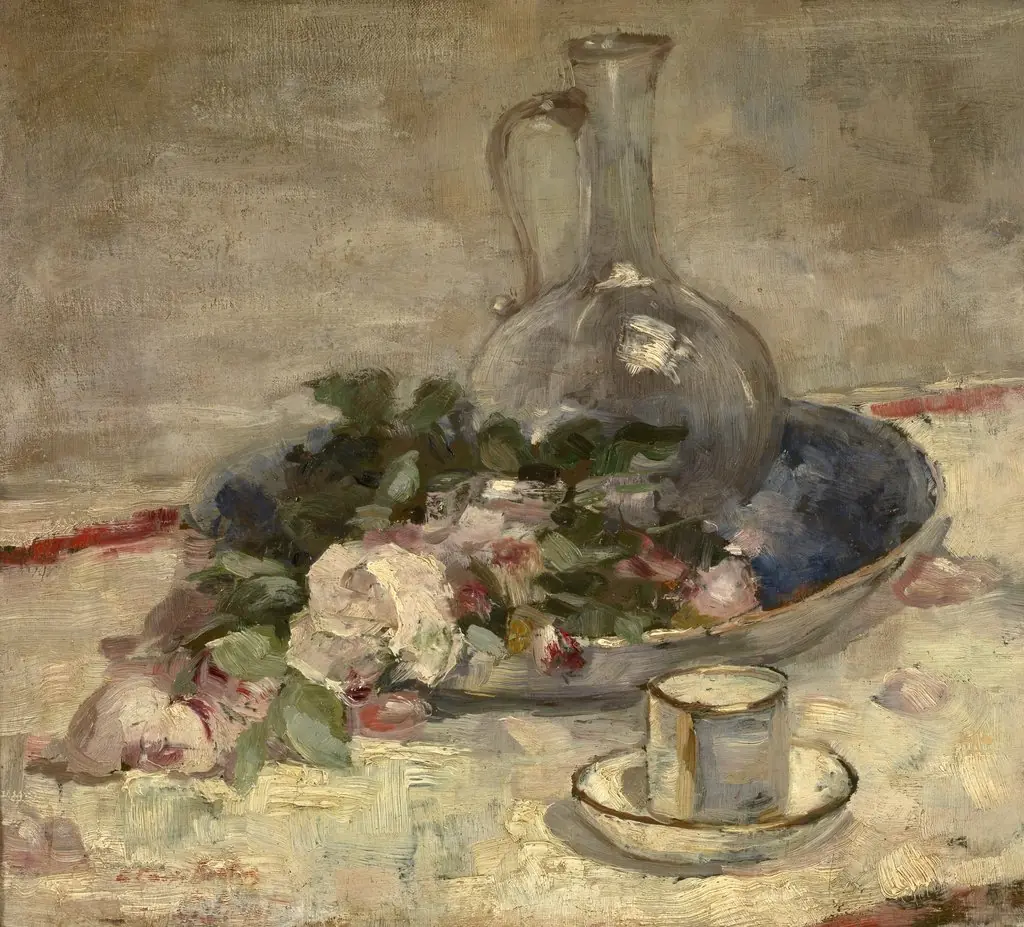
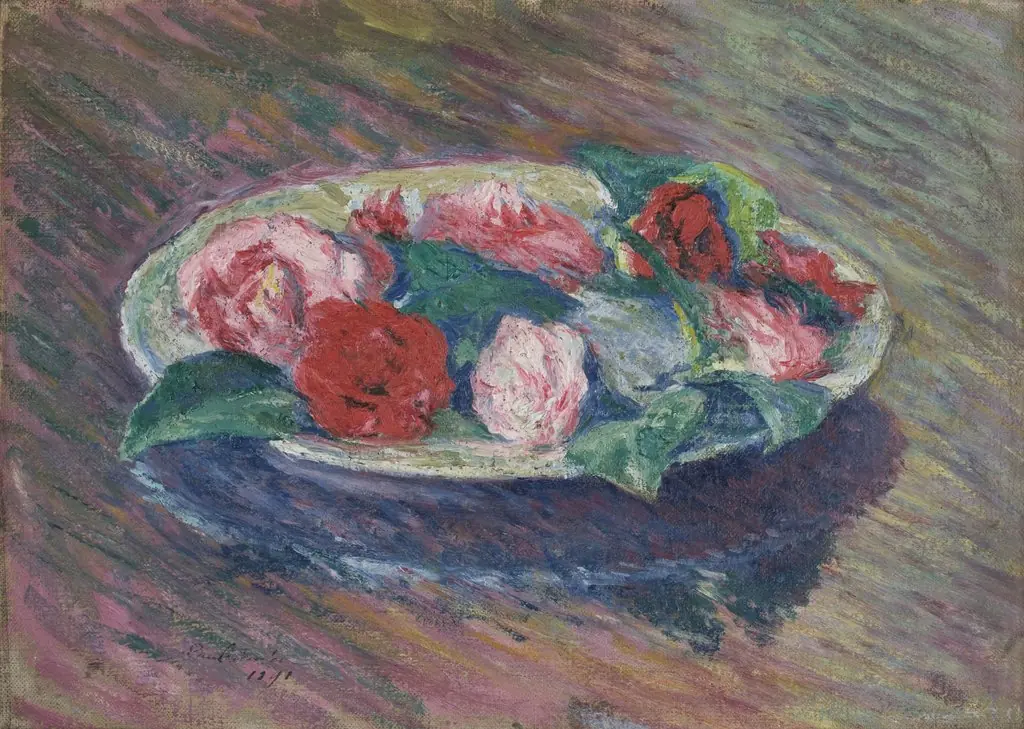
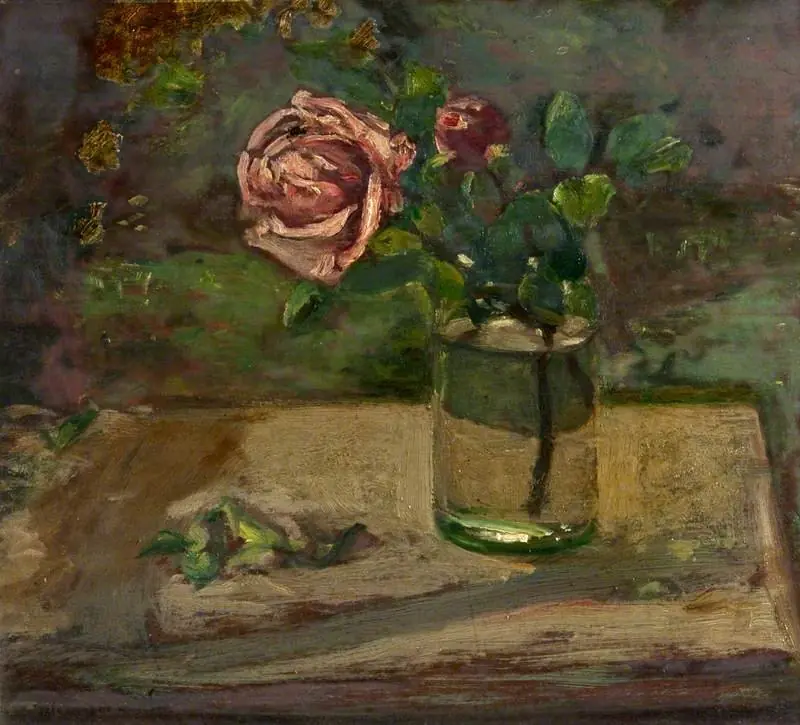
The painting features a vase of pale pink and white roses, accompanied by a few green leaves and a length of draped fabric. The absence of elaborate objects or symbolic elements suggests an emphasis on quiet beauty rather than narrative. The softness of the blooms and the muted tones convey a sense of stillness, possibly reflecting an intimate, private moment. The work invites contemplation rather than interpretation, focusing on the transient elegance of everyday flowers.
Technique & Style
Krieghammer employed delicate brushwork and a restrained palette to render the roses with a sense of luminosity and softness. The background is washed in pale tones, allowing the flowers to emerge subtly without strong contrast. The vase and table are rendered with minimal detail, reinforcing the floral subject as the focal point. The fabric’s loose folds add a gentle rhythm to the composition, enhancing the painting’s tranquil mood without drawing attention away from the blooms.
History & Provenance
Created in 1910, Blasse Rosen entered the collection of the Kunsthistorisches Museum in Vienna, where it remains today. Little is documented about its early ownership or exhibition history, suggesting it was likely acquired directly from the artist or through a private donation. Its inclusion in the museum’s holdings reflects an institutional interest in lesser-known female artists of the period, though Krieghammer’s broader oeuvre remains relatively understudied.
Context
In early 20th-century Vienna, still-life painting was often pursued by women artists as a socially acceptable genre. Krieghammer’s work aligns with a broader trend of intimate, domestic subjects favored by female painters at the time, who were frequently excluded from larger historical or public themes. Her approach, emphasizing subtlety and quiet observation, reflects both personal aesthetic choices and the limited artistic avenues available to women in that era.
Legacy
Blasse Rosen stands as a quiet example of early modern Austrian still life, representative of a genre often overshadowed by more monumental works. While Olga Krieghammer did not achieve widespread fame, her paintings contribute to a growing recognition of women artists who cultivated nuanced, personal visions within constrained social frameworks. The painting’s preservation in a major museum underscores its value as a historical artifact of understated artistic expression.
Artist & collection