Artwork
Coronation of the Virgin
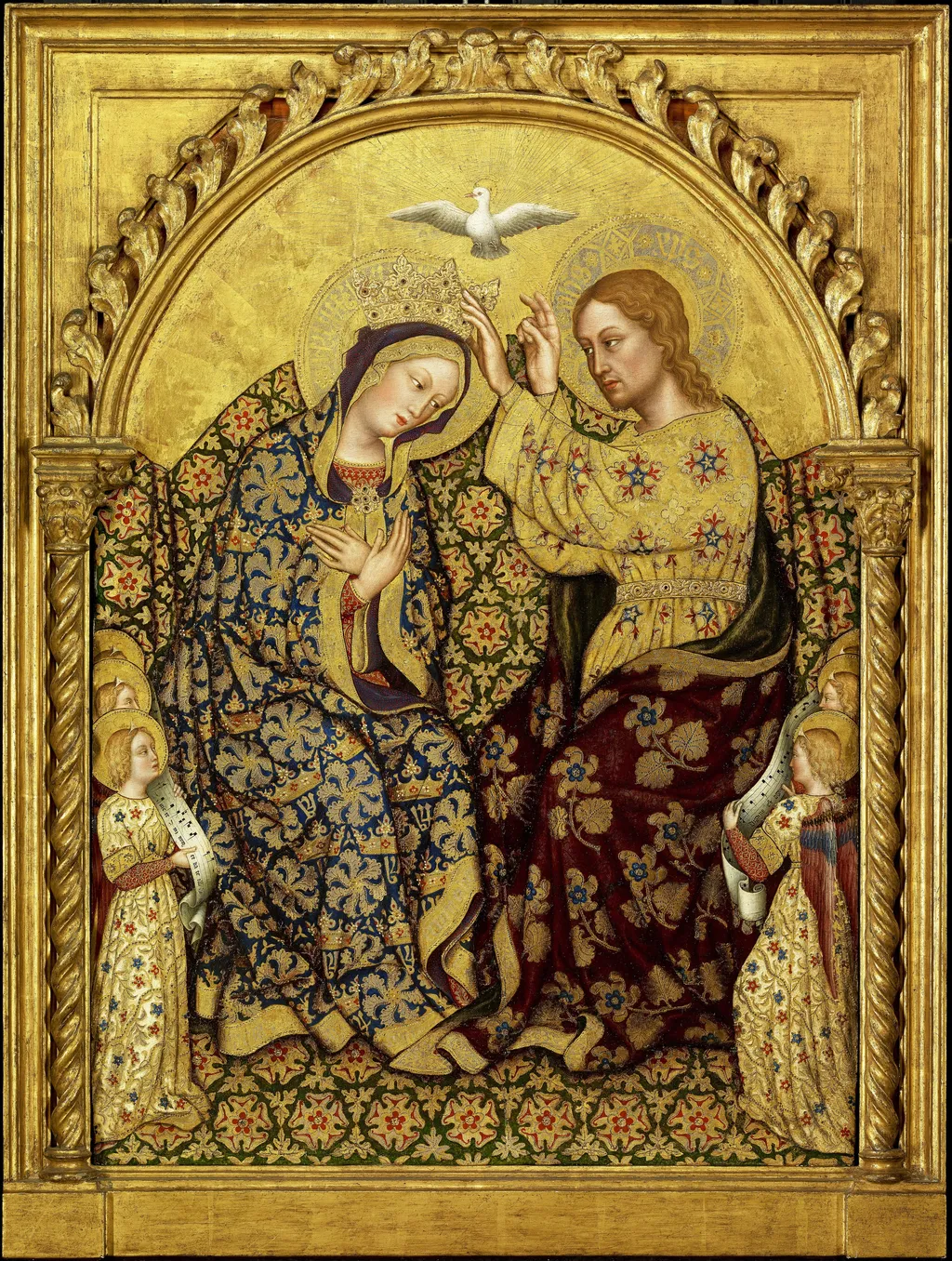
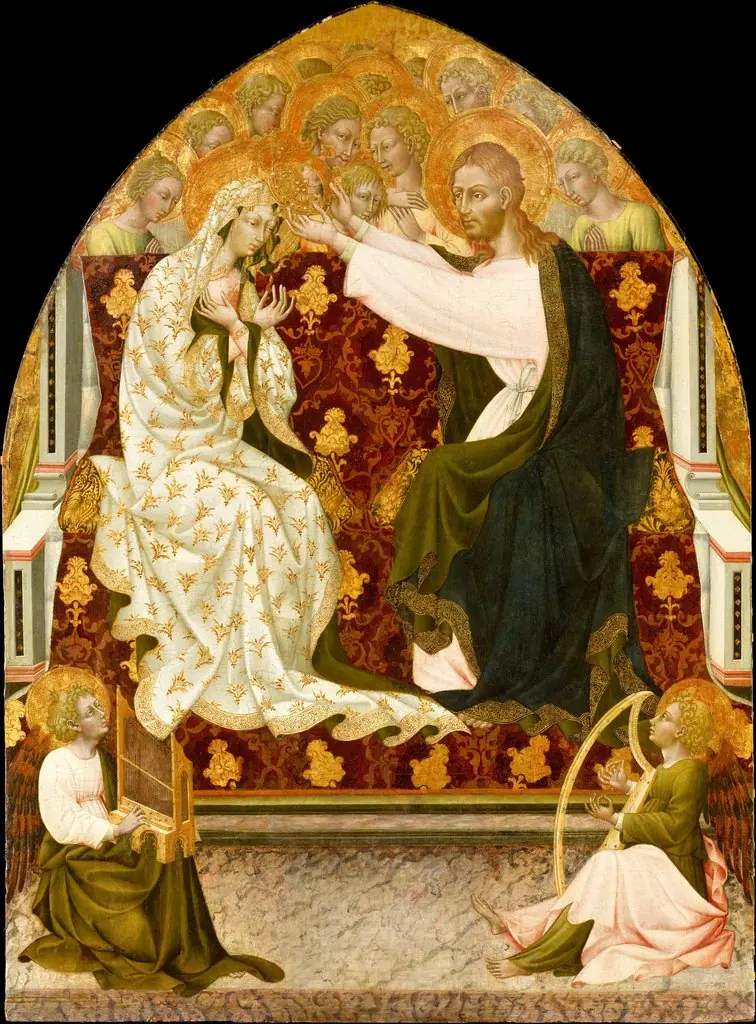
Coronation of the Virgin is a tempera painting by the Early Renaissance artist Gentile da Fabriano. It dates from 1420 and is held in the collection of the J. Paul Getty Museum.
About this work
The banner would have been carried in religious processions, adding visual focus for worshippers.
Coronation of the Virgin is a tempera work by Gentile da Fabriano, painted around 1420.
It was made as the front of a processional banner. The back side showed Saint Francis receiving the Stigmata, which now lives in Parma. The banner would have been carried in religious processions, adding visual focus for worshippers. Its bright colors and fine detail reflect the late Gothic style Gentile was known for.
You can see it at the J. Paul Getty Museum.
Overview
Gentile da Fabriano’s tempera panel, titled Coronation of the Virgin, dates to roughly 1420 and is presently displayed at the J. Paul Getty Museum. The work originally formed the front side of a movable processional banner, its counterpart depicting Saint Francis receiving the stigmata now residing in Parma. As a devotional image, it would have been unfurled during liturgical parades, offering a focal point for the faithful.
Subject & Meaning
The composition presents the Virgin Mary being crowned in heaven, a visual affirmation of her exalted status within medieval theology. The coronation motif underscores the belief in Mary’s intercessory power and her role as queen of the celestial realm, themes that resonated strongly in the religious climate of early‑15th‑century Italy.
Technique & Style
Executed in tempera, the painting showcases Gentile’s characteristic late‑Gothic elegance: luminous pigments, intricate gilding, and delicate modeling of figures. The artist’s meticulous brushwork creates a shimmering surface, while the rich chromatic palette enhances the spiritual atmosphere, reflecting the transition toward the more decorative sensibilities that would later inform the early Renaissance.
History & Provenance
Created for a processional banner, the panel’s reverse side—depicting Saint Francis receiving the stigmata—was eventually separated and is now held in a collection in Parma. The front panel entered the Getty Museum’s holdings in the late 20th century, where it remains a key example of Gentile’s portable devotional art.
Context
In the early 1400s, processional banners were central to public worship, moving through streets and churches to convey sacred narratives to congregants. Gentile’s work, with its vivid coloration and fine detailing, would have stood out against the urban backdrop, reinforcing communal devotion during festivals and feast days.
Artist & collection

Artist
Gentile da Fabriano was a traveler who followed the money. Around 1420 he landed in Florence chasing richer patrons than his Umbrian hometown could offer. He liked gold leaf more than gold coins—his paintings shimmer…